




















Grand Rapids, MI — Nearly one year into Trump’s crusade against undocumented immigrants, Grand Rapids and Kent County officials are under pressure from immigrant rights advocates to implement sanctuary policies amid the increase in ICE arrests in the area.
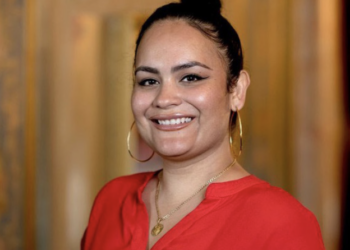
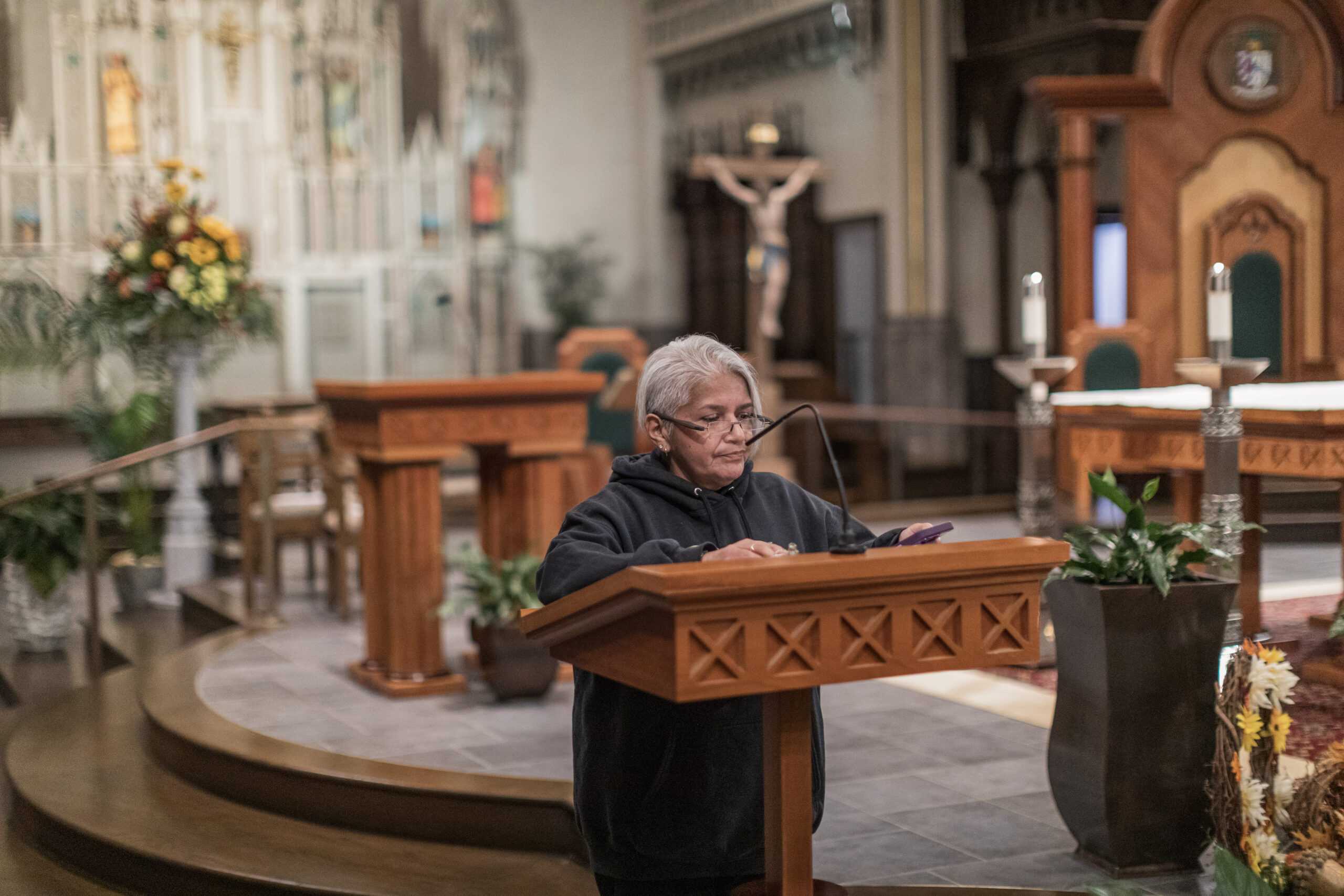
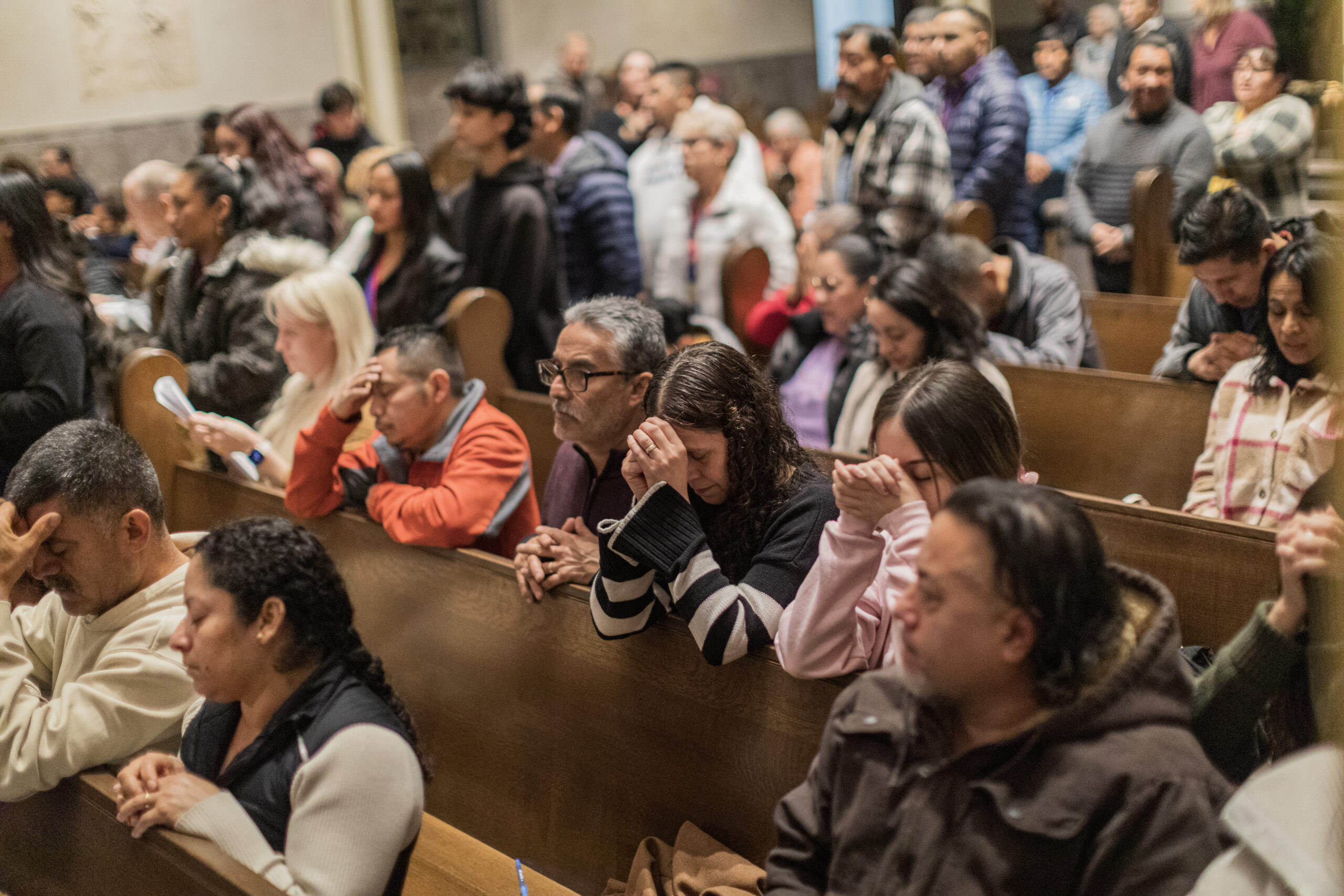
At a Mass for Immigrants at St. Andrew’s Cathedral on November 24, Gema Lowe, a Moviemiento Cosecha member, shared Clara’s story with hundreds of supporters. “All of this happened and is happening here, in our city, under the actions of ICE, and right before our eyes.”

Clara, an immigrant, returned with her five children to Guatemala to be reunited with her deported husband. He was arrested by ICE in September, in front of their kids, on the way to a dental appointment. She received financial and legal support from activist groups.
“Declaring a sanctuary city will make it harder for ICE to do its job,” Lowe said. “It doesn’t mean ICE won’t come; it simply means that if local authorities stand against their presence, their operations will become much more difficult.”
Movimiento Cosecha is an immigrant rights advocacy organization led by immigrants, with chapters across the country. Cosecha Michigan has been organizing to defend undocumented immigrant lives through marches and protests. They have been pushing for these policies in Grand Rapids since 2017.
An MLive analysis of the Deportation Data Project’s data shows that ICE arrests in counties like Kent, Oakland, and Wayne are at their highest levels in the state since Trump took office. Since then, through July 28th, the DDP’s data shows 1,470 people have been arrested this year in Michigan, surpassing the 951 people detained in 2024.
“There is no legal definition of a sanctuary city”, said Christine Sauvé, from Michigan Immigrant Rights Center (MIRC), about the term that can be traced back to the mid-1980s, when American churches on the West Coast began providing shelter to Central American refugees fleeing armed conflicts. Sauvé noted that the designation of a place as a sanctuary follows implemented policies and laws to limit cooperation with ICE, and its effectiveness will depend on what local authorities do in practice to protect the community.

“It’s important to underscore the separation of powers and duties between the federal government and states and local governments,” said Sauvé, pointing out that this separation ensures undocumented members feel safe when reporting crime, which therefore keeps the whole community safe.
Despite the numbers, the term has become controversial for some and a source of hope for others over the years. Following one of the most recent attacks, in August this year, U.S. Attorney General Pamela Bondi stated that sanctuary policies hinder the work of immigration agents and endanger American citizens. Bondi, along with the Department of Justice, indicated that they are working to eradicate these policies.
A shield, the city has no power to provide
Up to now, Grand Rapids Mayor David LaGrand has decided not to adopt a sanctuary city label, a term he described as “a media term with no legal standing.” He said it can create “false hope” for those most vulnerable, emphasizing that the Foreign Nationals policy from 2019 is already protecting the community.
LaGrand highlighted that it separates local policing and the enforcement of federal civil immigration law. “I am committed to prioritizing actual safety over symbolic labels. Declaring ourselves a ‘sanctuary’ suggests a shield against federal law that a city has no power to provide or enforce,” he clarified.
Cosecha claims that the GRPD’s 2019 Foreign Nationals policy should be updated and more policies should be added. They point out that the terms “emergency” or “immediate danger” situations that allow collaboration with ICE may follow the racially biased narrative adopted by immigration agents.

For Sauvé, the City’s Foreign Nationals policy has a good element that may be considered a sanctuary policy under some definitions. Although jurisdictions cannot stop ICE operations within their boundaries, sanctuary policies also show local governments’ prioritization of their resources amid racial profiling by immigration federal agents.
Across Kent County, tension persists. Cosecha and other organizations accuse the sheriff’s department of working with ICE on the release of arrested immigrants. This type of collaboration ended in 2019 when the Sheriff’s Department terminated its jail contract with ICE after months of pressure from these advocacy groups.
However, in May 2025, a list of sanctuary jurisdictions published by the Department of Homeland Security led the sheriff’s office to state they haven’t been and aren’t a sanctuary jurisdiction, and they maintain “consistent” collaboration with ICE and other federal departments.
The Kent County Sheriff’s Office follows the current policy on ICE holds. Scott Dietrich, the Sheriff’s Office spokesperson, said they “will honor ICE detainers for up to 48 hours,” a period when ICE must provide court-signed arrest warrants or detainer forms (I-247A and I-200), which have to be approved by the sheriff or deputy in chief.
According to MIRC, both forms, I-247A and I-200, shouldn’t be considered mandatory by local law enforcement to prolong detentions, as they aren’t judicial warrants. Adopting policies refusing to honor ICE detainers, unless accompanied by a judicial warrant, increases community trust and maintains constitutional rights.
As immigration enforcement concerns persist, local organizers say they will continue pushing for structural protections.
According to Cosecha, the sheriff and police department work “hand in hand” with ICE. Lowe maintains that the sanctuary policies they are asking for are not symbolic. Without a formal sanctuary designation or codified protections, communities remain exposed to informal cooperation, data-sharing practices, ICE holds, and racial profiling.
“Cosecha is led by people who are directly affected by immigration laws. As an affected community, we carry those experiences ourselves,” Lowe said. “It’s the community supporting the community. And with that foundation, we are demanding more sanctuary laws and policies.”