















Santiago Zamora, a 17-year-old Venezuelan asylum seeker, is a student at Western International High School in Southwest Detroit and is passionate about playing baseball. Last Friday afternoon, February 27, standing in front of hundreds of students raising their voices against ICE, the young Venezuelan, his face tense with nerves, shared his experience of being detained by immigration agents.
“We are in this country seeking a dream, seeking hope, and seeking a way to move forward,” Zamora began. “Two months ago, I was detained by ICE and spent 40 days in Texas. Four days ago, they detained my father; he is being held in jail.”

Zamora had been arrested by immigration agents and sent to Dilley Family Detention Center in Texas along with his mother after a Fraser police officer called U.S. Customs and Border Protection during a traffic stop in November while he was returning from a baseball practice. Zamora was released on January 18, and they returned to Detroit the following day.
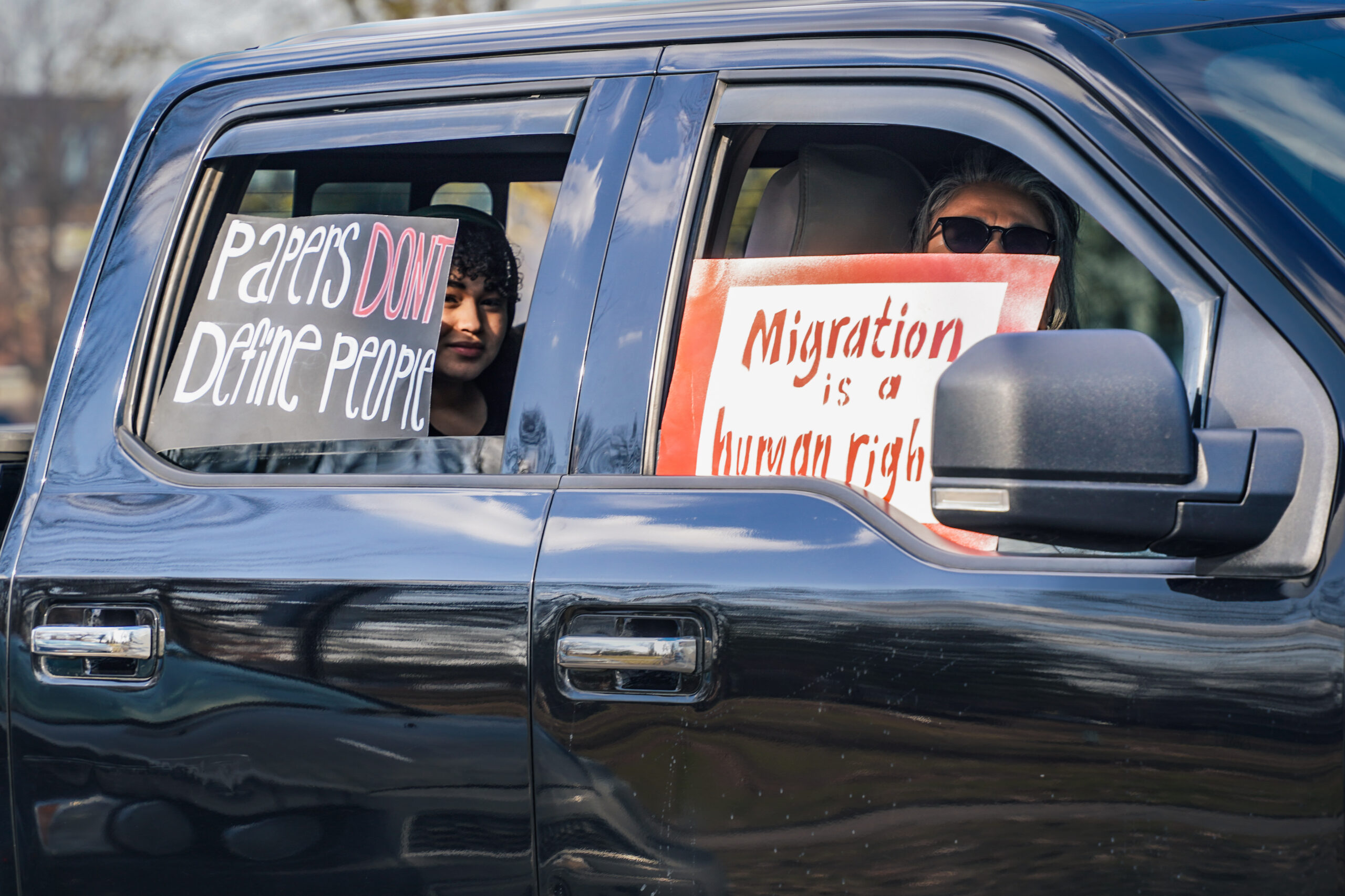
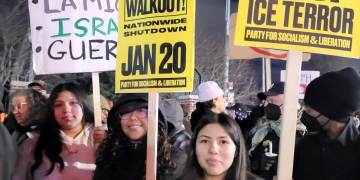
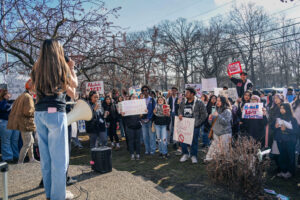
Recognizing that this has also happened to students in high schools in Howell, Grand Rapids, and Detroit, students showed up in groups, accompanied and supervised by faculty members, carrying signs and chanting what has been shouted for more than one year in Southwest Detroit and all across America: “ICE off our streets.”
The student-led demonstration took place outside the high school building at 2pm before the final bell for the school day. Hundreds of students staged the walkout in response to the increased ICE and CBP patrol and detention activity in Southwest Detroit. School faculty members, students, and local organizers also spoke in solidarity with five of their classmates who were recently detained, one of whom was deported to Colombia in June last year.
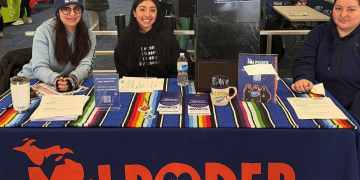
One of the local activist organizations that provided help on safety and logistical planning was Urban Neighborhood Initiatives (UNI) in Southwest Detroit, a community-focused organization that does community service work. Tammi Cervantes, youth organizer at UNI, told EL CENTRAL that students planned the walkout around three weeks ago, and they didn’t want to “rush into something.”
As a resident of Southwest Detroit, Cervantes highlighted the fear that the crackdown on immigrant families has been unleashed across the country. “They’re afraid for their children, of their children, our immigrants themselves. We’ve seen a lot of arrivals at a lot of the schools, and these children themselves are immigrants,” said Cervantes. “Parents are afraid for themselves and for their children, and no one wants to have to put their child through a potential detention center, which can be very traumatic.”
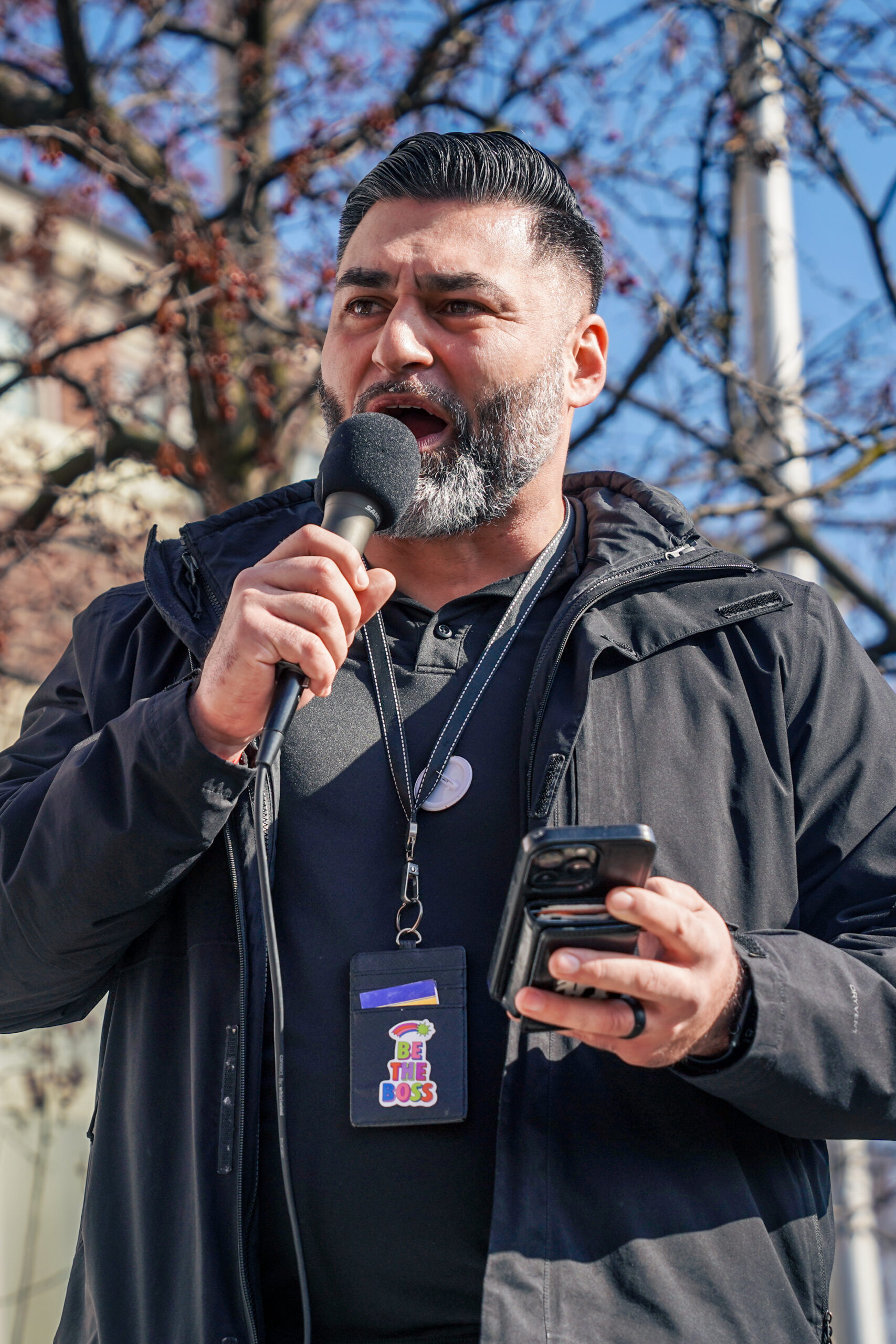
U.S. Congressmember Rashida Tlaib (D-MI-12) also spoke during the rally and urged students to know their rights to protect themselves and their family and friends from illegal actions by ICE and CBP. “They’re coming after all of us, and I don’t say this to make you scared. I say this so you all can prepare. We are the only ones who can protect us. You understand? So when I say ICE,” Tlaib exclaimed, the students loudly responded “OUT!”
For Angel Garcia, principal at Western International High School, these are important times to show a strong community presence, which also strengthens this message. “I hope this creates an urgency when it comes to participating in the political process. Our students know what’s right and what’s wrong,” he said to students gathered for the rally.
In a phone interview later, Garcia told EL CENTRAL that after a year of increasing numbers of immigration agents’ activities in Southwest Detroit, they have seen some attendance declines, but not in “astronomical” numbers. He also emphasized that the school space is a sanctuary and is safe for students, and in cases when some students decide to be absent due to fear of themselves or their parents, the school provides resources to continue their classes.
“When students are not willing to come to school in person because of fear or apprehension, we’ve come up with strategies to keep them engaged while being sensitive to those concerns. Our district offers virtual school as an option, and we’ve been able to help some students by leveraging that resource,” Garcia said.
The principal added that the walkout had been announced by student groups on social media, giving parents time to decide whether or not to send their children. He believes many students didn’t participate due to a palpable fear of speaking out, a fear that has been irrigated on their parents. However, he mentioned he is proud of his students and applauded the presence of local activists and politicians.
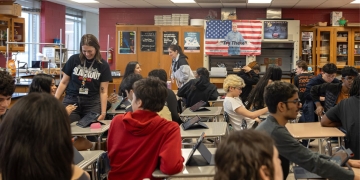
Not all students chose to participate in the walkout; some remained inside the building and continued their classes.
“I would imagine there are kids who wouldn’t come out for the same reasons they might be afraid to come to school. You never really know. I think that was part of the reason they didn’t want to go across the street — they felt it was safer here,” Garcia said. “I spoke to a mom who told her daughter not to walk out. It’s not because she’s against the message. She just doesn’t want her to be in danger.”
The demonstration proceeded in a completely peaceful manner. Students sang and raised their voices with emotion, mindful of the tense relationship between immigrant students at this school and immigration agents in the area since Donald Trump began his second administration. That relationship, as in the case of Zamora, has included communication between local police and U.S. Customs and Border Protection agents. Or in the case of Mor Ba, a Senegalese asylum seeker and graduate of Western International High School, it meant being arrested and detained at North Lake Correctional Facility before being released to his home in Detroit on a $10,000 bond.
Victoria Camille, current member of the Detroit Board of Police Commissioners representing District 7, highlighted the abuse suffered by immigrants detained by immigration agents and the losses they represent. Furthermore, she addressed concerns about alleged collaboration between the DPD and immigration agents, emphasizing that she will do everything possible to keep the community safe.

“This is more than a technical conversation; it starts with looking at the impact happening to human beings. When ICE and Border Patrol take our loved ones, they’re experiencing abuse in custody, loss of jobs, loss of family, loss of children, loss of vehicle, and loss of real estate. Loss of bonds that range from $1,500 to $20,000 and more. Who in the world can afford that? It’s a shame,” Camille said.
Santiago Zamora, un joven venezolano solicitante de asilo de 17 años, es estudiante de la escuela preparatoria Western International High School en Southwest Detroit y le apasiona jugar béisbol. El pasado viernes 27 de febrero por la tarde, frente a cientos de estudiantes que alzaban la voz en contra de ICE, el joven venezolano, con el rostro tenso por los nervios, compartió su experiencia al ser detenido por agentes de inmigración.
“Estamos en este país buscando un sueño, buscando una esperanza y buscando cómo salir adelante”, comenzó Zamora. “Hace dos meses, fui detenido por ICE y pasé 40 días en Texas. Hace cuatro días detuvieron a mi papá; él se encuentra en la cárcel”.
Zamora fue arrestado por agentes de inmigración y enviado al centro de detención familiar Dilley Family Detention Center en Texas junto con su madre, después de que un oficial de policía de Fraser llamara a la Oficina de Aduanas y Protección Fronteriza de EE. UU. (CBP, por sus siglas en inglés) durante un retén en noviembre, mientras regresaba de una práctica de béisbol. Zamora fue liberado el 18 de enero y regresaron a Detroit al día siguiente.
Reconociendo que esto también le ha sucedido a estudiantes en otras secundarias en Howell, Grand Rapids y Detroit, grupos de estudiantes se hicieron presentes, acompañados y supervisados por maestros y personal escolar, llevando pancartas y coreando lo que se ha gritado por más de un año en el Suroeste de Detroit y en todo Estados Unidos: “ICE off our streets” (Fuera ICE de nuestras calles).
La manifestación liderada por los estudiantes se llevó a cabo a las 2 p.m. fuera del edificio de la escuela, antes de la campana final del día de clases. Cientos de estudiantes organizaron esta salida masiva en respuesta al aumento de la patrulla y las actividades de detención por parte de ICE y la CBP en el suroeste de Detroit. Miembros del personal de la escuela, estudiantes y organizadores locales también hablaron en solidaridad con cinco de sus compañeros que fueron detenidos recientemente, uno de los cuales fue deportado a Colombia en junio del año pasado.
Una de las organizaciones activistas locales que brindó ayuda en cuanto a seguridad y planificación logística fue Urban Neighborhood Initiatives (UNI) en Southwest Detroit, una organización sin fines de lucro enfocada en el trabajo comunitario. Tammi Cervantes, organizadora juvenil en UNI, comentó a EL CENTRAL que los estudiantes planearon la manifestación hace unas tres semanas y que no querían “hacer las cosas a la ligera”.
Como residente del suroeste de Detroit, Cervantes destacó el miedo que ha desatado en todo el país la represión contra las familias inmigrantes. “Temen por sus hijos, y muchos de esos jóvenes, son nuestros propios inmigrantes. Hemos visto muchas llegadas a varias de las escuelas, y estos niños son inmigrantes”, dijo Cervantes. “Los padres tienen miedo por ellos mismos y por sus hijos, y nadie quiere tener que pasar por un centro de detención, ya que es una experiencia traumática”.
La congresista estadounidense Rashida Tlaib (D-MI-12) también habló durante la concentración e instó a los estudiantes a conocer sus derechos para protegerse a sí mismos, a sus familiares y a sus amigos de las acciones ilegales de ICE y la CBP. “Vienen por todos nosotros, y no digo esto para asustarlos. Lo digo para que todos puedan prepararse. Somos los únicos que podemos protegernos a nosotros mismos. ¿Entienden? Así que cuando yo diga ICE”, exclamó Tlaib, los estudiantes respondieron en voz alta “¡FUERA!”.
Para Ángel García, director de la Western International High School, estos son tiempos importantes para mostrar una fuerte presencia de la comunidad, lo que también refuerza este mensaje. “Espero que esto cree un sentido de urgencia en cuanto a participar en el proceso político. Nuestros estudiantes saben qué es lo correcto y qué es lo incorrecto”, le dijo a los estudiantes reunidos en la manifestación.
En una entrevista telefónica más tarde, García le dijo a EL CENTRAL que, después de un año del incremento en las actividades de agentes de inmigración en Southwest Detroit, han visto algunas caídas en la asistencia, pero no en cifras “astronómicas”. También enfatizó que el espacio escolar es un santuario y es seguro para los estudiantes, y en los casos en que algunos estudiantes deciden ausentarse por temor propio o de sus padres, la escuela proporciona recursos para que puedan continuar con sus clases.
“Cuando los estudiantes no están dispuestos a venir a la escuela en persona por miedo o preocupación, hemos creado estrategias para mantenerlos involucrados, siendo sensibles a esas inquietudes. Nuestro distrito ofrece la escuela virtual como una opción, y hemos podido ayudar a algunos estudiantes aprovechando ese recurso”, dijo García.
El director agregó que la manifestación había sido anunciada por grupos de estudiantes en redes sociales, dándoles tiempo a los padres para decidir si enviar a sus hijos o no. Él cree que muchos estudiantes no participaron debido a un temor palpable a hablar, un miedo que se ha sembrado en sus padres. Sin embargo, mencionó que está orgulloso de sus estudiantes y aplaudió la presencia de activistas locales y políticos.
No todos los estudiantes decidieron participar en el recorrido; algunos permanecieron dentro del edificio y continuaron con sus clases.
“Me imagino que hay chicos que no saldrían por las mismas razones por las que podrían tener miedo de venir a la escuela. Uno nunca sabe realmente. Creo que esa fue parte de la razón por la que no querían cruzar la calle, sentían que era más seguro aquí”, dijo García. “Hablé con una mamá que le dijo a su hija que no saliera. No es porque esté en contra del mensaje. Simplemente no quiere que corra peligro”.
La manifestación se llevó a cabo de manera completamente pacífica. Los estudiantes cantaron y alzaron la voz con emoción, conscientes de la tensa relación entre los estudiantes inmigrantes de esta escuela y los agentes de inmigración en el área desde que Donald Trump comenzó su segunda administración. Esa relación, como en el caso de Zamora, ha incluido comunicación entre la policía local y los agentes de la Oficina de Aduanas y Protección Fronteriza de EE. UU. O en el caso de Mor Ba, un solicitante de asilo senegalés y graduado de la Western International High School, significó ser arrestado y detenido en el centro correccional North Lake Correctional Facility antes de ser liberado a su hogar en Detroit bajo una fianza de $10,000.
Victoria Camille, miembro actual de la Junta de Comisionados de Policía de Detroit representando al Distrito 7, destacó los abusos que sufren los inmigrantes detenidos por agentes de inmigración y las pérdidas que estos representan. Además, abordó las preocupaciones sobre la presunta colaboración entre el DPD (Departamento de Policía de Detroit) y los agentes de inmigración, enfatizando que hará todo lo posible para mantener segura a la comunidad.
“Esto es más que una conversación técnica; comienza con mirar el impacto que está ocurriendo en seres humanos. Cuando ICE y la Patrulla Fronteriza se llevan a nuestros seres queridos, están experimentando abusos bajo custodia, pérdida de trabajos, pérdida de familiares, pérdida de hijos, pérdida de vehículos y pérdida de bienes raíces. Pérdida de fianzas que oscilan entre los $1,500 y más de $20,000. ¿Quién en el mundo puede pagar eso? Es una vergüenza”, dijo Camille.