



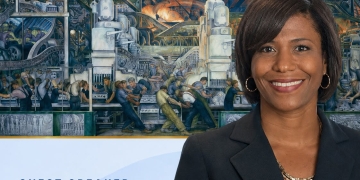









The fight for women’s right to vote in Latin America began in the early 20th century, driven by courageous activists across the region. Figures like Paulina Luisi in Uruguay, Bertha Lutz in Brazil, and Elvia Carrillo Puerto in Mexico pushed for change in their countries. But it was Matilde Hidalgo Navarro of Ecuador who made history by becoming the first woman to cast a vote in a democratic election in Latin America.
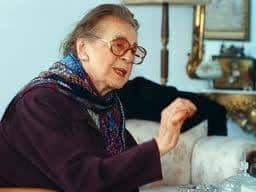
Matilde was born on September 25, 1889, in Loja, Ecuador. She was the youngest of six children. After her father passed away when she was still very young, her mother took on the responsibility of raising the family and ensuring her children received an education—something that would deeply shape Matilde’s path.
From an early age, Matilde showed determination and a desire to learn. After finishing primary school, she asked to continue her studies—something that was not common for women at the time. After a month of hesitation, the school’s director finally agreed. Years later, on October 8, 1913, she became the first woman in Ecuador to graduate from high school.
Her journey was anything but easy. Many families discouraged their daughters from associating with her, fearing her example. Still, Matilde refused to give up. When she was denied entry to the Central University of Ecuador’s medical school, she looked for another path and moved to Cuenca, where she was accepted. She went on to complete her medical degree and later earned a doctorate in 1921 with outstanding merit.
In 1923, she married lawyer Fernando Procel, and together they had two children. Just a year later, on May 10, 1924, Matilde achieved what no woman in Latin America had done before: she voted in a democratic election, exercising a right that many believed women should not have.
Her contributions didn’t stop there. In 1941, she became the first woman in Ecuador to run for public office and was elected as an alternate deputy in Loja, marking another milestone for women in public life. Alongside her political achievements, she continued practicing medicine in Guayaquil until 1949, when she received a scholarship to further specialize in pediatrics, neurology, and dietetics in Argentina.

When she returned to Ecuador, she dedicated much of her life to social causes. She served as Vice President of the Ecuadorian House of Culture and became the honorary lifetime president of the Red Cross in El Oro. Over the years, she received several honors, including recognition for her contributions to public health.
Matilde Hidalgo Navarro passed away on February 20, 1974. Her legacy lives on as a symbol of courage, perseverance, and the power of challenging what once seemed impossible.
Roberto Ayón B.
The Devil’s Nose Train is the name given to a scenic railway journey that cuts through the breathtaking landscapes of the Andes Mountains, connecting the towns of Alausí and Sibambe. The route follows a series of sharp zigzags, making it one of the most challenging railway tracks in the world.
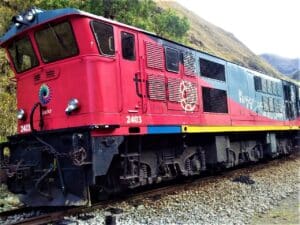
The most dramatic part of the journey is a rocky outcrop known as the Devil’s Nose. Here, the train descends 80 meters down what feels like an almost vertical slope, a remarkable feat of engineering that continues to impress visitors.
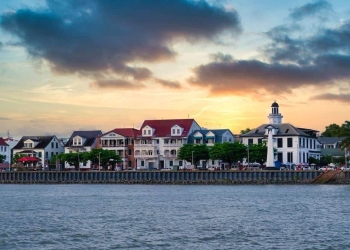
The journey begins in Alausí, a charming town known for its narrow cobblestone streets, flower-filled balconies, and picturesque 19th-century adobe houses. From there, the round-trip excursion takes about two and a half hours, including a stop in Sibambe. While there, visitors can enjoy traditional cuisine from Ecuador’s highlands or explore a small local museum.
Baños de Agua Santa, often just called Baños, is a small city in Ecuador’s Tungurahua province and one of the country’s most beloved travel destinations. It’s located about 45 minutes from Ambato and, although it has a population of around 13,000 people, it welcomes visitors from all over the world.
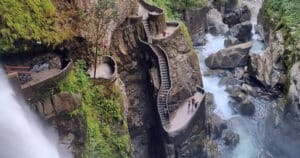
The town sits on the slopes of the Tungurahua volcano, about 1,820 meters above sea level, and very close to the geographic center of Ecuador. Its setting is part of what makes it so special: lush mountains, waterfalls, and easy access to Sangay and Llanganates National Parks. The weather is generally mild and pleasant throughout the year, even though it can be quite humid.
Baños is also known as a place of faith and tradition. Many people visit not only for its natural beauty but also for its thermal springs, which are widely believed to have healing, even “miraculous,” properties.
Ingredients:
- Green plantains, peeled
- Butter
- Egg
- Oil
- Grated cheese
- Cooked chorizo
- Chili pepper or ground chili
- Cumin
- Salt

Preparation:
- Start by peeling and cutting the plantains, then fry them over medium-high heat until they’re nicely golden, soft on the inside, not crunchy. Once they’re ready, mash them into a smooth mixture.
- Add the egg, a bit of chili, cumin, and salt, and mix everything together with your hands until you get a soft but firm dough.
- Next, shape the dough into balls about the size of your fist. Gently press your thumb into each one to create a small opening, then fill it with grated cheese, chorizo, or your preferred filling. Close it up carefully, pressing the dough so it holds together.
- You can serve them just like that, or fry them again quickly over high heat to give them a crisp, golden outside. Let them rest on paper towels to remove any excess oil.
- They’re usually served with fried eggs—and they’re incredibly comforting.
Los movimientos por el voto femenino en América Latina, se había iniciado en los primeros años del siglo XX, fueron muchos los países donde activistas sociales, libraban fuertes batallas para que se aprobara en una Constitución, ejemplos tenemos con Paulina Luisi de Uruguay, Bertha Lutz de Brasil, Elvia Carrillo Puerto de México, pero muy específicamente Matilde Hidalgo Navarro de Ecuador, quién logró ser la primera mujer en votar en una elección democrática en este Continente.
Matilde, nació el 25 de septiembre de 1889 en la ciudad de Loja, Ecuador, hija del comerciante Zarumeño, Juan Manuel Hidalgo y la venezolana Carmen Navarro, su padre murió siendo ella una niña, así que su madre se dedicó a trabajar para sostener a su familia y dar estudio a sus seis hijos, Matilde fue la menor de ellos.
Al concluir sus estudios de primaria, solicitó su ingreso a la secundaria y preparatoria, el director después de pensarlo durante un mes, dio finalmente su aprobación, convirtiéndose años después, el 8 de octubre de 1913, en la primera mujer que lograba graduarse de bachiller en Ecuador.
No fue un camino fácil, las familias prohibieron a sus hijas cualquier tipo de amistad con ella, no obstante, continuó sus estudios de licenciatura, primero le negaron su ingreso en la Facultad de Medicina de la Universidad Central de Ecuador, sin darse por vencida, viajó a Cuenca, donde fue aceptado su ingreso, y al concluir sus estudios profesionales, solicitó su inscripción para estudiar un doctorado siendo en noviembre de 1921, que lo obtuvo con mucho mérito.
Dos años después (1923) se casó con el abogado Fernando Procel con quien procreó dos hijos. Un año después, el 10 de mayo de 1924, Matilde Hidalgo se convirtió en la primera mujer en América Latina que ejerció el derecho constitucional a votar en una elección.
En 1941 se convirtió en la primera mujer candidata a un cargo de elección popular en el Ecuador y la primera mujer elegida administradora pública en Loja con el cargo de Diputada Suplente. Ejerció la medicina en Guayaquil hasta 1949, cuando obtuvo una beca para realizar una especialización en pediatría, neurología y dietética en Argentina.
A su regreso al Ecuador, se dedicó a desarrollar obras sociales, fue nombrada Vicepresidenta de la Casa de la Cultura Ecuatoriana y fue presidenta de honor y vitalicia de la Cruz Roja en El Oro. También recibió múltiples reconocimientos como la condecoración con el Mérito de Salud Pública.
Falleció el 20 de febrero de 1974.
Roberto Ayón B.
El tren nariz del Diablo, es como se le llama al recorrido en tren que atraviesa los paisajes de la Cordillera de los Andes, uniendo los poblados de Alausí y Sibambe a través de zigzagueantes caminos que conforman una de las rutas más complejas del mundo.
Su punto más álgido lo conforma la colina apodada la Nariz del Diablo, lugar en el cual los rieles del tren descienden 80 metros prácticamente en forma vertical, gracias a una impresionante obra de ingeniería.
Su punto de inicio corresponde a Alausí, un poblado que no deja de encantar por sus estrechas calles empedradas, balcones con flores y pintorescas casonas de adobe del siglo XIX. Desde ahí la excursión ida y vuelta dura aproximadamente 2 horas y media, parando por un tiempo en el poblado de Sibambe, lugar donde se puede disfrutar de la gastronomía típica de la sierra ecuatoriana o visitar su pequeño museo.
Baños de Agua Santa o simplemente Baños es una ciudad ecuatoriana, de la Provincia de Tungurahua. Es un centro turístico de importancia del país, se encuentra a unos 45 minutos de Ambato. Es la cabecera cantonal del cantón Baños y tiene una población de 12,995 personas.
La actividad económica más importante del cantón es el turismo receptivo. Baños, está ubicada en las faldas del volcán Tungurahua una altura de 1,820 metros (msnm), muy próximo al centro geométrico del territorio ecuatoriano. Goza de clima muy agradable, casi durante todo el año, a pesar de una alta humedad.
Los parques nacionales Sangay y Llanganates. están ubicados en los flancos del cantón. Baños es también un centro de peregrinación religiosa ya que los manantiales de aguas termales son popularmente asociados con curas “milagrosas”.
Ingredientes:
- Plátanos verdes pelados
- Mantequilla
- Huevo
- Aceite
- Queso rayado
- Chorizo cocido
- Pimiento picante o chile molido
- Comino
- Sal
Preparación:
- Se pelan, se cortan los plátanos y se fríen a temperatura media – alta; hasta que estén dorados mas no crujientes.
- Se hace un puré con los plátanos, y se le agrega el huevo, el pimiento picante, comino y sal.
- Se mezcla con las manos hasta conseguir una masa estable.
- Se forman bolas del tamaño de un puño y se le abre un hueco, que se rellena con queso rallado, chorizo o carne.
- Se tapa bien el hueco presionando la masa para que quede compacta.
- Se pueden servir así, o se pueden volver a freír a temperatura alta para que se doren rápido. Se colocan en papel absorbente para que destilen el aceite. Generalmente se acompañan con huevos fritos.