








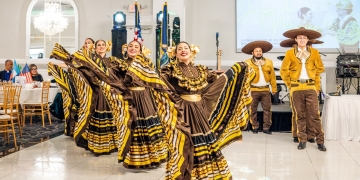








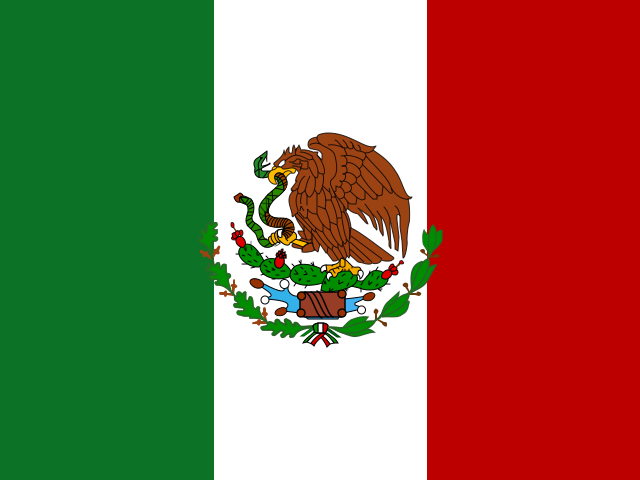


Mexico shares its northern border with the United States, although, interestingly, the southernmost international border of the U.S. is actually with Canada, just south of Detroit. Even though Mexico has existed as an independent nation for a little over two centuries, it is one of the most culturally, historically, and naturally rich countries in the Americas. This is due not only to its remarkable geographic diversity but also to its ethnic diversity, as more than 68 Indigenous peoples continue to live throughout the country, alongside other ethnic communities that have settled there more recently. Mexico does not have an official language. Instead, Spanish and the country’s 68 Indigenous languages all have equal legal recognition at the national level.

The country’s name comes from the Nahuatl word Mēxihco, commonly interpreted as “the navel of the moon.” It refers to the Mexica people, also known as the Aztecs, whose capital was located where Mexico City stands today. They were the founders of what is often called the Aztec Empire.
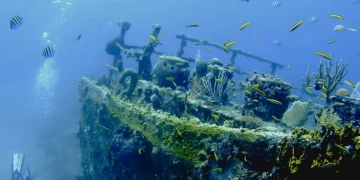
Mexico has coastlines on both the Pacific Ocean and the Atlantic Ocean. Along the Atlantic lie the Gulf of Mexico and the Caribbean Sea, while the Pacific coast stretches for thousands of miles and includes the Gulf of California, also known as the Sea of Cortez, between the Baja California Peninsula and the coasts of Sonora and Sinaloa. Because so many marine species gather there to reproduce, this body of water is often referred to as “the world’s aquarium.”
In the state of Sinaloa, specifically near Topolobampo Beach, lives a well known dolphin named “El Pechocho,” a nickname that roughly means “the handsome one” or “the beautiful one.” Topolobampo’s coastline is not only colorful but also exceptionally beautiful, making it one of the hidden gems along Mexico’s Pacific coast.
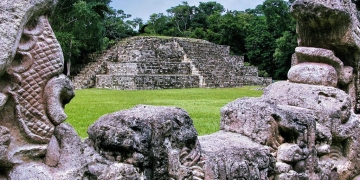
Mexico is home not only to world famous archaeological sites such as Teotihuacan and Chichén Itzá but also to lesser known treasures like Guachimontones in the state of Jalisco. This ancient ceremonial city is famous for its circular stepped pyramids, a style of architecture that is unique in Mesoamerica and offers visitors a very different perspective on the country’s pre Hispanic civilizations.
The country also features remarkable landmarks from more recent history, including Edward James’ Surrealist Garden in Xilitla, San Luis Potosí. Built in the middle of the jungle among waterfalls and lush vegetation, the site is filled with surreal concrete structures, staircases that lead nowhere, and enormous sculptural flowers. According to the story behind the garden, the British poet and artist Edward James decided to create giant concrete flowers after a devastating frost in 1962 destroyed his beloved orchid collection, ensuring they could never be lost again.
Another extraordinary destination is Copper Canyon in the state of Chihuahua. To fully appreciate its dramatic landscapes, one of the best experiences is riding El Chepe, the famous train that travels from the city of Chihuahua across mountains, bridges, and tunnels before reaching the state of Sinaloa.

In central Mexico, the city of Guanajuato is famous for its colorful streets, underground tunnels, and rich mining history. Its colonial architecture, charming plazas, and narrow alleyways have made it one of the country’s most picturesque destinations. Every year, it welcomes visitors from around the world during the International Cervantino Festival, considered one of the most important cultural festivals in Latin America.
Another unforgettable destination is the Tolantongo Hot Springs in the state of Hidalgo. Surrounded by mountains and canyons, the area is known for its naturally warm pools, turquoise river, caves, and waterfalls, making it one of Mexico’s most spectacular natural attractions.
Mexico’s countless landscapes make every state a different experience. Across its vast territory, visitors can explore tropical jungles, deserts, forests, mountain ranges, valleys, and sprawling cities such as Mexico City, Monterrey, and Guadalajara. This incredible variety of landscapes, cultures, and traditions is one of the reasons why Mexico continues to be one of the most fascinating destinations in the Americas.
México, frontera nacional al sur de Estados Unidos, incluso a pesar de que excepcionalmente al sur de Detroit también se encuentra la frontera con Canadá. México a pesar de ser un país con poco más de dos siglos de su fundación, tiene una gran riqueza cultural, histórica y natural del continente americano; en principio no sólo por su diversidad territorial, sino también por su diversidad étnica, pues en el territorio mexicano se albergan más de 68 pueblos ancestrales indígenas, aunadas a otras comunidades étnicas más recientes. México no cuenta con una lengua oficial, sino que el español, como las 68 lenguas indígenas tienen igual validez oficial en términos de legalidad nacional.
Su nombre proviene del náhuatl Mēxihco: Ombligo de la luna. El nombre de la nación hace referencia al también conocido como imperio del sol: los Mexicas, también conocidos como Aztecas, quienes habitaban la hoy conocida como Ciudad de México.
México cuenta con acceso al Pacífico y al Atlántico, en el Atlántico con el Caribe y el Golfo de México; en el Pacífico con el gran litoral del Pacífico, aunado al Golfo del Mar de Cortés entre las Baja Californias y las Costas de Sonora y Sinaloa. En esta zona del Golfo de Cortés México es donde muchas especies se albergan para la reproducción, lo que hace que se le conozca como el acuario del mundo.
En Sinaloa, específicamente en la playa de Topolobampo habita un conocido Delfín de nombre “El Pechocho”, que refiere a “precioso”. La costa de Topolobampo es no sólo colorida, sino también de una belleza excepcional.
México, no sólo cuenta con los lugares arqueológicos de gran popularidad Teotihuacán y Chichen Itzá, espectaculares; sino también con la zona arqueológica en Jalisco llamada los Guachimontones, una ciudad antigua piramidal con estructuras circulares.
Asimismo, están construcciones más recientes como el castillo de Edward James ubicado en Xilitla, San Luis Potosí. El castillo construido en la selva entre cascadas cuenta con estructuras de concreto surrealistas, escaleras que van a ningún lugar y una colección de flores de concretos de gran formato, pues, el poeta no quería volver a perder su colección de flores tras otra helada como la de 1962 que acabó con sus orquídeas.
Otro lugar también excepcional se encuentra en Chihuahua, las Barrancas del Cobre o Cooper Canyon, que para poder apreciarlas en su máximo esplendor se recomienda atravesar el recorrido en el tren Chepe, que va desde Chihuahua y cruza hasta llegar a Sinaloa.
En el centro del país destaca Guanajuato, ciudad conocida por sus coloridas calles, sus túneles y su importante pasado minero. Sus edificios coloniales, plazas y callejones la convierten en uno de los destinos más pintorescos de México. Cada año recibe visitantes de todo el mundo durante el Festival Internacional Cervantino, considerado uno de los encuentros culturales más importantes de América Latina.
Luego también las pozas de Tolantongo, Hidalgo.
Así, los rincones de México permiten que en cada estado del país, con su basto territorio se pueda disfrutar ya sea de selvas, desiertos, bosques, sierras, planicies, o bien, inmensas ciudades como la Ciudad de México, o también las grandes ciudades de Monterrey Guadalajara.