



















Ines de Jesus was ten years old when her family immigrated to the United States. Institutions like Holy Trinity Church provided the family with much needed resources. The assistance from the church led her to night school where her mother would bring her along for adult English as a Second Language (ESL) classes. She quickly realized this was her calling in life – to give back and be the person her younger self needed.
In Puerto Rico, de Jesus was academically well-adjusted and a good student. As a new student in the United States, her grades declined. The language barrier was too much for a child figuring out a new culture and a new academic system.
“At that point I already had decided, ‘I have to be able to become a teacher that speaks Spanish and English to the kids,’” said de Jesus, former teacher and education advocate.
She dedicated her career to advancing bilingual education and uplifting the community’s voice. Because of her tireless work and decades of leadership, she is one of ten recipients of the 2026 Skillman Visionary Awards. The award comes with a $50,000 unrestricted, no-strings-attached award in recognition of her life’s work to lift up educational opportunities for residents in our community.
“The Skillman Visionary Award really focuses on highlighting individuals that are making a system level impact or at least working towards a system level impact beyond a specific school or organization,” said Ashley Aidenbaum, Director of Strategic Initiatives at The Skillman Foundation.
System change comes with its challenges.
“If you think the system is broken, you have to work to change the system. But until the system changes, you have to work to make sure people that are trapped in the system are as successful as possible,” said Alycia Meriweather, Deputy Superintendent of Detroit Public Schools Community District.
Meriweather is a fellow 2026 Skillman Foundation Awardee. She began as a science teacher. Her work has been about “connecting students, community partnerships, and public policy to remove barriers to learning across Detroit.”
De Jesus noticed that kids were being pulled out of essential classes to learn the fundamentals of English and beyond. She understood that system change would take more people like her. She went on to become a bilingual teacher at Western International High School in Southwest Detroit.
She also helped create bilingual education programs at Wayne State University that would recruit people to go into bilingual education.
“We grew the workforce from just a few bilingual teachers to many bilingual teachers, bilingual counselors, bilingual secretaries,” de Jesus said. She helped others find financial opportunities for people who knew the community’s needs and spoke Spanish. “I learned that there’s a lot of places in this country that didn’t even want bilingual education, but Detroit, Michigan was open to it.”
As part of her fight for bilingual education, de Jesus joined one of the task forces involved in the 2016 lawsuit filed by seven Detroit students. The 136-page lawsuit claimed that Detroit students were denied basic education due to poor building conditions, shortages of textbooks, underqualified teachers, overcrowded classrooms, and inadequate support for English language learners.
$94.4 million was earmarked for Detroit Public Schools and the task force weighed in on how it should be spent.
“I felt compelled to represent our community,” de Jesus said of her involvement in the Literacy Equity Task Force. “To ensure that the education and literacy of our Latino students were being addressed. If you cannot read and write, you don’t become a lifelong learner.”
The task force was composed of students, parents, and advocates. They recommended funding be spent on more literacy teachers, literacy coaches, and increased bilingual education, such as bilingual special ed.

In 2024, a three-year plan was approved by the Detroit School Board. It had multiple key points such as the hiring of “one multilingual academic interventionist for every 42 students to support immigrant students and English language learners.”
The results? According to 2025 state standardized test data, the percentage of DPSCD third graders who met or exceeded English language arts proficiency on Michigan Student Test of Educational Progress (M-STEP) reached an 11-year high for the 2024-2025 school year.
This next school year will see the last of the funds.
“The need continues,” de Jesus said. “And my advice to young people who want to get involved is to listen to what the community needs and wants. How can you support?”
She emphasizes the need to address and change system issues like housing and employment.
“It’s all connected. We can’t separate a good school from having a good neighborhood from having a good city. You have to address the systemic issues across the city in order to have student success to succeed in schools and become lifelong learners,” de Jesus said.
Aidenbaum agrees. She sees the Skillman Foundation Visionary Award as a way to strengthen the work being done by those who have made systemic change a part of their life’s work.
“There are so many ways that you can positively impact Detroit youth and so many ways that you can positively move towards change, particularly when working in partnerships and alongside students, educators and families,” Aidenbaum said.
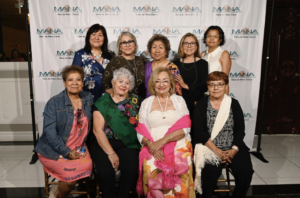
One of those ways, at least according to de Jesus, is a scholarship program. De Jesus is chair of the scholarship program for MANA de Metro Detroit (“mana” from the Spanish word for sister, hermana), which has provided almost $300,000 through 197 scholarships in the last 30 years. She is one of the founding members of MANA’s Detroit chapter.
“Ines put the scholarship committee together,” said Belda Garza, another of the original founders of the local MANA chapter. “We have done outstanding work and also workshops for younger women in terms of letting them know what’s available for them. And one of them is making sure that they’re thinking about going on to higher education.”
The scholarship extends beyond money; it represents personal support and mentorship. De Jesus recognizes that success requires addressing the real barriers students face – whether it’s a need for eye glasses, lunch meal plans, books, laptops, or gas.
“Behind the scholarship money, what most people don’t see is that you can call us anytime and we’ll talk to you,” de Jesus said.
The work being done by de Jesus is vital to the community. It represents years of hard work and dedication to something greater than herself. It’s this sense of purpose that has enriched so many lives.
“Within MANA, we are trying to get young women to come in and take over the leadership role because the OGs, as they call us, the ones that we’ve been around for a long time, we want to retire. We want to step back and let the young women take over,” Garza said.
Ines de Jesus tenía diez años cuando su familia inmigró a Estados Unidos. Instituciones como Holy Trinity Church proporcionaron a la familia los recursos tan necesarios. La asistencia de la iglesia la llevó a la escuela nocturna donde su madre la traía consigo para clases de adultos de inglés como segundo idioma (ESL). Rápidamente se dio cuenta de que este era su llamado en la vida — devolver y ser la persona que su yo más joven necesitaba.
En Puerto Rico, de Jesus estaba académicamente bien adaptada y era una buena estudiante. Como nueva estudiante en Estados Unidos, sus calificaciones declinaron. La barrera del idioma era demasiado para una niña averiguando una nueva cultura y un nuevo sistema académico.
“En ese punto ya había decidido, ‘Tengo que poder convertirme en una maestra que hable español e inglés a los niños,'” dijo de Jesus, exmaestra y defensora de educación.
Dedicó su carrera a avanzar educación bilingüe y elevar la voz de la comunidad. Por su trabajo incansable y décadas de liderazgo, es una de diez receptoras del 2026 Skillman Visionary Awards. El premio viene con un premio de $50,000 sin restricciones y sin ataduras en reconocimiento de su trabajo de vida para elevar oportunidades educativas para residentes en nuestra comunidad.
“El Skillman Visionary Award realmente se enfoca en destacar individuos que están haciendo un impacto a nivel de sistema o al menos trabajando hacia un impacto a nivel de sistema más allá de una escuela u organización específica,” dijo Ashley Aidenbaum, Directora de Strategic Initiatives en The Skillman Foundation.
El cambio de sistema viene con sus desafíos.
“Si piensas que el sistema está roto, tienes que trabajar para cambiar el sistema. Pero hasta que el sistema cambie, tienes que trabajar para asegurar que las personas que están atrapadas en el sistema sean lo más exitosas posible,” dijo Alycia Meriweather, Vicepresidenta de Superintendencia del Detroit Public Schools Community District.
Meriweather es una colega receptora del 2026 Skillman Foundation Award. Comenzó como maestra de ciencias. Su trabajo ha sido acerca de “conectar estudiantes, asociaciones comunitarias, y política pública para remover barreras al aprendizaje en Detroit.”
De Jesus notó que niños estaban siendo sacados de clases esenciales para aprender los fundamentos del inglés y más allá. Entendió que el cambio de sistema tomaría más gente como ella. Siguió adelante para convertirse en maestra bilingüe en Western International High School en Southwest Detroit.
También ayudó a crear programas de educación bilingüe en Wayne State University que reclutarían gente para entrar en educación bilingüe.
“Crecimos la fuerza laboral de solo unos pocos maestros bilingües a muchos maestros bilingües, consejeros bilingües, secretarias bilingües,” dijo de Jesus. Ayudó a otros a encontrar oportunidades financieras para gente que conocía las necesidades de la comunidad y hablaba español. “Aprendí que hay muchos lugares en este país que ni siquiera querían educación bilingüe, pero Detroit, Michigan estaba abierto a ello.”
Como parte de su lucha por educación bilingüe, de Jesus se unió a una de las fuerzas de tarea involucradas en la demanda de 2016 presentada por siete estudiantes de Detroit. La demanda de 136 páginas reclamaba que estudiantes de Detroit fueron negados educación básica debido a pobres condiciones de construcción, escaseces de libros de texto, maestros no calificados, aulas abarrotadas, y apoyo inadecuado para estudiantes de idioma inglés.
$94.4 millones fueron destinados para Detroit Public Schools y la fuerza de tarea pesó en cómo deberían ser gastados.
“Me sentí obligada a representar nuestra comunidad,” dijo de Jesus de su participación en la Literacy Equity Task Force. “Para asegurar que la educación y alfabetización de nuestros estudiantes latinos estaban siendo abordadas. Si no puedes leer y escribir, no te conviertes en un estudiante de por vida.”
La fuerza de tarea estaba compuesta de estudiantes, padres, y defensores. Recomendaron que el financiamiento sea gastado en más maestros de alfabetización, entrenadores de alfabetización, y educación bilingüe aumentada, como educación especial bilingüe.
En 2024, un plan de tres años fue aprobado por la Detroit School Board. Tenía múltiples puntos clave como la contratación de “un interventor académico multilingüe por cada 42 estudiantes para apoyar estudiantes inmigrantes y estudiantes de idioma inglés.”
¿Los resultados? De acuerdo a datos de pruebas estandarizadas estatales de 2025, el porcentaje de estudiantes de tercer grado de DPSCD que cumplieron o excedieron competencia en artes del idioma inglés en el Michigan Student Test of Educational Progress (M-STEP) alcanzó un máximo de 11 años para el año escolar 2024-2025.
El próximo año escolar verá el último de los fondos.
“La necesidad continúa,” dijo de Jesus. “Y mi consejo a gente joven que quiere involucrarse es escuchar lo que la comunidad necesita y quiere. ¿Cómo puedes apoyar?”
Enfatiza la necesidad de abordar y cambiar problemas del sistema como vivienda y empleo.
“Está todo conectado. No podemos separar una buena escuela de tener un buen barrio de tener una buena ciudad. Tienes que abordar los problemas sistémicos en toda la ciudad para tener éxito estudiantil para tener éxito en escuelas y convertirse en estudiantes de por vida,” dijo de Jesus.
Aidenbaum está de acuerdo. Ve el Skillman Foundation Visionary Award como una manera de fortalecer el trabajo siendo hecho por aquellos que han hecho el cambio sistémico parte de su trabajo de vida.
“Hay tantas maneras en que puedes impactar positivamente a la juventud de Detroit y tantas maneras en que puedes positivamente moverte hacia cambio, particularmente cuando trabajas en asociaciones y al lado de estudiantes, educadores y familias,” dijo Aidenbaum.
Una de esas maneras, al menos de acuerdo a de Jesus, es un programa de becas. De Jesus es presidenta del programa de becas para MANA de Metro Detroit (“mana” de la palabra en español para hermana, hermana), que ha proporcionado casi $300,000 a través de 197 becas en los últimos 30 años. Es una de los miembros fundadores del capítulo de Detroit de MANA.
“Ines reunió el comité de becas,” dijo Belda Garza, otra de los fundadores originales del capítulo local de MANA. “Hemos hecho trabajo extraordinario y también talleres para mujeres más jóvenes en términos de hacerles saber qué está disponible para ellas. Y uno de ellos es asegurar que estén pensando en ir a educación superior.”
La beca se extiende más allá del dinero; representa apoyo personal y mentoría. De Jesus reconoce que el éxito requiere abordar barreras reales que estudiantes enfrentan — ya sea una necesidad de gafas, planes de comidas de almuerzo, libros, laptops, o gasolina.
“Detrás del dinero de la beca, lo que la mayoría de la gente no ve es que puedes llamarnos en cualquier momento y hablaremos contigo,” dijo de Jesus.
El trabajo siendo hecho por de Jesus es vital para la comunidad. Representa años de trabajo duro y dedicación a algo mayor que ella misma. Es este sentido de propósito que ha enriquecido tantas vidas.
“Dentro de MANA, estamos tratando de conseguir que mujeres jóvenes vengan e tomen el papel de liderazgo porque los OGs, como nos llaman, los que hemos estado alrededor por mucho tiempo, queremos retirarnos. Queremos dar un paso atrás y dejar que las mujeres jóvenes tomen el relevo,” dijo Garza.