







For centuries, people have found ways to cross the Detroit River.
The first were Anishinaabe travelers, paddling birch bark canoes across its waters.
Next came the steamboat ferries carrying recreation and adventure seekers between the United States (Michigan) and Canada (Ontario) at the turn of the 20th century.
Then, in 1929, cars were able to cross on the Ambassador Bridge for the first time.
Now, there is another way to make the journey: on foot or by bicycle.
When the Gordie Howe International Bridge opened its pedestrian and bicycle path on Aug. 5, it created something new for travelers — a simple, toll-free way for people to cross between Detroit and Windsor without ever getting behind the wheel.
The bridge’s name honors Gordie Howe, the Canadian-born Detroit Red Wings legend known as “Mr. Hockey.”

Its two 720-foot towers are among the tallest structures in the region, and its main span is the longest for any cable-stayed bridge in North America.
The bridge is the newest of four crossing points between Michigan and Canada, and it is the only one that allows people to cross over on foot or by bicycle. The others are the International Bridge in Sault Ste. Marie, the Blue Water Bridge in Port Huron and the previously mentioned Ambassador Bridge in Detroit.
The trip from one country to the other takes about 45 minutes on foot and roughly 20 minutes by bicycle, and unlike for motorists, there isn’t a fee to use the pedestrian bridge.
For adventure-loving, long-distance cyclists and hikers, the bridge represents a missing link between two extensive trail systems that span North America. For those looking for a more casual day trip, the bridge serves as a destination as well as a new way to experience the sister cities of Detroit and Windsor.
“The Gordie Howe International Bridge creates a remarkable new connection, linking Michigan’s world-class trail network with our neighbors in Ontario and opening an international gateway for people traveling by foot and bike,” said Andrea LaFontaine, Michigan Trails & Greenways Alliance executive director. “It’s a proud moment for Michigan trails, and a testament to the power of sustained advocacy.”
From Windsor to Detroit: Trails on the Michigan side
For Canadians, the bridge opens the door to a wide range of urban hiking and biking adventures on the Michigan side of the river. Over the past decade, Detroit’s riverfront has undergone extensive improvements, with over $1 billion invested to transform former industrial spaces into vibrant parks and extensive greenways.
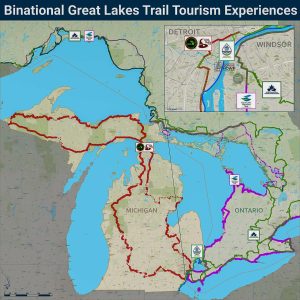
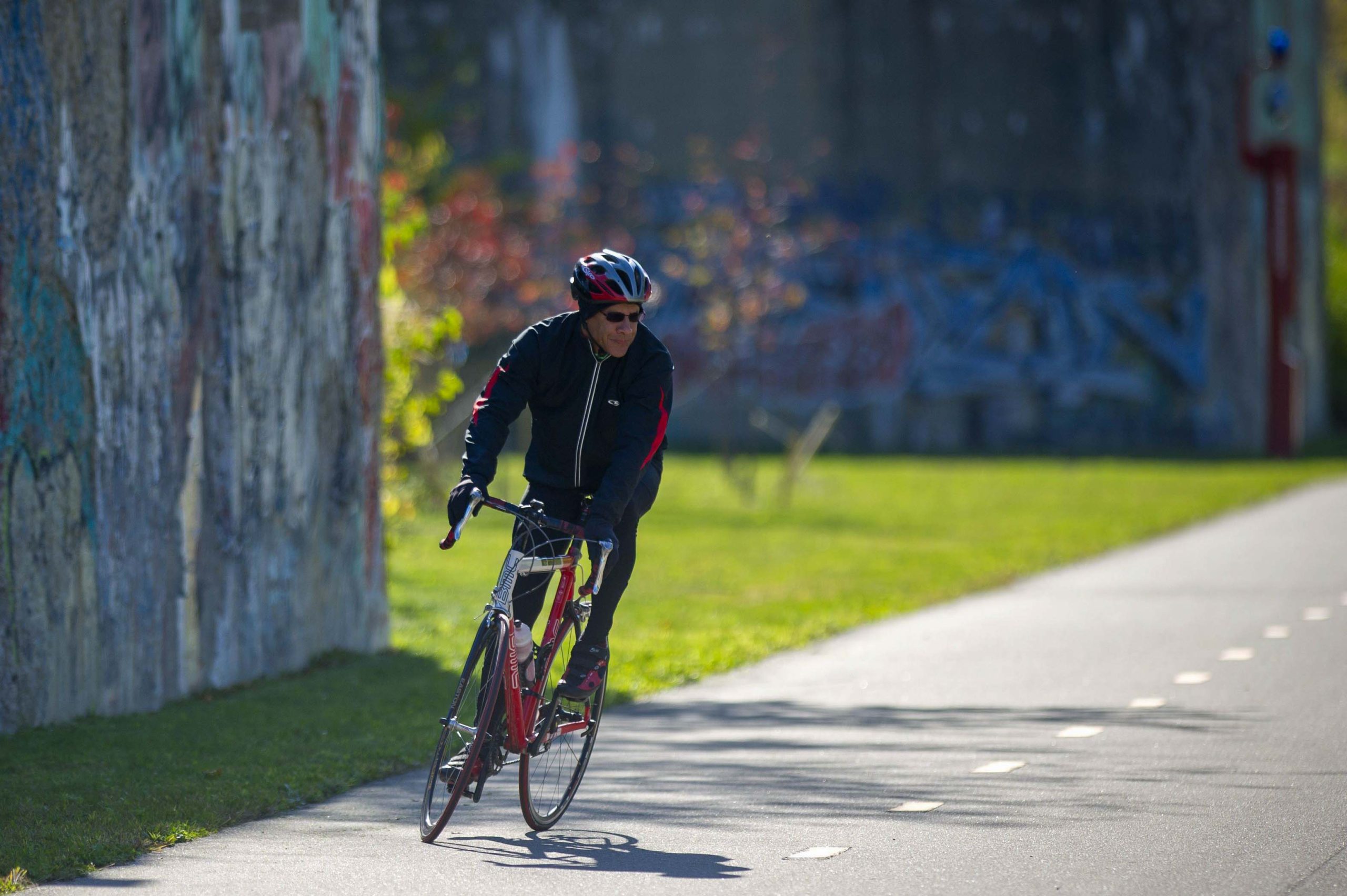
One of the most accessible destinations for visitors is the Detroit Riverfront, which is home to the Dequindre Cut Greenway, a 2-mile rail-trail dotted with dozens of murals by local and international artists.
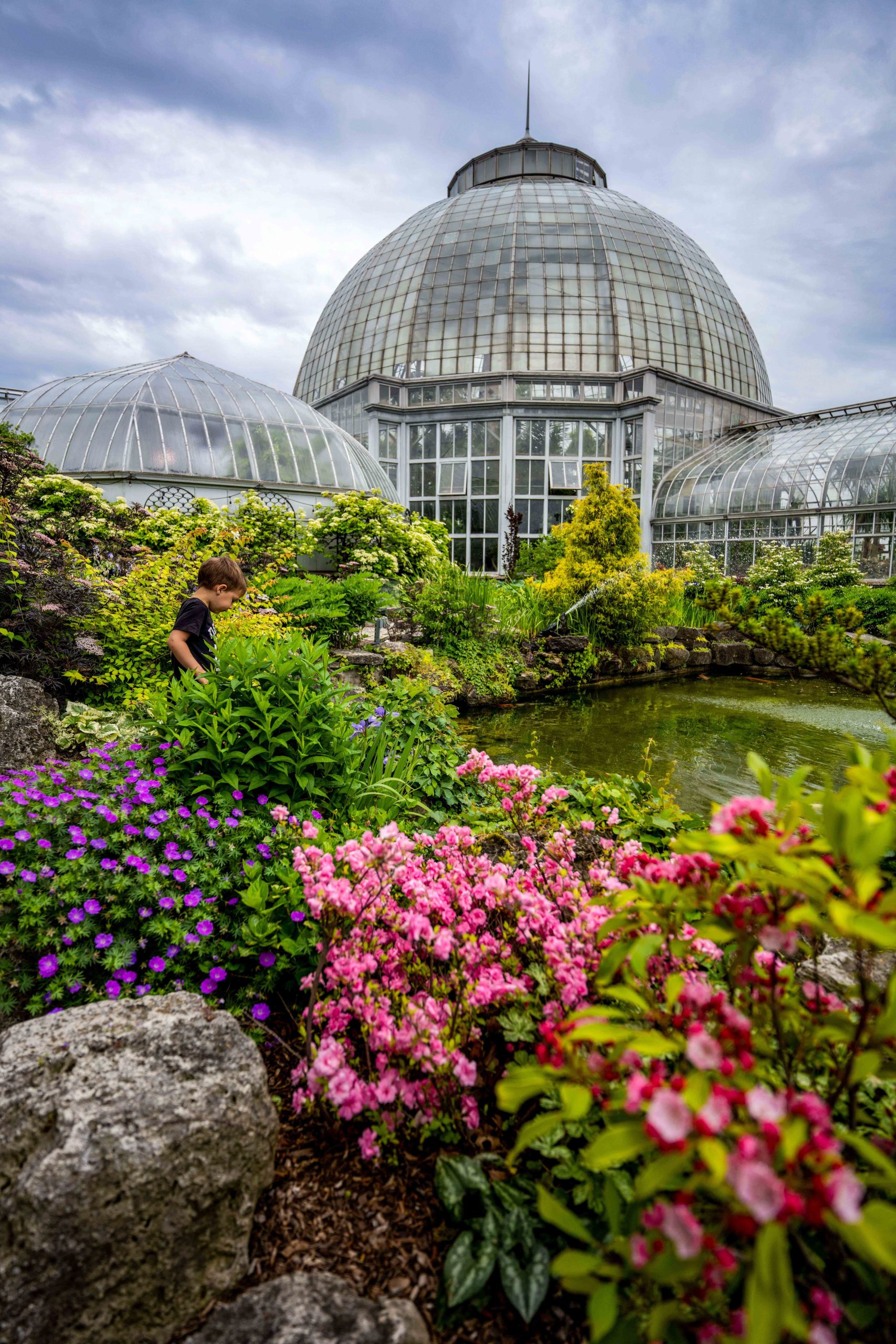
A little farther along the river, Milliken State Park and Harbor provides a place to fish, picnic and simply enjoy the waterfront. Farther down the river still is Belle Isle, an urban gem offering beaches, wildlife viewing and historic attractions, like the Anna Scripps Whitcomb Conservatory and Belle Isle Aquarium.
From Detroit to Windsor: Trails on the Canadian side
Michiganders who cross the Gordie Howe International Bridge can find a unique trail network on the Canadian side, with several options for day, weekend or multiday trips.
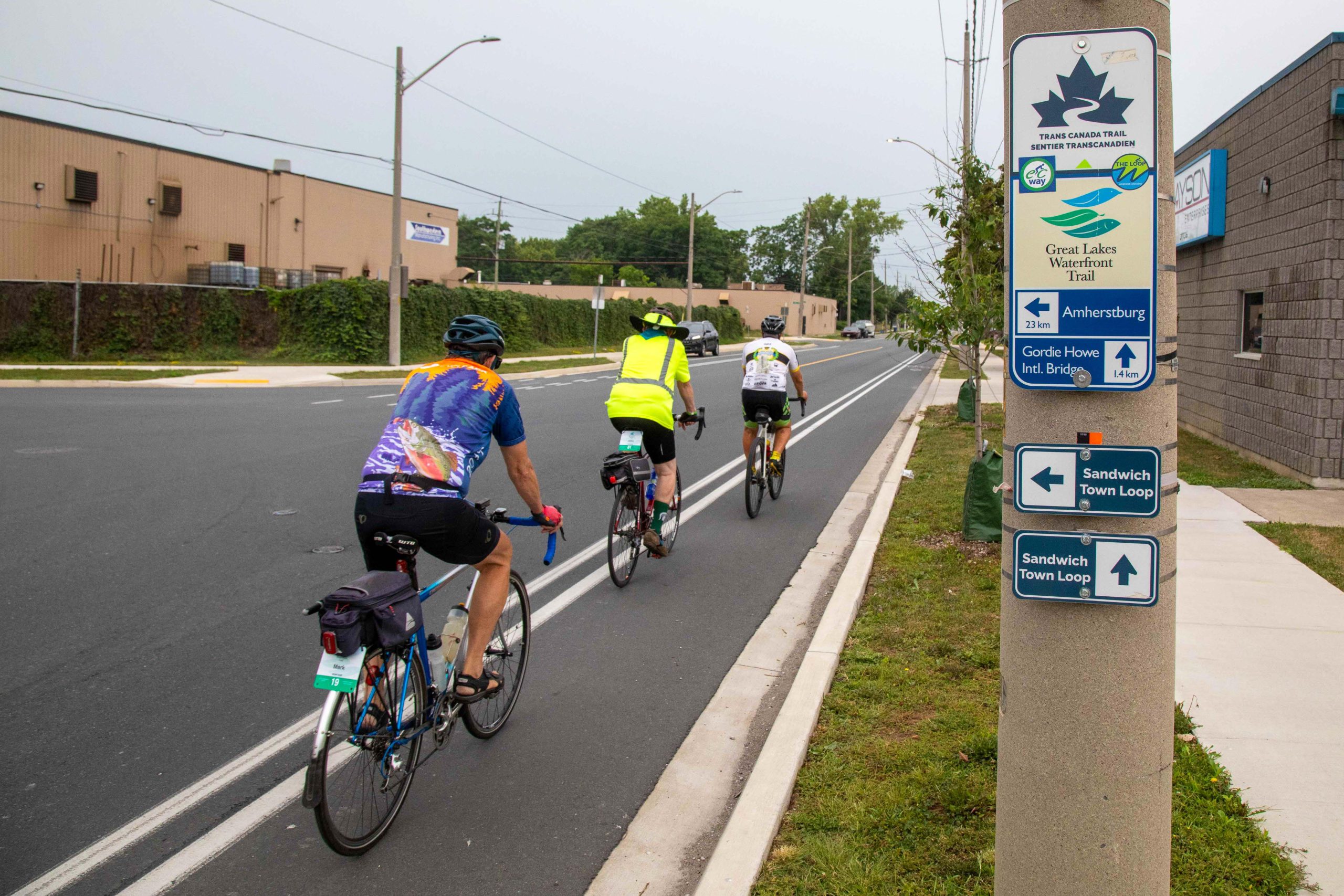
The Waterfront Regeneration Trust assembled a collection of routes connected to the Gordie Howe International Bridge, which include:
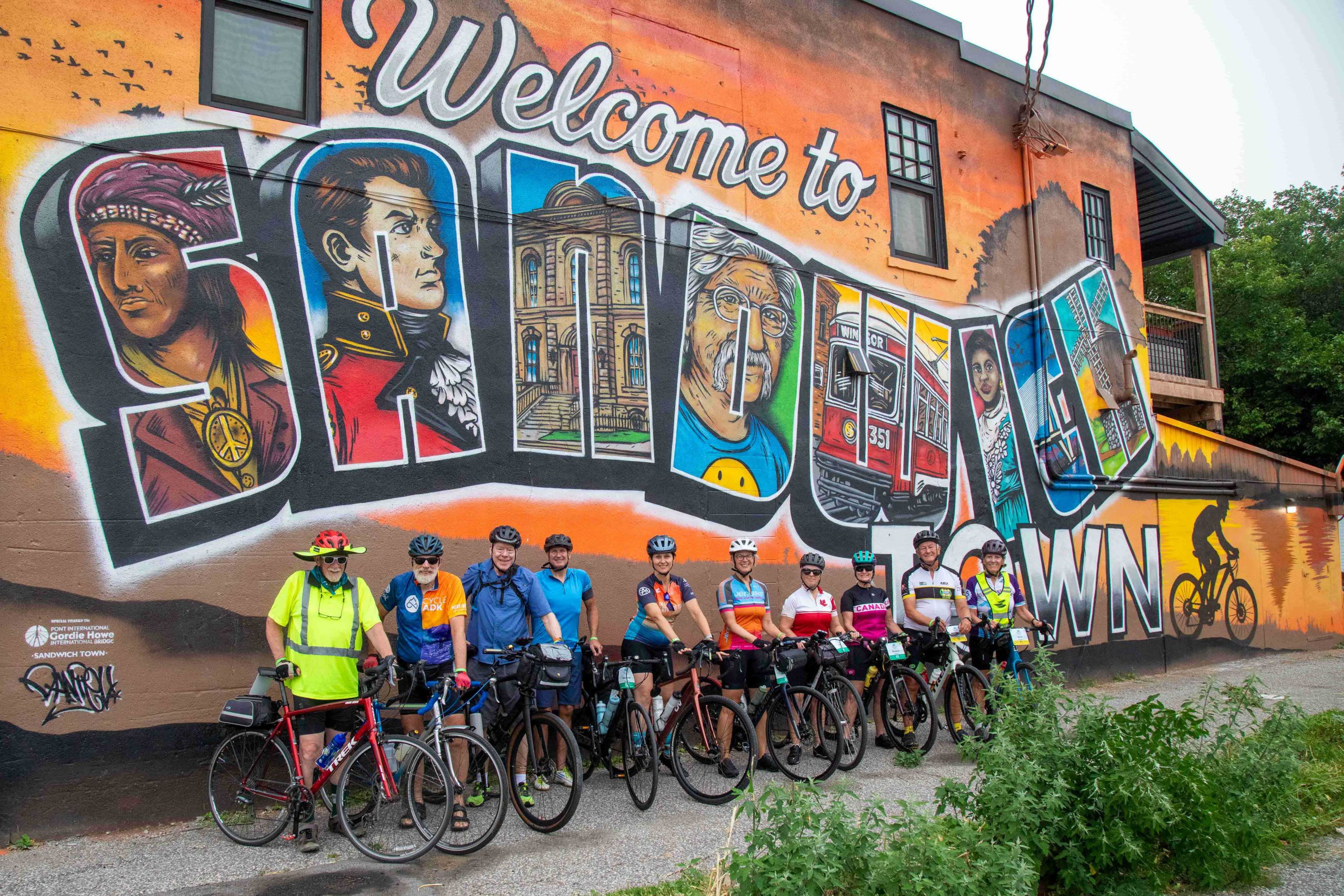
- Sandwich Town Loop: A 6.2-mile loop with craft brewery and historic sites, including Sandwich Town First Baptist Church, a prominent stop on the Underground Railroad.
- Great Lakes Waterfront Trail Lake Erie: Ontario’s signature cycling long-distance route, visiting over 170 communities along the Canadian shores of the Great Lakes, from the Quebec border on the St. Lawrence River to Sault Ste. Marie, with pockets on Lake Superior.
- Wine Trails: Beginning and ending in Kingsville, the Wine Trails link the communities of Kingsville, Colchester and Harrow, with opportunities to visit several wineries along the way and scenic Colchester Beach over the three- to five-hour ride.
Where two trail networks meet
For long-distance hikers and cyclists, the bridge represents something bigger than a way to spend a sunny afternoon. Rather, the bridge offers a chance to incorporate two of North America’s major trail networks.
The North Country National Scenic Trail stretches about 4,800 miles across eight northern states, from North Dakota to Vermont. In Michigan, it forms part of the Iron Belle Trail system, whose hiking route stretches from Belle Isle in Detroit to Ironwood in the Upper Peninsula.
Across the river, the Trans Canada Trail spans more than 12,400 miles through all 10 provinces and three territories. It connects thousands of communities across Canada and is recognized as the world’s longest recreational trail network.
The bridge doesn’t make those two long-distance trails a single, continuous route, but it creates an international connection between them.
For someone planning a multiday adventure, that’s significant, because the river that once represented the end of the trail can now be used as part of their route.
“It is a privilege to now be able to welcome even more neighbors onto our incredible trails system,” said Kate Lemon, North Country Trail Association marketing and communications manager. “It’s also a gift to be invited to enjoy what they have to offer.”
A gateway to an international adventure
When the bridge opened in August, 3,400 people crossed on the very first day.
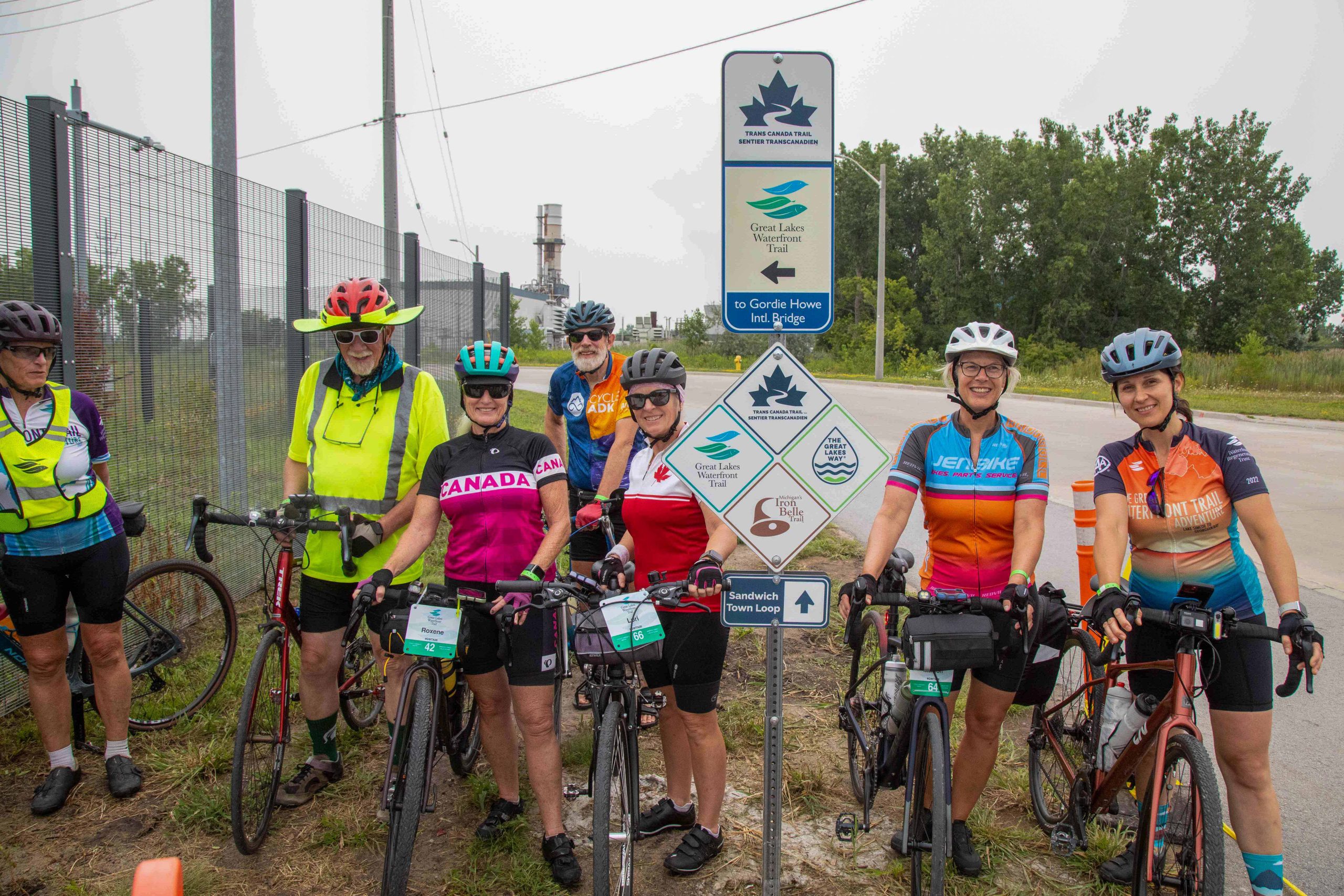
Among them were 100 cyclists from Canada and the United States, who were participating in the 2026 Great Waterfront Trail Adventure, a five-day, 264-mile cycling tour through the region.
The ride was the result of four years of cross-border collaboration among trail and tourism organizations and created a glimpse of what international trail adventures the region could offer, when an international boundary is changed from an obstacle to part of the adventure.
Their trip showcased how the bridge has created a new kind of trail experience: a connection between Detroit’s growing greenway network and Windsor’s trails and, beyond them, a way to access larger systems that stretch across North America.
“The most exciting thing about the bridge is the ability to experience it with others,” said Todd Scott, Detroit Greenways Coalition executive director. “It brings out the best in everyone who’s using it.”
The journey across the bridge may take 20 minutes by bike or 45 minutes on foot, but once you reach the other side, your adventure has only just begun.
Check out previous Showcasing the DNR stories at Michigan.gov/DNRStories. To subscribe to upcoming Showcasing articles, sign up for free email delivery at Michigan.gov/DNREmail.
Un Puente hacia la Aventura: El Puente Internacional Gordie Howe crea oportunidades recreativas internacionales
Durante siglos, la gente ha encontrado maneras de cruzar el Detroit River.
Los primeros fueron viajeros Anishinaabe, remando canoas de corteza de abedul a través de sus aguas.
Después vinieron los transbordadores de vapor llevando buscadores de recreación y aventura entre Estados Unidos (Michigan) y Canadá (Ontario) a principios del siglo 20.
Luego, en 1929, los autos pudieron cruzar el Ambassador Bridge por primera vez.
Ahora, hay otra manera de hacer el viaje: a pie o en bicicleta.
Cuando el Gordie Howe International Bridge abrió su camino peatonal y de bicicleta el 5 de agosto, creó algo nuevo para viajeros — una manera simple y libre de peaje para que la gente cruce entre Detroit y Windsor sin nunca meterse detrás del volante.
El nombre del puente honra a Gordie Howe, la leyenda de Detroit Red Wings nacida en Canadá conocida como “Mr. Hockey.”

Sus dos torres de 720 pies están entre las estructuras más altas de la región, y su tramo principal es el más largo para cualquier puente atirantado en América del Norte.
El puente es el más nuevo de cuatro puntos de cruce entre Michigan y Canadá, y es el único que permite que la gente cruce a pie o en bicicleta. Los otros son el International Bridge en Sault Ste. Marie, el Blue Water Bridge en Port Huron y el Ambassador Bridge mencionado previamente en Detroit.
El viaje de un país al otro toma alrededor de 45 minutos a pie y aproximadamente 20 minutos en bicicleta, y a diferencia de para los automovilistas, no hay una tarifa para usar el puente peatonal.
Para ciclistas de larga distancia y excursionistas que aman la aventura, el puente representa un eslabón faltante entre dos sistemas de senderos extensos que se extienden a lo largo de América del Norte. Para aquellos buscando un viaje de un día más casual, el puente sirve como destino así como una nueva manera de experimentar las ciudades hermanas de Detroit y Windsor.
“El Gordie Howe International Bridge crea una conexión extraordinaria, vinculando la red de senderos de clase mundial de Michigan con nuestros vecinos en Ontario y abriendo una puerta internacional para gente viajando a pie y en bicicleta,” dijo Andrea LaFontaine, directora ejecutiva de Michigan Trails & Greenways Alliance. “Es un momento orgulloso para los senderos de Michigan, y un testimonio del poder de la defensa sostenida.”
De Windsor a Detroit: Senderos en el Lado de Michigan
Para canadienses, el puente abre la puerta a una amplia gama de aventuras urbanas de senderismo y ciclismo en el lado de Michigan del río. Durante la última década, la ribera de Detroit ha sufrido mejoras extensas, con más de $1 mil millones invertidos para transformar espacios industriales anteriores en parques vibrantes y greenways extensos.

Uno de los destinos más accesibles para visitantes es Detroit Riverfront, que es hogar del Dequindre Cut Greenway, un sendero de rieles de 2 millas salpicado con docenas de murales de artistas locales e internacionales.
Un poco más allá del río, Milliken State Park and Harbor proporciona un lugar para pescar, hacer picnic y simplemente disfrutar de la ribera. Más allá del río aún está Belle Isle, una joya urbana ofreciendo playas, visualización de vida silvestre y atracciones históricas, como la Anna Scripps Whitcomb Conservatory y Belle Isle Aquarium.
De Detroit a Windsor: Senderos en el Lado Canadiense
Michiganders que cruzan el Gordie Howe International Bridge pueden encontrar una red de senderos única en el lado canadiense, con varias opciones para viajes de un día, fin de semana o de múltiples días.
El Waterfront Regeneration Trust reunió una colección de rutas conectadas al Gordie Howe International Bridge, que incluyen:
- Sandwich Town Loop: Un circuito de 6.2 millas con cervecería artesanal y sitios históricos, incluyendo Sandwich Town First Baptist Church, una parada prominente en el Underground Railroad.
- Great Lakes Waterfront Trail Lake Erie: La ruta de ciclo de larga distancia de firma de Ontario, visitando más de 170 comunidades a lo largo de las costas canadienses de los Great Lakes, desde la frontera de Quebec en el St. Lawrence River hasta Sault Ste. Marie, con secciones en Lake Superior.
- Wine Trails: Comenzando y terminando en Kingsville, los Wine Trails vinculan las comunidades de Kingsville, Colchester y Harrow, con oportunidades de visitar varias bodegas en el camino y la pintoresca Colchester Beach durante el paseo de tres a cinco horas.
Donde Dos Redes de Senderos se Encuentran
Para excursionistas y ciclistas de larga distancia, el puente representa algo más grande que una manera de pasar una tarde soleada. Más bien, el puente ofrece una oportunidad de incorporar dos de las redes de senderos principales de América del Norte.
El North Country National Scenic Trail se extiende alrededor de 4,800 millas a lo largo de ocho estados del norte, desde North Dakota hasta Vermont. En Michigan, forma parte del sistema Iron Belle Trail, cuya ruta de senderismo se extiende desde Belle Isle en Detroit hasta Ironwood en la Upper Peninsula.
A lo largo del río, el Trans Canada Trail se extiende más de 12,400 millas a través de 10 provincias y tres territorios. Conecta miles de comunidades a lo largo de Canadá y es reconocido como la red de senderos recreativos más larga del mundo.
El puente no hace que esos dos senderos de larga distancia sean una ruta única y continua, pero crea una conexión internacional entre ellos.
Para alguien planeando una aventura de múltiples días, eso es significativo, porque el río que una vez representaba el fin del sendero ahora puede ser usado como parte de su ruta.
“Es un privilegio ahora poder bienvenida aún más vecinos en nuestro increíble sistema de senderos,” dijo Kate Lemon, gerente de marketing y comunicaciones de North Country Trail Association. “También es un regalo ser invitado a disfrutar lo que tienen para ofrecer.”
Una Puerta hacia una Aventura Internacional
Cuando el puente abrió en agosto, 3,400 personas cruzaron en el primer día.
Entre ellos había 100 ciclistas de Canadá y Estados Unidos, quienes estaban participando en el 2026 Great Waterfront Trail Adventure, un tour de ciclismo de cinco días y 264 millas a través de la región.
El paseo fue el resultado de cuatro años de colaboración transfronteriza entre organizaciones de senderos y turismo y creó un vistazo de qué aventuras internacionales de senderos la región podría ofrecer, cuando una frontera internacional se cambia de un obstáculo a parte de la aventura.
Su viaje mostró cómo el puente ha creado un nuevo tipo de experiencia de sendero: una conexión entre la red de greenway creciente de Detroit y los senderos de Windsor y, más allá de ellos, una manera de acceder a sistemas más grandes que se extienden a lo largo de América del Norte.
“Lo más emocionante del puente es la capacidad de experimentarlo con otros,” dijo Todd Scott, director ejecutivo de Detroit Greenways Coalition. “Saca lo mejor en todos quienes lo están usando.”
El viaje a lo largo del puente puede tomar 20 minutos en bicicleta o 45 minutos a pie, pero una vez que llegas al otro lado, tu aventura apenas ha comenzado.