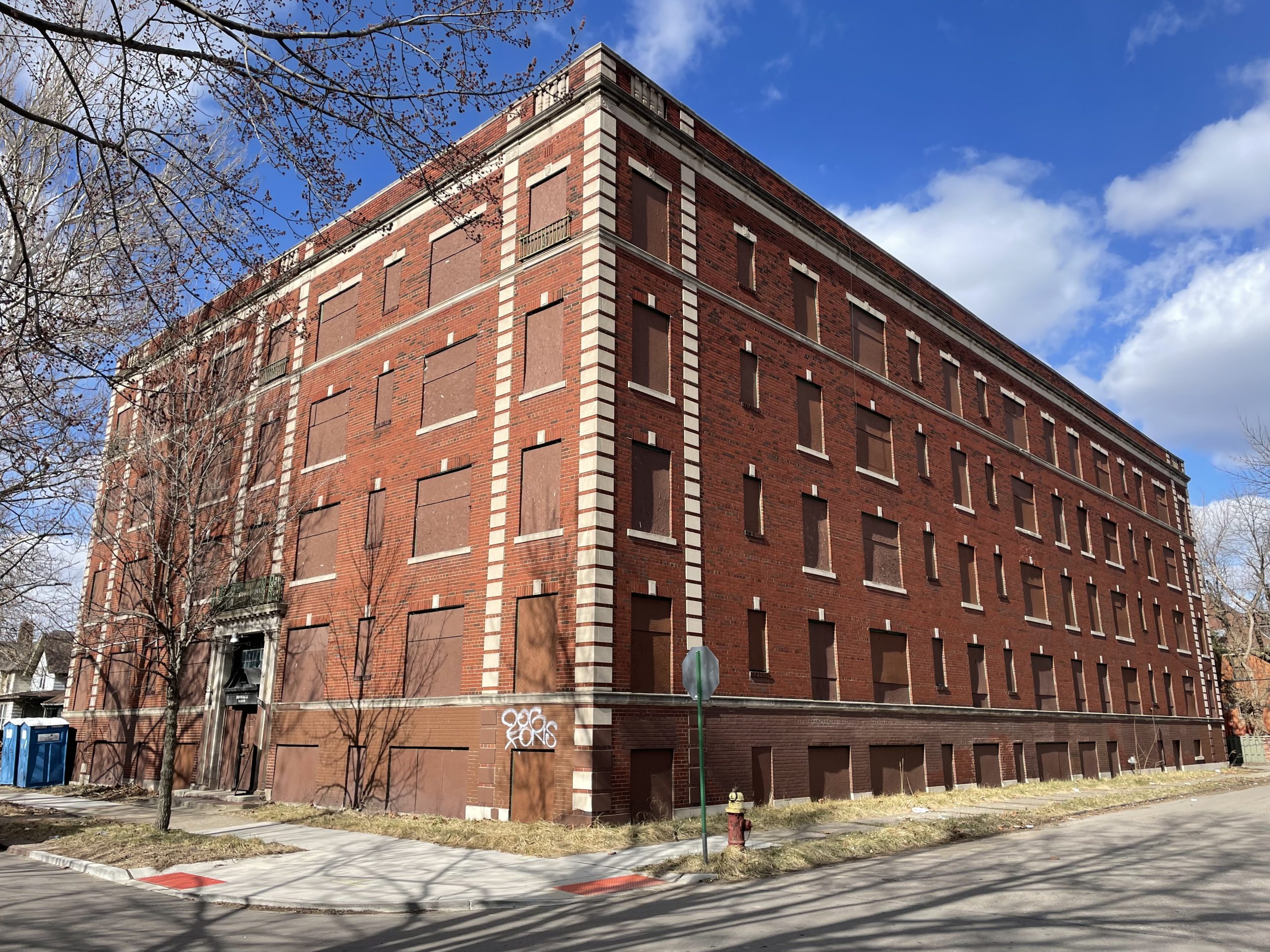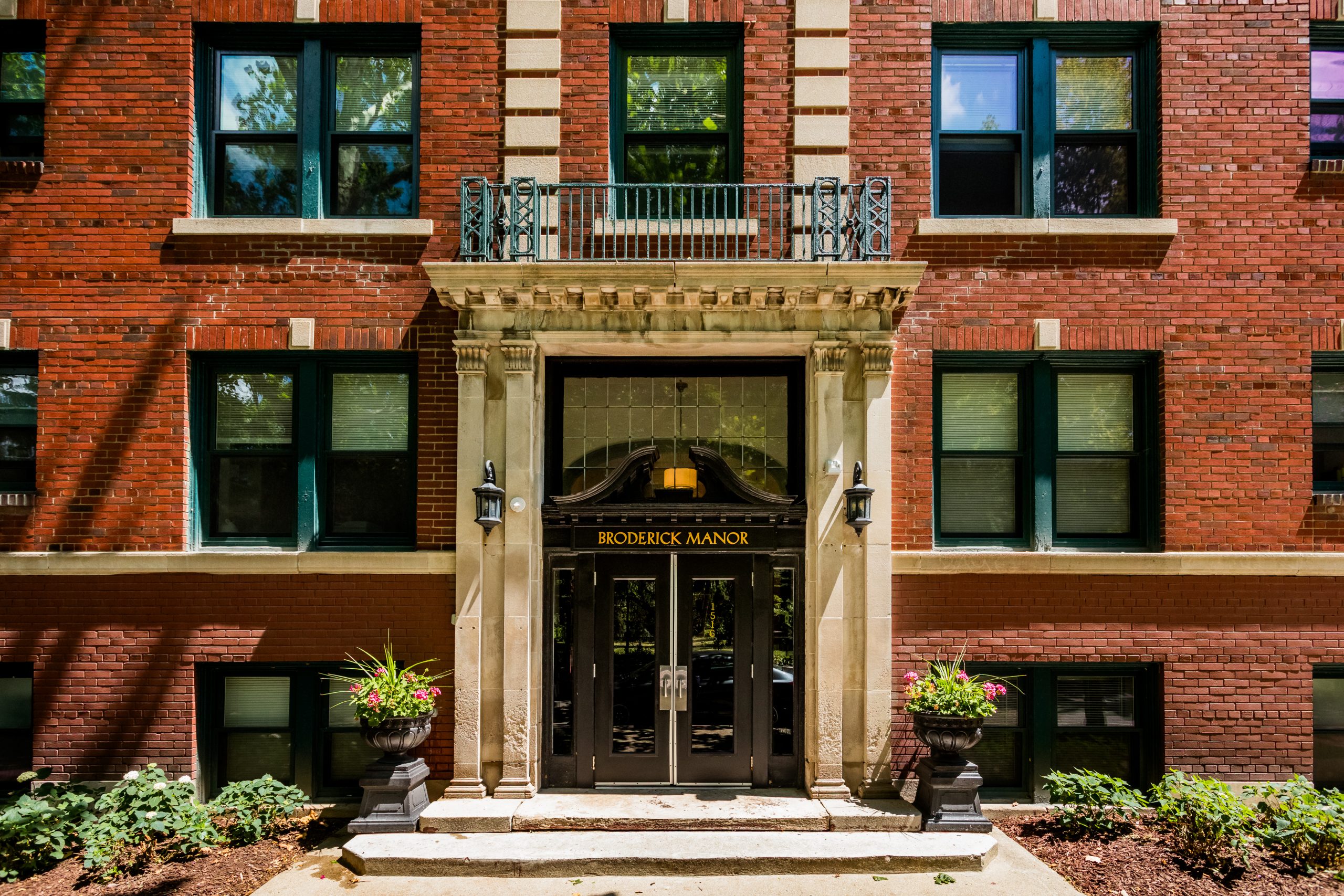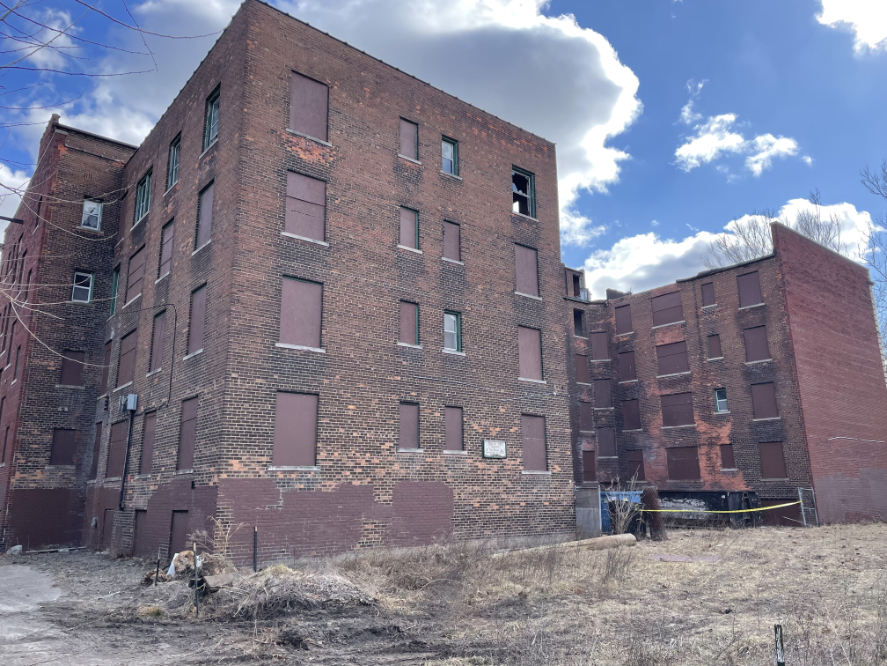



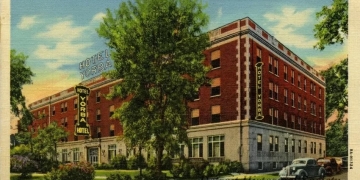
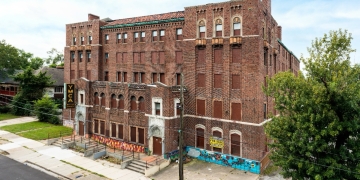















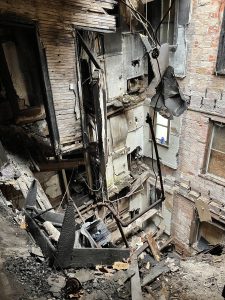
For more than a decade, Broderick Manor stood vacant at the corner of Vinewood Street and Shady Lane in Southwest Detroit. Fires had damaged the building, the roof had deteriorated, and at one point, an entire section of its upper floors had collapsed into the basement.
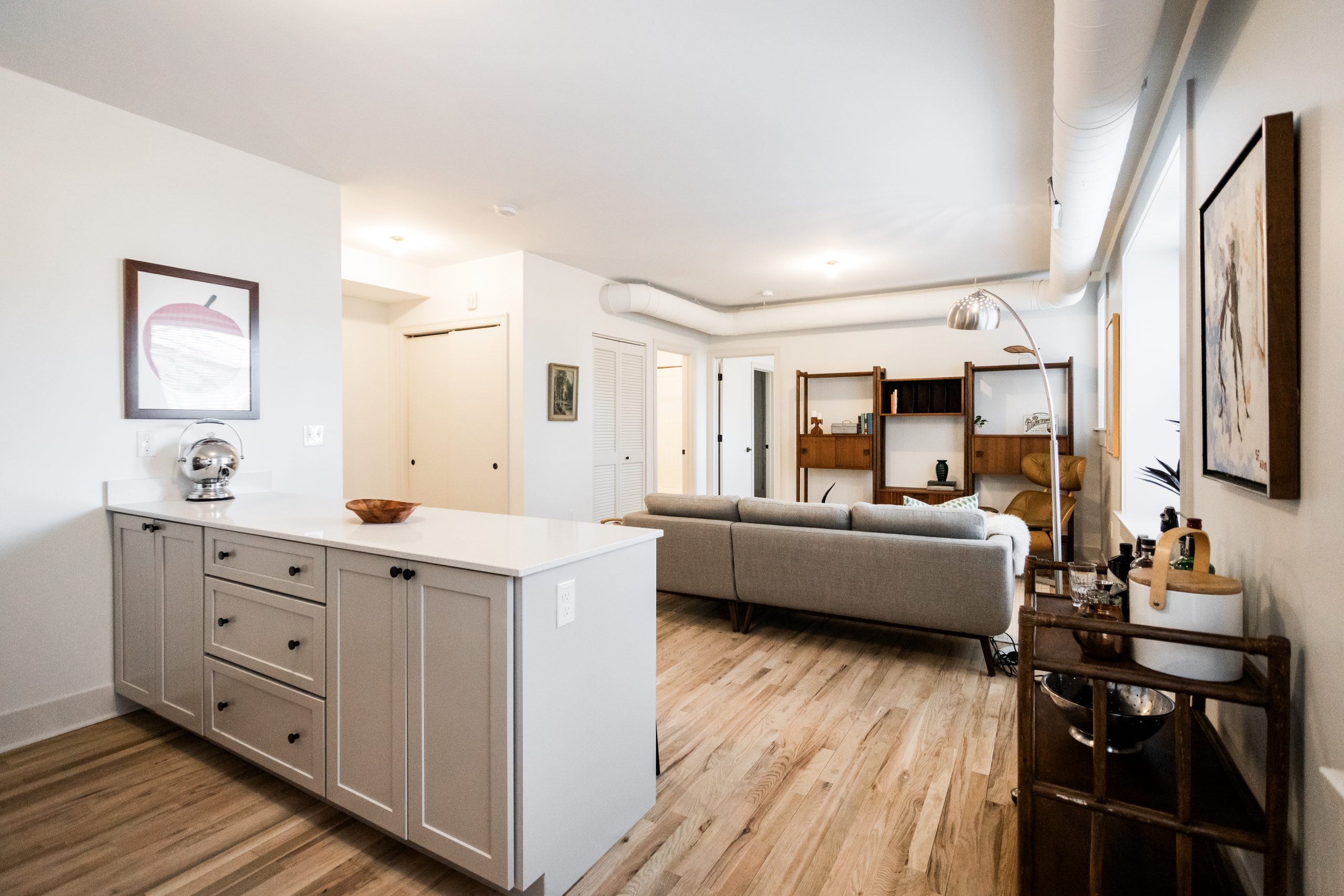
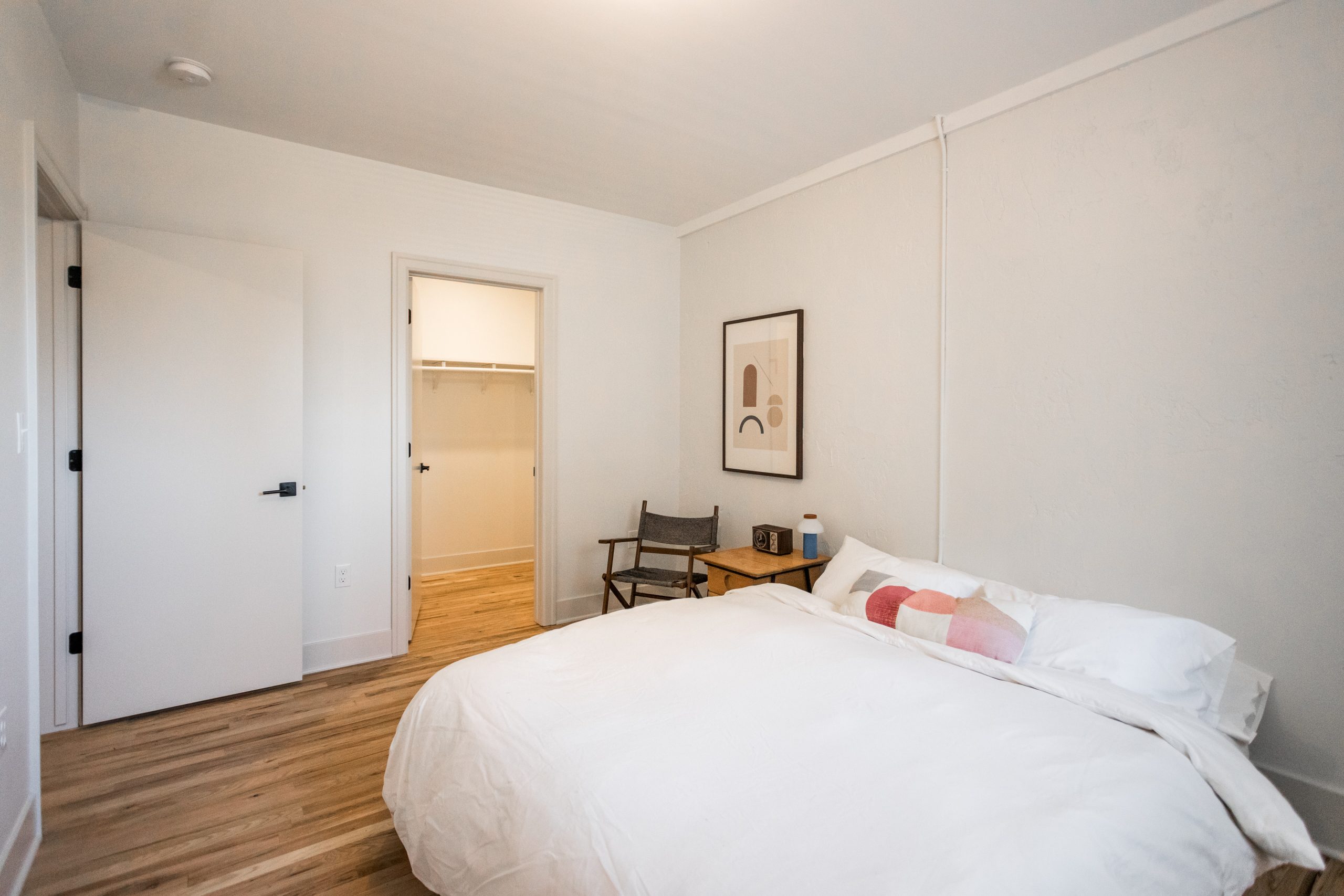
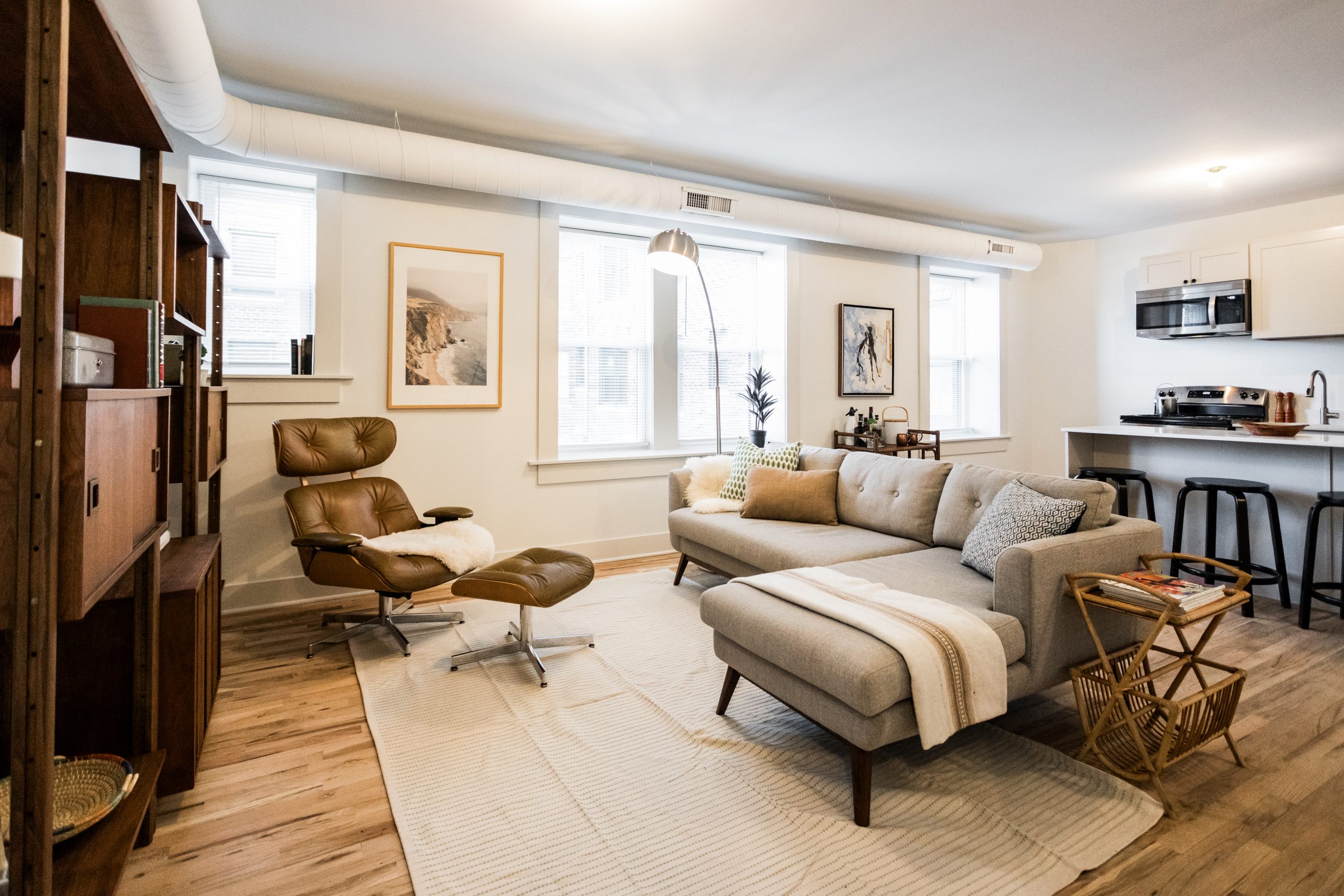
The historic apartment building in Hubbard Farms was eventually placed on the city’s demolition list. City records confirm that the building was damaged by fires in August 2011 and remained vacant afterward. Today, its windows are restored, its apartments are occupied, and a building once at risk of disappearing has returned to residential use.
“Bringing Broderick back to life began with stabilizing what remained.” said Devon Caldwell, principal and co-founder of Inkwell Partners, the Detroit development company behind the rehabilitation. Inkwell closed on the property in spring 2022 and spent the rest of that year and 2023 on stabilization work before full construction began in early 2024. Replacing the roof alone cost approximately $500,000, part of an investment that ultimately reached about $10 million.
As the work progressed, Inkwell had to show the city that the building was moving toward rehabilitation. Caldwell noted the company submitted progress reports, photographs and proof of spending every 45 days.
He explained financing came from Capital Impact Partners, Invest Detroit, the Strategic Neighborhood Fund run in partnership by Invest Detroit and the City of Detroit, and private equity. Unlike earlier proposals, the completed project did not use low-income housing tax credits. It received a Neighborhood Enterprise Zone tax abatement and a temporary property-tax break designed to encourage housing rehabilitation.
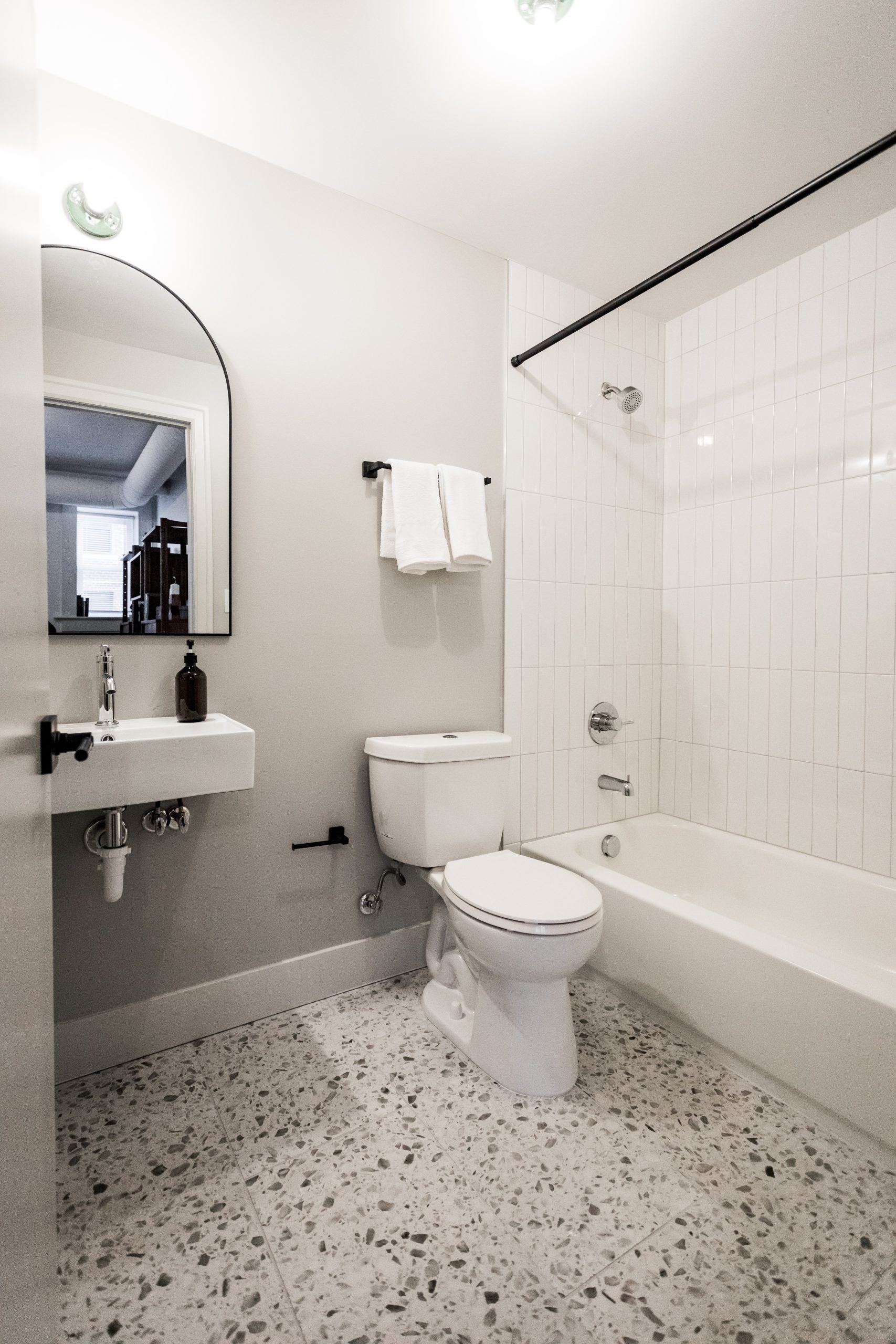
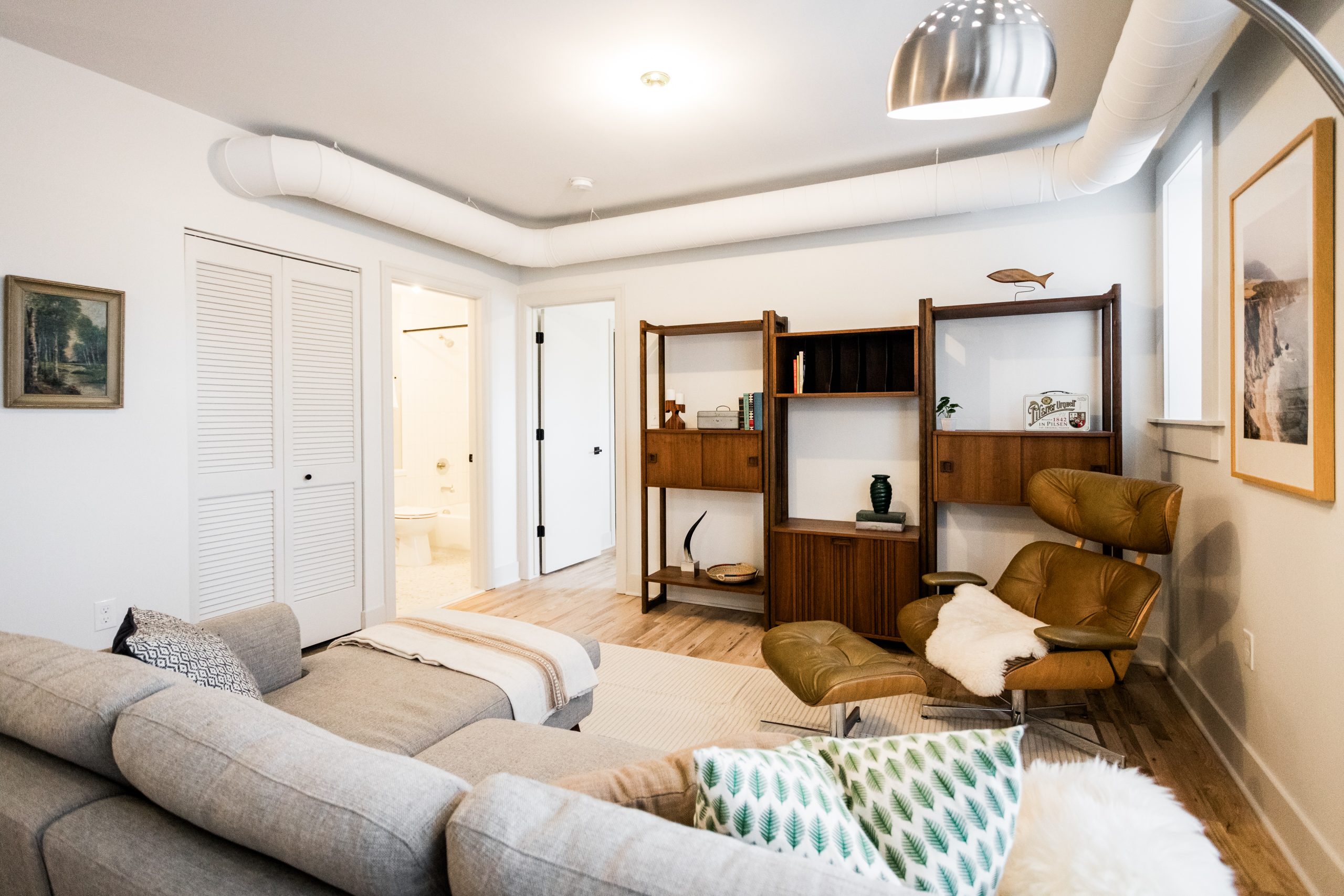
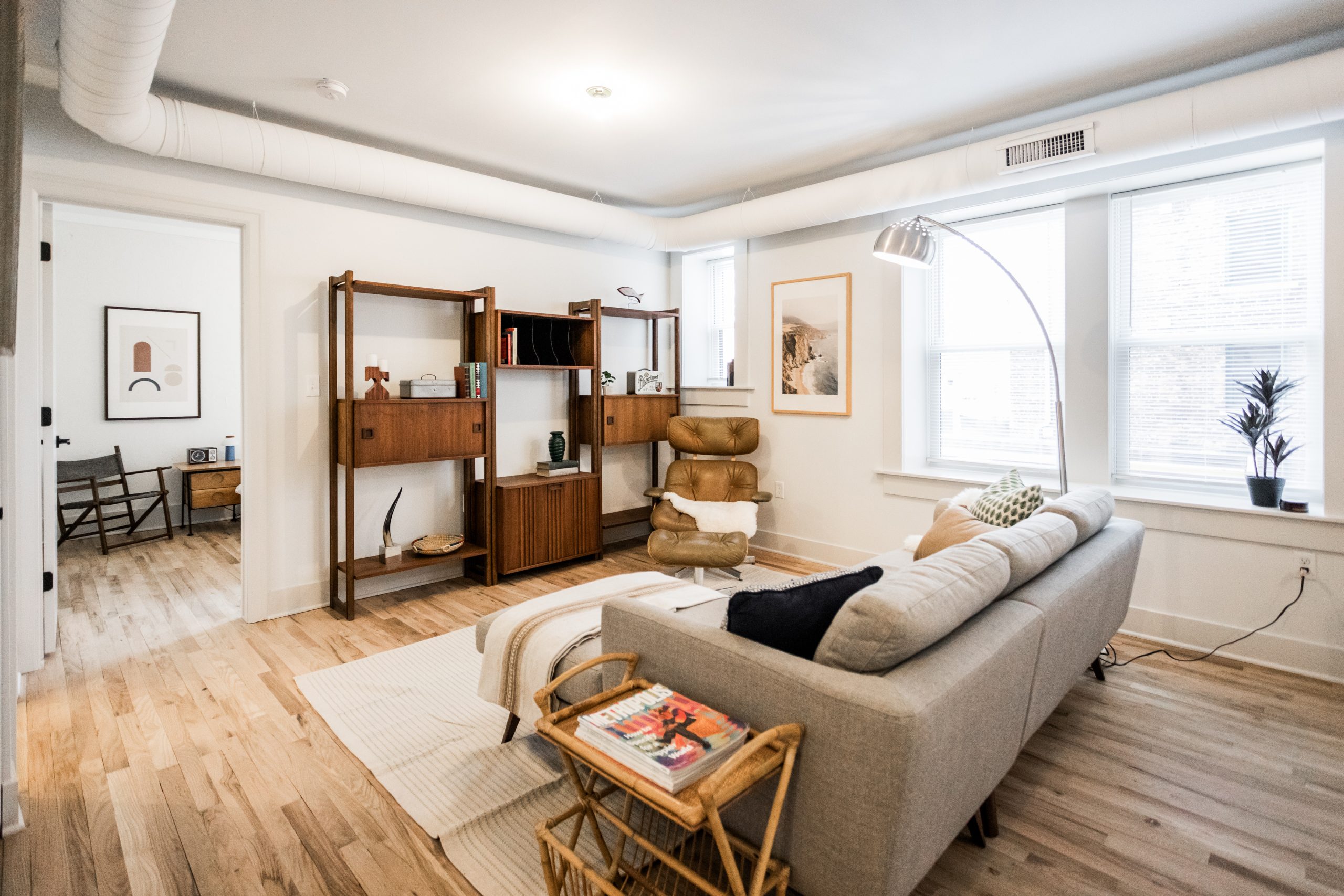
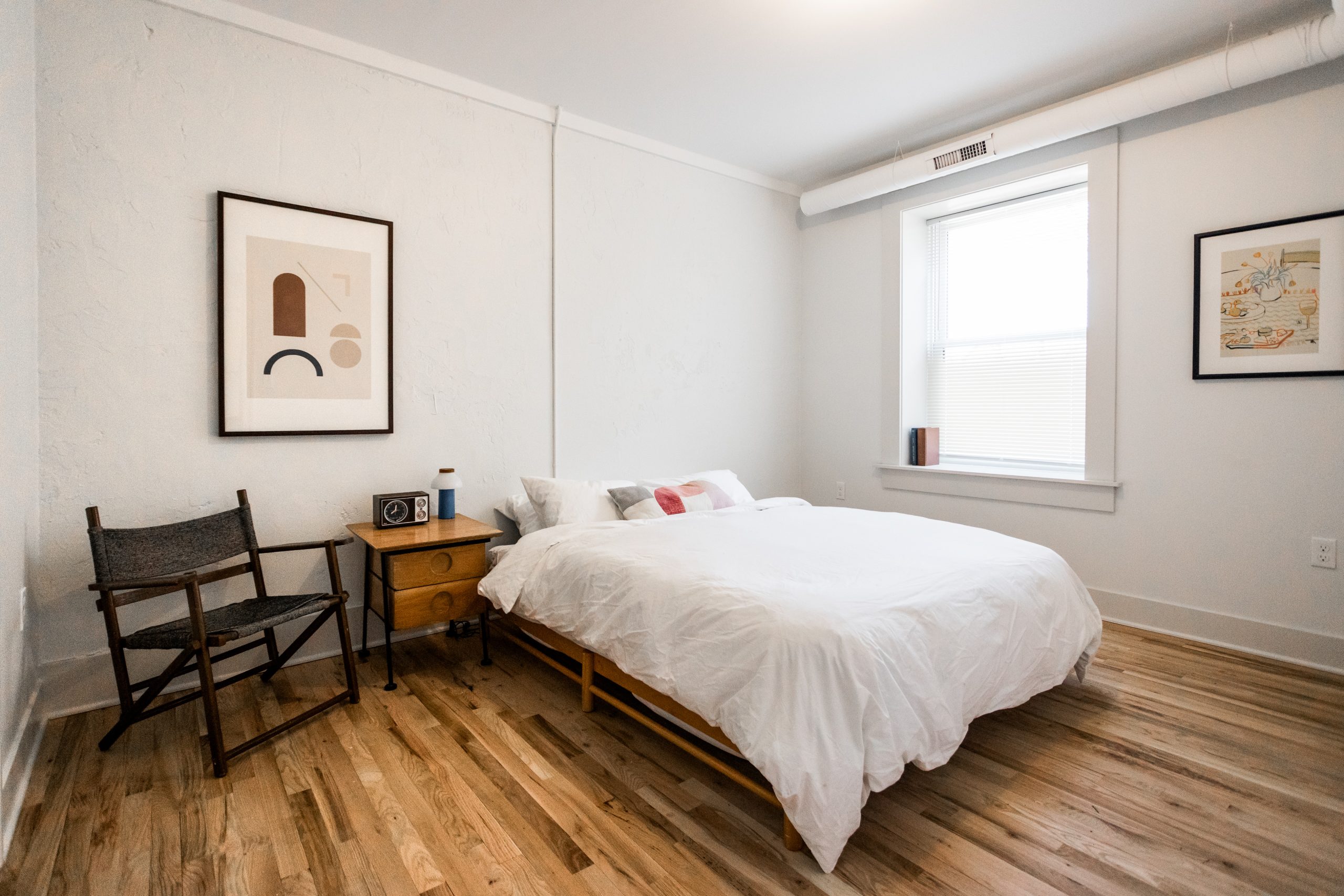
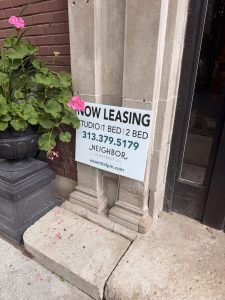
By summer 2025, Inkwell began leasing 56 apartments after more than a decade of vacancy. During EL CENTRAL’s visit, management reported only two available units with rents ranging from $845 for the least expensive units to $1,395 for larger one-bedroom apartments; two-bedroom units started at about $1,245. Caldwell described the rents as affordable to households earning roughly 45 to 70 percent of area median income.
For resident Abbie Griffith, that value is part of what makes Broderick feel like a good place to live. “When you compare the rent to what you’re getting in terms of the facilities and overall quality, it’s a better setup than other places I’ve seen around the city,” Griffith said.
Janet Ray, a Southwest Detroit resident for 37 years who lives on Hubbard Street, remembers a very different neighborhood. When she first moved to the area, she recalled Clark Park was a place residents avoided at night. Her home was broken into once, and her car was stolen twice.
“I have not had any crime against myself, my family, my property, houses, or cars in recent years,” Ray said. Ray believes restoring vacant buildings such as Broderick Manor has contributed to that change. “Now the building is full of life. There are no broken windows.”
For Ray, occupied and maintained buildings make the neighborhood safer and more walkable. She also supports what she calls hyper-local investing. “The current owners are from our community. If we can keep wealth creation in our neighborhood, that’s a very positive trend,” she said.
But Ray worries whether longtime Southwest Detroit residents can afford to stay: “I have six children. None of them live on my block anymore. One of my adult children purchased a home in Allen Park because it was affordable.”
Ray acknowledged that construction materials and labor have become more expensive, but she also believes newcomers arriving from communities with higher housing costs can view Detroit rents as inexpensive, contributing to a higher rental floor in the neighborhood.
Are any of the local residents benefiting from this redevelopment?” Ray asked. She sees housing affordability as connected not only to rents and property values, but also to the incomes of Detroit residents.
Caldwell argues that the company’s focus on vacant buildings allows it to add housing without directly displacing residents already living in those properties. “Our secret sauce is being incredibly focused on investing behind the walls and the systems that we need to modernize, and then not over-investing and making things too fancy that the rent has to be way higher than people can afford,” Caldwell said.
Caldwell also acknowledged that housing costs in the neighborhood have increased and that redevelopment has played some role. At the same time, he pointed to sharply higher construction and operating costs as another part of the equation.
For Inkwell, Caldwell said, the objective with many of its Southwest Detroit properties is long-term ownership rather than completing projects and quickly selling them. The company has committed to holding most of its properties in the neighborhood for at least 10 years, he added.
Caldwell sees that preserving the character of an old building and respecting the identity of the surrounding neighborhood are connected. He said losing the cultural character that makes Southwest Detroit distinctive would undermine one of the reasons people are attracted to the neighborhood in the first place. “We try to honor the history and the character of the building in the same way that we try to honor the history and the character of the community,” Caldwell said.
Griffith values being within walking distance of Honey Bee Market, Clark Park, restaurants, the riverfront and community events. “Southwest is such a vibrant community within Detroit, it’s hard for me to imagine living anywhere else,” Griffith said.
Ray believes welcoming new investment and protecting that sense of community do not have to be opposing ideas. “Southwest Detroit is big enough to hold everyone,” Ray added, while emphasizing that newcomers should understand the neighborhood’s history, culture and what it means to be a neighbor.
Durante más de una década, Broderick Manor estuvo vacío en la esquina de Vinewood Street y Shady Lane en Southwest Detroit. Los incendios habían dañado el edificio, el techo se había deteriorado, y en un punto, una sección completa de sus pisos superiores se había desplomado al sótano.
El edificio histórico de apartamentos en Hubbard Farms eventualmente fue puesto en la lista de demolición de la ciudad. Los registros de la ciudad confirman que el edificio fue dañado por incendios en agosto de 2011 y permaneció vacío después. Hoy, sus ventanas están restauradas, sus apartamentos están ocupados, y un edificio una vez en riesgo de desaparecer ha regresado al uso residencial.
“Traer a Broderick de vuelta a la vida comenzó con estabilizar lo que quedaba,” dijo Devon Caldwell, principal y co-fundador de Inkwell Partners, la compañía de desarrollo de Detroit detrás de la rehabilitación. Inkwell cerró en la propiedad en primavera de 2022 y pasó el resto de ese año y 2023 en trabajo de estabilización antes de que la construcción completa comenzara a principios de 2024. Reemplazar el techo solo costó aproximadamente $500,000, parte de una inversión que finalmente llegó a aproximadamente $10 millones.
Conforme el trabajo progresó, Inkwell tuvo que mostrar a la ciudad que el edificio se estaba moviendo hacia rehabilitación. Caldwell señaló que la compañía presentó reportes de progreso, fotografías y prueba de gasto cada 45 días.
Él explicó que el financiamiento vino de Capital Impact Partners, Invest Detroit, el Strategic Neighborhood Fund ejecutado en asociación por Invest Detroit y la City of Detroit, y capital privado. A diferencia de propuestas anteriores, el proyecto completado no utilizó low-income housing tax credits. Recibió una Neighborhood Enterprise Zone tax abatement y un break temporal de impuestos a la propiedad diseñado para alentar rehabilitación de vivienda.
Para el verano de 2025, Inkwell comenzó a arrendar 56 apartamentos después de más de una década de vacío. Durante la visita de EL CENTRAL, la administración reportó solo dos unidades disponibles con alquileres variando de $845 para las unidades menos costosas a $1,395 para apartamentos de una recámara más grandes; unidades de dos recámaras comenzaban alrededor de $1,245. Caldwell describió los alquileres como asequibles para hogares ganando aproximadamente 45 a 70 por ciento del área ingreso mediano.
Para la residente Abbie Griffith, ese valor es parte de lo que hace que Broderick se sienta como un buen lugar para vivir. “Cuando comparas el alquiler con lo que estás obteniendo en términos de las instalaciones y calidad general, es un mejor arreglo que otros lugares que he visto alrededor de la ciudad,” dijo Griffith.
Janet Ray, una residente de Southwest Detroit durante 37 años que vive en Hubbard Street, recuerda un barrio muy diferente. Cuando se mudó por primera vez al área, recordó que Clark Park era un lugar que residentes evitaban por la noche. Su casa fue allanada una vez, y su coche fue robado dos veces.
“No he tenido ningún crimen en contra de mí, mi familia, mi propiedad, casas, o autos en años recientes,” dijo Ray. Ray cree que restaurar edificios vacíos como Broderick Manor ha contribuido a ese cambio. “Ahora el edificio está lleno de vida. No hay ventanas rotas.”
Para Ray, edificios ocupados y mantenidos hacen el barrio más seguro y más caminable. También apoya lo que ella llama inversión hiper-local. “Los dueños actuales son de nuestra comunidad. Si podemos mantener la creación de riqueza en nuestro barrio, esa es una tendencia muy positiva,” dijo ella.
Pero Ray se preocupa si residentes de largo tiempo de Southwest Detroit pueden permitirse quedarse: “Tengo seis hijos. Ninguno de ellos vive en mi cuadra más. Uno de mis hijos adultos compró una casa en Allen Park porque era asequible.”
Ray reconoció que los materiales de construcción y la mano de obra se han vuelto más caros, pero también cree que nuevos llegados provenientes de comunidades con costos de vivienda más altos pueden ver alquileres de Detroit como inexpensivos, contribuyendo a un piso de alquiler más alto en el barrio.
¿Hay algunos residentes locales beneficiándose de este redevelopment?” preguntó Ray. Ella ve asequibilidad de vivienda conectada no solo a alquileres y valores de propiedad, sino también a los ingresos de residentes de Detroit.
Caldwell argumenta que el enfoque de la compañía en edificios vacíos le permite añadir vivienda sin directamente desplazar residentes ya viviendo en esas propiedades. “Nuestro ingrediente secreto es estar increíblemente enfocados en invertir detrás de las paredes y los sistemas que necesitamos modernizar, y luego no sobre-invertir e hacer las cosas demasiado sofisticadas que el alquiler tiene que ser mucho más alto de lo que la gente puede permitirse,” dijo Caldwell.
Caldwell también reconoció que los costos de vivienda en el barrio han aumentado y que redevelopment ha jugado algún papel. Al mismo tiempo, señaló a costos de construcción y operación considerablemente más altos como otra parte de la ecuación.
Para Inkwell, Caldwell dijo, el objetivo con muchas de sus propiedades de Southwest Detroit es propiedad a largo plazo en lugar de completar proyectos y venderlos rápidamente. La compañía se ha comprometido a mantener la mayoría de sus propiedades en el barrio durante al menos 10 años, agregó.
Caldwell ve que preservar el carácter de un edificio viejo y respetar la identidad del barrio circundante están conectados. Dijo que perder el carácter cultural que hace a Southwest Detroit distintivo socavaría una de las razones por las cuales la gente está atraída al barrio en primer lugar. “Tratamos de honrar la historia y el carácter del edificio de la misma manera que tratamos de honrar la historia y el carácter de la comunidad,” dijo Caldwell.
Griffith valora estar dentro de distancia caminable de Honey Bee Market, Clark Park, restaurantes, la ribera y eventos comunitarios. “Southwest es tal comunidad vibrante dentro de Detroit, es difícil para mí imaginar vivir en cualquier otro lado,” dijo Griffith.
Ray cree que dar la bienvenida a nueva inversión y proteger ese sentido de comunidad no tienen que ser ideas opuestas. “Southwest Detroit es bastante grande para sostener a todos,” agregó Ray, mientras enfatizaba que nuevos llegados deberían entender la historia del barrio, cultura y lo que significa ser un vecino.