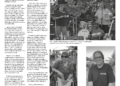

























From October 12-16, Detroit’s Huntington Place was the site of the Battery Show North America.
It was attended by more than a thousand suppliers and exhibitors and 16,000 attendees despite what many thought would have been a diminished role with the reduced role of EV production by American auto producers. However, the increased price in energy simply shifted the focus from EV’s to Energy Storage.
Here is a simple explanation: electric rates in the Detroit area are around $.11 per KW hour a 1am compared to $.36 per KW hour from 3pm to 6pm. The more than 300 percent difference between the two rates means that charging a battery (car or home backup) at the low night rate make a significant enough difference that a home battery backup can be economically justified. It makes sense to buy and store electricity when it is cheap and use the stored energy during peak hours. While the concept is not new, it is becoming a practical application for a residential backup battery to also provide some protection for homeowners in the case of a power failure.
The conference saw every aspect of the battery industry represented. More than 250 expert speakers delivered 140 hours of educational programming. Every square foot of the main display floor was filled with exhibitors from around the world and from right here in Michigan, as well.

The University of Michigan Solar Car team was on the show floor with last year’s race vehicle, the 18th of a series of vehicles powered by solar power. The team is currently building a new vehicle for the 3,000km World Solar Challenge in Darwin, Australia. Winners of 10 National Solar powered championships, the UM students took a Solar Trek from Michigan to California earlier this year on strictly solar power. The University of Michigan has 35 years of Solar Car racing and looks forward to the innovations that will evolve from the project.