
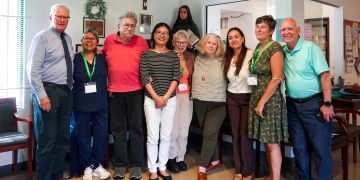



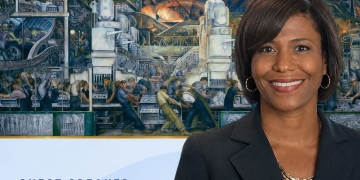











Bank of America Co-President Dean Athanasia visited Detroit recently, where he met with regional leaders about workforce development efforts supported by the bank’s local grantmaking. The grants are helping nonprofit partners connect local residents with career opportunities while addressing the talent needs of employers across the region.
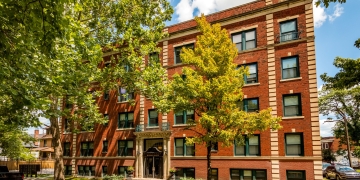
Athanasia joined Bank of America Detroit President Ed Siaje, Detroit Regional Chamber President and CEO Sandy Baruah, and Henry Ford Health Vice President of HR Planning, Development, and Belonging Catherine Susko for a tour of Henry Ford Hospital’s new patient tower development.
As Henry Ford Health continues its expansion in Detroit, developing the workforce needed to support a growing health system is also a regional priority.
The visit highlighted Bank of America’s recent $75,000 grant to the Detroit Regional Chamber Foundation in support of the Healthcare Talent Collaborative, an employer-led initiative focused on strengthening the region’s healthcare talent pipeline.
The collaborative brings together major health systems, including Henry Ford Health, Corewell Health and Trinity Health, along with education, workforce development and community organizations to connect residents with high-quality healthcare careers. One of its current efforts is supporting a new Henry Ford Health Respiratory Therapy Training program expected to launch in January 2027.
The effort comes at a time when healthcare employers across Michigan are facing significant workforce challenges. Michigan hospitals are currently facing approximately 23,000 open positions statewide, according to the Michigan Health & Hospital Association’s 2026 workforce survey.
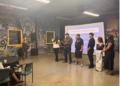
The conversation around workforce development continued following the Henry Ford Health tour. The leaders convened at the Motown Museum for a discussion about the region’s workforce needs and the role public-private collaboration can play in preparing workers for in-demand careers.
“Henry Ford Health’s expansion reflects the momentum we’re seeing across Detroit, and the impact possible when partners come together with a shared commitment to economic investment and growth in a city,” Athanasia said. “Initiatives like the Chamber’s Healthcare Talent Collaborative help build on that progress and connect people to training and meaningful careers while supporting the workforce needs of employers.”
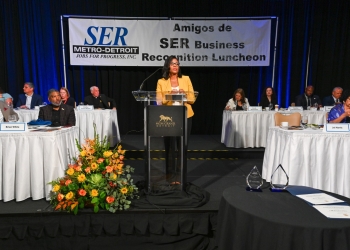
The Healthcare Talent Collaborative is one piece of Bank of America’s broader workforce investment in Metro Detroit. Over the past two years, the bank has awarded more than $1.4 million in grants to 27 local partners in support of programs that create jobs and develop leadership skills throughout the region. Among the recipients are Grow Detroit’s Young Talent, SER Metro-Detroit, The Greening of Detroit and Year Up United.
“Our local nonprofit partners understand the needs of the communities they serve and play an important role in advancing economic mobility,” said Siaje. “By supporting organizations that provide skills training, education and career pathways, we can help connect more people to livable-wage jobs, build the talent pipelines local employers need to grow and strengthen our region’s economy.
Those local partnerships are part of a much larger workforce development effort by Bank of America. Nationally, the company has invested nearly $40 million in workforce development initiatives and works with more than 100 universities and community colleges and more than 600 nonprofit partners across its U.S. markets. Bank of America also recently announced plans to hire 1,000 additional apprentices over the next two years and commit $150 million over five years to workforce development organizations nationwide.