








Suriname, Republic of Suriname (English), Republiek Suriname (Dutch), Sranankondre (Sranan Tongo), is a country located in South America. It is part of the region known as the Guyanas, along with French Guiana and the Republic of Guyana (formerly British Guiana); however, this territory was colonized by the Dutch from the Netherlands, hence it was called Dutch Guiana. Its official language remains Dutch, although Sranan Tongo, the creole language of Suriname, also plays a significant role in Surinamese identity.

In Suriname, more than 80% of its land area is covered by tropical forests, earning it a reputation as one of the greenest nations on the planet. Its economy is based on the export of raw materials such as aluminum, oil, bauxite, and gold. Most of its inhabitants live in Paramaribo. Tourists in Suriname can experience a Caribbean paradise blended with South Asian architecture.
Its flag was adopted on November 25, 1975, and consists of five horizontal stripes in green, white, red, white, and green. In the center of the red stripe is a five-pointed yellow star, symbolizing the unity of the main ethnic groups that make up Suriname’s population, as well as hope and prosperity. The color red represents progress and love. Green represents hope and fertility. White represents peace and justice.
Suriname is the smallest country on the South American mainland, and its capital is Paramaribo. It gained independence from the Kingdom of the Netherlands in 1975. Suriname is a multiethnic country; unlike other South American nations, Asian influence is strongly felt there, due to the large-scale migration of Indo-Pakistanis, Javanese, and Chinese during the 19th century, who brought with them cultural traits that remain not only in the general culture but also in traditional cuisine.
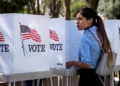
According to Rodrigo Nobile, “In 1948, [Suriname] established an administrative council, and in 1949, Surinamese citizens achieved universal suffrage. Almost a year later, the time came to exercise the right to elect their own government, independent of matters concerning foreign policy and defense. Partial independence was achieved in 1954: Suriname became an independent state within the Kingdom of the Netherlands. That year, elections were held for the Parliament. Johan Adolf Pengel, an Afro-Surinamese man, leader of the National Federation of Trade Unions of Suriname, and chairman of the National Party of Suriname (NPS), governed the country from 1958 to 1963 and was reelected with the title of “Minister-President of Suriname.”
Despite all these achievements, it was not until 1975 that Suriname gained independence from the Kingdom of the Netherlands.
The National Party of Suriname, founded in 1961, came under the leadership of Henck Alphonsus Eugène Arron in 1969, who became the party’s interim leader and would later serve as prime minister, thanks to his perseverance as a major driving force behind the independence movement.

In 1973, following the formation of a coalition between the National Party of Suriname and the following parties: the Nationalist Republican Party, the Progressive People’s Party of Suriname, and the KTPI (Kerukanan Tulodo Paranatan Ingil), the coalition won 22 of the 39 seats in the National Assembly. Following this election, Henck Alphonsus Eugène Arron was appointed prime minister, a position in which he achieved self-government for Suriname. However, the push for independence did not end until 1975.
Suriname’s history has been influenced by various cultures, not only because it lay along the migration routes of pre-Columbian ethnic groups such as the Arawak, the Wayanes, and their ties to other peoples of the modern Caribbean, but also by the tensions that arose during the period of European colonization, which began with Christopher Columbus’s sighting of the islands in 1498, though Spanish rule was not established until the 16th century.
According to Rodrigo Nobile, “After a hundred years of Spanish rule, the first Dutch settlers arrived in the early 17th century to exploit the territory, which came under the control of the Dutch West India Company, founded in 1621. Dutch rule suffered some setbacks, such as attacks and occupation by the French and English. The new hegemony would not be consolidated until 1667, with the end of the Anglo-Dutch War and the signing of the Treaty of Breda, under which the Dutch territory in North America—then called New Amsterdam, now New York—was exchanged for the English territory in northern South America, which came to be known as Dutch Guiana.”
This leads us to question the significance of this position in terms of international geopolitics. What is there—not only in terms of minerals and natural resources—but also, in terms of where one can reach from Suriname, that led the Netherlands to exchange it for New York, formerly New Amsterdam?
Surinam, República de Surinam (español), Republiek Suriname (neerlandés) Sranankondre (sranan tongo), es un país ubicado en América del Sur, forma parte de la región que se conoce como las Guyanas junto con la Guyana francesa y la República Guyana (antigua inglesa), sin embargo, este territorio fue colonizado por los neerlandeses de Países Bajos, de ahí que se le llamara la Guyana Neerlandesa. Su lengua oficial sigue siendo el neerlandés, aunque el Sranan Tongo, lengua criolla de Surinam, también tiene gran importancia para la identidad suriname.
En Surinam más del 80% de su superficie terrestre se encuentra cubierta por bosques tropicales, con lo cual se ha ganado la reputación de ser una de las naciones más verdes del planeta. Su economía está basada en la exportación de materias primas como aluminio, petróleo, bauxita y oro. La mayor parte de sus habitantes se encuentra en Paramaribo. El turismo en Surinam puede encontrar el paraíso del caribe fusionado con la arquitectura surasiática.
Su bandera fue adoptada el 25 de noviembre de 1975 y consta de cinco franjas horizontales de color verde, blanco, rojo, blanco y verde. En el centro de la franja roja se ubica una estrella amarilla de cinco picos que simboliza la unidad de los principales grupos étnicos que componen la población de suriname así como la esperanza y la prosperidad. El color rojo representa el progreso y el amor. El verde representa la esperanza y la fertilidad. El blanco representa la paz y la justicia.
Surinam es el país más pequeño de la parte continental de Sur América y su capital es Paramaribo. Alcanzó su independencia del Reino de los Países Bajos en 1975. Surinam es un país multiétnico, a diferencia de otros países de América del sur, la influencia asiática tiene gran presencia, lo anterior debido a la gran migración que hubo durante el siglo XIX de indopaquistaníes, javaneses y chinos, trayendo consigo rasgos identitarios que permanecen no sólo en la cultura general sino también en la gastronomía tradicional.
De acuerdo a Rodrigo Nobile, “En 1948 [Surinam] instituyó un consejo administrativo, y en 1949 los surinameses conquistaron el sufragio universal. Casi un año después, fue el momento de ejercer el derecho de elegir su propio gobierno, independientemente de las cuestiones concernientes a la política externa y a la defensa. La independencia parcial se alcanzó en 1954: Surinam se transformó en un Estado independiente, perteneciente al Reino de los Países Bajos. Ese año se convocó a elecciones para el Parlamento. Johan Adolf Pengel, un afrosurinamés, líder de la Federación Nacional de los Sindicatos de Surinam y presidente del Partido Nacional de Surinam (NPS), gobernó el país de 1958 a 1963, y fue reelegido con el título de ministro presidente de Surinam”.
Pese a todos estos logros, no fue sino hasta 1975 que Surinam alcanzó la independencia del Reino de los Países Bajos.
El Partido Nacional de Surinam fundado en 1961, mismo que en 1969 comenzó a ser liderado por, Henck Alphonsus Eugène Arron quien se convirtió en el líder interino del partido, y quien posteriormente sería el primer ministro y gracias a su perseverancia como gran impulsor del movimiento independentista.
En 1973 tras formar una coalición entre el Partido Nacional de Surinam y los partidos: Partido Republicano Nacionalista, Partido Popular Progresista de Surinam y el KTPI (Kerukanan Tulodo Paranatan Ingil) se obtuvo 22 de los 39 escaños en la Asamblea Nacional, tras esta elección se designó como primer ministro a Henck Alphonsus Eugène Arron, puesto con el que logró el autogobierno de Surinam. No obstante, la presión por la independencia no terminó sino hasta 1975.
La historia de Surinam ha estado influida por diferentes culturas, no sólo por encontrarse en los tránsitos de los grupos étnicos precolombinos como los Arawak, los wayanes y sus vínculos con otros pueblos del actual caribe, sino también por las fricciones que se dieron durante el periodo de las colonias europeas, avistadas desde 1498 por Cristóbal Colón, no siendo hasta el siglo XVI en que se estableció el dominio español.
Acorde a Rodrigo Nobile “Luego de cien años de dominación española, a comienzos del siglo XVII se instalaron los primeros holandeses para explotar el territorio, el cual pasó a ser controlado por la Compañía Holandesa de las Indias Occidentales, fundada en 1621. La dominación holandesa sufrió algunos reveses, como ataques y ocupación por parte de franceses e ingleses. La nueva hegemonía sólo se consolidaría en 1667, con el fin de la guerra anglo-holandesa y la firma del Tratado de Breda, por el cual el territorio holandés en América del Norte, entonces llamado Nueva Ámsterdam, hoy Nueva York, fue intercambiado por el territorio inglés en el norte de América del Sur, que pasó a llamarse Guayana Holandesa”.
Lo anterior nos lleva a preguntarnos sobre la relevancia de esta posición en términos de geopolítica internacional. ¿Qué hay no sólo en minerales, recursos naturales, sino también, a dónde se puede llegar desde Surinam que los Países Bajos lo tomaron a cambio de Nueva York, antigua Nueva Ámsterdam?