











Holy Week is the most important commemoration and celebration in the Catholic Church, and given that Latin America is a predominantly Catholic region, it is one of its most significant holidays. Holy Week commemorates the final days of Jesus Christ’s life, fulfilling Isaiah’s prophecy about the coming of the Messiah, the Prince of Peace, who would rise on the third day after his death to save humanity from sin.
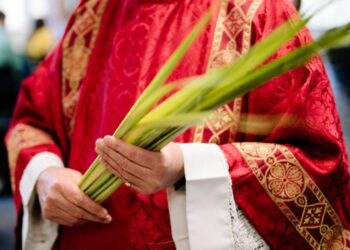
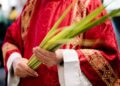
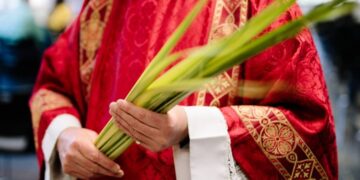
These holy days began last Sunday, Palm Sunday, when Jesus entered Jerusalem and was received with olive branches in recognition of his forty days in the desert, facing the temptations of Lucifer. Currently, the observances begin on Ash Wednesday, leading into what we call Lent, the forty days of fasting and abstinence.
Later, Holy Week concludes with Jesus’ entry into Jerusalem to carry out the greatest sacrifice of his life, which would confirm him as Christ. Through his sacrifice, the absolution of sins would be achieved, and a new era would begin with the emergence of the Catholic Church through the New Fire.
However, within this process, Holy Thursday, which we commemorate today, is a day of great importance. It begins when Jesus demonstrates his immeasurable humility with the washing of feet, that is, he acknowledges himself as the Son of God, but not as a superior being to his brothers and sisters, other human beings.
For we must remember that during his forty-day retreat in the desert, Jesus overcame the temptations of Satan, who had offered to make him king of the world. Jesus rejected this proposal; he wanted to reach heaven with his Father God as a merciful being. In this way, by washing the feet of his apostles, he bears witness to his service to others, to his brothers and sisters.
Later, the Last Supper takes place, when Jesus offers bread and wine to his disciples: “This is the body and blood of God,” as a symbol of his sacrifice and devotion.
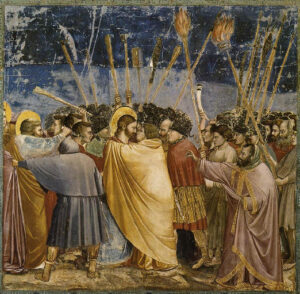
That night, when they go to pray in the Garden of Gethsemane, Judas kisses Jesus to identify him, thus betraying him to be arrested. Judas had sold him for 30 pieces of silver.
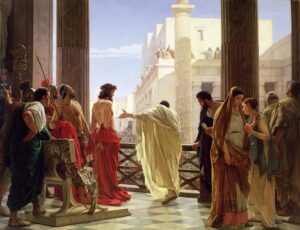
Once Jesus has been arrested, he is taken to visit seven kings or seven authorities so that one of them will be the one to judge him. Finally, Jesus is handed over to Pontius Pilate, who will decide his fate. However, Pontius Pilate doesn’t want to deal with it either, but he can’t avoid the situation.
The next morning, in front of the Jews, the trial takes place. Pontius Pilate tells them that he finds no reason for Jesus to have committed any crime, so there is no reason to punish him. Taking advantage of the fact that a prisoner was released during Passover, Pilate asked them if they wanted to release Jesus or Barabbas. The Jews chose Barabbas.
Once the Jews asked Pilate to punish Jesus, the Stations of the Cross began. This is when he was flogged, crowned with thorns, and given a purple robe as a symbol of his royal status—he was a king, with his robe and crown of thorns.
In Latin America, the Stations of the Cross are so important that reenactments are performed in cities and towns, where men carry their crosses to the place where the crucifixion will take place. It’s important to know that the commemoration is carried out with realistic acts; they do receive some of the scourging, even if it’s only simulated.
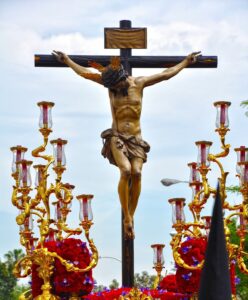
Jesus carries his cross to Calvary, and upon arriving at Golgotha, he is crucified according to the custom. However, in those days, people didn’t die on the cross itself, but were tied to it, as was the case with the two thieves, one on each side of Jesus. Unlike the two thieves, Dismas and Gestas, Jesus was crucified with nails, and at the top, they placed the inscription that reads: “Jesus of Nazareth, King of the Jews.”
When Jesus was on the cross, he asked for water because he was thirsty, and they gave him vinegar. When he spat out the vinegar, he looked to heaven and exclaimed his words that affirmed that everything had been fulfilled. Not only that, he asked God: “Father, forgive them, for they do not know what they are doing.”
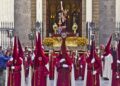
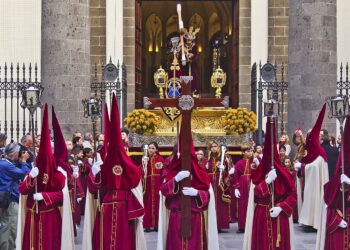
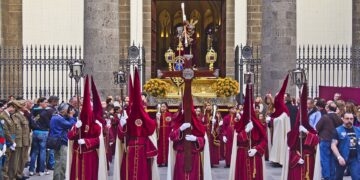
At three in the afternoon, a Roman centurion pierced his left side with a spear. The skies closed, and everything went dark. The rivers and seas ran red with blood. Jesus had died. They took him to his tomb, where they laid his body to rest. On the afternoon of Good Friday, the “Procession of Silence” takes place to accompany the Virgin Mary in her grief for the loss of her son. On the third day, Jesus rises again; therefore, on Saturday night, the New Fire ceremony is celebrated, which is the most important event in the Catholic calendar.
La Semana Santa es la conmemoración seguida por la celebración más importante de la iglesia católica, y siendo iberoamérica una región mayormente católica, es, pues, una de las festividades más importantes. Recordemos, pues, que la Semana Santa se lleva a cabo la conmemoración de los últimos días de la vida de Jesucristo, que es cuando se cumplió la profecía de Isaías en la que hablaba sobre la venida del Mesías, el príncipe de paz, quien resucitaría al tercer día después de morir para salvar de los pecados a la humanidad.
Estos días santos que comenzaron el domingo pasado, Domingo de Ramos, cuando entra Jesús a Jerusalén y lo reciben con ramos de olivos como reconocimiento por haber sobrellevado los cuarenta días en el desierto afrontando las tentaciones de Lucifer. En la actualidad, se conmemora a partir del miércoles de ceniza para llevar a lo que llamamos la cuaresma, los cuarenta días de vigilia.
Posteriormente, cierra con la semana mayor, la entrada de Jesús a Jerusalén para concretar el sacrificio más grande de su vida, lo que lo confirmará como Cristo, y a través de su sacrificio que se alcanzará la absolución de los pecados, y el principio de un nuevo tiempo a partir del surgimiento de la iglesia católica con el Fuego Nuevo.
Sin embargo, en este proceso, el Jueves Santo que hoy se conmemora, es un día de gran importancia, comienza cuando Jesús hace muestra de su inconmensurable humildad con el lavatorio de pies, es decir, se reconoce como hijo de Dios más no como ser superior antes sus hermanos los otros seres humanos.
Pues, debemos recordar que durante su retiro en de cuarenta días en el desierto Jesús venció las tentaciones de Satanás quien le había ofrecido hacerlo rey del mundo, mas Jesús había rechazado tal propuesta, él quería llegar al cielo con su padre Dios como un ser misericordioso. De esta manera, al lavar los pies de sus apóstoles hace testimonio de su servicio al otro, a sus hermanos.
Más tarde sucede la última cena, cuando Jesús ofrece pan y vino a sus discípulos: “Éste es el cuerpo y la sangre de Dios”, como símbolo de su entrega y devoción.
Por la noche, cuando se van a orar al huerto de Getsemaní, Judas le da un beso a Jesús para que lo identifiques, entregándolo así para que Jesús sea arrestado. Judas lo ha vendido a cambio de 30 monedas de plata.
Una vez que Jesús ha sido arrestado lo llevan a visitar siete reyes o siete autoridades para que uno de ellos sea quien se ocupe de juzgarlo. Finalmente, Jesús es entregado a Poncio Pilatos, quien decidirá cuál será su destino. No obstante, Poncio Pilatos tampoco quiere lidiar con ello, mas no logra evadir la situación.
A la mañana siguiente frente a los judíos, se lleva a cabo el juicio. Poncio Pilatos les dice que él no encuentra que Jesús haya cometido algún delito, de manera que no hay razón para castigarlo. Y aprovechando que en la pascua judía se liberaba a un preso, Pilatos les dice que si quieren liberarlo a Jesús o que si prefieren liberar a Barrabás. Los judíos salvan a Barrabás.
Una vez que los judíos piden a Pilatos castigue a Jesús, empieza el Viacrucis, que es cuando lo azotan y le ponen la corona de espinas y un manto púrpura en símbolo de que es parte de la Realeza, es rey, tiene su manto y corona de espinas.
En Iberoamérica, el viacrucis es de tal importancia que se lleva a cabo representaciones en ciudades y pueblos en las que hombres cargan sus cruces hasta el lugar en el que se llevará a cabo la crucifixión. Es importante saber que la conmemoración se lleva a cabo con actos realistas, sí reciben parte de la práctica de los azotes aunque sean sólo simulados.
Jesús lleva su cruz camino al calvario, al llegar al monte de Gólgota lo crucifican como era la práctica en la cruz. Sin embargo, en aquella época no morían en la cruz, sino que los ataban a la cruz, que es como estaban dos ladrones uno de cada lado de Jesús. A diferencia de los dos ladrones, Dimas y Gestas, a Jesús lo crucifican con clavos, y en la parte de arriba ponen la inscripción que dice que es Jesús el nazareno, rey de los judíos.
Cuando Jesús está en la cruz, pide agua porque tiene sed, le dan vinagre. Cuando escupe el vinagre mira al cielo y exclama sus palabras que afirmaban que todo se había cumplida, no sólo eso, le pide a dios: “Padre, perdónalos, no saben lo que hacen”.
A las tres de la tarde, un centurión romano le clava en el costado izquierdo su lanza. Los cielos se cierra y se oscurece todo. Los ríos y mares se pintan de sangre. Jesús ha muerto. Lo llevan a su tumba, donde dejan su cuerpo a descansar. En la tarde del Viernes Santo, se lleva a cabo “La procesión del silencio”, para acompañar a la Virgen María en su pena por la pérdida de su hijo.
Al tercer día resucita Jesús, por lo tanto, el sábado por la noche se celebra el fuego nuevo que es la ceremonia más importante del calendario católico.