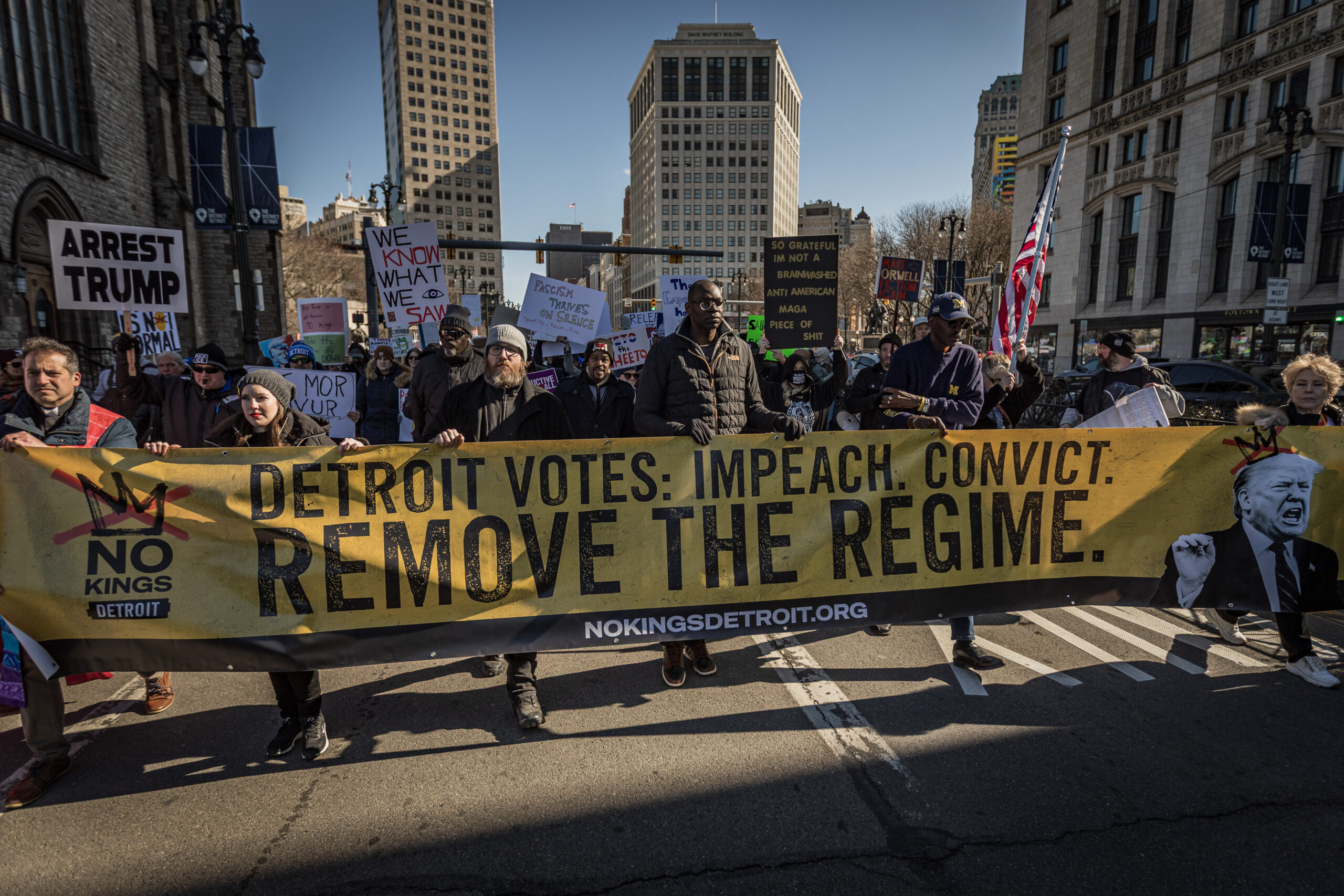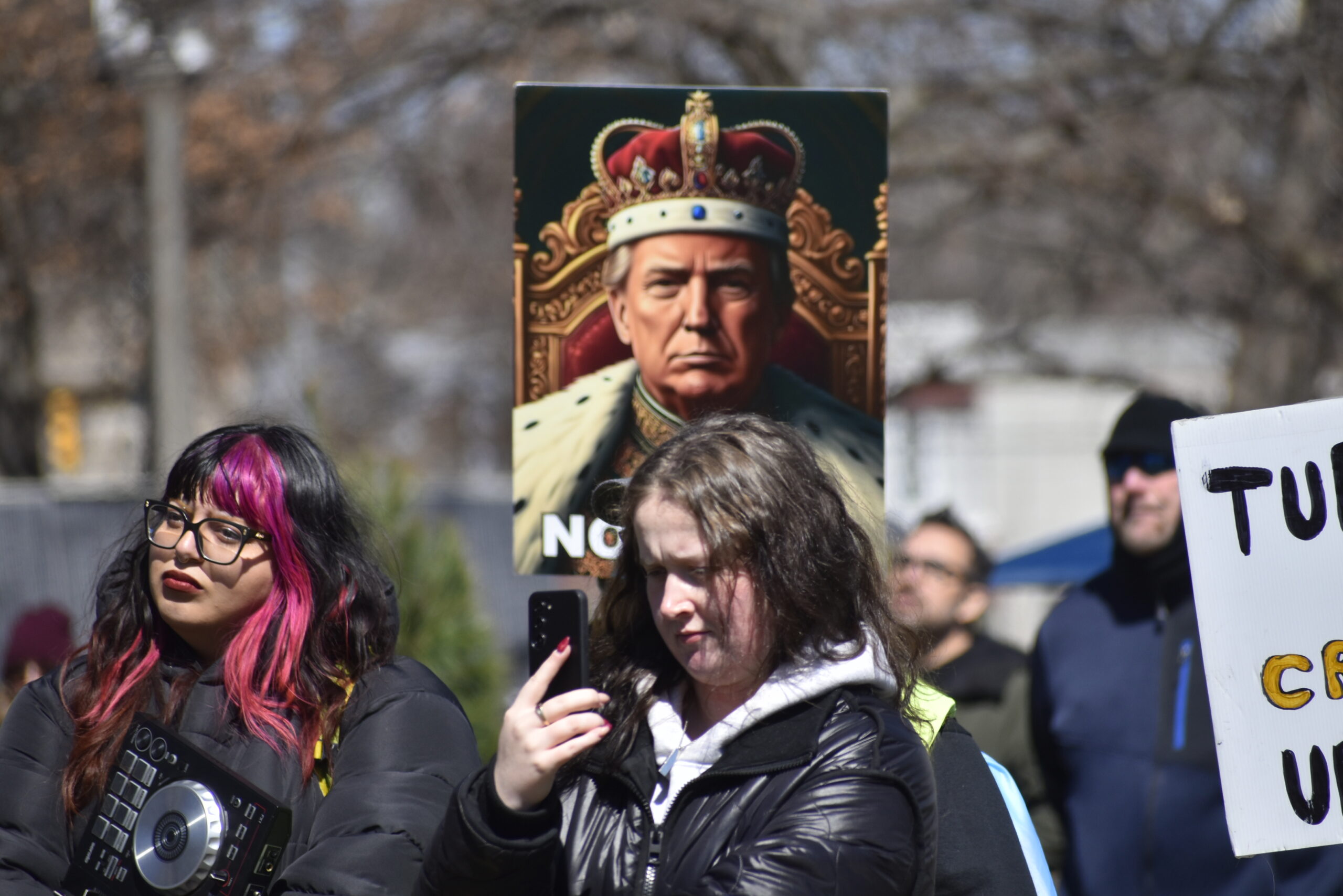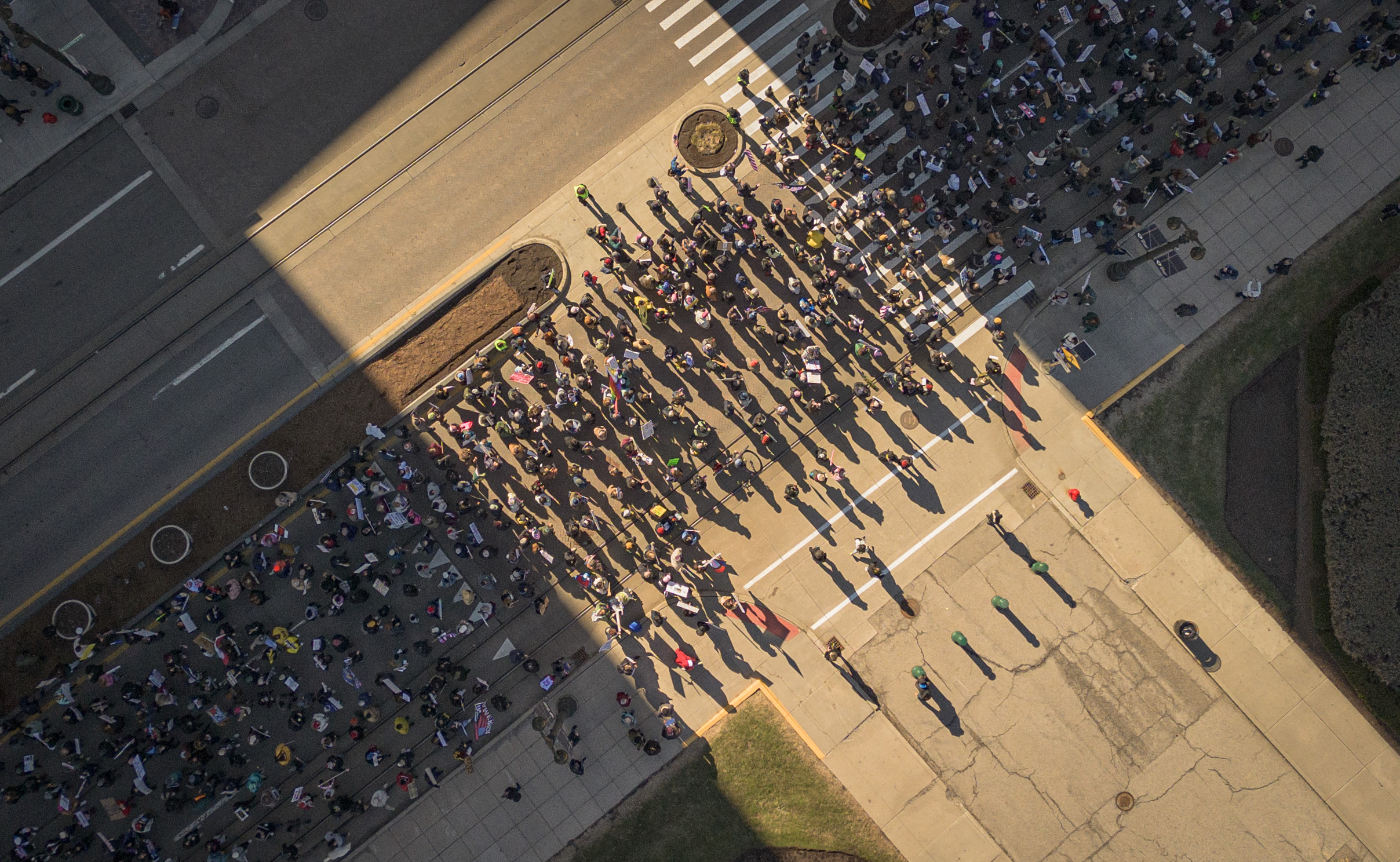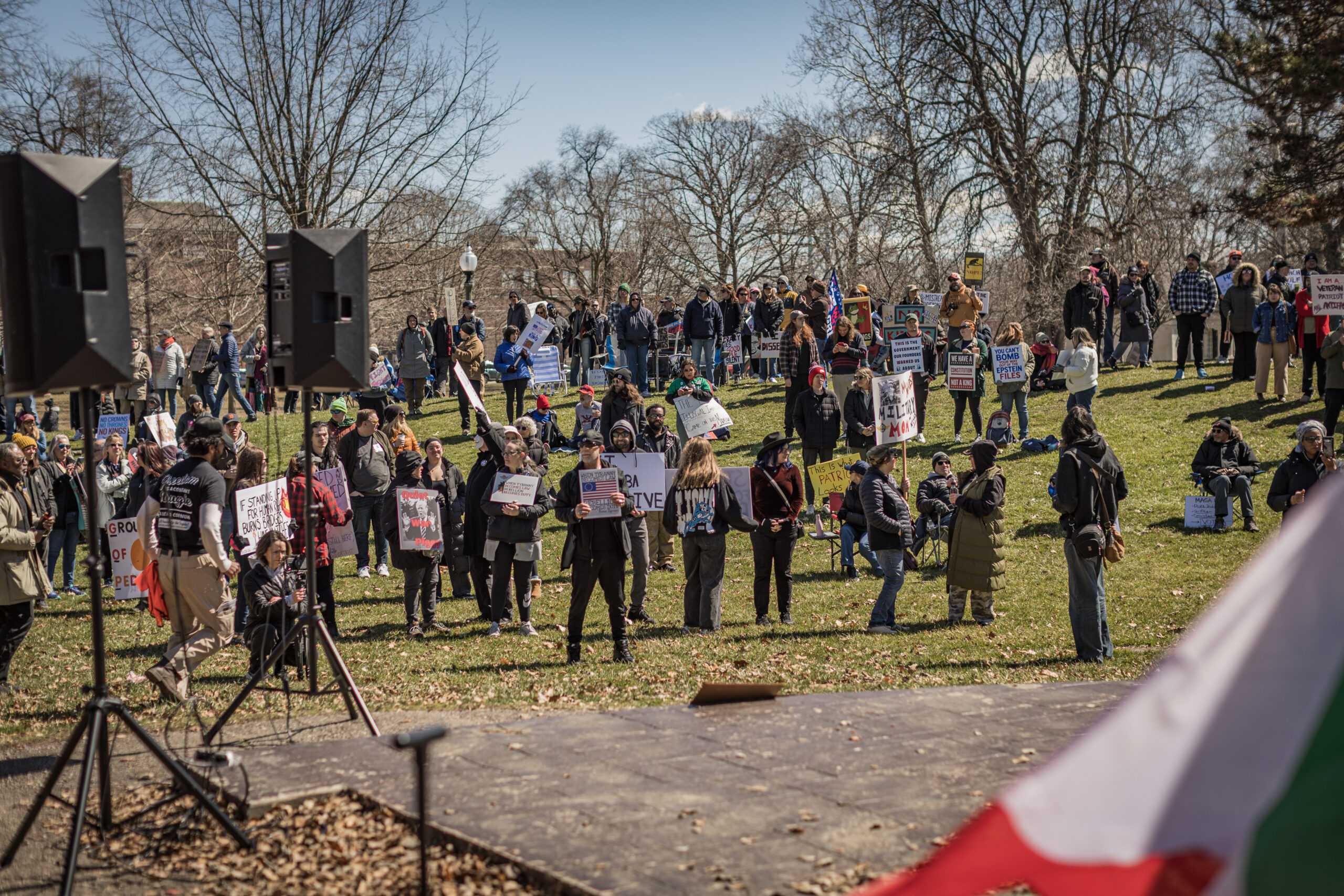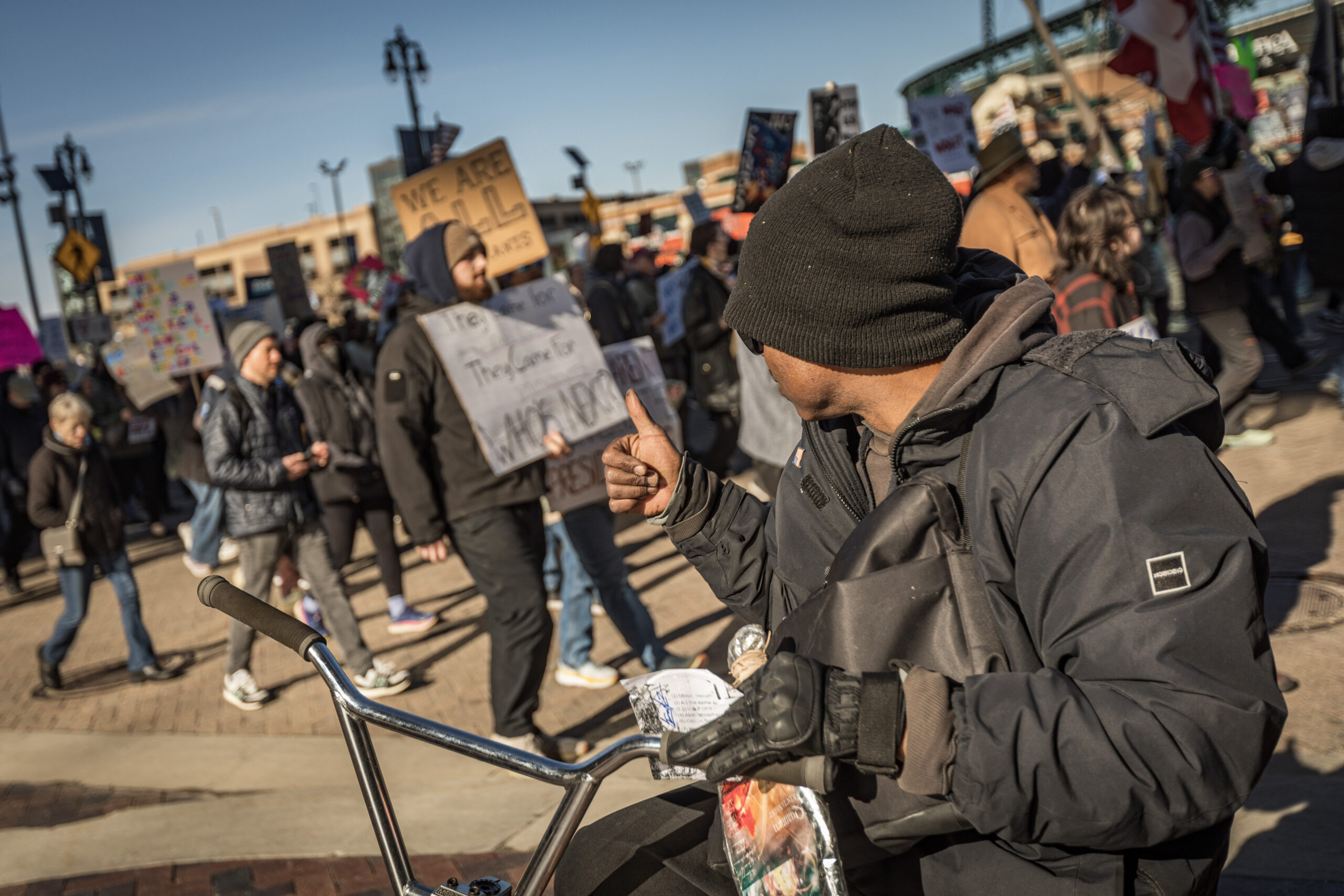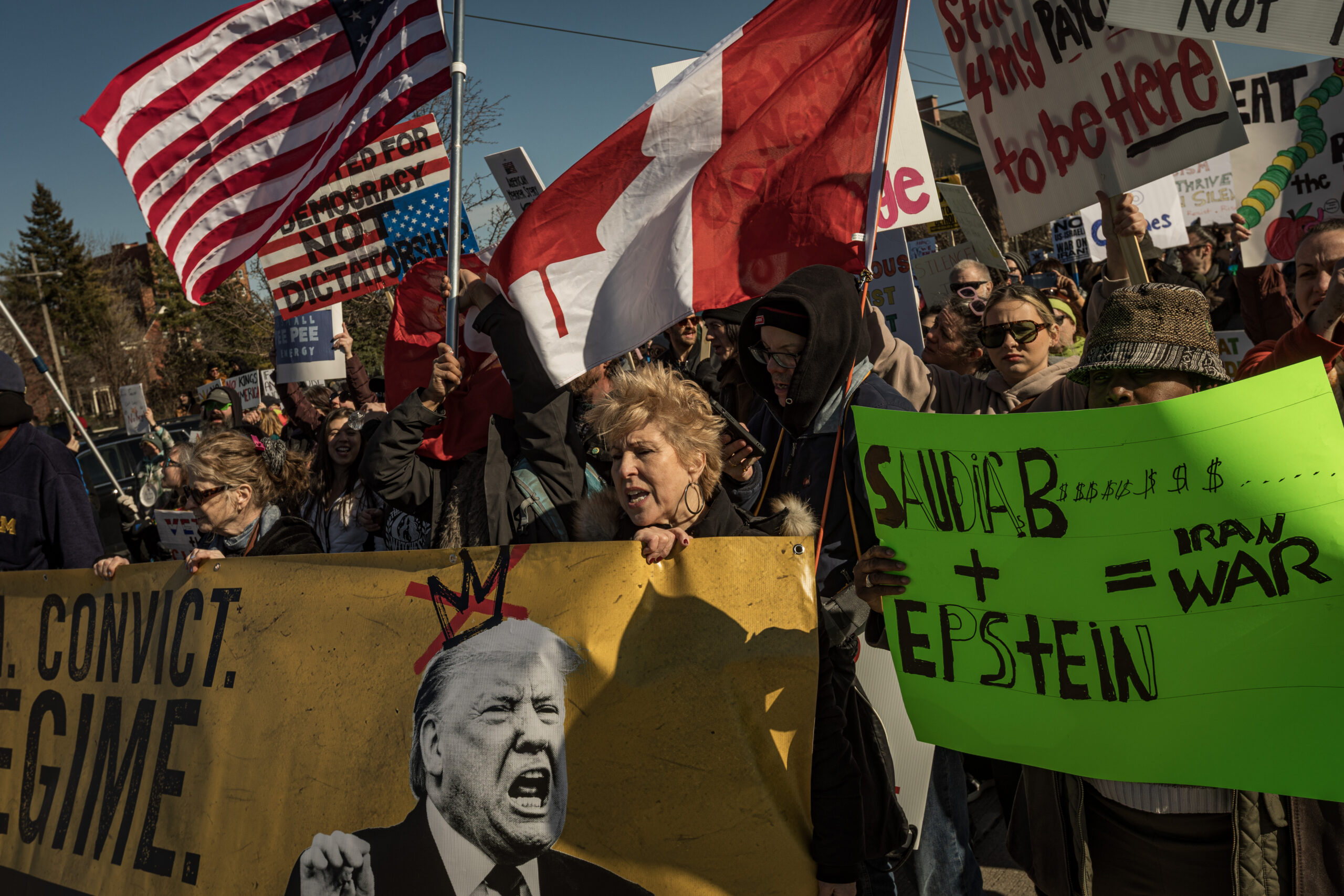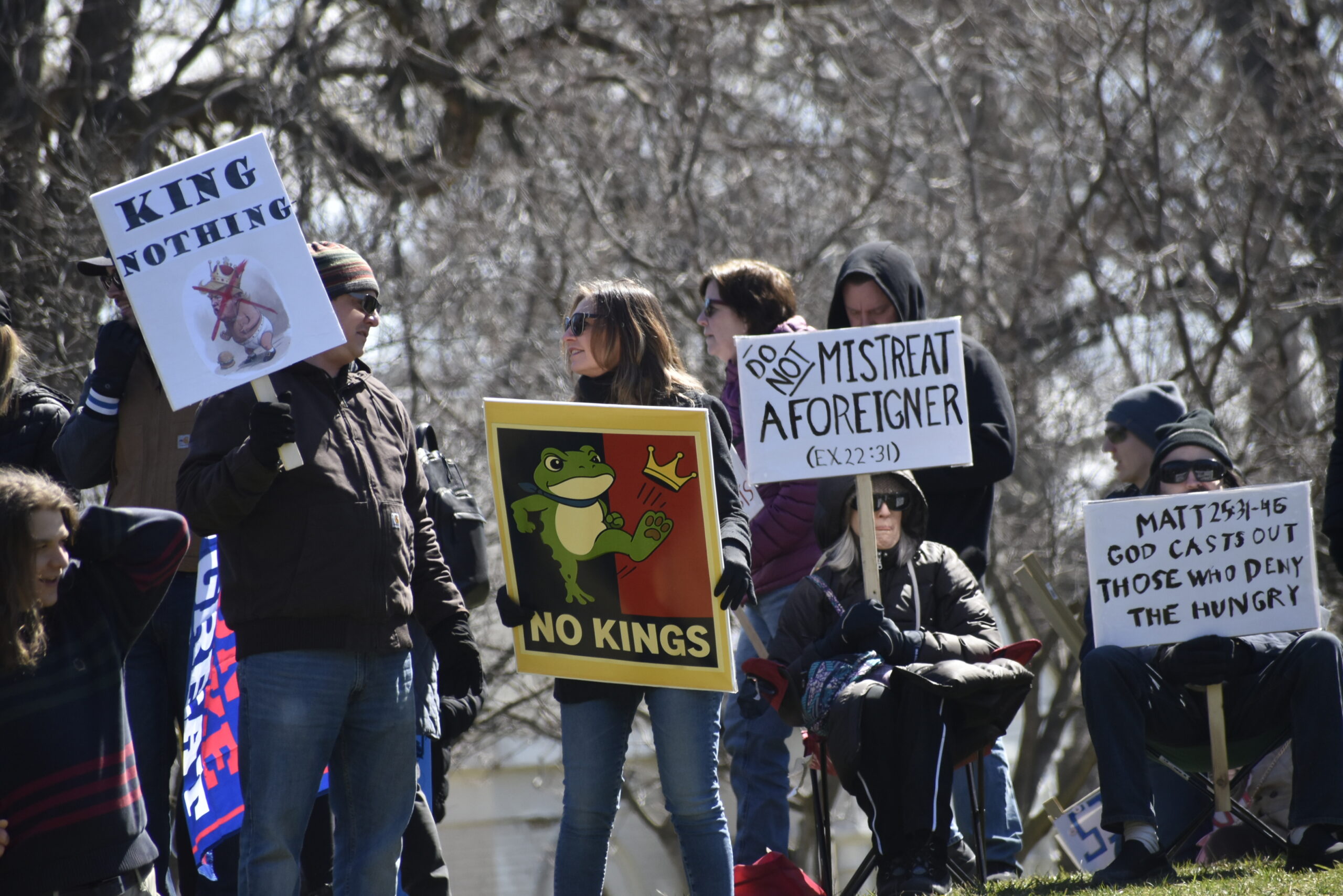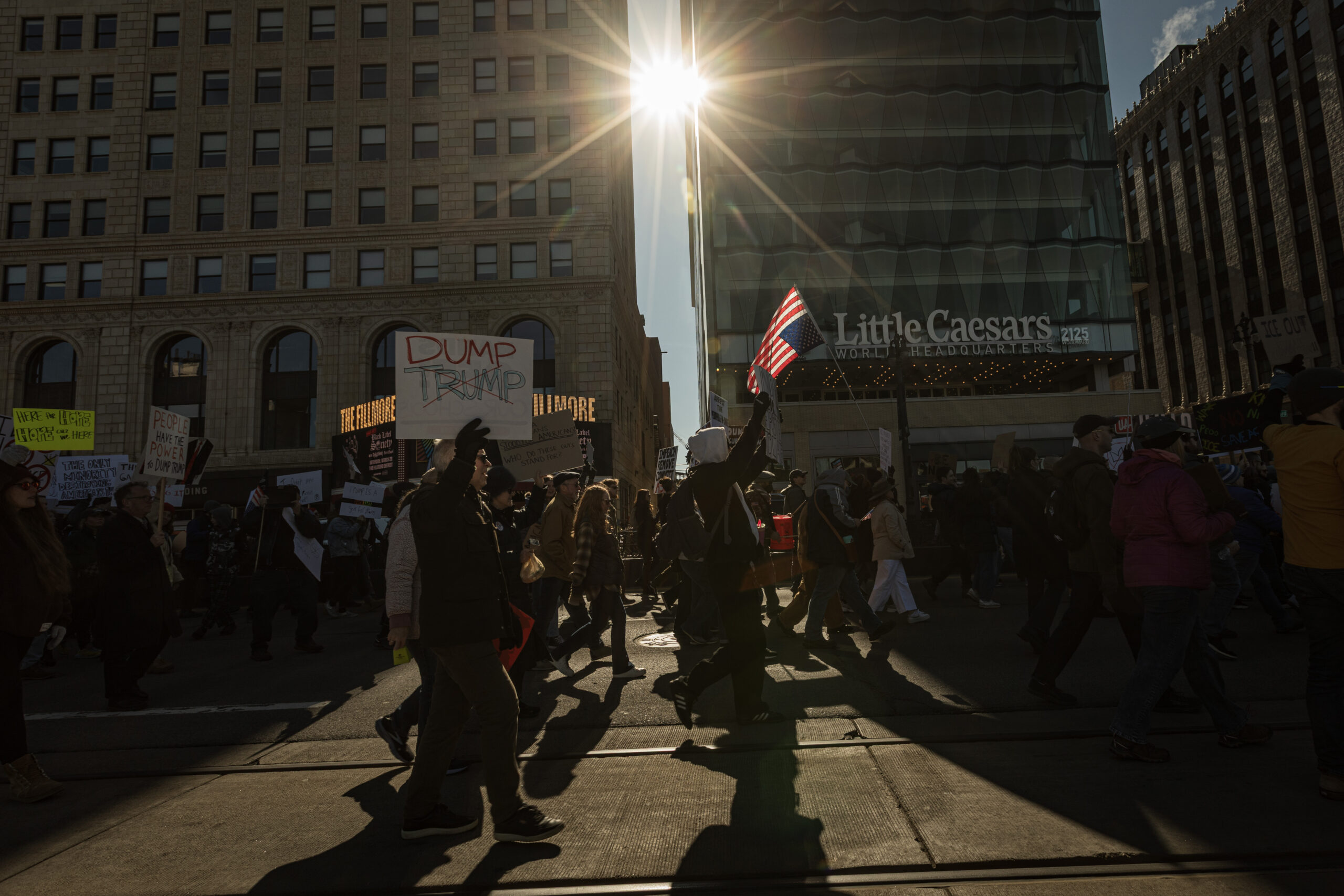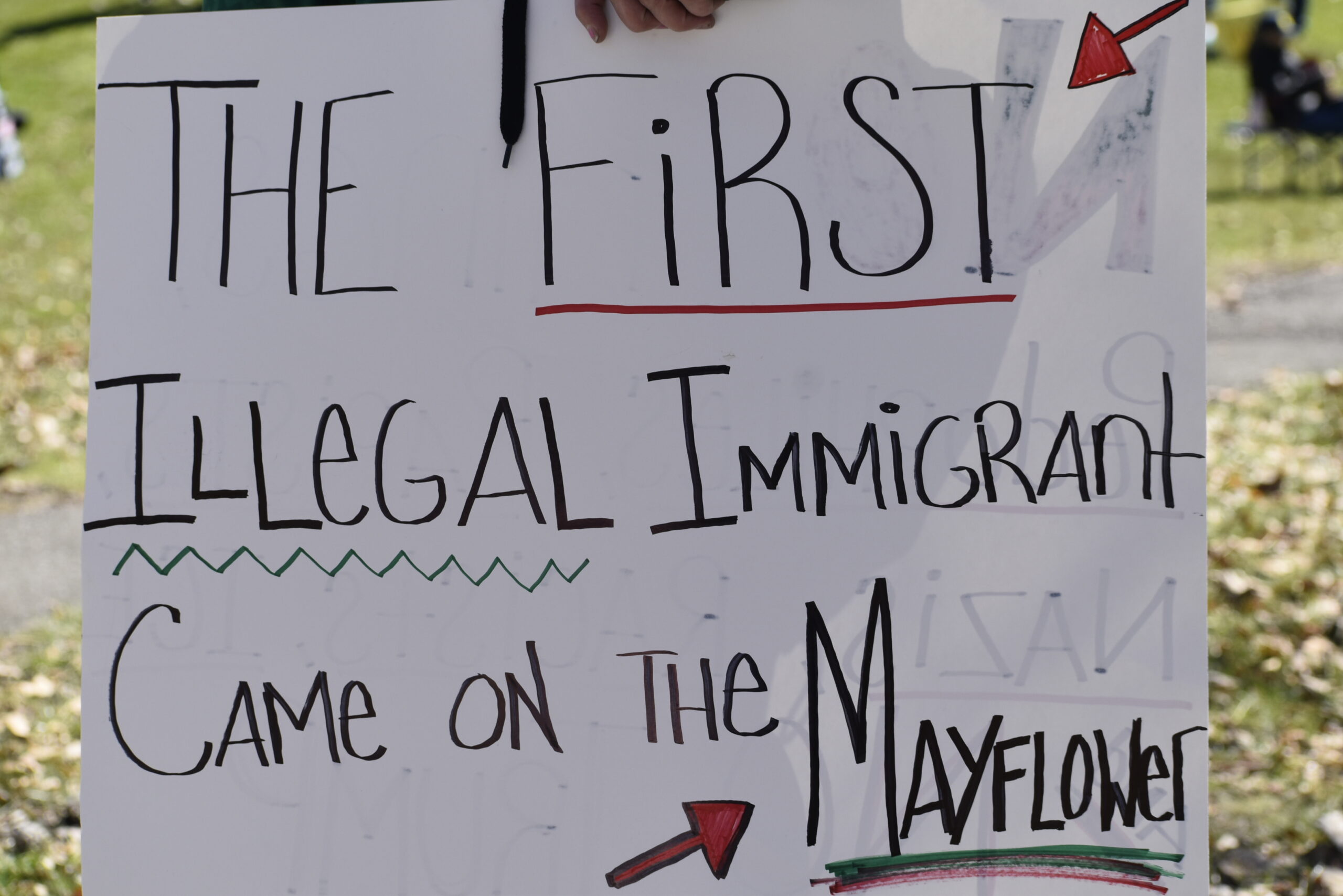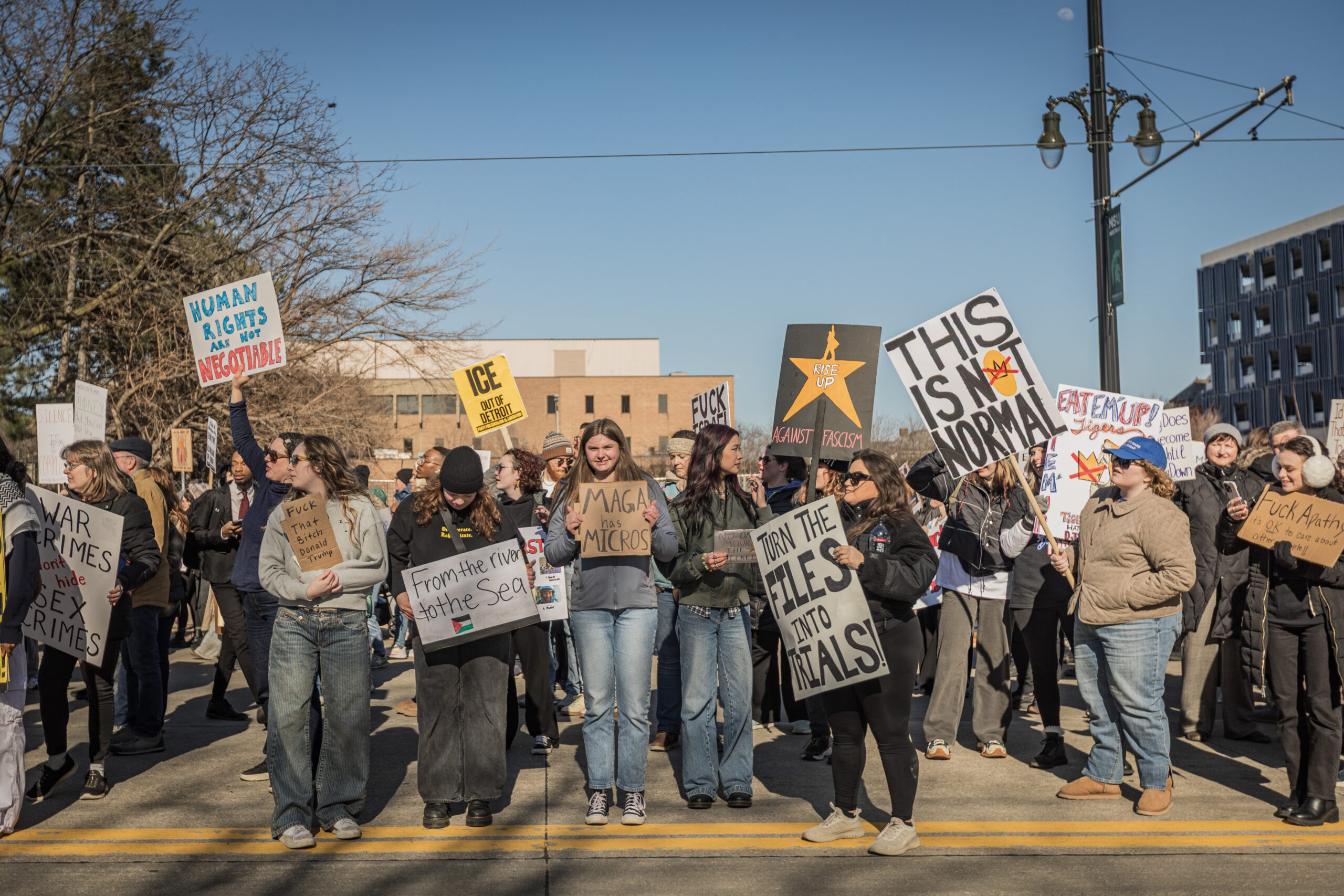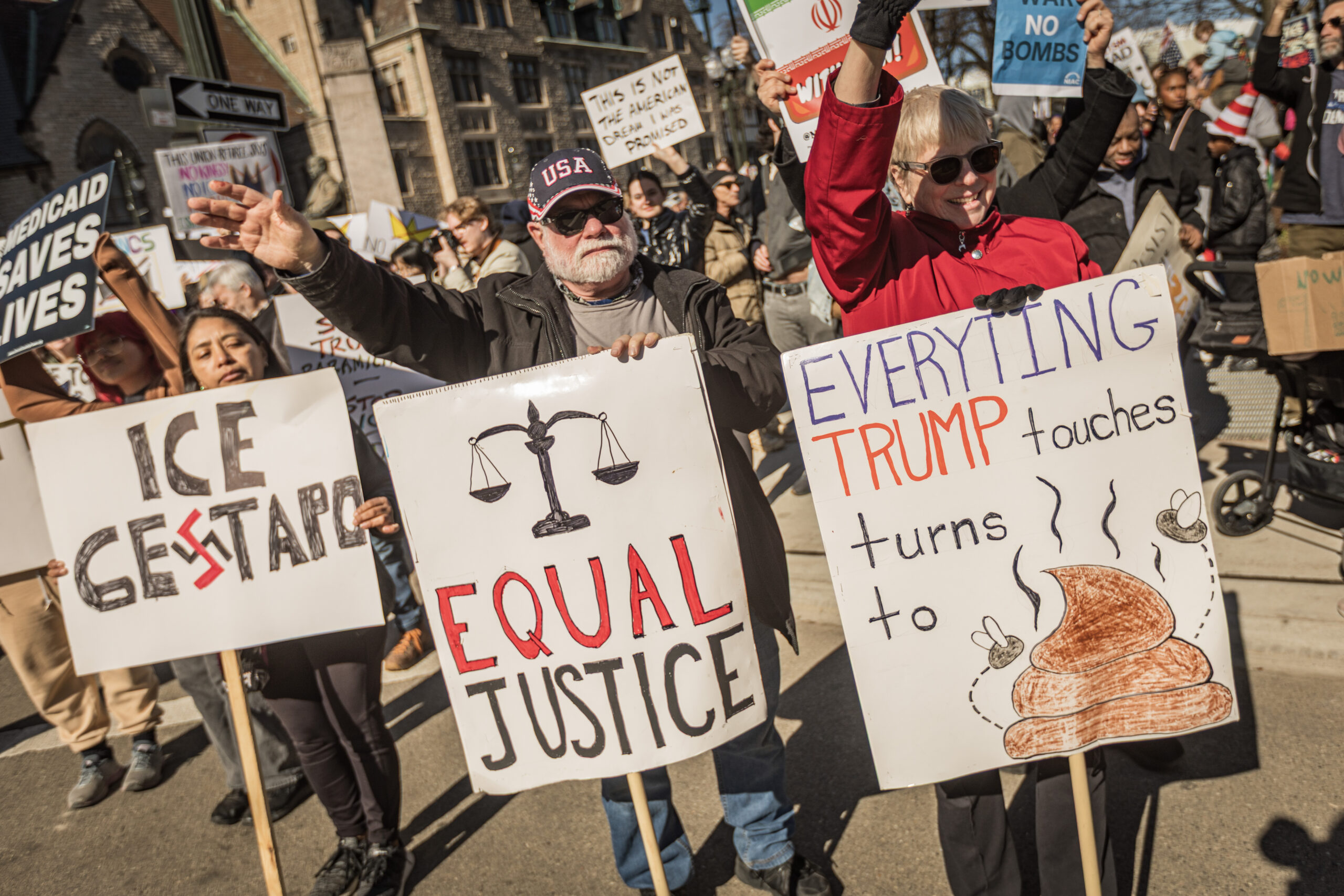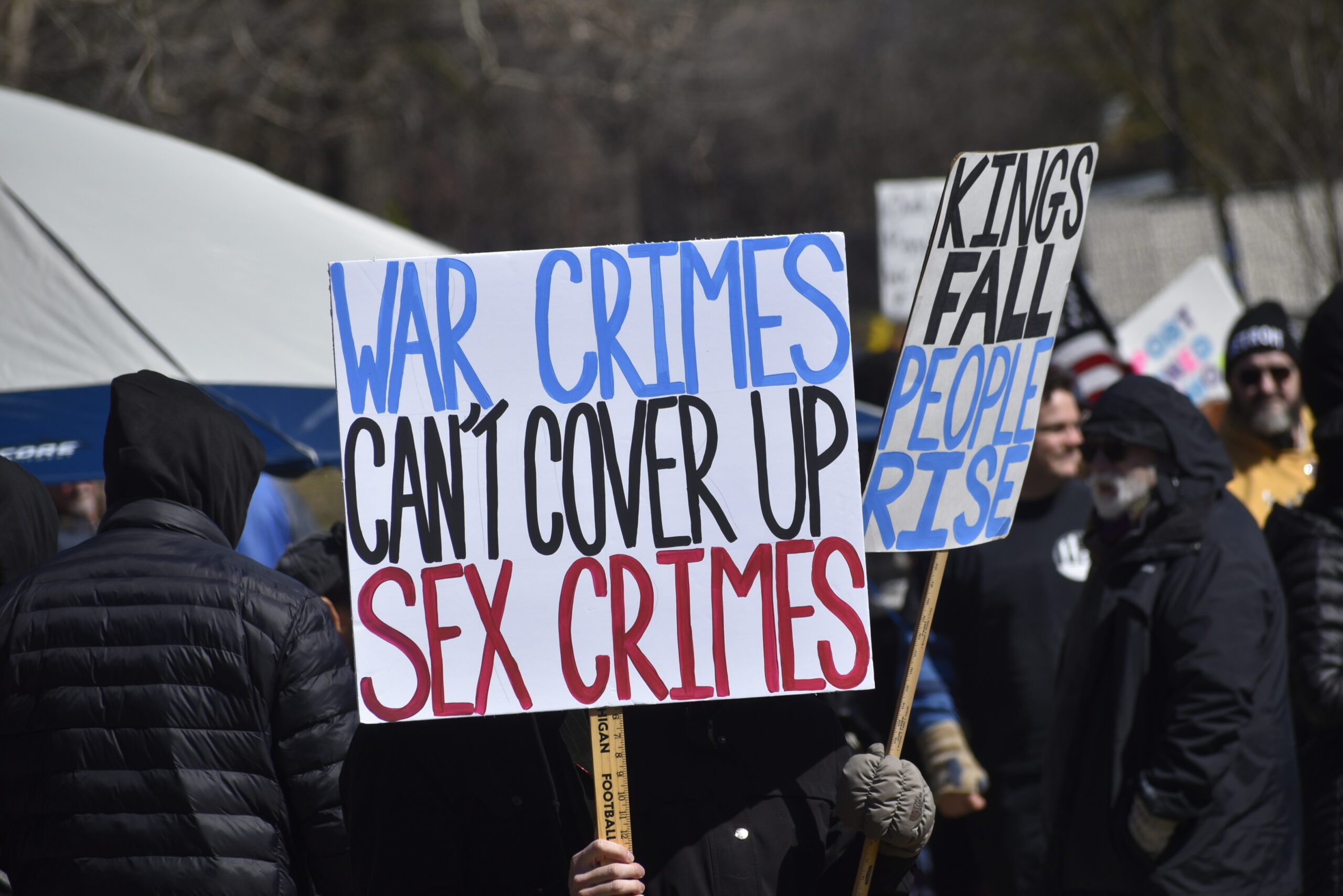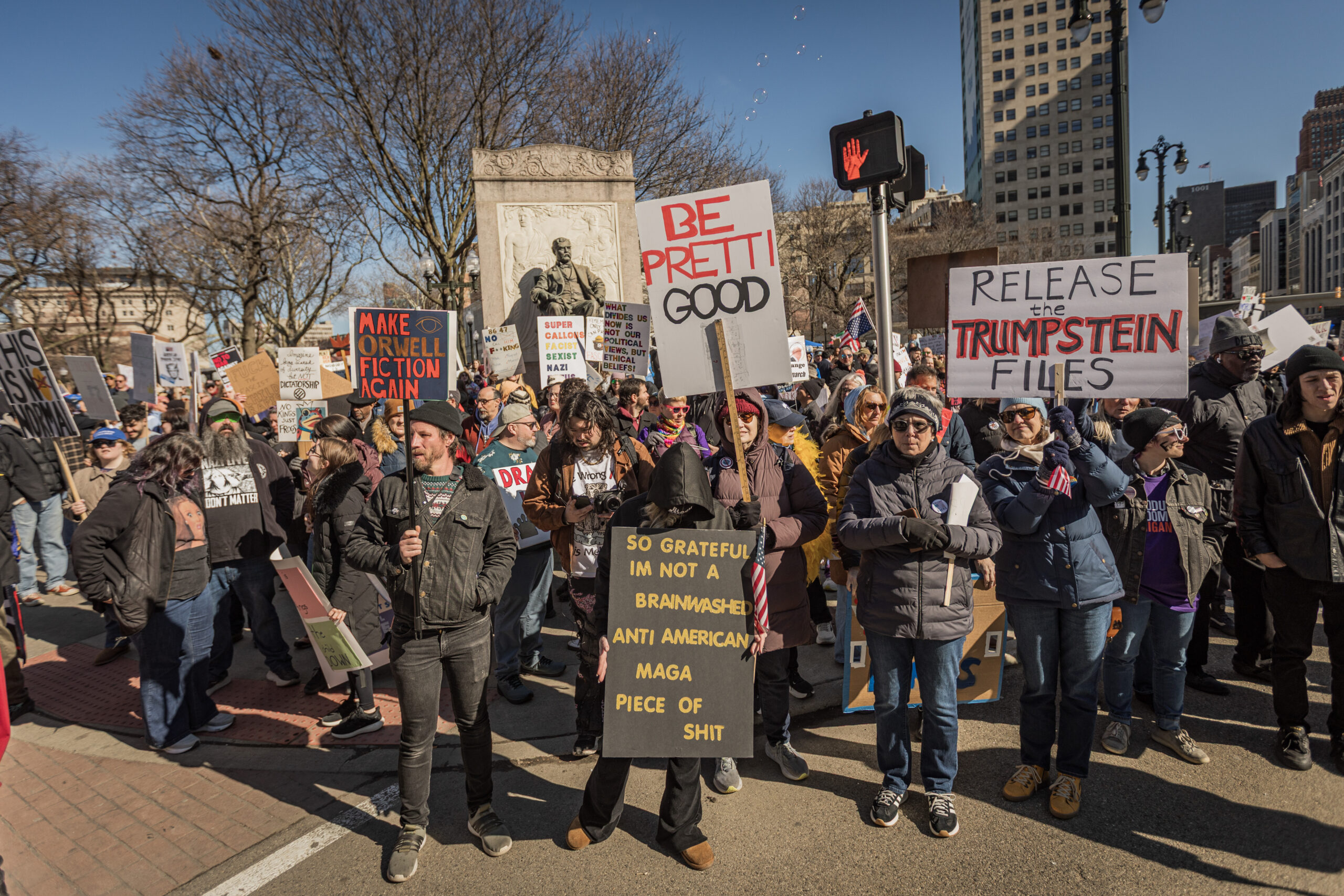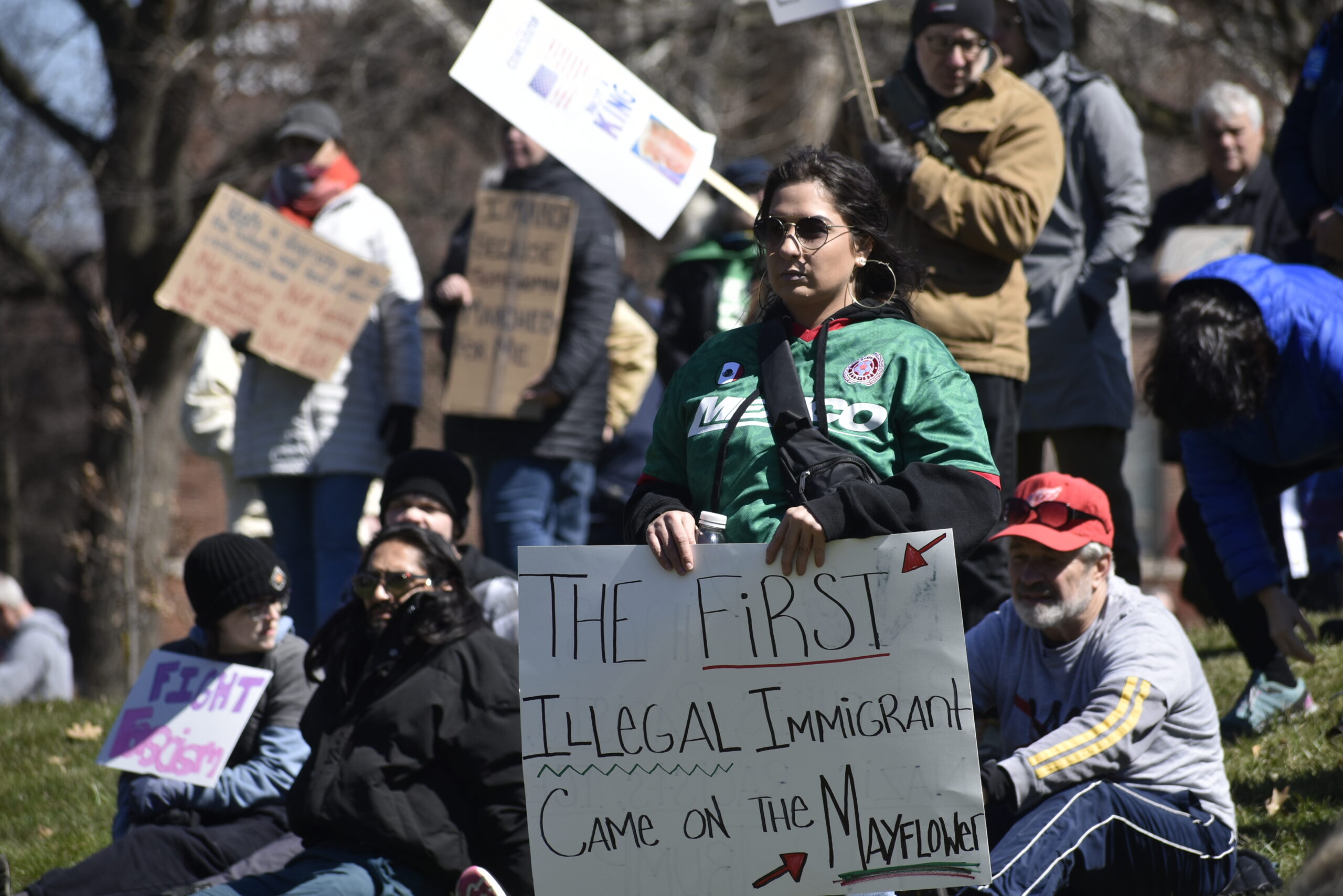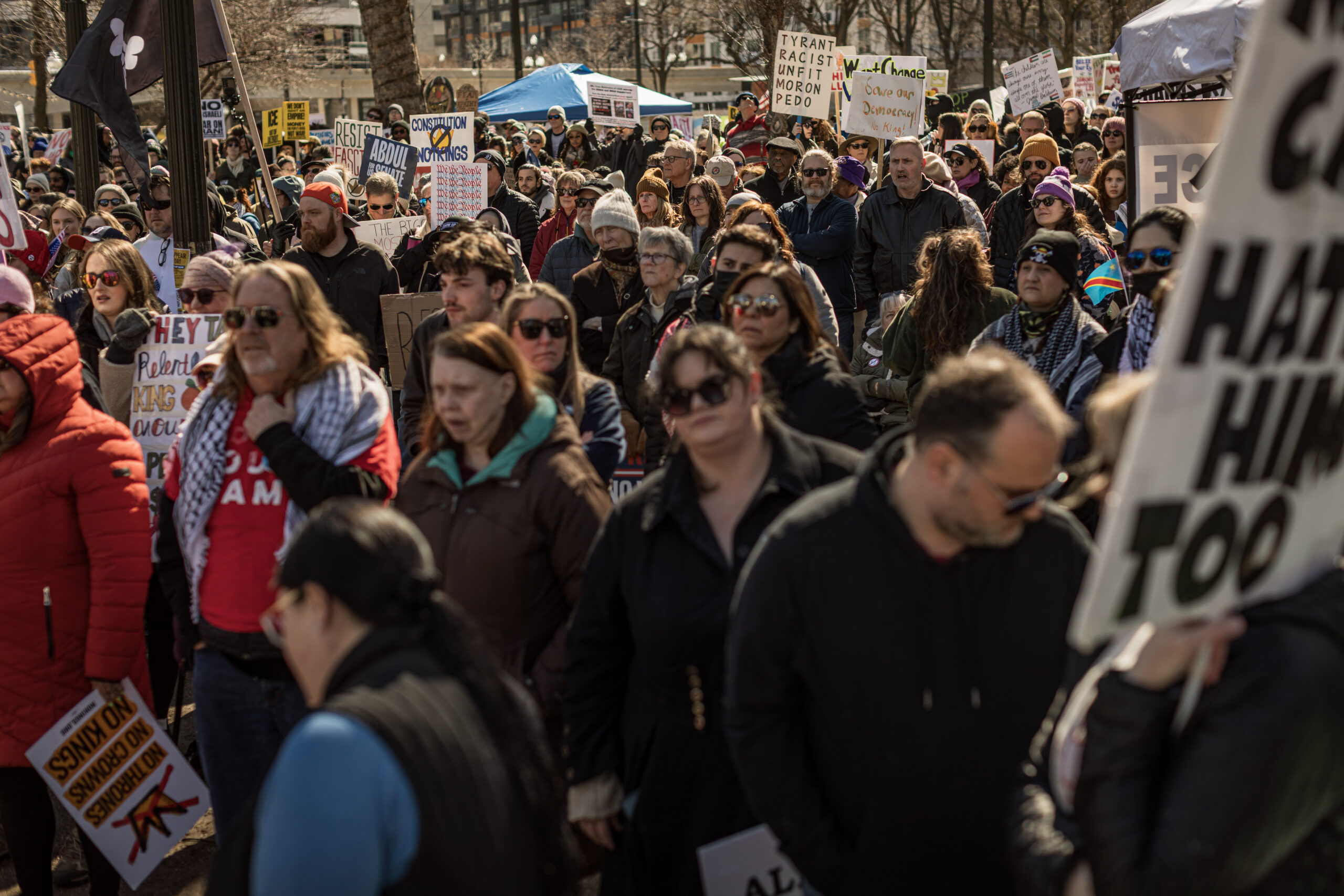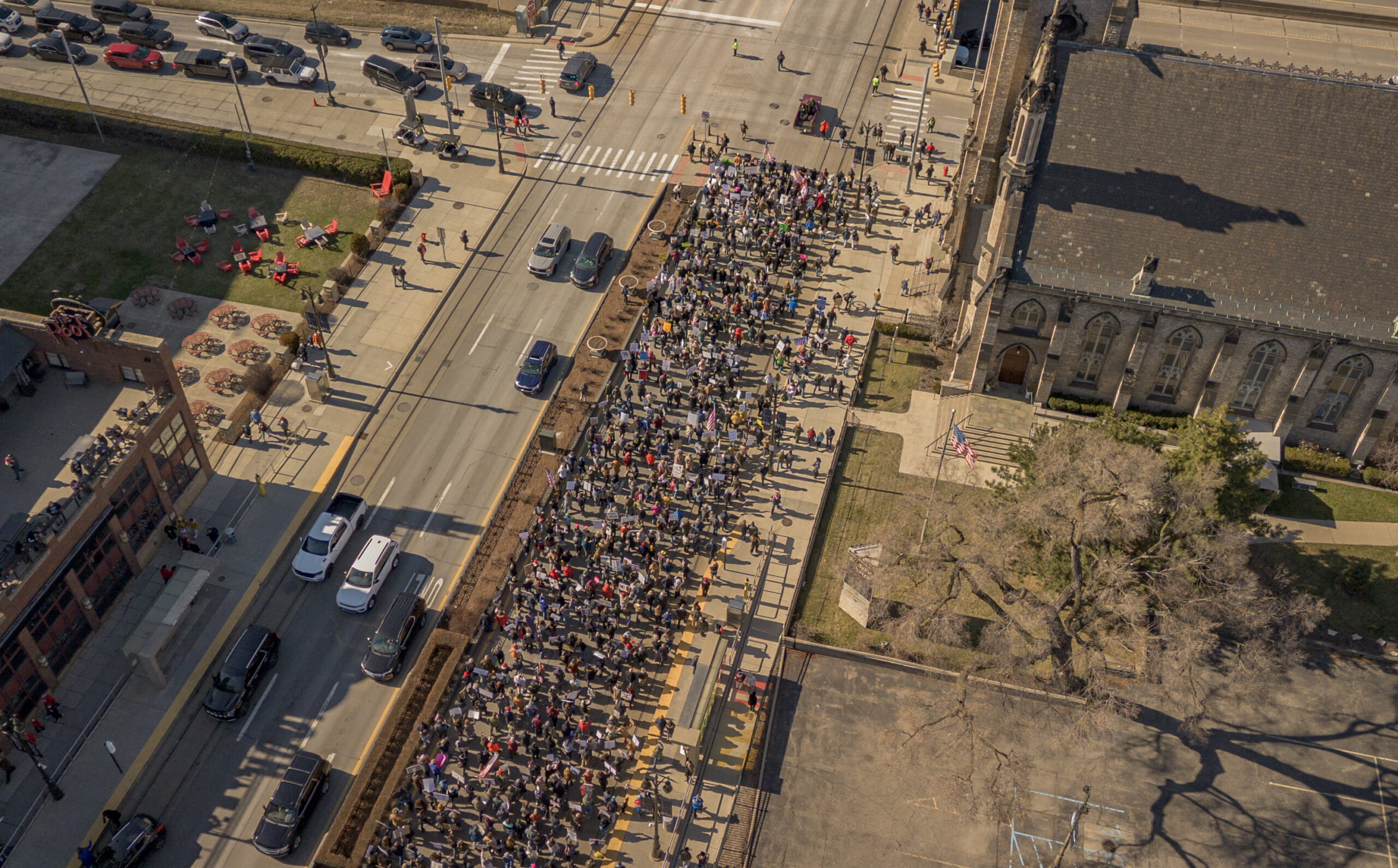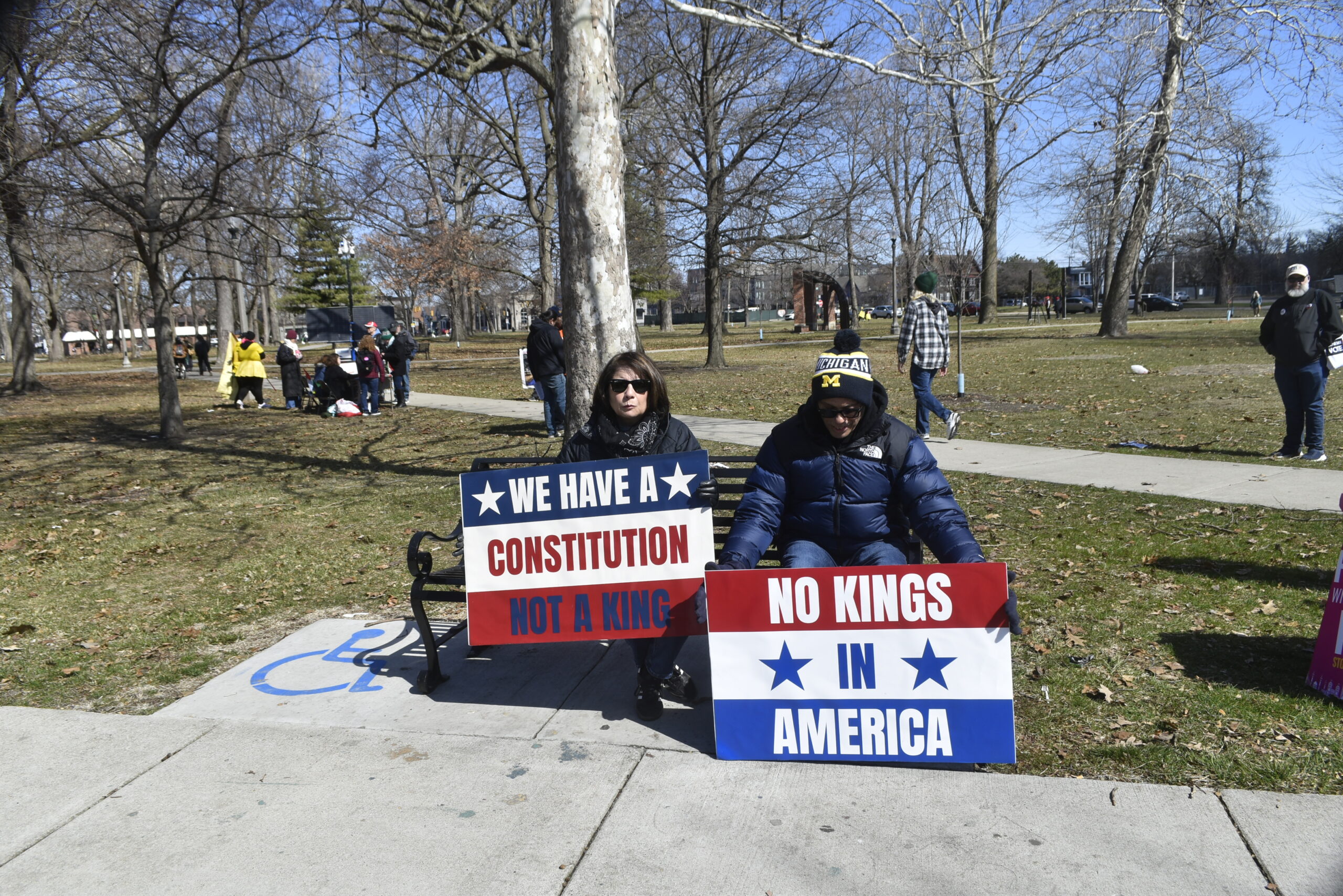



















A rolling sea of noise and colourful signs occupied one side of Woodward Avenue in Detroit. Demonstrators’ chants, shouts, and slogans showed one more time their rejection of the authoritarian excesses of President Donald Trump, whose public approval rating has fallen to 36% according to a poll by Reuters/IPSOS, the lowest since his second administration began. Carefully organized and marshaled by volunteers, the mass of thousands of people peacefully advanced for several blocks, in full view of passersby whose expressions ranged from support and curiosity to occasional signs of disapproval.
The marchers returned to Grand Circus Park, where the rally began at 3 pm, carrying a festive attitude with music, dances, costumes, and creative signs.
It was the first “No King” protest for Kyla Selph, 19, a Detroit resident, who said she wanted to make a difference alongside the people of her community; however, she also highlighted how, despite social movements, many things remain unchanged.

“I’m being honest, I really don’t think anything has changed,” she said. “We still have the same people with the same mindsets and still racism, still police brutality, still ICE brutality. I think the more we come out here and the more we keep taking action, the more that we can improve.”
Driven by the “No Kings” movement and followed by advocacy groups, similar scenes unfolded on Saturday, March 28 in cities and towns across the country as an act of social and political resistance. It is the fourth major mass demonstration since April 2025, which has now brought together around 8 million people in more than 3,000 locations according to organizers’ estimates. While the overwhelming number of protests were peaceful, clashes between protesters and police, arrests, and the deployment of tear gas were seen in Los Angeles, Memphis, and Dallas.
Republicans once again mocked and criticized the national protest movement. In a statement shared to media outlets, White House spokesperson Abigail Jackson called them the product of “leftist funding networks” with little real public support, AP reported.
The “only people who care about these Trump Derangement Therapy Sessions are the reporters who are paid to cover them,” Jackson said.

From Dubai, at a business summit hosted by Saudi royals, Donald Trump Jr. called the demonstrators “crazy liberals”, reported PBS News. “If my father was a king, he probably wouldn’t have allowed those protests to happen,” he said.
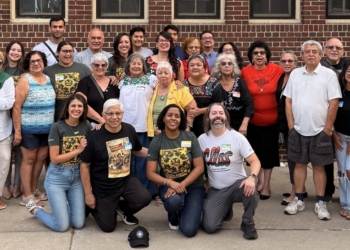
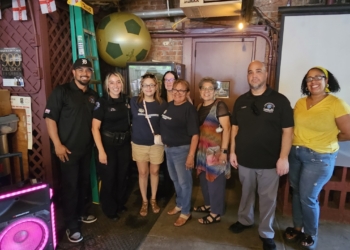
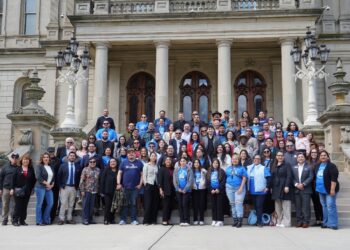
In Michigan, thousands of people, including residents, activists, politicians, and faith leaders, peacefully joined over 100 other marches in small towns and cities such as Grand Rapids, Lansing, Ann Arbor, and three demonstrations in Detroit.
With the midterm elections just a few months away, protests have been supported by Democratic politicians, some seeking reelection, others urging the public to recognize the importance of their votes.
“We stand tall in Michigan, the state that is the number one MAGA priority to interfere with the election,” said Michigan Lt. Gov. Garlin Gilchrist to thousands gathered for the rally at Grand Circus Park. “When we vote out all their allies, we vote up for our power.”

“No Kings Detroit” organizers had stated that this demonstration is a defense of the Constitution to “protect the Michiganders brutalized by ICE and stop the ongoing escalating war in Iran.”
Trump’s anti-immigrant crusade has remained the central focus of these demonstrations since they began. Now, added to the stack of demands is the current conflict with Iran, a theme Trump himself used as a banner during his presidential campaign: no more wars. Military funding for Israel; Trump’s involvement in the Epstein case; deteriorating foreign relations with other nations, and the upcoming midterm elections were also among protesters’ demands.
In West Michigan, Grand Rapids was the epicenter of the largest gathering. The event took place in downtown, where thousands of people attended to fill the streets during the rally and march.
“People are denied housing, health care, clean water, food, or basic social safety nets. We reject that reality,” said a member of Movimiento Cosecha during the rally at Rosas Park. “We must not accept a system where black and brown people are feared, targeted, and brutalized. We will not normalize a state violence that kidnaps, cages, and kills our communities with masked agents operating without accountability.”
The group advocating for the rights of undocumented immigrants also cited cases of immigrants arrested by immigration agents and taken to the North Lake Detention Center in Baldwin, MI where they were not provided with adequate treatment and medicine when needed. Furthermore, they accused the Grand Rapids Police and the Kent County Sheriff of cooperating with ICE.
“We demand sanctuary policies to end this cooperation,” they said. “These are not radical demands. These are necessary protections for immigrants.”

In Romulus, several dozen people gathered outside 7525 Cogswell St., where a warehouse, now owned by the federal government, is slated to become a 500-bed ICE detention center. On one side of the road, political leaders and activists arrived to deliver speeches expressing their opposition to the future facility and calling for more definitive action.
The demonstration was preceded by a lawsuit filed by the State of Michigan and the City of Romulus on March 24, in which they seek to prevent the opening of the planned facility. The lawsuit, spearheaded by Attorney General Dana Nessel, stated: “The Romulus Warehouse is simply not, and never will be, an appropriate place for a large-scale detention center.”
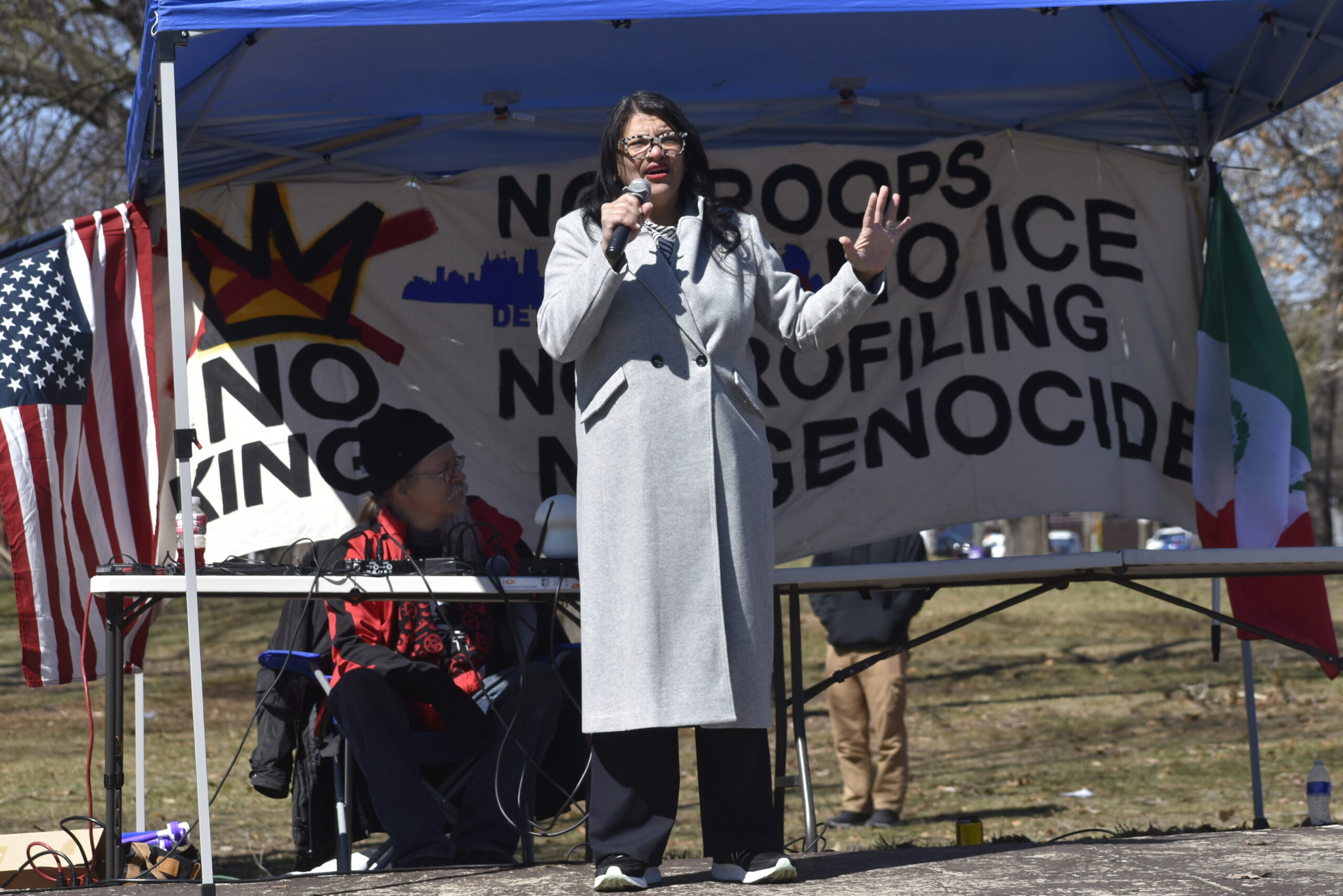
Congresswoman Rashida Tlaib spoke about cases of ICE abuse against Michigan families and accused the government of leading the country into an illegal war. The Democrat lawmaker, who advocates for the complete abolition of ICE, had just come from Clark Park in Southwest Detroit where she gave a similar speech to some 300 protesters. There, she criticized her Democratic colleagues for seeking only ICE reform and not abolition, and offered a mea culpa for the abuse of federal agents against the community.

“It is not just Republicans. It is Democrats who are not moving with the urgency that is needed,” she said.
“It is unbelievable that many of my colleagues still think they can fix our broken, inhumane immigration system with war enforcement. We all have experienced it, not only the Southwest, but really around the country,” Tlaib added.
Un delgado mar de ruido y coloridos carteles ocupó un lado de la avenida Woodward en Detroit. Sus cánticos, gritos y consignas mostraron, una vez más, su rechazo a los excesos autoritarios del presidente Donald Trump, cuya aprobación pública ha caído al 36% según una encuesta de Reuters/IPSOS, el nivel más bajo desde que comenzó su segunda administración. Cuidadosamente contenida y guiada por voluntarios, la multitud de cientos de personas se echó pacíficamente durante varias cuadras, ante la mirada de transeúntes cuyas expresiones iban desde el apoyo y la curiosidad hasta el rechazo absoluto.
La marcha regresó a Grand Circus Park, donde la manifestación comenzó a las 3 p.m., con un comportamiento festivo que incluyó música en vivo, cantos, bailes y disfraces.
Fue la primera protesta “No Kings” para Kyla Selph, de 19 años, residente de Detroit, quien dijo que quería marcar una diferencia junto a la gente de su comunidad; sin embargo, también destacó que, a pesar de los movimientos sociales, muchas cosas no han cambiado.
“Siendo honesta, realmente no creo que algo haya cambiado”, dijo. “Seguimos teniendo a las mismas personas con las mismas mentalidades: sigue habiendo racismo, brutalidad policial y brutalidad de ICE. Creo que mientras más salgamos y sigamos tomando acción, más podremos mejorar”.
Impulsadas por el movimiento “No Kings” y seguidas por grupos activistas, escenas similares se desarrollaron el sábado en ciudades y pueblos de todo el país como un acto de resistencia sociopolítica. Es la tercera gran manifestación masiva desde julio del año pasado, que ahora ha reunido a alrededor de 8 millones de personas en más de 3.000 lugares, según estimaciones de los organizadores. En Los Ángeles, Memphis y Dallas se registraron enfrentamientos entre manifestantes y la policía, arrestos y el uso de gas lacrimógeno.
El gobierno republicano volvió a burlarse y criticar las concentraciones. En una declaración compartida con medios, la vocera de la Casa Blanca, Abigail Jackson, las calificó como producto de “redes financiadas por la izquierda” con poco apoyo público, según AP.
“Las únicas personas a las que les importan estas sesiones de ‘terapia por trastorno anti-Trump’ son los reporteros a quienes les pagan por cubrirlas”, dijo Jackson.
Desde Dubái, durante una cumbre empresarial organizada por la realeza saudí, Donald Trump Jr. calificó a los manifestantes de “liberales locos”, informó PBS News. “Si mi padre fuera un rey, probablemente no habría permitido que esas protestas ocurrieran”, dijo.
En Michigan, miles de personas, incluidos residentes, activistas, políticos y líderes religiosos, se unieron pacíficamente a más de 100 marchas en pueblos y ciudades como Grand Rapids, Lansing, Ann Arbor y tres manifestaciones en Detroit.
Con las elecciones de medio término a solo unos meses, las protestas han contado con la presencia de políticos demócratas, algunos en busca de la reelección y otros instando al público a reconocer la importancia de su voto.
“Nos mantenemos firmes en Michigan, el estado que es la prioridad número uno de MAGA para interferir en la elección”, dijo el vicegobernador de Michigan, Garlin Gilchrist, ante cientos de personas durante el rally en Grand Circus Park. “Cuando sacamos a todos sus aliados, elevamos nuestro poder”.
Los organizadores de “No Kings Detroit” habían señalado que esta manifestación es una defensa de la Constitución para “proteger a los habitantes de Michigan brutalizados por ICE y detener la guerra en escalada en Irán”.
La cruzada antiinmigrante de Trump ha sido el enfoque central de estas manifestaciones desde el inicio. Ahora, a la pila de demandas se suman el conflicto actual con Irán, un tema que el republicano utilizó como bandera durante su campaña presidencial: no más guerras, la financiación militar para Israel, la implicación de Trump en el caso Epstein, una política exterior deficiente hacia otros países y las próximas elecciones de medio término.
En el oeste de Michigan, Grand Rapids fue el epicentro de la mayor concentración en el área. El evento tuvo lugar en el centro de la ciudad, donde miles de personas llenaron las calles durante el mitin y la marcha.
“A la gente se le niega vivienda, atención médica, agua potable, alimentos o redes básicas de seguridad social. Rechazamos esa realidad”, dijo un miembro de Movimiento Cosecha durante el rally en Rosas Park. “No debemos aceptar un sistema en el que las personas negras y latinas sean abusadas, perseguidas y brutalizadas. No normalizaremos una violencia estatal que secuestra, encarcela y mata a nuestras comunidades con agentes enmascarados que operan sin rendición de cuentas”.
El grupo, que aboga por los derechos de los inmigrantes indocumentados, también citó casos de inmigrantes arrestados por agentes migratorios y trasladados a North Lake, donde no se les brindó tratamiento ni medicamentos adecuados cuando los necesitaban. Además, acusaron a la policía de Grand Rapids y al sheriff del condado de Kent de cooperar con ICE.
“Exigimos políticas de santuario para terminar con esta cooperación”, dijeron. “Estas no son demandas radicales, son protecciones necesarias para los inmigrantes”.
En Romulus, varias decenas de personas se reunieron frente al 7525 Cogswell St., donde un almacén, ahora propiedad del gobierno federal, está destinado a convertirse en un centro de detención de ICE con capacidad para 500 camas. A un lado de la carretera, líderes políticos y activistas dieron discursos expresando su oposición a la futura instalación y pidiendo acciones más contundentes.
A la manifestación le precede una demanda presentada por el estado de Michigan y la ciudad de Romulus el 24 de marzo, con la que buscan impedir la apertura del centro planificado. La demanda, encabezada por la fiscal general Dana Nessel, afirma: “El almacén de Romulus simplemente no es ni será nunca un lugar apropiado para un centro de detención a gran escala”.
La congresista Rashida Tlaib habló sobre casos de abuso de ICE contra familias en Michigan y acusó al gobierno de llevar al país a una guerra ilegal. La legisladora demócrata, que aboga por la abolición total de ICE, venía desde Clark Park, donde ofreció un discurso similar ante unos 300 manifestantes. Allí criticó a sus colegas demócratas por buscar solo reformas a ICE y no su eliminación, y ofreció una autocrítica por los abusos de agentes federales contra la comunidad.
“No son solo los republicanos. Son los demócratas quienes no están actuando con la urgencia necesaria”, dijo.
“Es increíble que muchos de mis colegas todavía crean que pueden arreglar nuestro sistema migratorio roto e inhumano mediante la aplicación de leyes de guerra. Todos lo hemos experimentado, no solo en el suroeste, sino realmente en todo el país”, afirmó Tlaib.