


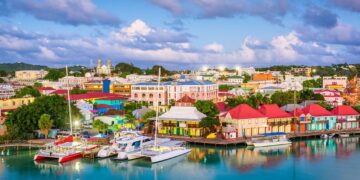










Cartagena de Indias, located in the Viceroyalty of Granada, in present-day Colombia, was the first province to declare its independence from Spain after the battle that began on November 11, 1811, and lasted 10 years.
Cartagena was a strategic location, as much of the transatlantic trade to the Southern Cone depended on it, due to the location of its port. The trade routes that left Europe and came to the American continent included the African islands under Spanish and Portuguese rule, such as the Canary Islands and Cape Verde, primarily, before continuing on to the Antillean islands of the Caribbean Sea and arriving at the continental port of Cartagena, which had the great advantage of the Magdalena River, facilitating the entry of ships into the interior of the continent.
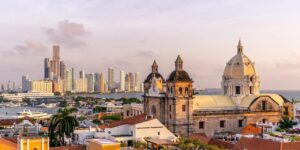
Cartagena, being an important port, also became a point of cultural exchange between the three continents, which to this day distinguishes it for its richness, as its Afro-descendant heritage left a notable imprint on the identity of Cartagena with its musical rhythms and body movements that are now part of the cultural expression of the region. Cartagena de Indias, besides being the most important port in Colombia and the capital of the department (state, province) of Bolívar, boasts not only the capital region itself, but also several idyllic beaches surrounding the port: Playa Blanca, the beaches of Isla Grande, the beaches of Isla Múcura, the beaches of the Barú Peninsula, and the beaches of the Rosario Islands. The latter are a type of islet located off the coast.
Bullerengue
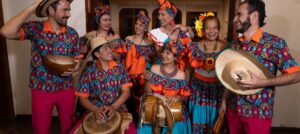
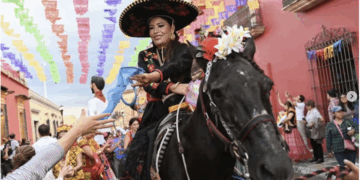
Bullerengue is music and dance from the Colombian Caribbean region, currently associated with cultural resistance. It was primarily performed by the descendants of the Maroons (cimarrons) who inhabited the palenques (maroon settlements) of the Canal del Dique area, the Lower Magdalena (Colombia), the Palenque of Mamoní or Santiago del Príncipe, and the Mandinga tribe of Kuna Yala (Panama), extending as far as the Darién region. The songs, dances, and rounds are organized in a circular fashion, with the lead vocals being those of the woman, the highest-ranking dignitary in this sung dance.
Bullerengue is characterized as a sung dance, seemingly derived from the ritual customs of the Palenque of San Basilio, forming part of the initiation rites for young women into puberty, especially in Cartagena de Indias.
Bullerengue emerged as a cultural product of enslaved Africans who used female drums, or alegre drums, and male drums, or llamador drums. The women also wore their polleronas, or skirts. Through this musical revelry of drums and handclaps, they celebrated their freedom upon leaving their lives of slavery.
The music includes a female drum, or alegre drum, accompanied by a male drum, or llamador drum, which keeps the rhythm. It also includes a totuma (a gourd) with a broken ceramic plate inside, and the handclaps of the chorus accompanying the music. Vocally, bullerengue is led by a master of ceremonies, and the singing is based on the narration of a story through question and answer in décimas (ten-line stanzas) and fragmented lines.
If I were a drum,
my black woman,
I would play only for you;
For you, my black woman, for you.
If I were a maraca,
I would play only for you,
for you, maraca and drum;
For you, my darling, for you.
I wish I could become a bagpipe
and it would play only for you,
just for you, all by myself, for you;
for you, my darling, for you.
And if I were a drum
I would hum softly,
very softly,
so that I could dance for you.
For me, my darling, for me,
for me, only for me.
Cartagena de Indias, ubicada en el virreinato de Granada, actual Colombia, fue la primera provincia en declararse independiente de España tras la batalla que inició el 11 de noviembre de 1811 y que duró 10 años.
Cartagena era un lugar estratégico, pues gran parte del comercio transatlántico al Cono Sur dependía de ella, por la ubicación de su puerto. Las rutas comerciales que salían de Europa y venían hacia el continente americano incluían las islas africanas bajo el dominio español y portugués como las Islas Canarias y Cabo Verde, principalmente, para pasar a las islas antillanas del mar Caribe y arribar al puerto continental de Cartagena, que tenía a su gran ventaja el río Magdalena facilitando el ingreso de los barcos hasta el interior continental.
Cartagena, siendo un puerto importante, se volvió también un punto de intercambio cultural entre los tres continentes, lo que hasta la fecha le distingue por su riqueza, pues su herencia afrodescendiente dejo una imprenta notable en la identidad cartaginés con sus ritmos musicales y sus movimientos corporales que ahora son parte de la expresión cultural de la región.
Cartagena de indias aparte de ser el puerto más importante de Colombia, siendo también la capital del departamento (estado, provincia) de Bolívar, cuenta no sólo con la región capital, sino que alrededor del puerto se encuentran diferentes playas paradisíacas: Playa Blanca, Playas de Isla Grande, Playas de Isla Múcura, Playa de la Península de Barú, Playas de Islas del Rosario. Éstas últimas, son un tipo de islotes construidos frente a la playa.
Bullerengue
Es música y danza de la región Caribe colombiana actualmente asociada a la resistencia cultural. El bullerengue fue ejecutada principalmente por los actuales descendientes de los negros cimarrones que habitaron los palenques del área del Canal del Dique, el Bajo Magdalena (Colombia), el Palenque del Mamoní o Santiago del Príncipe y la tribu de los Mandingas de Kuna Yala (Panamá), que se extendieron hasta el Darién. Donde Los cantos, bailes y rondas, se organizan de manera circular y la voz prima está a cargo de la mujer como la mayor dignataria este baile canta’o.
El bullerengue se caracteriza por ser un baile cantado, al parecer desprendida de las costumbres rituales del Palenque de San Basilio, formando parte de los actos de iniciación de las jóvenes a la pubertad, sobre todo en Cartagena de Indias.
El bullerengue surge como producto cultural de los esclavizados africanos quienes utilizaban tambores hembra o tambor alegre y el tambor macho o llamador, asimismo las mujeres visten sus polleronas o faldones. Por medio de esta bulla musical de tambores y palmas celebraban su libertad cuando dejaban su vida como esclavizados.
La música incluye un tambor hembra o tambor alegre acompañado de un tambor macho o llamador que lleva el ritmo, también una totuma con un plato de loza quebrado en su interior. y las palmas del coro que acompañan la música. A nivel vocal el bullerengue es liderado por un maestro de ceremonia y su canto se basa en la narración de una historia mediante pregunta y respuesta en décimas y líneas fragmentadas.
Si yo fuera tambó
mi negra,
sonara na’ má’ pá’ ti;
Pá’ ti, mi negra, pá’ tí.
Si maraca fuera yo,
sonara sólo pá’ ti,
pá’ ti maraca y tambó;
pá’ ti, mi negra, pá’ ti.
Quisiera voveme gaita
y sonará na’ má’ pá’ ti,
pá’ ti, solita, pá’ ti;
pá’ ti, mi negra, pá’ ti.
Y si fuera tamborito
currucutearía bajito,
bajito, pero bien bajito,
pá’ que bailara pá’ ti.
Pá’ mí, mi negra, pá’ mí,
pá’ mí, na’ má’ que pá’ mí.