









ADVERTISEMENT
41.34 °f
Detroit
EL CENTRAL Hispanic News
  • Home
  • About
    • Resources
  • Community

    Vigilia interreligiosa por el voto pide proteger a los trabajadores electorales y a los votantes antes de las elecciones del 3 de noviembre

    EL CENTRAL Endorsements: Jocelyn Benson for Governor and Abdul El-Sayed for U.S. Senator

    Jorge and Paola Ramos Bring National Platform to Michigan Highlighting Pivotal Election

    Bank of America Co-President Dean Athanasia Visits Detroit to Spotlight Workforce Investments, Including Local Efforts to Expand Health Care Career Pathways

    No Kings Rallies Encourage Early Voting to Protect the Vote 

    Joi Harris, President and CEO of DTE Energy presents a keynote address.

    Annual Amigos de SER Business Recognition Luncheon: SER Metro-Detroit Celebrates its 55th Anniversary

    􏰔􏰕􏰈 􏰌􏰗􏰓􏰛􏰋􏰂􏰑 􏰐􏰋􏰏􏰏􏰌􏰍􏰮􏰛􏰘􏰖􏰖􏰋􏰍􏰒 􏰛􏰈􏰐􏰈􏰙􏰌􏰍􏰫

    Credit Union ONE Deepens Investment in Southwest Detroit with New Community-Focused Branch

    Habla Detroit Unites Spanish Learners For Judgement-Free Lessons 

    Rx Kids Is Putting Resources Directly Into Wayne County Families 

  • Featured

    National Leaders Converge on Michigan for Midterm Closing Arguments

    EL CENTRAL Endorsements: Jocelyn Benson for Governor and Abdul El-Sayed for U.S. Senator

    Jorge and Paola Ramos Bring National Platform to Michigan Highlighting Pivotal Election

    AOC Rallies Voters for Abdul El-Sayed in Southwest Detroit and Pontiac

    Joi Harris, President and CEO of DTE Energy presents a keynote address.

    Annual Amigos de SER Business Recognition Luncheon: SER Metro-Detroit Celebrates its 55th Anniversary

    Día de los Votos: Honoring Our Roots and Building Our Future

    L to R: Mayte Penman, Tech Town; Maria Mendez, Accounting Aid Society; Luis Antonio Uribigan, Design Think Tank; Alejandro Ugalde Sandoval, Kopali Media; Elizabeth Madrid, Hombro a Hombro; Martha Rosales, Nuvo Studio

    Toast of the Town Celebrates the People Behind Detroit’s Businesses

    All Important Midterm Elections Are Here: Be Prepared

    The Playoffs Are Coming to Keyworth

  • Opinion
  • Culture & Arts
    • All
    • World Cultures

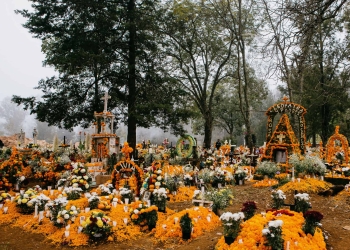
    Día de los Muertos traditions

    Trinidad and Tobago

    Suriname

    The Mayan Ruins of Copán

    100 Years of Film and Music: Detroit’s Senate Theater Marks Milestone With October Event

    Saint Barthélemy

    Saint Kitt’s and Nives

    Talentos Latinos Awards Announces 2026 Honorees Ahead of Oct. 2 Ceremony

    DIA Announces Ofrenda Artists Celebrating el Día de Muertos

    • World Cultures
  • Latest Issue
  • Past Issues
    • Throwbacks
  • Events
  • Newsletter
  • Contact
    • Advertise
  • en English
    • en English
    • es Spanish
No Result
View All Result
EL CENTRAL Hispanic News
No Result
View All Result

Triquis: The Worshipers from Oaxaca

Mariana Ayón RV by Mariana Ayón RV
December 4, 2025
in Español, World Cultures
Home Español
ShareShareTweetEmail to a friend
Español Abajo

The nominative Triqui is a deformation of the word driqui, from the Triqui language, composed of Dri, derived from dre: father, and qui: great or superior. The Triqui region comprises a lowland area, whose main town is San Juan Copala, and a highland area, with its main town in San Andrés Chicahuaxtla.

The main festivities are those dedicated to the patron saint of the community.

Triqui women are known for their creative and artisanal skill in making clothing, primarily on backstrap looms and horizontal four-stake looms, also called malacates; they also make shirts and sashes, weave palm hats and baskets, which they use for themselves.

ADVERTISEMENT

The Triqui people have actively participated in two historical movements in Mexico: The Caste War (1822-1865) and the Revolution (1910-1919).

San Andrés Chicahuaxtla and San Juan Copala lost their status as municipalities in 1940 and 1948, respectively. San Martín Itunyoso is the only Triqui municipality that still exists.

The migration of the Triqui people, from both the lowlands and highlands, is not only due to political and social conflicts, but also to a lack of educational and employment opportunities.

They have migrated to the agricultural fields of Sonora, Sinaloa, Baja California, and Cuautla, Morelos. Many others have gone to large cities such as Mexico City, the State of Mexico, and Oaxaca City, among other Mexican states. But Triqui migration doesn’t remain within Mexico, as many have crossed the northern border into the United States or Canada.

After the arrival of Europeans, the Triqui adopted Catholicism. However, they have undergone a syncretic process, preserving the religion of their ancestors. From their traditional religion, they maintain the worship of nature, astronomical phenomena, and the stars, their religion being a syncretism between shamanic-animistic practices and Christianity.

They believe in the existence of good and evil gods. Some of the good gods are the god of the earth, called Naac Shishec; Naac Yahui, the god of the moon; Naac Naac, the name of the sun god; and Naac Cunmá, the god of water.

Among the evil gods are the god of death (Naac-Nimá) and the underworld (Naac Chunguy). All these gods have a father named Nexquiriaco, their creator, who is respected and venerated by the ethnic community.

They celebrate the day of their patron saint, the Day of the Dead, Holy Week, the Virgin of Guadalupe, Easter, among others.

Triqui Food

Their cuisine is based on the preparation of rich traditional dishes such as roasted venison, beef chilatas, enchiladas, chileatoles, and the traditional tepache made with sugarcane. From gathering, they obtained sweet potatoes, wild herbs and fruits, quelites (edible greens), edible mushrooms, and wild fruits such as capulines (Mexican cherry blossoms) and blackberries. Animals and insects, such as giant ants called chicatanas, obtained through hunting, are also part of their daily diet. They prepare tamales, salsas, and pozole with special aromatic herbs. They also eat lobsters. Today, the Triqui people continue to maintain their traditional dishes in their daily diet, enriching them with some processed foods. The most traditional food of the Triquis:

“Hniín gànè-e”. ‘Pozole’. The triqui style pozole is a pozole with corn kernels cooked without juice and bathed with a sauce similar to a corn atole and dried chilies.

“Nneè txrùnj-un”. ‘Slow Cooked Meat’. The meat is cooked in an underground oven, covered with maguey leaves and a layer of soil is placed on top.

“Diyaan-an.” ‘Enchilada’. It is a type of enchilada bathed in red sauce generally.

“Runee nayúun kinj-in.” ‘Beans with dough’. They are boiled beans and later the dough and dried chilli sauce

is added.

“Txra natah yahaj.” ‘Omelette muddy with sauce’. The tortilla is smeared with a special sauce made exclusively with dried chili peppers without any other seasoning. It is accompanied with some boiled eggs. This meal is exclusively for women who have just given birth.

Triqui Legend of the Devil’s Sink

According to the elders, many years ago there lived a newlywed couple. The wife was very beautiful, while the husband was a hardworking man, though, he was very poor. 

Before marrying, the woman already had a very rich lover, so she never loved her husband, because, the woman’s greatest desire was to marry her rich lover. 

One day, she got tired of living with the poor man, the woman invited him for a walk along the banks of the Devil’s Sink. Upon arriving, the woman told her husband to look down the sinkhole, and while he was looking at the bottom, she pushed him in. That is how the woman married her lover, believing her first husband had died, and a grand wedding was celebrated. The woman’s first husband remained inside the sinkhole for seven years, thanks to the help of a crow that dropped an ear of corn for him to survive. He ate a kernel of corn each day so he wouldn’t go hungry and quenched his thirst with water from the river that flowed inside the sinkhole.

One day, a feathered serpent descended into the sinkhole and saw a very sad man. She asked him what he was doing there, and he told her his whole story of how he got there and his unhappy life. The serpent took pity on him and said, “Don’t be afraid, good man, I will get you out of here. Hold on to my tail tightly so you can get to the outside.”

When he emerged, the feathered serpent said to him, “I will shake myself, and my feathers will fall out. Gather them and sell them so you can become a very rich man.” He did as he was told; he gathered all the feathers, sold them, and became a very rich man, thanks to the beautiful feathers of the feathered serpent.

When his wife saw him, she was surprised; but he no longer wanted to be with her and married another woman who treated him well, and with whom he was very happy.

Triquis de Oaxaca

El nominativo triqui es una deformación del vocablo driqui, de la lengua triqui, compuesto por dri, derivado de dre: padre, y qui: grande o superior. La región triqui comprende una zona baja, cuya cabecera es San Juan Copala, y una alta, con cabecera en San Andrés Chicahuaxtla.

Las festividades principales son las dedicadas al santo patrono de la comunidad.

Las mujeres triquis son conocidas por su habilidad creativa y artesanal en la elaboración de ropa, principalmente en telar de cintura y en telar horizontal de cuatro estacas, también llamado malacate; también confeccionan camisas y fajas, tejen sombreros de palma y cestos, que destinan al uso personal.

Los triquis han participado activamente en dos movimientos históricos de México: La lucha de Castas (1822-1865) y la Revolución (1910-1919).

San Andrés Chicahuaxtla y San Juan Copala perdieron la categoría de municipios en 1940 y 1948 respectivamente; San Martín Itunyoso es el único municipio triqui que aún existe.

La migración de los triquis, tanto de la zona baja como de la zona alta, no sólo es por los conflictos políticos y sociales, sino también por la falta de oportunidades de estudios y trabajo. 

Han emigrado a los campos agrícolas de Sonora, Sinaloa, Baja California, Cuautla Morelos. Otros tantos a las grandes urbes como la Ciudad de México, el Estado de México, la Ciudad de Oaxaca, entre otos estados mexicanos. Mas la migración Triqui no queda en México, pues muchos han cruzado la frontera norte hacia los Estados Unidos de América o Canadá.

Tras la llegada de los europeos, los Triquis adoptaron la religión católica. Sin embargo, han vivido un proceso sincrético, pues conservan la religión de sus ancestros. De su religión tradicional, preservan la adoración a la naturaleza, los fenómenos astronómicos y las estrellas, siendo su religión un sincretismo entre las prácticas chamánicas – animistas y la religión cristiana.

Creen en la existencia de dioses buenos y malos. Algunos de Los dioses buenos son el Dios de la tierra, llamado Naac Shishec; Naac Yahui, el Dios de la Luna; Naac Naac el nombre del dios del sol y Naac Cunmá, el del agua. 

Dentro de los dioses malos está el de la muerte (Naac-Nimá) e infierno (Naac Chunguy). Todos estos dioses poseen un padre llamado Nexquiriaco, su creador, quien goza de respeto y veneración de la comunidad étnica. 

Celebran el día de su santo patrono, el día de los muertos, Semana Santa, Virgen de Guadalupe, la Pascua, entre otras.

Comida Triqui

Su gastronomía se basa en la preparación de ricos platos tradicionales como ciervos asados, chilatas de res, enchiladas, chileatoles y los tradicionales tepaches con caña de azúcar. De la recolección obtenían patatas dulces, hierbas y frutas salva jes, quelites, setas comestibles, frutas silvestres como capulines y moras. También forman parte de la dieta diaria animales e insectos como las hormigas gigantes llamadas chicatanas” obtenidas de la caza.

Preparan tamales, salsas y pozoles con hierbas de olor especiales. También comen langostas. En la actualidad, los Triqui siguen manteniendo sus platos tradicionales en la dieta diaria, enriqueciéndolos con parte de los alimentos industrializados.

Los platillos más tradicionales de los Triquis:

“Hniín gànè-e”. ‘Pozole’. El pozole estilo triqui, es un pozole con granos de maíz cocidos sin jugo y bañados con salsa similar a un atole de maíz y chiles secos.

“Nneè txrùnj-un”. ‘Barbacoa’. La carne es cocida en un horno bajo tierra, cubierta con pencas de Maguey y al final se coloca una capa de tierra.

“Diyaan-an”. ‘Enchilada’. Es un tipo de enchilada bañada en salsa roja generalmente.

“Runee nayúun kinj-in”. ‘Frijol con masa’. Son frijoles hervidos y posteriormente es agregada la masa y salsa de chiles secos.

Leyenda Triqui del Sumidero del Diablo

Según cuentan los ancianos; hace muchos años vivía un matrimonio de recién casados, la esposa era muy bonita en cambio el esposo era un hombre trabajador, pero era muy pobre. 

Antes de casarse la mujer ya tenía un amante muy rico, por lo que nunca quiso a su esposo. El mayor deseo de la mujer era poder casarse con su amante. 

Un día la mujer cansada ya de vivir con el hombre pobre, lo invitó a dar un paseo en las orillas del sumidero del diablo, al llegar la mujer le dijo a su esposo que mirara abajo del pozo, y mientras él observaba el fondo del pozo, la mujer lo empujó hacia el interior. 

Así fue cómo la mujer se casó con su amante pensando que su primer esposo había muerto, y se celebró una gran boda.

El primer esposo de la mujer permaneció en el interior del sumidero durante siete años gracias a la ayuda de un cuervo que desde arriba le dejaba caer una mazorca para que pudiera sobrevivir, él se comía un granito de maíz cada día para que no le faltara alimento y se saciaba su sed con el agua del río que pasaba en el interior del sumidero. 

Un día, una serpiente emplumada bajó en el interior del sumidero y vio un hombre muy triste y le preguntó qué hacía ahí, él le contó toda su historia sobre cómo llegó ahí 

y su infeliz vida, la serpiente se compadeció de él y le dijo: “No temas buen hombre, yo te sacaré de aquí, agárrate de mí cola con fuerza para que puedas salir al exterior”. 

Al salir, la serpiente emplumada le dijo: “me sacudiré y mis plumas se caerán, recógelas y véndelas para que seas un hombre muy rico”. Él así lo hizo, recogió todas las plumas los vendió y se volvió un hombre muy rico, gracias a las bellas plumas de la serpiente emplumada. 

Cuando la esposa lo miró, se sorprendió; pero él ya no quiso estar con ella y se casó con otra mujer que lo trataba bien, y con la que fue muy feliz.

Tags: Mexico
Previous Post

The Monetization of Rage

Next Post

DC Hosting World Cup Draw

Mariana Ayón RV

Mariana Ayón RV

Mexican poet and writer. Interested in hispanic-latinamerican cultures. Settled in Mexico, she is currently studying a Master's Degree in History.

Related Posts

Español

Blue Tsunami Sweeps Across Michigan and the Nation

by EL CENTRAL
November 5, 2026
0

Michigan voters elect Jocelyn Benson governor and Abdul El-Sayed U.S. Senator, the first Muslim senator. Latino voters flip Texas and...

Read moreDetails
Español

Latinos Vote Early

by EL CENTRAL
November 5, 2026
0

Latino early voting surges 80% to 5.2 million ahead of 2026 midterms. 406,000 young Latinos voted early. Record 100+ Latino...

Read moreDetails
Culture & Arts

MANÁ Brings “Vivir Sin Aire” Tour for Historic First Visit to Detroit

by Juanita Zuniga
November 5, 2026
0

Maná brings Vivir Sin Aire Tour to Detroit for first-ever show at Little Caesars Arena. Fher Olvera thanks Latino workers....

Read moreDetails
Culture & Arts

Día de los Muertos traditions

by Mariana Ayón RV
November 1, 2026
0

Día de los Muertos: November 1–2 traditions, from Mexica altars to pan de muerto and calaveritas literarias. Learn how Mexico...

Read moreDetails
Español

Trump and his Sycophants Exposed: The Real Meaning of the Midterm Election

by EL CENTRAL
November 1, 2026
0

Trump’s approval hits record lows as Americans see democracy at stake. National Guard deployments, ICE raids, DOJ pressure. Midterms Nov....

Read moreDetails
Español

National Leaders Converge on Michigan for Midterm Closing Arguments

by EL CENTRAL
October 29, 2026
0

Obama rallies 4,000 at Cass Tech; Trump, Vance, AOC, Sanders join Michigan closing push before November 3. El-Sayed, Benson, Rogers...

Read moreDetails
Next Post

DC Hosting World Cup Draw

ADVERTISEMENT
  • Trending
  • Comments
  • Latest
Three young players vie for the soccer ball during intense active play, with spectators and field fencing visible in the background

Occupy the Summer and Detroit City FC host a night of street soccer at Clark Park

July 30, 2026

Two Food and Specialty Markets. One Destination

August 6, 2026

Remembering Humberto Ruben Oriel

August 6, 2026
Multiple panelists stand in discussion in front of a projection screen reading "THREE WAYS TO TAKE ACTION" at an event space with distinctive yellow-framed windows and decorative skull murals on the walls

Latino Leaders Gather in Detroit for Statewide ‘No Se Puede, Sin Nosotros’ Convening

July 30, 2026

Vigilia interreligiosa por el voto pide proteger a los trabajadores electorales y a los votantes antes de las elecciones del 3 de noviembre

0

EL CENTRAL Endorsements: Jocelyn Benson for Governor and Abdul El-Sayed for U.S. Senator

0

Bring On the Post-Season! 

0

Jorge and Paola Ramos Bring National Platform to Michigan Highlighting Pivotal Election

0

Vigilia interreligiosa por el voto pide proteger a los trabajadores electorales y a los votantes antes de las elecciones del 3 de noviembre

November 1, 2026

Día de los Muertos traditions

November 1, 2026

Trump and his Sycophants Exposed: The Real Meaning of the Midterm Election

November 1, 2026

National Leaders Converge on Michigan for Midterm Closing Arguments

October 29, 2026
ADVERTISEMENT

Vigilia interreligiosa por el voto pide proteger a los trabajadores electorales y a los votantes antes de las elecciones del 3 de noviembre

November 1, 2026

Día de los Muertos traditions

November 1, 2026

Trump and his Sycophants Exposed: The Real Meaning of the Midterm Election

November 1, 2026

National Leaders Converge on Michigan for Midterm Closing Arguments

October 29, 2026

EL CENTRAL Endorsements: Jocelyn Benson for Governor and Abdul El-Sayed for U.S. Senator

October 29, 2026

Jorge and Paola Ramos Bring National Platform to Michigan Highlighting Pivotal Election

October 29, 2026
  • Trending
  • Comments
  • Latest

Volunteers Needed for Refugee Resettlement in Michigan

February 14, 2024

Why We Celebrate “CINCO DE MAYO, THE 5TH OF MAY”

May 2, 2024
Steve Nagi Vanessa and Joanna Velazquez

Infamous Highwaymen Motorcycle Club Leader Pursues a Second Chance at Life

February 1, 2024

MSHDA Opens $60 Million MI Neighborhood Applications

April 4, 2024

Community and RuboFest 2022 

0

“Vemos a México como un socio igualitario”

0

Ford Hispanic and Latino Network Beautifies Clark Park

0

Editorial Opinion “The Fifth, I take the Fifth”

0

Vigilia interreligiosa por el voto pide proteger a los trabajadores electorales y a los votantes antes de las elecciones del 3 de noviembre

November 1, 2026

Día de los Muertos traditions

November 1, 2026

Trump and his Sycophants Exposed: The Real Meaning of the Midterm Election

November 1, 2026

National Leaders Converge on Michigan for Midterm Closing Arguments

October 29, 2026

EL CENTRAL Endorsements: Jocelyn Benson for Governor and Abdul El-Sayed for U.S. Senator

October 29, 2026

Jorge and Paola Ramos Bring National Platform to Michigan Highlighting Pivotal Election

October 29, 2026
ADVERTISEMENT
EL CENTRAL Hispanic News

Local News. Latin Pride. Real Stories.
Contamos lo que otros no cuentan
Be part of the conversation

Follow Us

Browse by Category

  • Business
  • Classifieds
  • Community
  • Culture & Arts
  • Education
  • Entrepreneurs
  • Español
  • Events
  • Featured
  • Finance
  • Food
  • Latest News
  • Local News
  • Local Small Business
  • Music
  • National News
  • Opinion
  • Others
  • People
  • Politics
  • Resources
  • Restaurants
  • Sports
  • Throwbacks
  • World
  • World Cultures

Republishing Guidelines

Our stories may be republished online or in print under Creative Commons license CC BY-NC-ND 4.0. We ask that you edit only for style or to shorten, provide proper attribution and link to our website.

  • Latest Issue
  • Newsletter
  • Advertise
  • About
  • Contact
  • Privacy & Cookie Policy
  • Terms
  • Created with EyeBreatheDesign

© 2026 EL CENTRAL HISPANIC NEWS

No Result
View All Result
  • Home
  • Sections
    • Featured
    • Local News
    • Community
    • Culture & Arts
    • Español
    • Music
    • Sports
  • Events
  • Latest Issue
  • Past Issues
  • Contact
  • Advertise
  • Privacy & Cookie Policy
  • Terms of Service

© 2026 EL CENTRAL HISPANIC NEWS