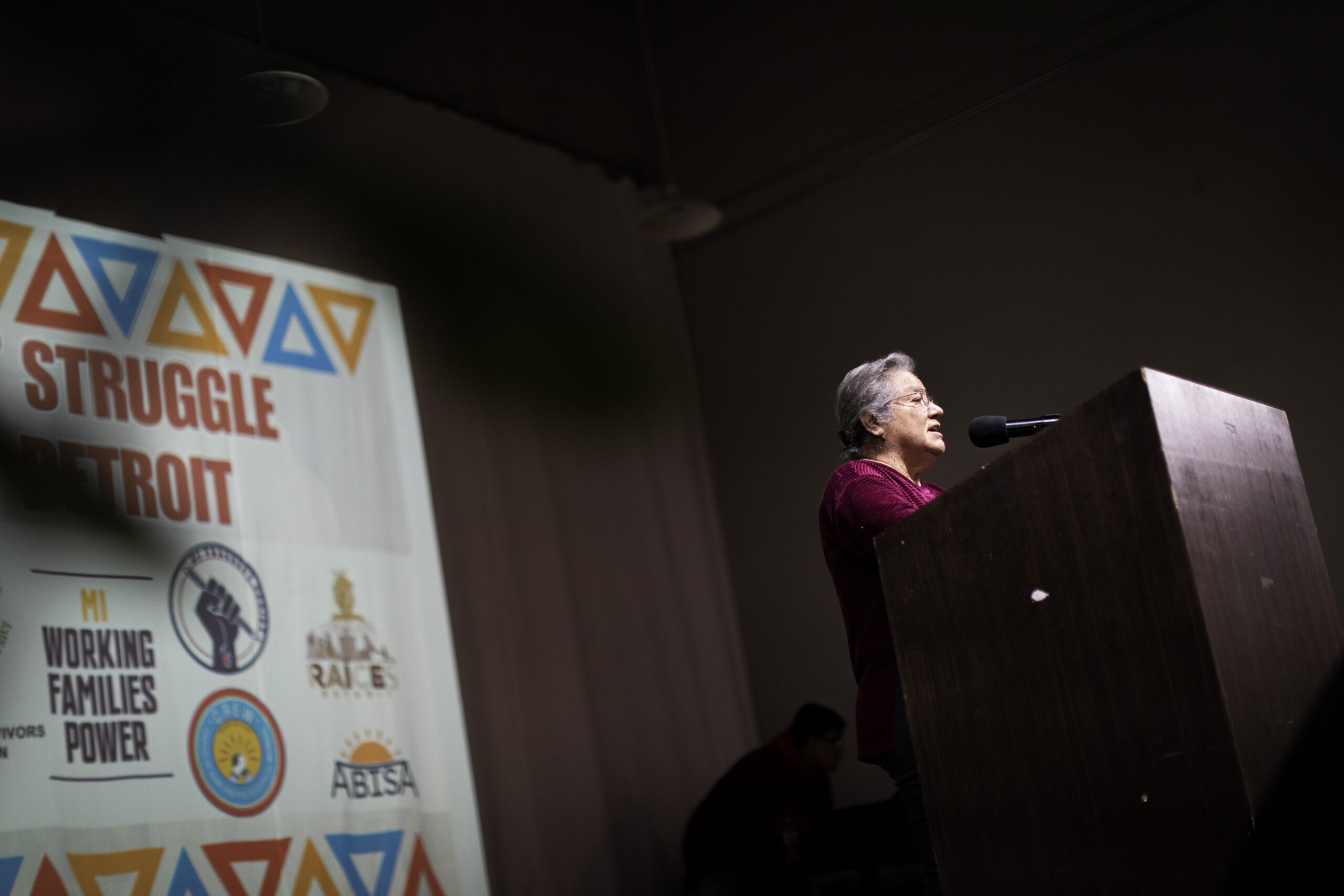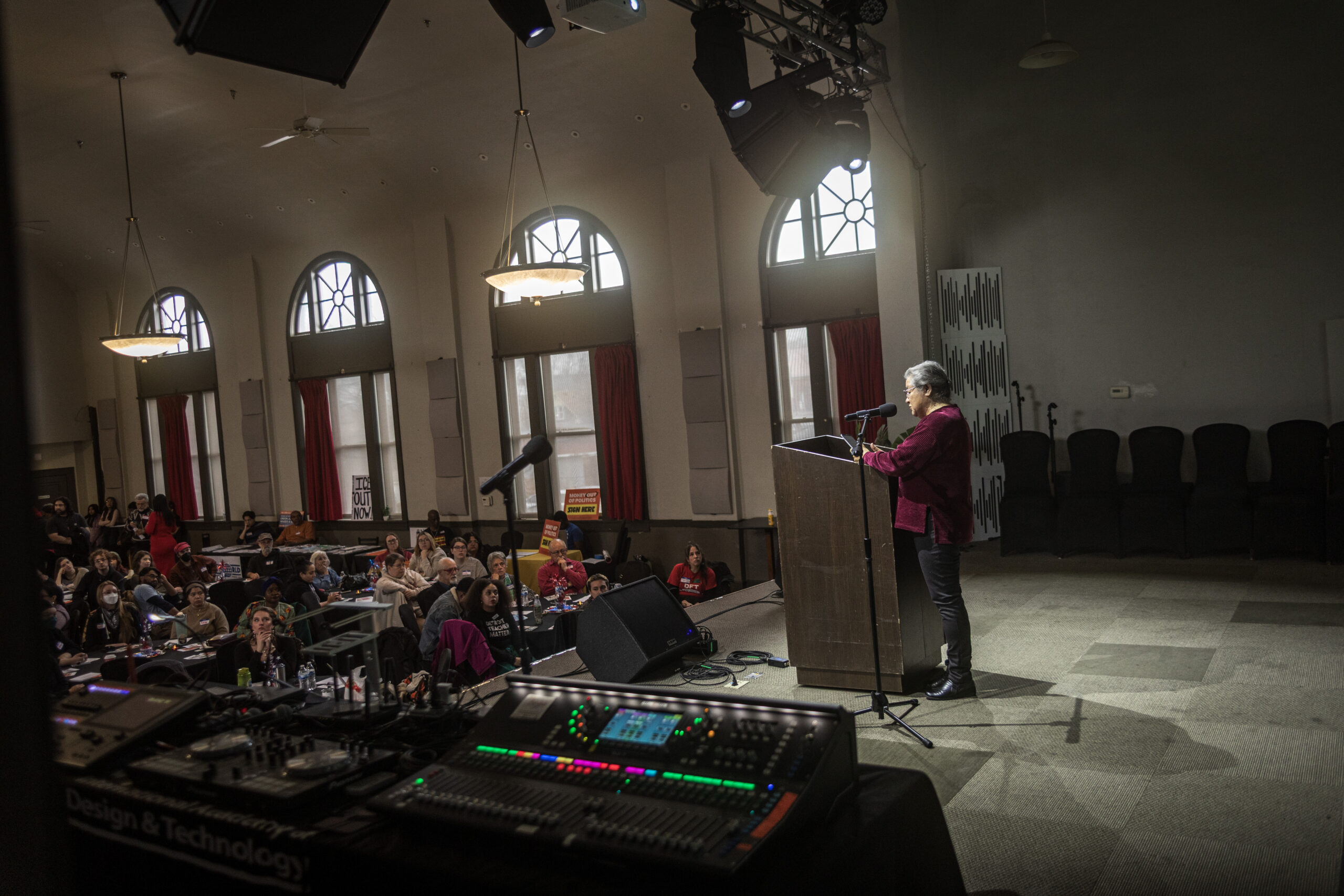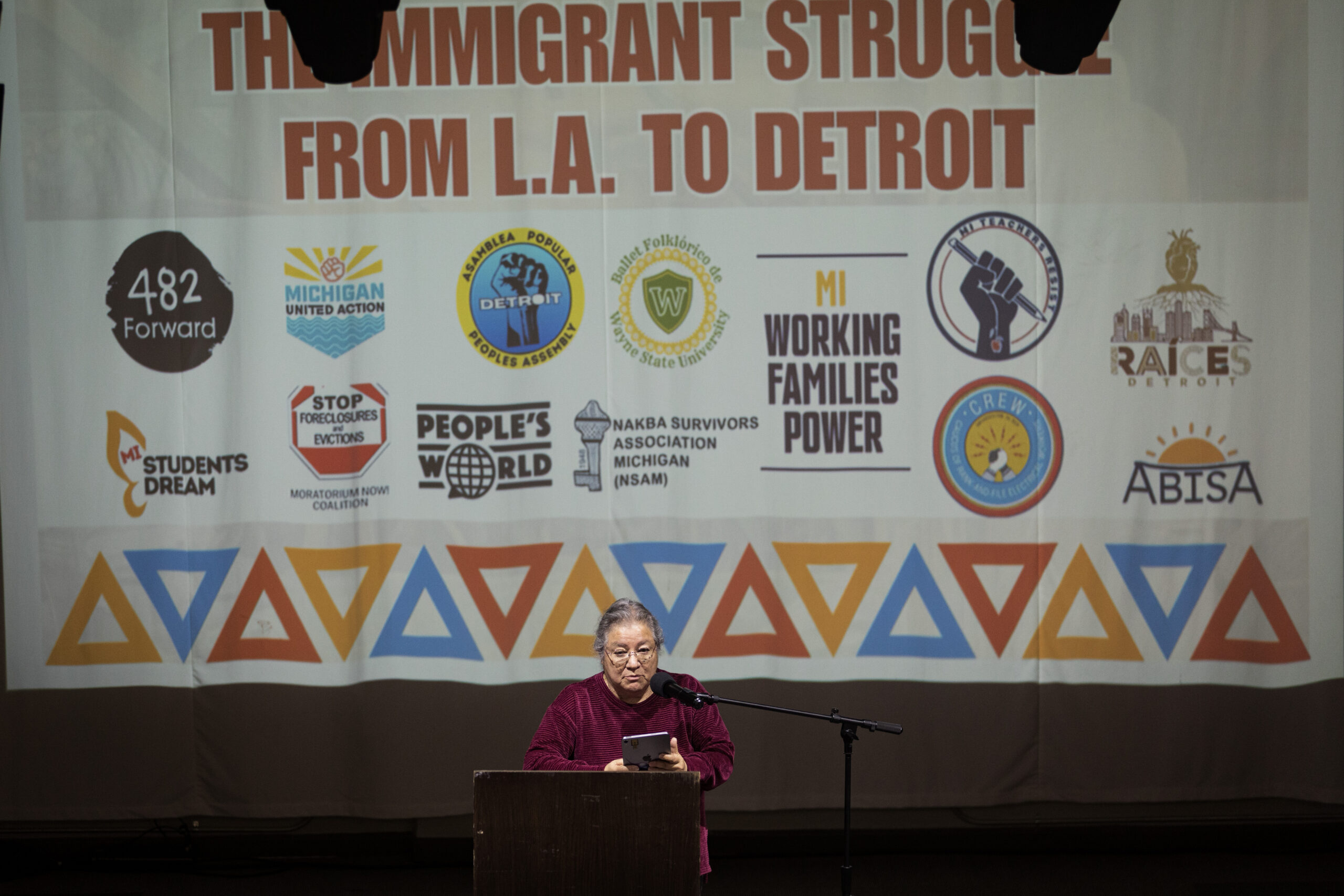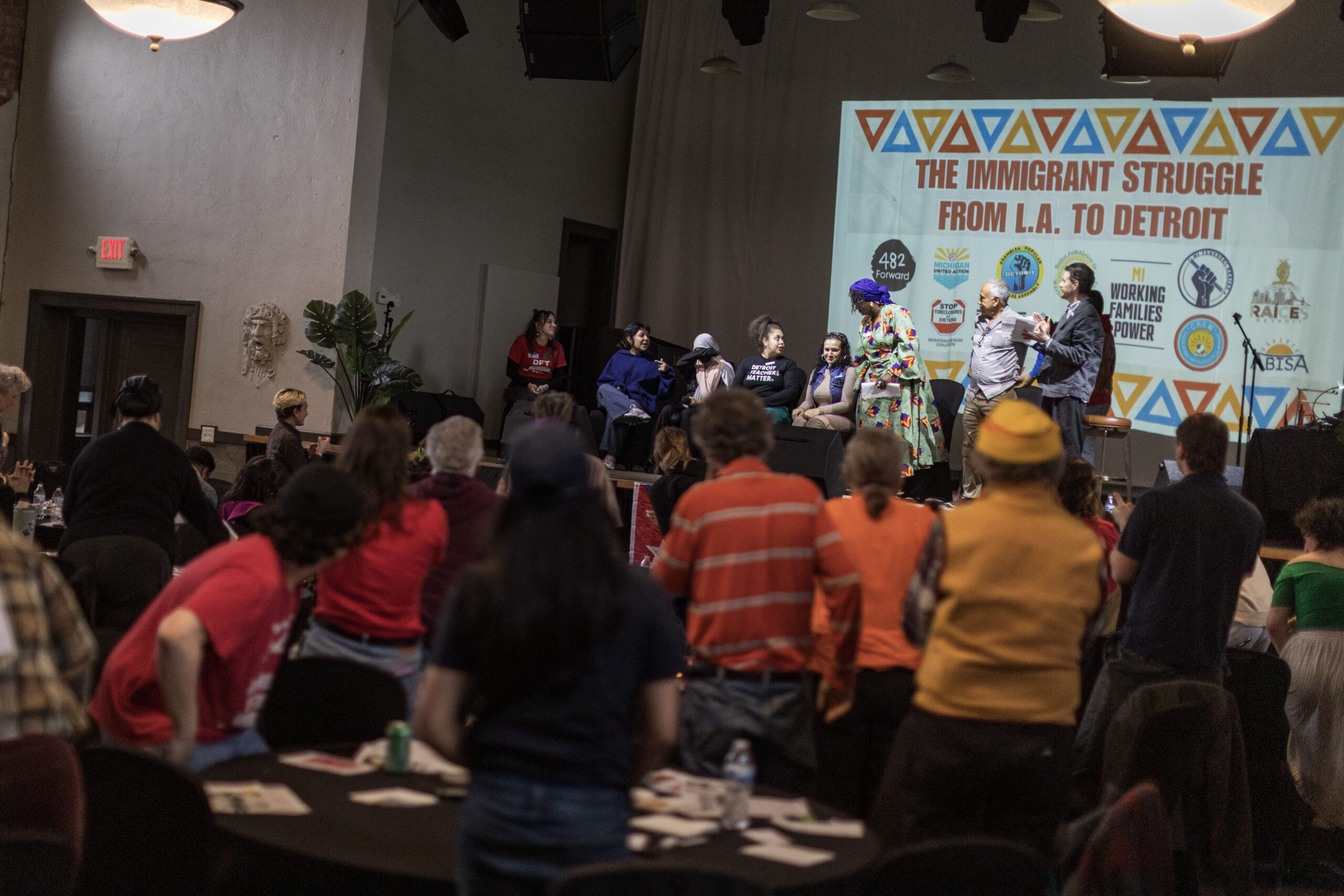







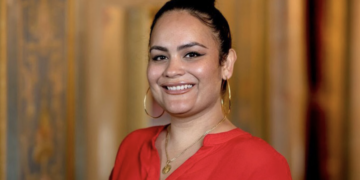















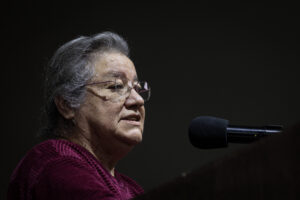
Her presence had already been announced; she was the face of the afternoon’s gathering. Slowly, wearing a maroon sweater, Rossana Cambron, co-chair of the Communist Party USA and a longtime activist for immigrant rights, stepped onto the stage at the Candela Detroit venue to argue, as she always has, that the anti-immigrant issue has been present even before the 1929 stock market crash, and working-class immigrants have been easy targets to be blamed by different government in the US amid economic crisis.
“Instead of blaming bankers, corporations, or broken economic systems, politicians blame working-class immigrants. They were called an economic drain. They were accused of stealing jobs,” Cambron said. “The narrative was simple and powerful. American jobs for Americans. Does that sound familiar?”
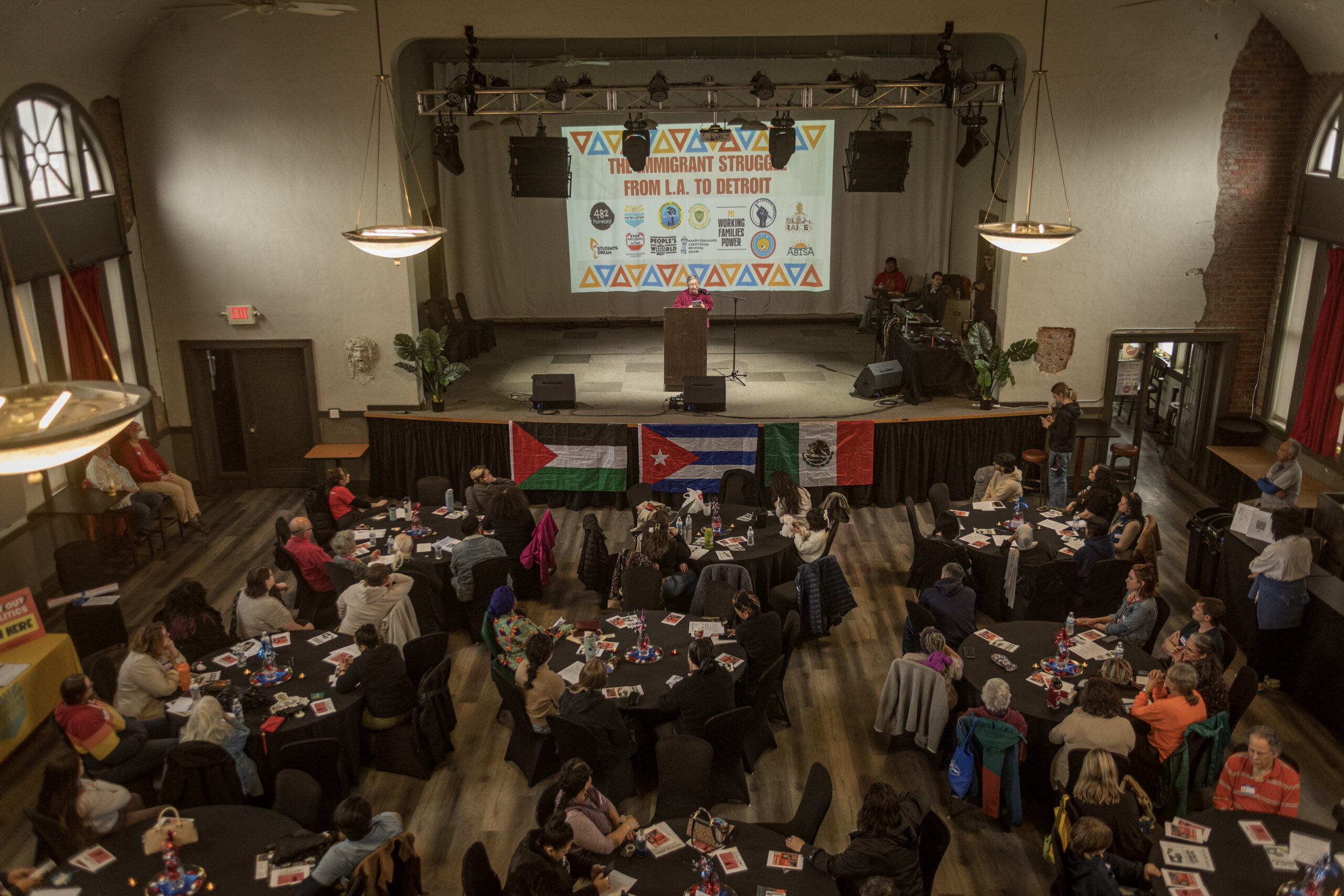
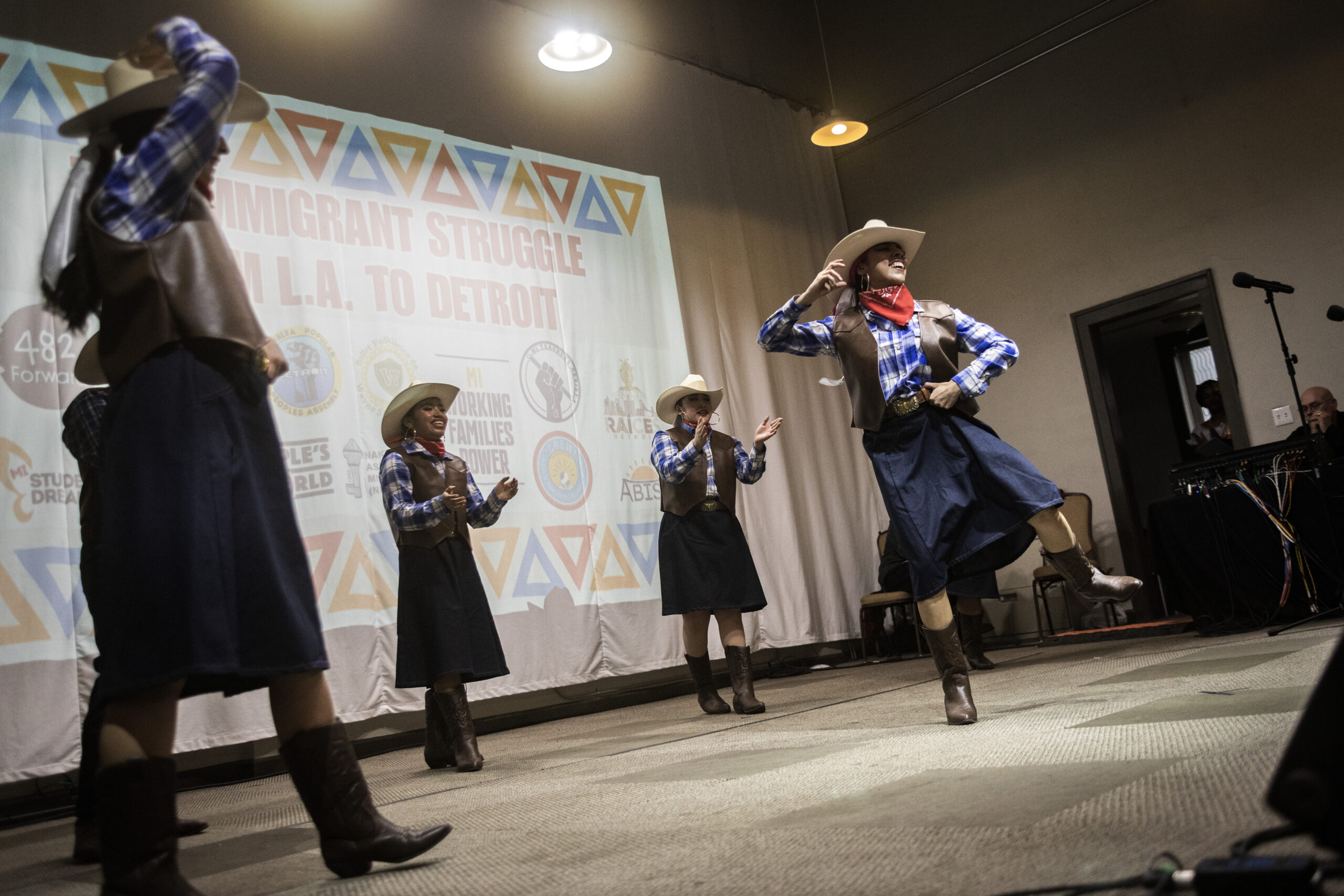
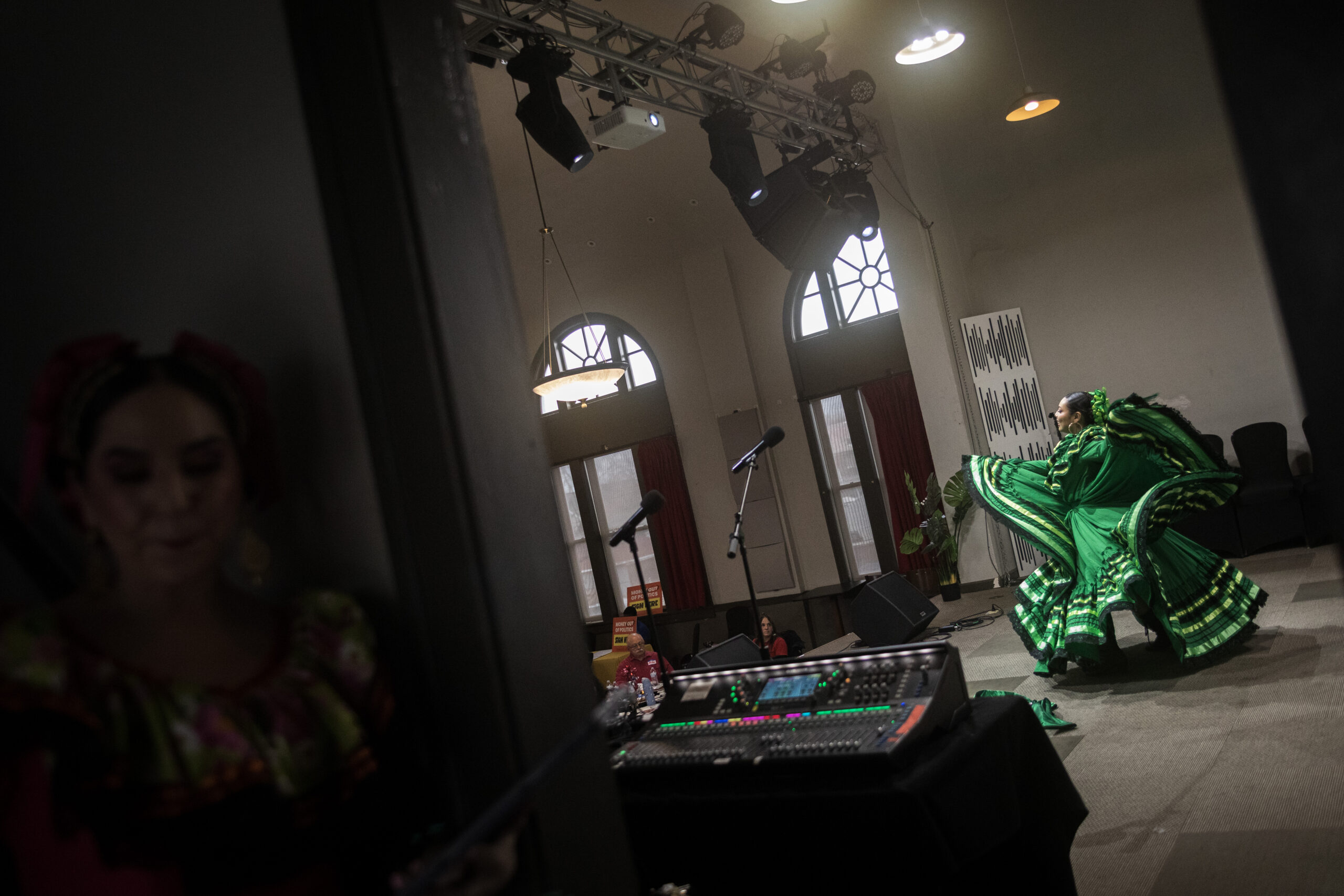
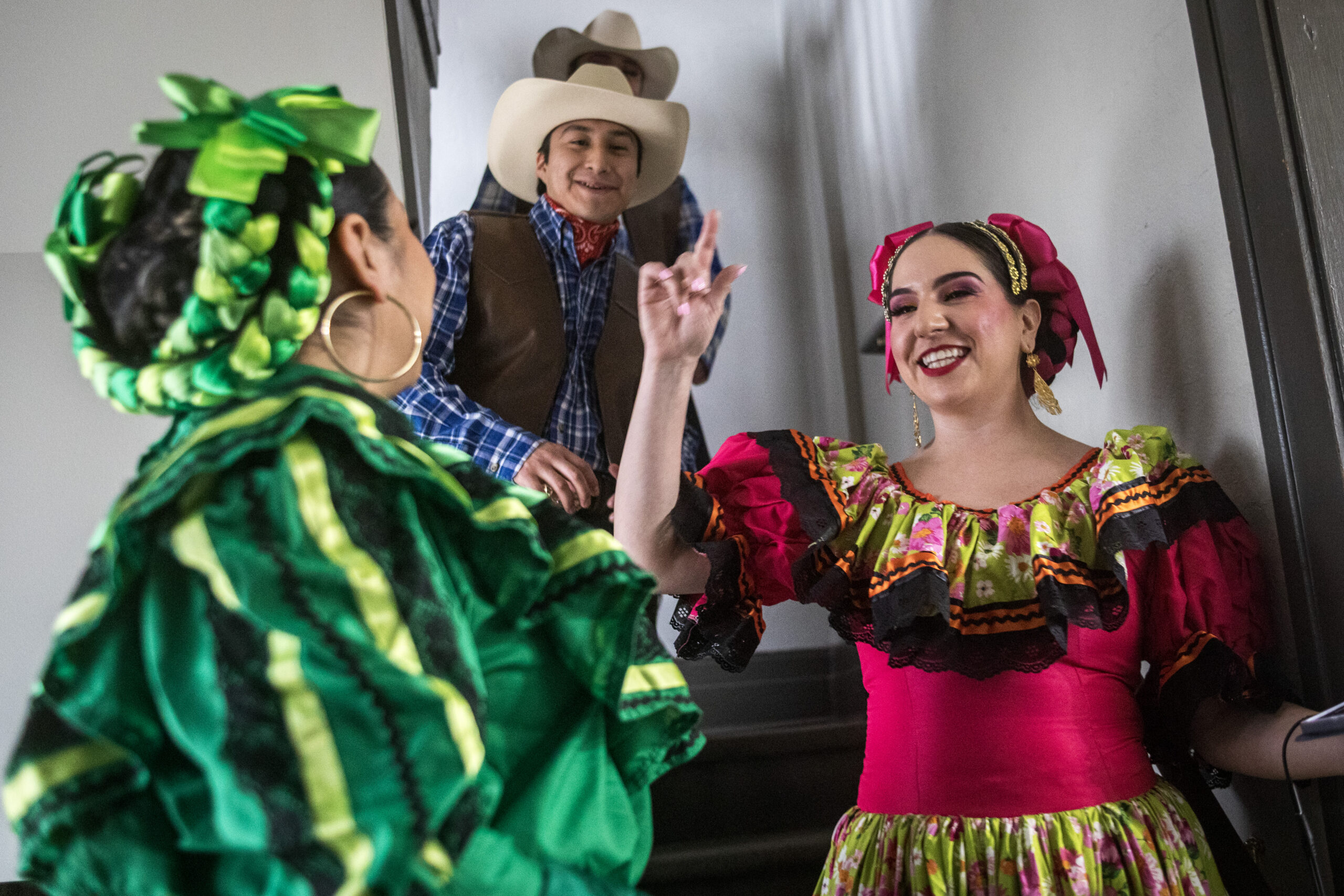
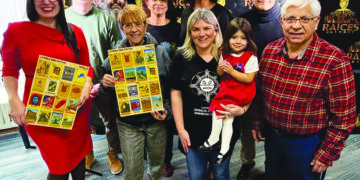
Around midday on Saturday in Southwest Detroit, various pro-immigrant activists, residents, organizations, and community leaders welcomed Rossana and Arturo Cambron, a couple who discussed the similarities between the problems faced by immigrants in Los Angeles and Detroit and how people are organizing against them. The gathering, held in front of Cuban, Mexican, and Palestinian flags, included community activities, Mexican food, and dances performed by the Wayne State University Folkloric Ballet.
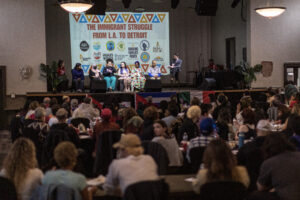
Among the audience were also families affected by immigration agents, families who have lost a relative or know someone who has been taken away, or families suffering financially because ICE took the only breadwinner in the family. “These are real lives. It’s not just stories. So we have to figure out a way to create a collective that also understands and has this narrative together that says, ‘These are the real people that have really been impacted by what’s happening,'” said Laura Chavez, founder of the Detroit-based organization RAICES, as the first speaker.
“The fight back is stronger. Immigrants aren’t isolated the way they once were. There is a broader solidarity. Labor is stepping up. Faith groups are stepping up. Students are stepping up. Communities are stepping up. You hear their voices. I learned early that if you’re not at the table, decisions are made without you,” mentioned Rossana, who also said community protection, such as ICE watches to protect immigrant workers, grocery delivery for families, and arranged rides in Detroit, were similar in LA.
However, she warned it must not stop. “This will not fix itself. It will only stop when people make it stop. That means maximum pressure on Congress, on the White House, and especially on the corporate forces behind them. We must call, we must write, we must petition, we must lobby, and hold vigils,” the activist said.
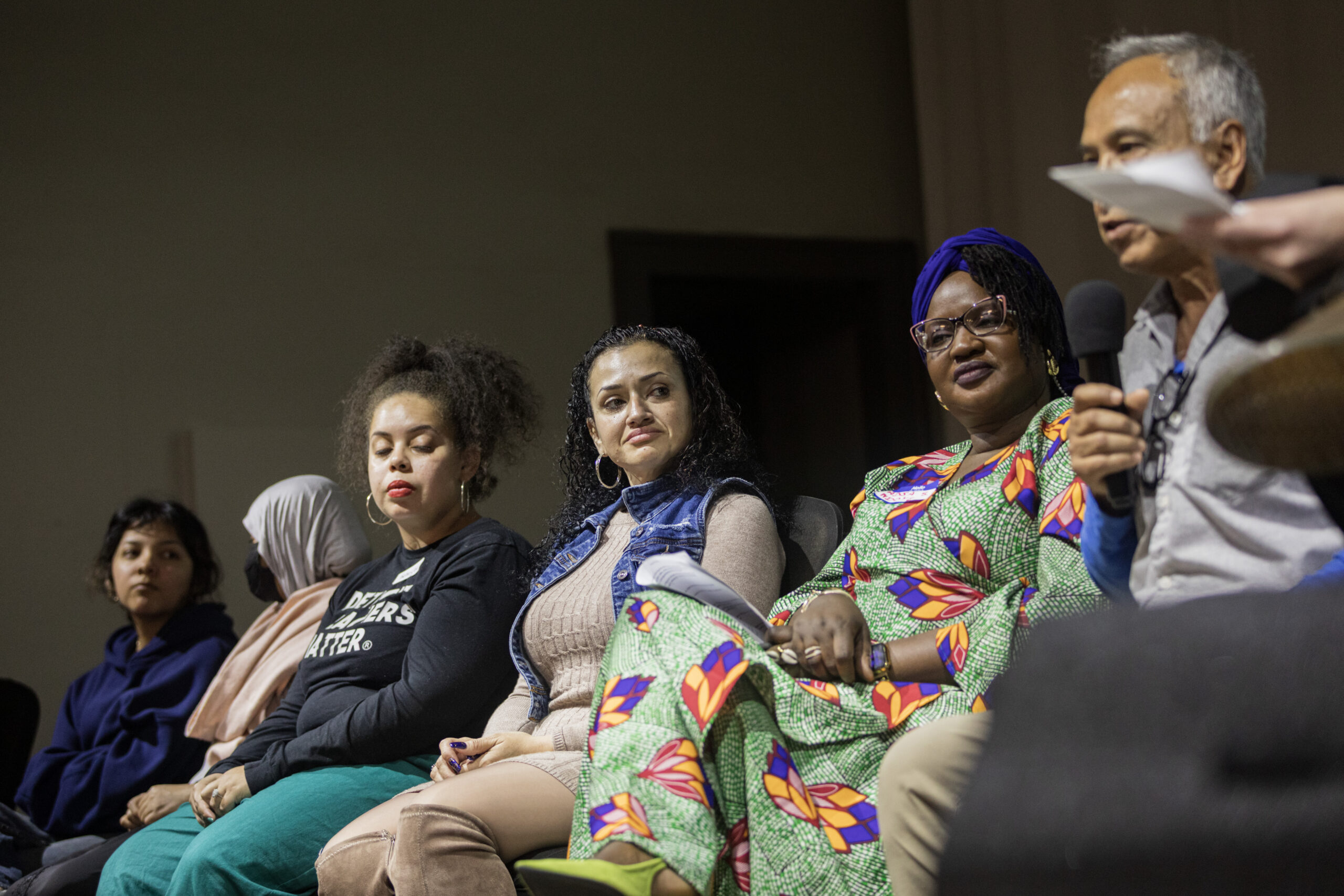
The room erupted in applause from the more than 100 people who attended the speech. Community members, including parents, teachers, and students, also took the opportunity to share their experiences with immigration agents and how these encounters have affected their daily lives. Veronica Rodriguez, a resident of Southwest Detroit, changed her lifestyle almost a year ago to religiously drive her car every day beginning at 5am to spot ICE agents, warns the community, tow cars from those whose got arrested, and make sure the family is informed about that. She is not the only one in the area.
“A lot of parents have withdrawn their kids from school. And you’ve got to think, they come from other countries where education is a privilege. It’s not something that we are entitled to, because that’s what our country used to be about, right?” asked Rodriguez.
And it has been a difficult year for many students. High school students have been arrested by immigration agents, some deported, and many parents deported as well. Immigrant parents are now afraid to send their children to school, and immigrant students are even more afraid to go to school. Lakia Wilson-Lumpkins, president of the Detroit Federation of Teachers, and two invited students from Cass Tech confirmed this.
“Our students are afraid to attend school,” Wilson-Lumpkin charged. Our parents are either self-deporting or staying home. Our educators, whether they are classroom teachers or attendants in the cafeteria, feel helpless.
“Knowing that this generation has gone through a lot, it’s actually enabling us to continue our education. Being afraid of going to school, knowing that they (ICE) can be around your school. I feel like we are the ones who are going to step up. Adults have the opportunity to do that, but unfortunately… but I feel like we are the only ones who are actually stepping up,” said Valeri, a junior high school student, who also took pride in her Latino heritage.
Arturo Cambron took the opportunity to mention that identity can be used as a powerful form of protest against repression. He explained how culture and art have historically fueled social movements, recalling how art in East Los Angeles during the Chicano movement created a sense of identity, hope, and collective power.
“I think that culture is a key component in terms of a movement that we want to create. And if we look at this moment in time, we are living through one of these moments because activism is not linear, it goes up and down,” added Arturo.

Sofia Rowland, 23, youth organizer at the Detroit Hispanic Development Corporation, said she learned something new. This meeting made her get to know the testimonies of students and teachers more closely.
“It was illuminating to me because it shows the impact that this has on all of our students every day. I’m really interested in understanding how all of these movements across our country and across time are connected,” she added.
Su presencia ya se había anunciado; ella era el rostro de la reunión de la tarde. Con paso lento y un suéter color vino, Rossana Cambron, co-presidenta del Communist Party USA y activista de larga trayectoria por los derechos de los inmigrantes, subió al escenario en el espacio Candela Detroit para argumentar, como siempre lo ha hecho, que el tema antiinmigrante existe desde antes del colapso bursátil de 1929, y que los inmigrantes de clase trabajadora han sido blancos fáciles a los que distintos gobiernos en Estados Unidos han culpado durante las crisis económicas.
“En lugar de culpar a los banqueros, a las corporaciones o a los sistemas económicos rotos, los políticos culpan a los inmigrantes de clase trabajadora. Se les llamó una carga económica. Se les acusó de robar empleos”, dijo Cambron. “La narrativa era simple y poderosa: ‘Empleos estadounidenses para estadounidenses’. ¿Les suena familiar?”
Alrededor del mediodía del sábado en Southwest Detroit, activistas pro-inmigrantes, residentes, organizaciones y líderes comunitarios dieron la bienvenida a Rossana y Arturo Cambron, una pareja que discutió las similitudes entre los problemas que enfrentan los inmigrantes en Los Ángeles y Detroit, y cómo la gente se está organizando para enfrentarlos. La reunión, realizada frente a banderas cubanas, mexicanas y palestinas, incluyó actividades comunitarias, comida mexicana y bailes a cargo del Wayne State University Folkloric Ballet.
Entre el público también había familias afectadas por agentes migratorios: familias que han perdido un pariente o conocen a alguien que ha sido detenido, o familias que sufren económicamente porque ICE arrestó al único sostén de la familia. “Estas son vidas reales. No son solo historias. Tenemos que encontrar la manera de crear un colectivo que también entienda y comparta esta narrativa, que diga: ‘Estas son las personas reales que realmente han sido afectadas por lo que está pasando’”, dijo Laura Chavez, fundadora de RAICES, organización con base en Detroit, como primera oradora.
“La resistencia es más fuerte. Los inmigrantes ya no están aislados como antes. Hay una solidaridad más amplia. Los sindicatos están al frente. Las comunidades de fe están al frente. Los estudiantes están al frente. Las comunidades están al frente. Se escuchan sus voces. Aprendí desde temprano que si no estás en la mesa, las decisiones se toman sin ti”, mencionó Rossana, quien también dijo que la protección comunitaria, como las ICE watches para proteger a trabajadores inmigrantes, la entrega de despensas a familias y los viajes organizados en Detroit, son prácticas similares a las de Los Ángeles.
Sin embargo, advirtió que esto no puede detenerse. “Esto no se va a arreglar solo. Solo parará cuando la gente lo haga parar. Eso significa presión máxima sobre el Congreso, sobre la Casa Blanca y, especialmente, sobre las fuerzas corporativas detrás de ellos. Debemos llamar, escribir, enviar peticiones, hacer lobby y mantener vigilias”, afirmó la activista.
El salón estalló en aplausos de más de 100 personas que asistieron a la charla. Miembros de la comunidad, incluyendo padres, maestros y estudiantes, también aprovecharon para compartir sus experiencias con agentes migratorios y cómo estos encuentros han afectado su vida diaria. Veronica Rodriguez, residente de Southwest Detroit, cambió su rutina hace casi un año para conducir religiosamente su auto todos los días desde las 5 a.m., con el fin de detectar agentes de ICE, advertir a la comunidad, remolcar autos de personas arrestadas y asegurarse de que la familia esté informada. No es la única en la zona.
“Muchos padres han sacado a sus hijos de la escuela. Y hay que pensar que vienen de otros países donde la educación es un privilegio, no algo a lo que tenemos derecho, porque así solía ser nuestro país, ¿verdad?”, preguntó Rodriguez.
Y ha sido un año difícil para muchos estudiantes. Algunos estudiantes de preparatoria han sido arrestados por agentes migratorios, algunos deportados, y muchos padres también. Los padres inmigrantes ahora tienen miedo de mandar a sus hijos a la escuela, y los estudiantes inmigrantes tienen aún más miedo de asistir. Lakia Wilson-Lumpkins, presidenta de la Detroit Federation of Teachers, y dos estudiantes invitados de Cass Tech confirmaron esto.
“Nuestros estudiantes tienen miedo de ir a la escuela”, denunció Wilson-Lumpkins. “Nuestros padres o se auto-deportan o se quedan en casa. Nuestros educadores, sean maestros de aula o asistentes en la cafetería, se sienten impotentes. Saber que esta generación ha pasado por mucho, en realidad nos permite continuar con nuestra educación. Tener miedo de ir a la escuela, sabiendo que pueden estar (ICE) cerca de tu escuela… siento que somos nosotros quienes vamos a dar un paso al frente. Los adultos tienen la oportunidad de hacerlo, pero desafortunadamente… siento que somos los únicos que realmente estamos dando ese paso”, dijo Valeri, estudiante de secundaria, quien también se siente orgullosa de su herencia latina.
Arturo Cambron aprovechó para mencionar que la identidad puede ser un poderoso instrumento de protesta contra la represión. Explicó cómo la cultura y el arte han impulsado históricamente movimientos sociales, recordando cómo el arte en East Los Angeles durante el movimiento chicano creó un sentido de identidad, esperanza y poder colectivo.
“Creo que la cultura es un componente clave para el tipo de movimiento que queremos crear. Y si miramos este momento, estamos viviendo uno de esos momentos, porque el activismo no es lineal, tiene altibajos”, agregó Arturo.
Sofia Rowland, de 23 años, organizadora juvenil en la Detroit Hispanic Development Corporation, dijo que aprendió algo nuevo. Este encuentro le permitió conocer más de cerca los testimonios de estudiantes y maestros.
“Fue iluminador para mí porque muestra el impacto que esto tiene en todos nuestros estudiantes cada día. Estoy realmente interesada en entender cómo todos estos movimientos en nuestro país y a través del tiempo están conectados”, añadió.