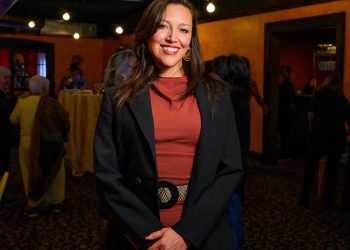















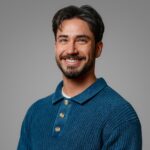
Joaquín Nuño-Whelan keeps a photograph of his grandmother at 22 years old, holding her two small daughters after stepping off a train from Jalisco, Mexico at Michigan Central Station. He calls the look on her face “calm determination,” and it tells you more about the president of Lincoln Motor Company than any press release will.
“It’s my favorite picture that ever hung in my grandmother’s house,” he said. “When I finish the book about her, it will be the cover.”
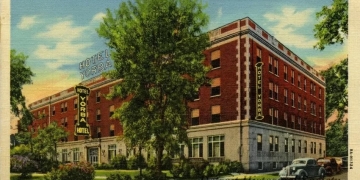
Nuño-Whelan became president of Lincoln on May 1, 2025. The brand now runs its headquarters out of that same Michigan Central Station, on the ninth floor of the building where his grandmother arrived a century ago. He also chairs the boards of both the Detroit Hispanic Development Corporation (DHDC) and Detroit Cristo Rey High School. Those two organizations do work that no car company can.
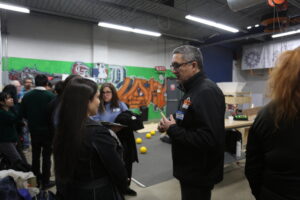
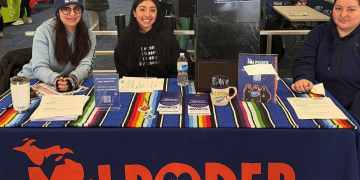
DHDC, founded in 1997 by Angie Reyes from her living room after gang violence tore through the neighborhood, now serves more than 5,000 youth and adults each year through programs spanning youth development, entrepreneurship, robotics, and community advocacy. Cristo Rey, the Catholic college-prep school on W. Vernor that opened during the Great Recession in 2008, has sent 100 percent of every graduating class to college since its first commencement in 2012.
Nuño-Whelan’s connection to both organizations started the same way: through robots.
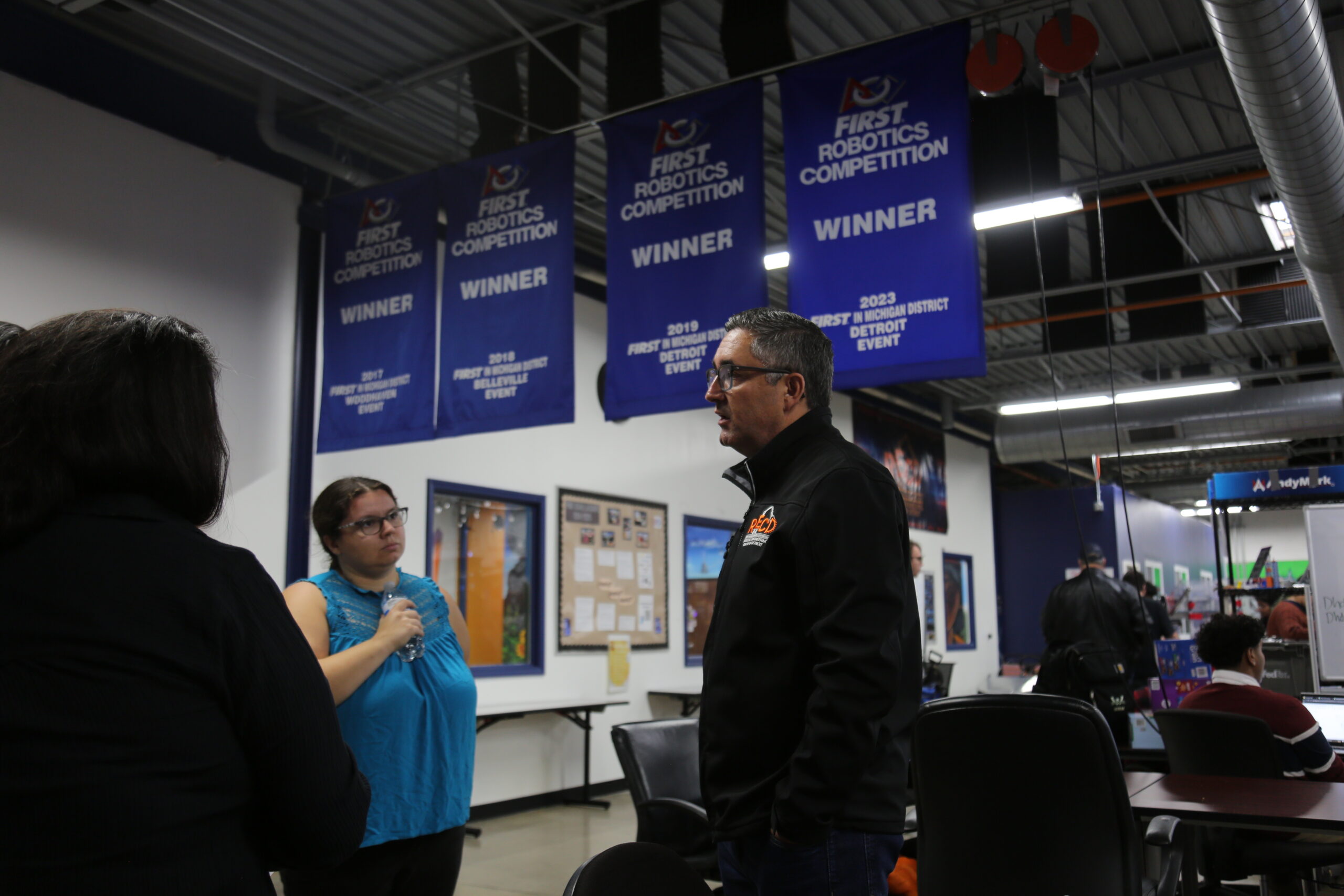
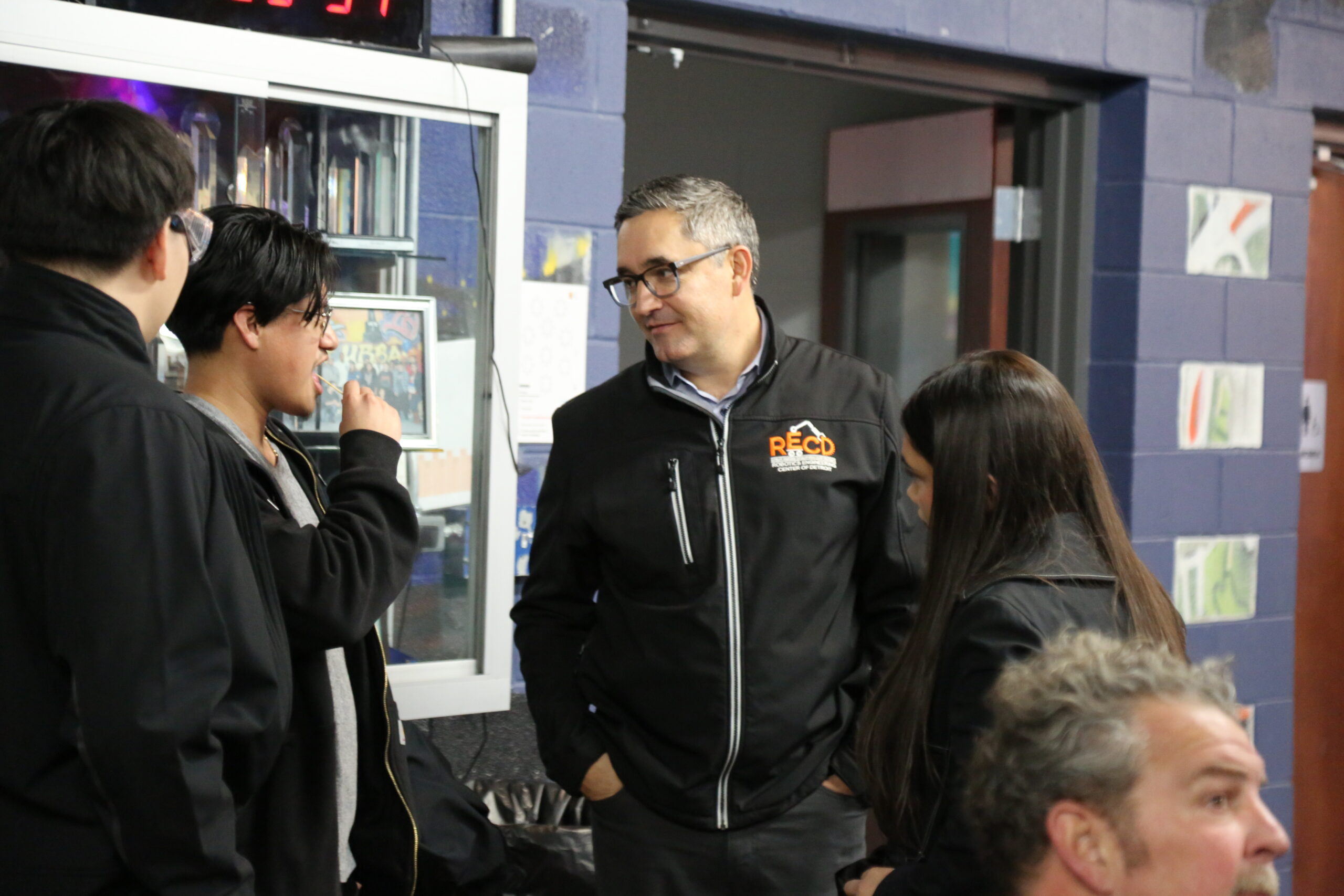
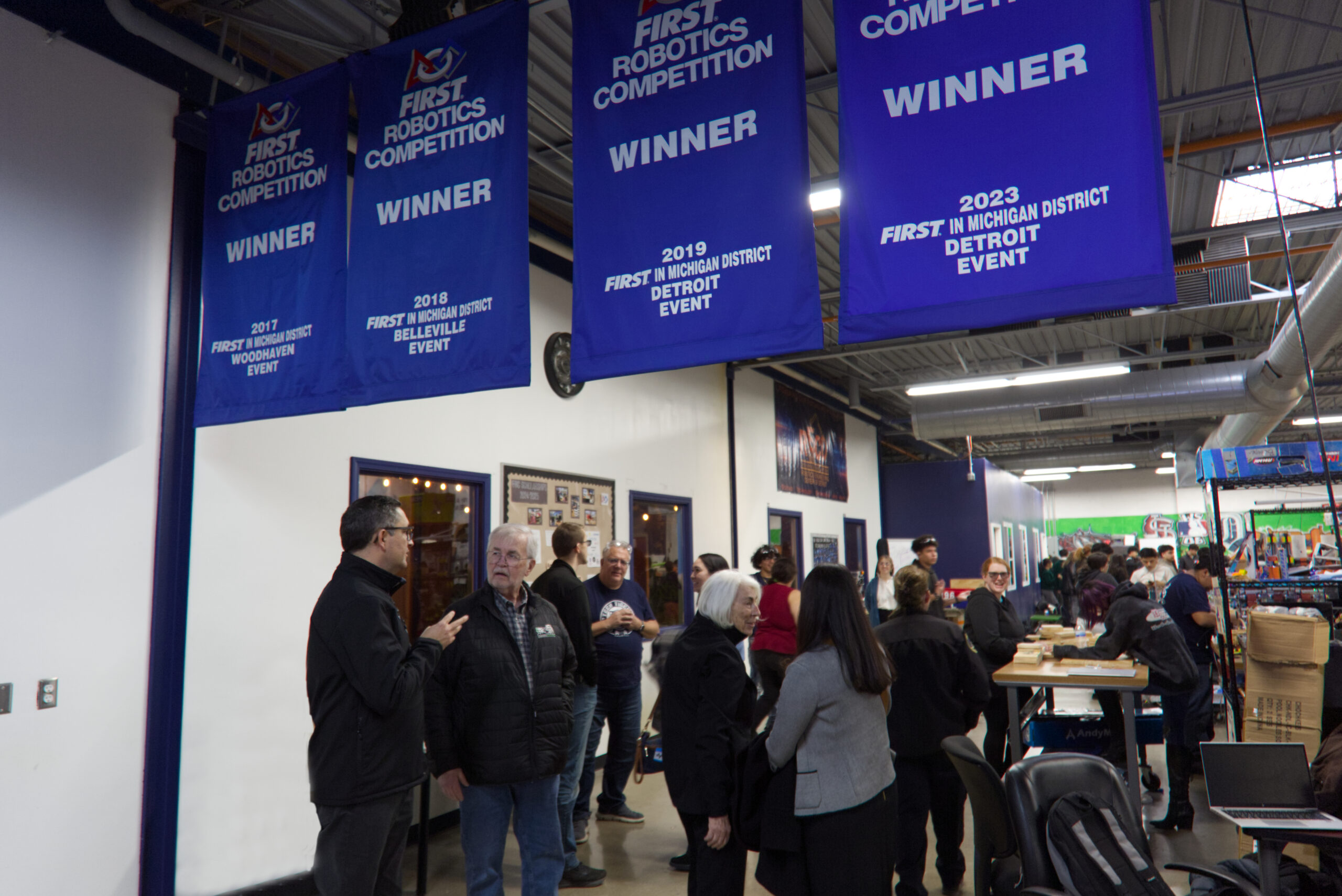
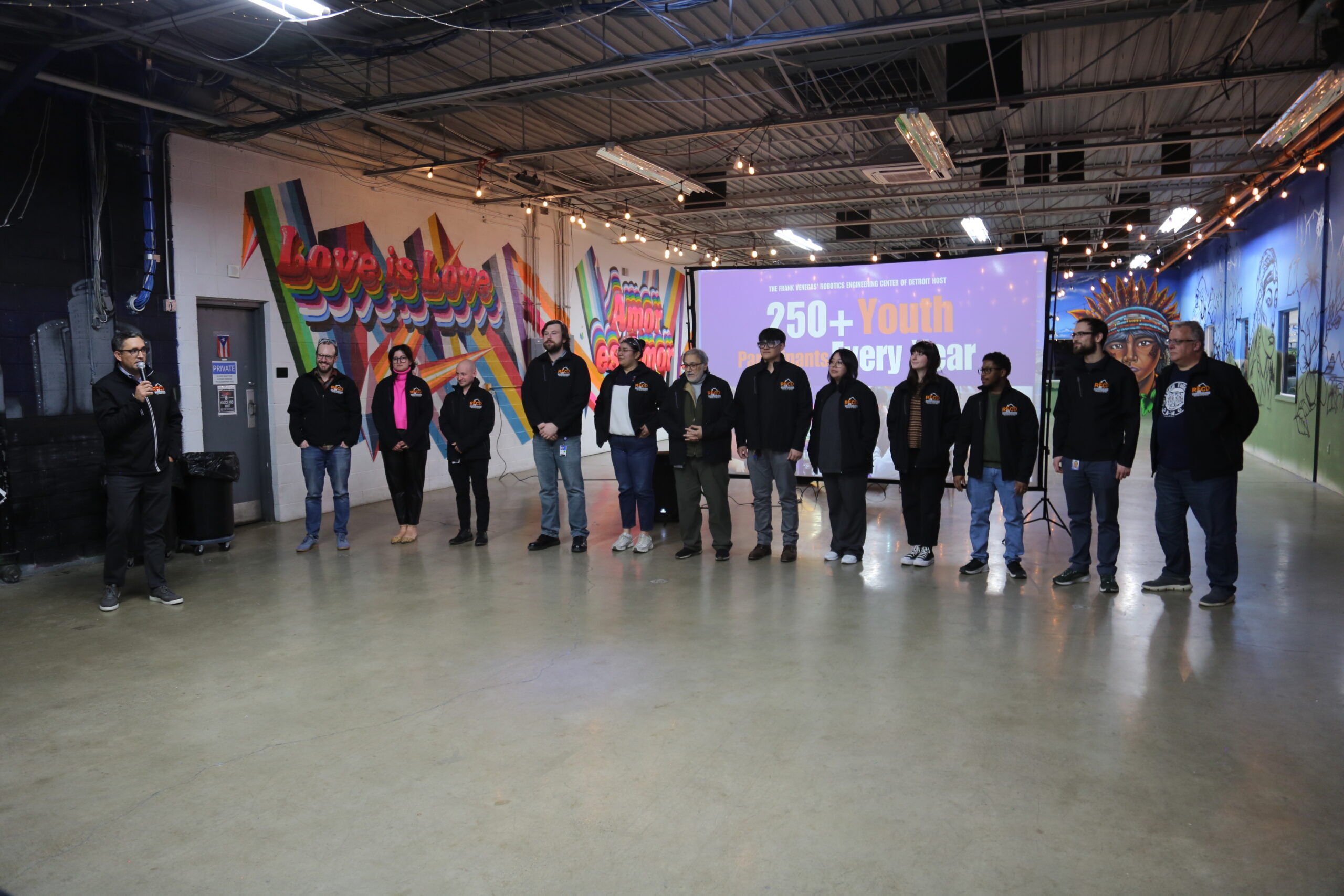
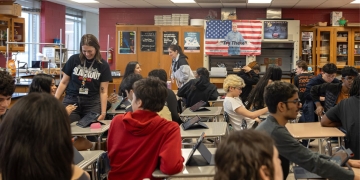
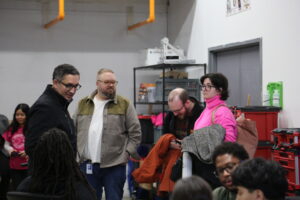
Twelve years ago, while still at GM, he got introduced to Frank Venegas of Ideal Group. Within weeks they launched two FIRST Robotics teams, one at DHDC and one at Cristo Rey. That small start turned into the Robotics Engineering Center of Detroit, which now houses more than 12 teams, 175 students, and 70 mentors. The Cristo Rey team became what he calls “the example team,” the squad that helped every other team learn how to build.
From there, he saw something bigger. Cristo Rey students already worked five days a month at more than 50 corporate partners, including GM, Ford, and Ideal Group, as part of the school’s work-study model, where their earnings cover up to half of their tuition. Nuño-Whelan started assigning high-potential young GM engineers to mentor those same students, both in the office and on the robotics floor. A ninth grader could meet a near-peer mentor on a Monday, build a robot with them on a Saturday, and by senior year be looking at a college scholarship in engineering. Some of those students are now engineers at Ford and GM.
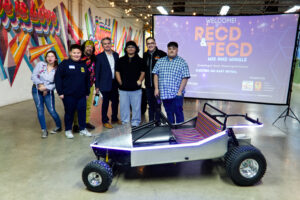
“When you do it that way and you make it really intentional, that was really cool to me,” Nuño-Whelan said. “It’s not like you’re at a recruiting fair and you take 100 resumes and then you offer two jobs. This is more like a five- or ten-year window that you have to invest in. But the output on the other end is so much more meaningful.”
At Cristo Rey, where 93.9 percent of students are Hispanic or Latino and average family income is $44,754 according to the school’s 2025-2026 profile, that pipeline changes the math for entire families. The school serves 252 students across four grade levels. When he walks in and sees the freshmen, he said, he sees his own family—like his grandmother’s face in that photograph.
“You’re here. You came here to change something about your life that was difficult,” he said. “And then you don’t know what it means yet.”
At a recent Cristo Rey event, he met a woman named Mari Carmen whose family was also from Jalisco. They talked about the train station, and she told him her parents used to go there and wait for people arriving from Mexico so they could help them. His own family came from Matotepec, in Jalisco, part of the wave of Mexican families pulled to Detroit by Ford’s five-dollar-a-day wage. “That’s beautiful,” Nuño-Whelan said. “This idea of community helping each other.”
His mother was the first in the family to earn a university degree. “The best gift my mother gave me was the confidence that I could do anything,” he said. “That’s the currency we operate in.”
Before Lincoln, Nuño-Whelan spent more than 25 years in the auto industry. He started at General Motors at 19, rose through chief engineer roles with assignments in Mexico, South Korea, and Brazil, and held senior positions at Rivian and other companies before joining Ford in 2024. His tía Rosa had taken him to a Ford facility as a boy. He still remembers the test tracks.
Recently, he guided both organizations through major leadership transitions. At Cristo Rey, he oversaw a national search that drew about 150 candidates and ended with the appointment of Bill McGrail as president, a process that included case studies, community presentations, and a selection committee that featured a Cristo Rey alumna now working at Ideal Group. At DHDC, the stakes were different. Founder Angie Reyes retired in May 2025 after 52 years of community service. Replacing a founder is a different challenge. Nuño-Whelan led the board through a process that ended with the hiring of Miguel Rodriguez, a leader with two decades of grassroots organizing experience across Mexico, Honduras, East LA, and New Orleans.
“You’ll never replace the founder,” Nuño-Whelan said. “But the question becomes: what is the best thing to do for the organization to move it to the next level?”
He handled the pressure the same way both times: put a process in place, get input from every constituent and let the board’s collective voice drive the decision, not any one individual. Honor the legacy by making the right call for the future.
Legacy is something he thinks about at work and at home, and lately the two have overlapped. Nuno-Whelan and his siblings recently sold his grandmother’s house in Southwest Detroit, the one where he lived with her while studying at the University of Detroit Mercy. They gathered there before letting it go, told stories, and honored her sacrifices. His eyes welled up as he recounted it.
When you ask him what he wants to be most proud of in 2036, the first thing he mentions is not a vehicle, but the work at Cristo Rey and DHDC still going strong.
His advice for young people comes back to the women who raised him. “Don’t let fear get in the way,” he said. “Lead with your heart and your gut more than your brain. Follow that curiosity. Everything else will fall into place.”
That confidence, the kind his mother gave him and his grandmother carried off a train from Jalisco, is the thing he’s trying to pass along. At Cristo Rey, at DHDC, at the robotics center, and now from the ninth floor of Michigan Central Station. “That’s what it’s all about,” he said. “The ability to give somebody confidence, help grow their confidence, inspire them. That’s the best gift you can give them.”
Joaquín Nuño-Whelan guarda una fotografía de su abuela cuando tenía 22 años. En la imagen aparece sosteniendo a sus dos hijas pequeñas después de bajar de un tren que venía de Jalisco, México, en la estación Michigan Central de Detroit. Él dice que la expresión en su rostro es de “determinación tranquila”, y que esa imagen dice más sobre él que cualquier comunicado de prensa.
“Es mi foto favorita de todas las que estaban colgadas en la casa de mi abuela,” dijo. “Cuando termine el libro que estoy escribiendo sobre ella, esa foto será la portada.”
Nuño-Whelan se convirtió en presidente de Lincoln Motor Company el primero de mayo de 2025. Hoy, la marca tiene su sede en ese mismo edificio de Michigan Central Station, en el noveno piso, el mismo lugar donde su abuela llegó hace casi un siglo.
Además, Nuño-Whelan preside las juntas directivas de dos organizaciones importantes en Southwest Detroit: Detroit Hispanic Development Corporation (DHDC) y Detroit Cristo Rey High School. Son dos instituciones que hacen un trabajo comunitario que ninguna compañía automotriz puede hacer.
DHDC fue fundada en 1997 por Angie Reyes, quien empezó la organización desde la sala de su casa después de que la violencia de pandillas afectara al vecindario. Hoy, la organización sirve a más de 5,000 jóvenes y adultos cada año con programas de desarrollo juvenil, emprendimiento, robótica y defensa comunitaria.
Por su parte, Cristo Rey High School, la preparatoria católica ubicada en la calle Vernor, abrió en 2008 durante la Gran Recesión. Desde su primera generación graduada en 2012, el 100 por ciento de sus estudiantes han sido aceptados a la universidad.
La conexión de Nuño-Whelan con ambas organizaciones empezó de una forma inesperada: a través de robots.
Hace unos doce años, cuando todavía trabajaba en General Motors, conoció a Frank Venegas, de Ideal Group. En cuestión de semanas lanzaron dos equipos de FIRST Robotics, uno en DHDC y otro en Cristo Rey.
Lo que comenzó como un pequeño proyecto se convirtió en el Robotics Engineering Center of Detroit, que hoy alberga más de 12 equipos, 175 estudiantes y 70 mentores. El equipo de Cristo Rey se volvió lo que Nuño-Whelan llama “el equipo ejemplo”, el grupo que ayudó a enseñarles a los demás cómo construir robots.
Pero para él, eso era solo el comienzo.
Los estudiantes de Cristo Rey ya trabajan cinco días al mes con más de 50 empresas asociadas, entre ellas GM, Ford e Ideal Group, como parte del modelo de trabajo-estudio de la escuela. El dinero que ganan ayuda a cubrir hasta la mitad de su matrícula.
Nuño-Whelan empezó entonces a asignar a jóvenes ingenieros de GM para que sirvieran como mentores de esos estudiantes, tanto en la oficina como en el taller de robótica.
Así, un estudiante de noveno grado podía conocer a un mentor un lunes, construir un robot con él un sábado, y para el último año de preparatoria ya estar considerando una beca universitaria en ingeniería.
Algunos de esos estudiantes hoy trabajan como ingenieros en Ford y GM.
“Cuando lo haces de esa manera, de forma intencional, es algo muy especial,” dijo Nuño-Whelan. “No es como ir a una feria de empleo donde recibes cien currículos y terminas ofreciendo dos trabajos. Esto es una inversión de cinco o diez años. Pero el resultado al final es mucho más significativo.”
En Cristo Rey, donde 93.9 por ciento de los estudiantes son hispanos o latinos, y donde el ingreso promedio familiar es de 44,754 dólares, ese tipo de oportunidades puede cambiar la realidad de familias enteras.
La escuela tiene 252 estudiantes distribuidos en cuatro grados.
Cuando Nuño-Whelan entra al edificio y ve a los estudiantes de primer año, dice que ve reflejada a su propia familia, como la mirada de su abuela en aquella fotografía.
“Estás aquí,” dijo. “Viniste aquí para cambiar algo en tu vida que era difícil. Pero todavía no sabes lo que eso significa.”
En un evento reciente de Cristo Rey, conoció a una mujer llamada Mari Carmen, cuya familia también venía de Jalisco.
Hablaron de la estación de tren.
Ella le contó que sus padres solían ir a la estación Michigan Central a esperar a las personas que llegaban desde México para ayudarles.
La propia familia de Nuño-Whelan llegó desde Matotepec, Jalisco, como parte de la ola de familias mexicanas que llegaron a Detroit atraídas por el famoso salario de cinco dólares al día que ofrecía Ford a principios del siglo veinte.
“Eso es algo hermoso,” dijo. “La idea de que la comunidad se ayuda entre sí.”
Su madre fue la primera persona en la familia en obtener un título universitario.
“El mejor regalo que me dio mi mamá fue la confianza de que podía lograr cualquier cosa,” dijo. “Esa es la moneda con la que nosotros trabajamos.”
Antes de llegar a Lincoln, Nuño-Whelan pasó más de 25 años en la industria automotriz.
Comenzó en General Motors a los 19 años, y con el tiempo llegó a ocupar puestos de ingeniero principal con asignaciones en México, Corea del Sur y Brasil. También ocupó puestos ejecutivos en Rivian y otras compañías antes de unirse a Ford en 2024.
Cuando era niño, su tía Rosa lo llevó a visitar una planta de Ford. Todavía recuerda las pistas de prueba donde probaban los vehículos.
Recientemente, también tuvo que guiar a las dos organizaciones comunitarias que preside a través de importantes cambios de liderazgo.
En Cristo Rey supervisó una búsqueda nacional que atrajo a unos 150 candidatos, y que finalmente terminó con el nombramiento de Bill McGrail como presidente de la escuela.
El proceso incluyó estudios de caso, presentaciones comunitarias y un comité de selección que incluso contó con una exalumna de Cristo Rey que hoy trabaja en Ideal Group.
En DHDC, el reto era diferente.
Su fundadora, Angie Reyes, se retiró en mayo de 2025 después de 52 años de servicio comunitario.
Reemplazar a un fundador siempre es un desafío.
Nuño-Whelan lideró el proceso que terminó con la contratación de Miguel Rodríguez, un líder con más de veinte años de experiencia organizando comunidades en México, Honduras, el Este de Los Ángeles y Nueva Orleans.
“Nunca vas a reemplazar al fundador,” dijo Nuño-Whelan. “La pregunta es: ¿qué es lo mejor para que la organización dé el siguiente paso?”
En ambos casos manejó la presión de la misma manera: crear un proceso claro, escuchar a todos los involucrados y dejar que la decisión final reflejara la voz colectiva de la junta directiva.
Honrar el legado, dijo, también significa tomar las decisiones correctas para el futuro.
El tema del legado también lo toca en lo personal.
Hace poco, Nuño-Whelan y sus hermanos vendieron la casa de su abuela en Southwest Detroit, donde él vivió mientras estudiaba en University of Detroit Mercy.
Antes de venderla, la familia se reunió ahí una última vez. Recordaron historias y honraron los sacrificios de su abuela. Mientras lo contaba, sus ojos se llenaron de lágrimas.
Cuando se le pregunta de qué le gustaría sentirse más orgulloso en el año 2036, lo primero que menciona no es un automóvil.
Habla del trabajo de Cristo Rey y DHDC, todavía fuertes y creciendo.
Su consejo para los jóvenes también vuelve a las mujeres que lo criaron.
“No dejen que el miedo se interponga en su camino,” dijo. “Lideren con el corazón y con su intuición más que con el cerebro. Sigan su curiosidad. Todo lo demás encontrará su lugar.”
Esa confianza, la misma que su madre le dio y que su abuela llevaba consigo cuando bajó de aquel tren desde Jalisco, es lo que él quiere transmitir ahora a las nuevas generaciones.
En Cristo Rey. En DHDC. En el centro de robótica. Y ahora desde el noveno piso de Michigan Central Station.
“De eso se trata todo,” dijo. “De darle confianza a alguien, ayudarle a desarrollarla e inspirarlo. Ese es el mejor regalo que puedes darle a una persona.”