















Talamanca is a place where the jungle feels alive, like every corner has a story to tell. In this part of Costa Rica’s Caribbean, you’ll find a mix of beaches, rainforest, mountains, rivers, and Indigenous communities like the Bribri, who share their traditions, culture, and history.
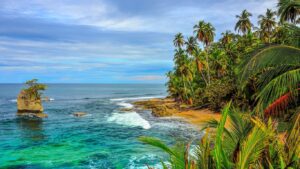
Time feels different in Talamanca—slower, more connected to nature. As you walk around, you hear birds everywhere, feel the rhythm of the forest, wander deeper into the jungle, and come across beautiful waterfalls.
But Talamanca isn’t just jungle. Its Caribbean beaches have their own kind of magic—light sand, warm water, and a laid-back vibe. In Puerto Viejo, everything comes together: Afro-Caribbean culture, great music, and amazing food. The sound of the ocean blends with reggae and the tropical breeze, creating a chill, authentic atmosphere. And watching the sunset over the ocean? That’s something you won’t forget.
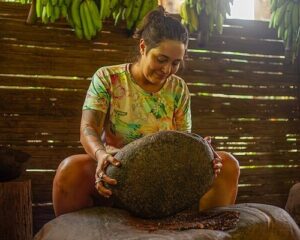
Bribri: Indigenous people of Talamanca
The Bribri people are one of the most important Indigenous communities in Costa Rica. They mainly live in the Talamanca region, but some also live across the border in Panama. Like many Indigenous groups, they have a deep connection to nature, and that sense of harmony is a big part of who they are. For them, the land, rivers, and rainforest aren’t just resources—they’re living beings that deserve respect.
The Bribri have held on to many of their ancestral traditions. They have their own language, Bribri, and a unique social structure based on family clans. They also have an impressive knowledge of medicinal plants, which they’ve passed down from generation to generation.
Cacao holds a really special place in their culture, especially for women, since it’s closely tied to their spirituality and rituals.
Bribri Origin Myth
Bribri elders from Talamanca tell that long before the world existed the way we know it, Sibú—also called Sibö—and Surá were already there, together from the very beginning, like the sky and the earth, like light and depth.
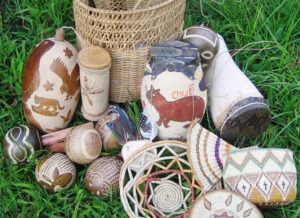
Sibö, the great creator, once walked the Earth as a man. He taught people how to live—how to build their cone-shaped homes, how to plant crops, how to hunt, how to sing and dance the stories of creation. He showed them how to listen to the forest and live in harmony with everything around them. But he wasn’t just any man—he could be everywhere at once, understand every language, and take the form of animals or people. From the sky, he watches over life and keeps the world in balance.
But Sibö wasn’t alone. Deep beneath the earth lived Surá, his inseparable counterpart. She was the great mother, the first grandmother, the guardian of the corn seeds where the spirit of humanity rested before being born. Her realm was underground, because deep inside the earth is where everything begins. They say Surá isn’t just one being, but many—eight and more, as many as there are living beings, since every person carries a part of her within them.
One day, Sibö went down into that deep world called Surakaska—the place where everything begins and everything returns. There, he took the corn seeds that Surá had been protecting since the beginning of time. He carried them to the top of Suráyön mountain, and after fasting and praying for five days, he purified them with water and planted them in the earth.
He placed the seeds into eight groups, and from each group the first people emerged, forming the original clans. That’s how humanity came to be.
Even though Sibö gave them life, it was Surá who gave them form. From deep below, like a master craftswoman, she shaped them like clay vessels. And as she molded each one, they gave off a different sound, like a melody that revealed their essence—some would be brave, others wise, others kind or strong. Only shamans, the ones who truly see, can hear those songs and recognize each person’s true form.
The first people listened to Sibö’s teachings—his songs, his dances, his words. From that came the Siwa, the path for living in balance, passed down from generation to generation since ancient times.

They say Sibö watches over the world from above—during the day he stays in the east, protecting good spirits, and at night he moves to the west to guard people from the bad ones. Meanwhile, Surá keeps working quietly beneath the earth, shaping life from its very beginning.
And when life comes to an end, the journey doesn’t stop. Each person returns to where they came from—to Surá’s deep world, to Surakaska, where everything began. There, in that eternal womb, souls rest and wait, like seeds, ready for a new beginning.
That’s what the Bribri elders say: everything that exists was born from the union of Sibö and Surá… and one day, everything will return to them.
Talamanca donde la selva parece tener vida propia y cada rincón guarda una historia. En esta región del Caribe costarricense une playas, selvas, montañas, ríos y comunidades indígenas como los Bribri con sus tradiciones por compartir, su cultura y su historia.
En Talamanca el tiempo se siente distinto: más lento, más conectado con la naturaleza, pues al caminar se puede escuchar a las aves, sentir el ritmo de los bosques, adentrarse en la selva y disfrutar de cascadas.
Mas, no podemos dejar de lado que Talamanca no es solo selva, pues sus playas caribeñas tienen un encanto especial: arena clara, aguas cálidas. Puerto Viejo, Talamanca ha logrado la armonía de la cultura afrocaribeña con su música y sabores únicos. El sonido del mar se combina con el reggae y la brisa tropical, creando un ambiente relajado y auténtico. Aquí, ver el atardecer frente al océano se vuelve un momento inolvidable.
Bribris: Indígenas de Talamanca
El pueblo Bribri es una de las comunidades indígenas más importantes de Costa Rica, y vive principalmente en la región de Talamanca, aunque también habitan territorios de Panamá. Como otros pueblos indígenas, su conexión con la naturaleza, así como su relación de armonía hace que en su entorno se sienta lo esencial de la tranquilidad como parte de su identidad. Para ellos, la tierra, los ríos y la selva no son recursos: son seres vivos que merecen respeto.
Los Bribri conservan muchas de sus tradiciones ancestrales. Tienen su propio idioma, el bribri, y una organización social muy particular basada en clanes familiares. Además, su conocimiento sobre plantas medicinales es impresionante, y lo han transmitido de generación en generación.
El cacao tiene un valor muy especial en su cultura, sobre todo para las mujeres, ya que está ligado a la espiritualidad y a sus rituales.
Mito Bribri del Origen
Cuentan los abuelos Bribri de Talamanca que antes de que existiera el mundo como lo conocemos, ya estaban Sibú o Sibö y Surá, unidos desde siempre, como el cielo y la tierra, como la luz y la profundidad.
Sibö, el gran creador, caminó alguna vez sobre la Tierra como un hombre. Enseñó a la gente a vivir: a construir sus casas cónicas, a sembrar, a cazar, a cantar y a danzar los relatos del origen. Les mostró cómo escuchar al bosque y vivir en armonía con todo lo que los rodea. Pero no era un hombre cualquiera: podía estar en todos lados, hablar todas las lenguas y tomar la forma de animales o de personas. Desde el cielo cuidaba la vida y el equilibrio del mundo.
Pero Sibö no estaba solo. En lo más profundo de la tierra habitaba Surá, su contraparte inseparable. Ella era la gran madre, la primera abuela, la guardiana de las semillas del maíz, donde descansaba el espíritu de la humanidad antes de nacer. Su reino era subterráneo, porque es en las entrañas de la tierra donde todo comienza. Dicen que Surá no es una sola, sino muchas: ocho y más, tantas como seres existen, pues cada persona lleva dentro su propio reflejo de ella.
Un día, Sibö descendió hasta ese mundo profundo llamado Surakaska, el lugar donde todo empieza y todo regresa. Allí tomó las semillas de maíz que Surá había guardado y cuidado desde el principio de los tiempos. Las llevó hasta la cima del monte Suráyön, donde, después de ayunar y orar durante cinco días, las purificó con agua y las sembró en la tierra.
Colocó las semillas en ocho grupos, y de cada uno brotaron las primeras personas, formando los clanes originales. Así nació la humanidad.
Aunque Sibö les dio la vida, fue Surá quien les dio forma. Desde lo profundo, como una gran artesana, comenzó a moldearlos como vasijas de barro. Y mientras los formaba, cada uno emitía un sonido distinto, como una melodía que anunciaba su esencia: algunos serían valientes, otros sabios, otros bondadosos o fuertes. Solo los chamanes saben escuchar esos cantos y ver la forma verdadera de cada ser.
Las primeras personas escucharon entonces las enseñanzas de Sibö: sus cantos, sus danzas, su palabra. De ahí nació el Siwa, el camino para vivir en equilibrio, que ha pasado de generación en generación desde tiempos antiguos.
Dicen que Sibö cuida el mundo desde lo alto: durante el día permanece en el este, protegiendo a los buenos espíritus, y por la noche viaja al oeste para resguardar a la gente de los malos. Mientras tanto, Surá sigue trabajando en silencio desde el fondo de la tierra, moldeando la vida desde su origen.
Y cuando llega el final de la vida, el viaje no termina. Cada persona regresa al lugar de donde vino, al mundo profundo de Surá, al Surakaska, donde todo comenzó. Allí, en ese vientre eterno, las almas descansan y esperan, como semillas, listas para un nuevo comienzo.
Así dicen los antiguos Bribri: que todo lo que existe nació de la unión de Sibö y Surá… y que todo, algún día, volverá a ellos.