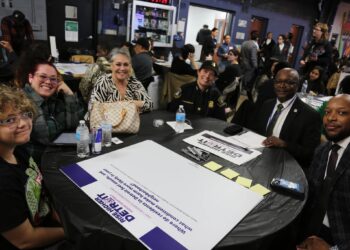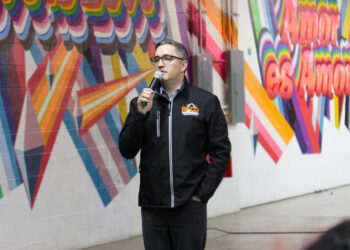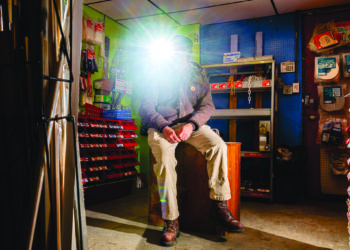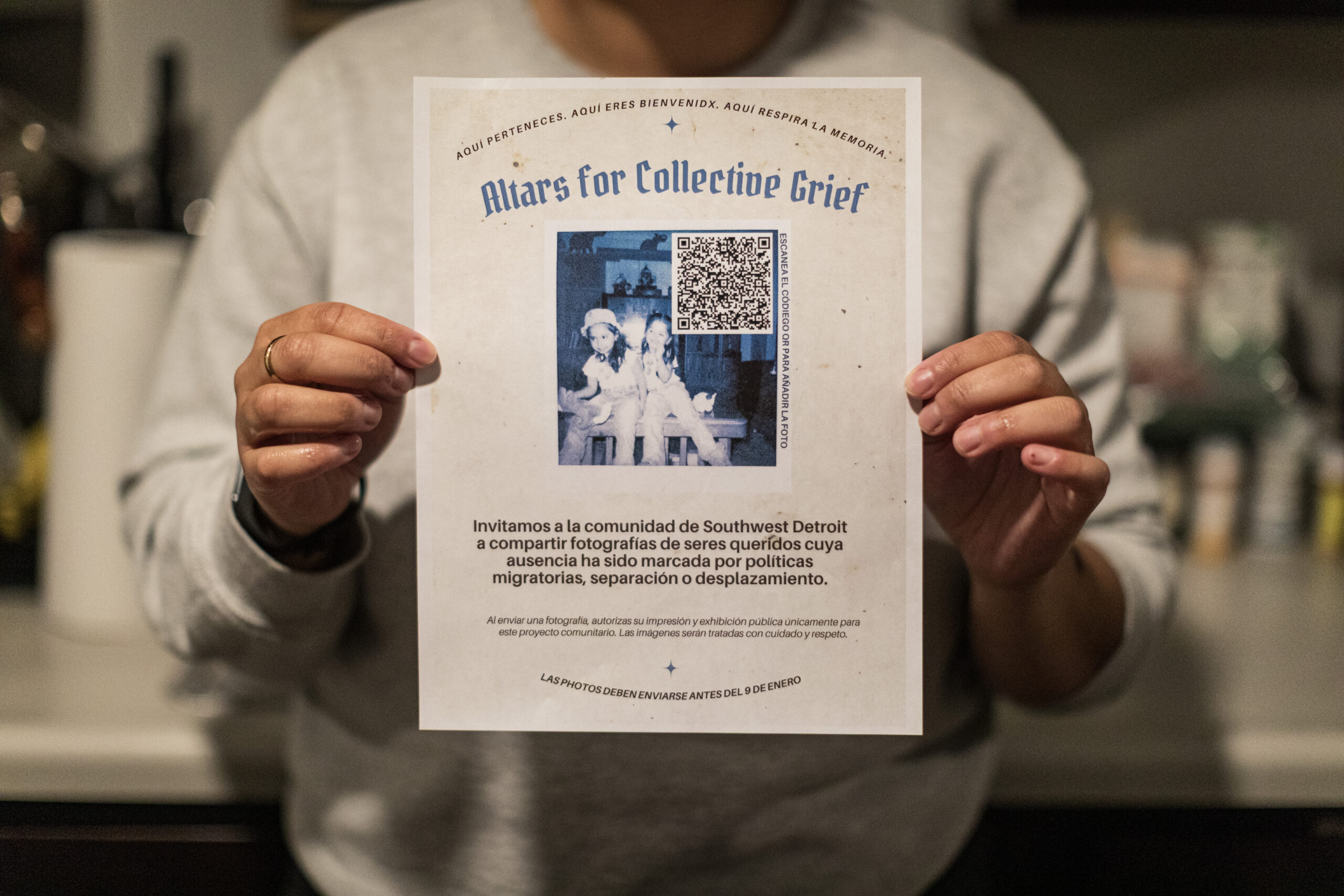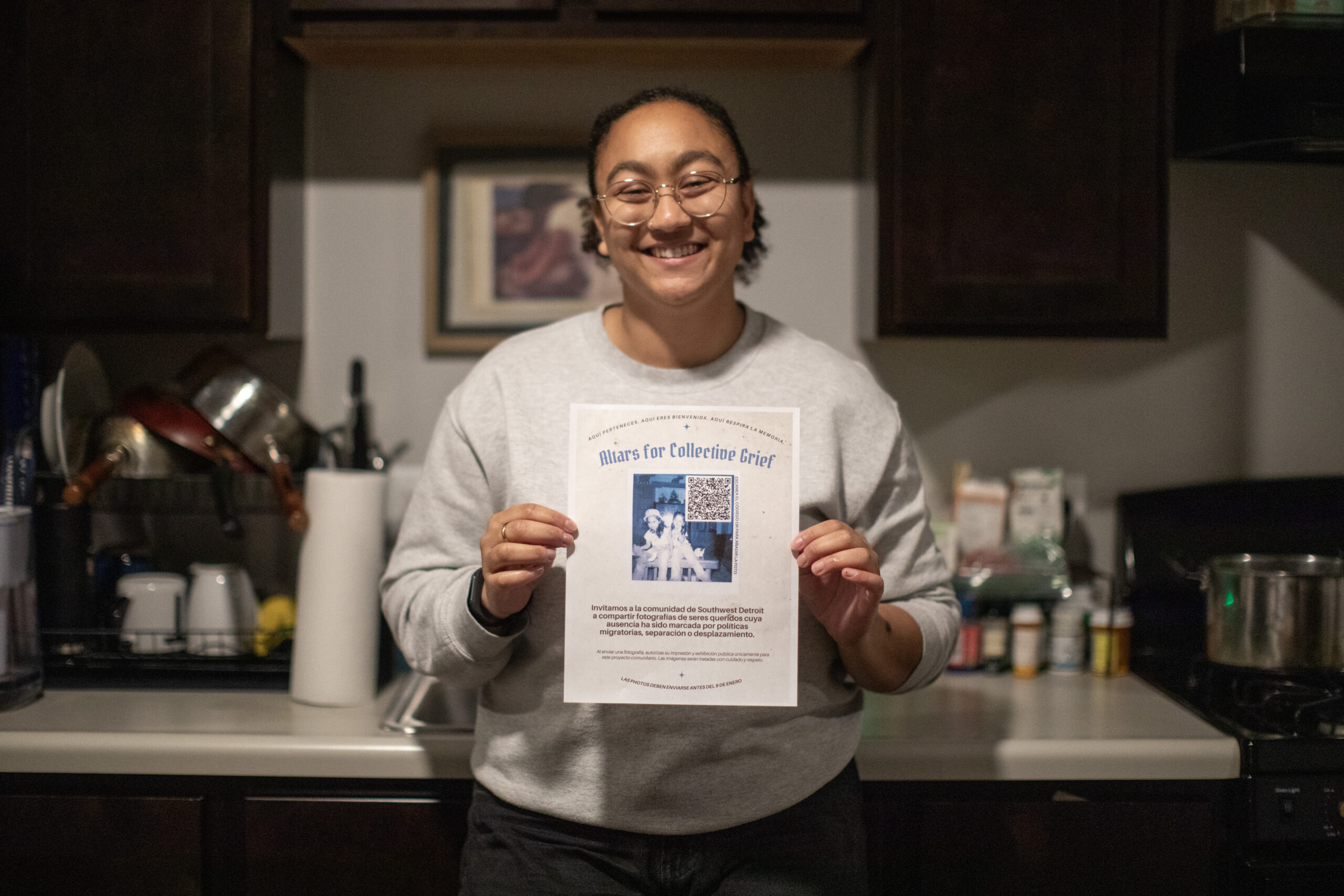














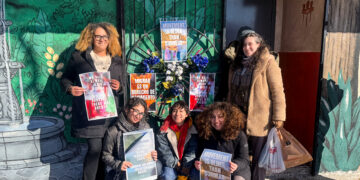



It was a phone call from Theresa Beckley Amaya, a hospice social worker, to Julianna Sanromán Rojas a few days before Christmas, that marked the beginning of the Altars for Collective Grief project. Altars with photos of deported community members define the project, which will be placed in businesses and parks throughout Southwest Detroit, with the hope that it will expand throughout Michigan.
The motivation was grief, and the arrest of the four students from Western International High School was the trigger. For Beckley, the grief of a family close to losing a loved one is similar to that of those whose family member has been deported; they share similar patterns.
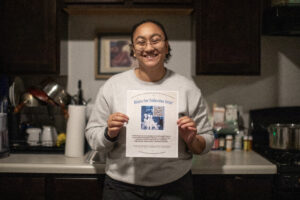
“Obviously, these people are not gone; they’re physically gone from our community. And that’s a loss. That’s an active grieving process,” Beckley explained. “This person is still alive, but the family still goes through anger.”
And it has been a tough year. Even though a third of ICE arrests involved individuals with no criminal records, a few weeks before the end of 2025, Washington praised the Department of Homeland Security for having deported approximately 605,000 “the worst of the worst criminal illegal aliens,” in addition to celebrating the other 1.9 million who voluntarily self-deported.
In Michigan, since Trump began his second term on January 20, 2025, there have been approximately 1,500 deportations out of nearly 2,400 ICE arrests as of October 15th, according to the Deportation Data Project (DDP). The DDP collects and publishes data from federal immigration agencies through the Freedom of Information Act. The study shows that in Michigan, around 620 deportees had no criminal records, and deportations increased by 123% compared to 2024, when there were 676 deportations.
The idea behind the project is to avoid leaving people alone with their pain and instead share the experience collectively, something Beckley learned from her family when she lost her little brother when she was younger. “People get so isolated in their grief, and they think they’re going crazy. I hear this from families all the time. They’re like, ‘Am I going crazy?’ And I’m like, ‘No, you’re just grieving’,” she adds.
Following the escalation of ICE immigration pursuits, the pain of a family member’s deportation is becoming increasingly common nationwide, and it’s now a palpable feeling around Southwest Detroit. Both agree that continuing with daily life without processing the grief leads to a profound sense of isolation, especially when grieving impacts the rest of someone’s life.
“There’s something that’s like really missing here, where you just grieve alone. It gets you to a point where you feel so lonely,” adds Sanromán. “We wanted to create a space where people can publicly acknowledge loss in a way that is rooted in care, rather than lonely confronting it.”
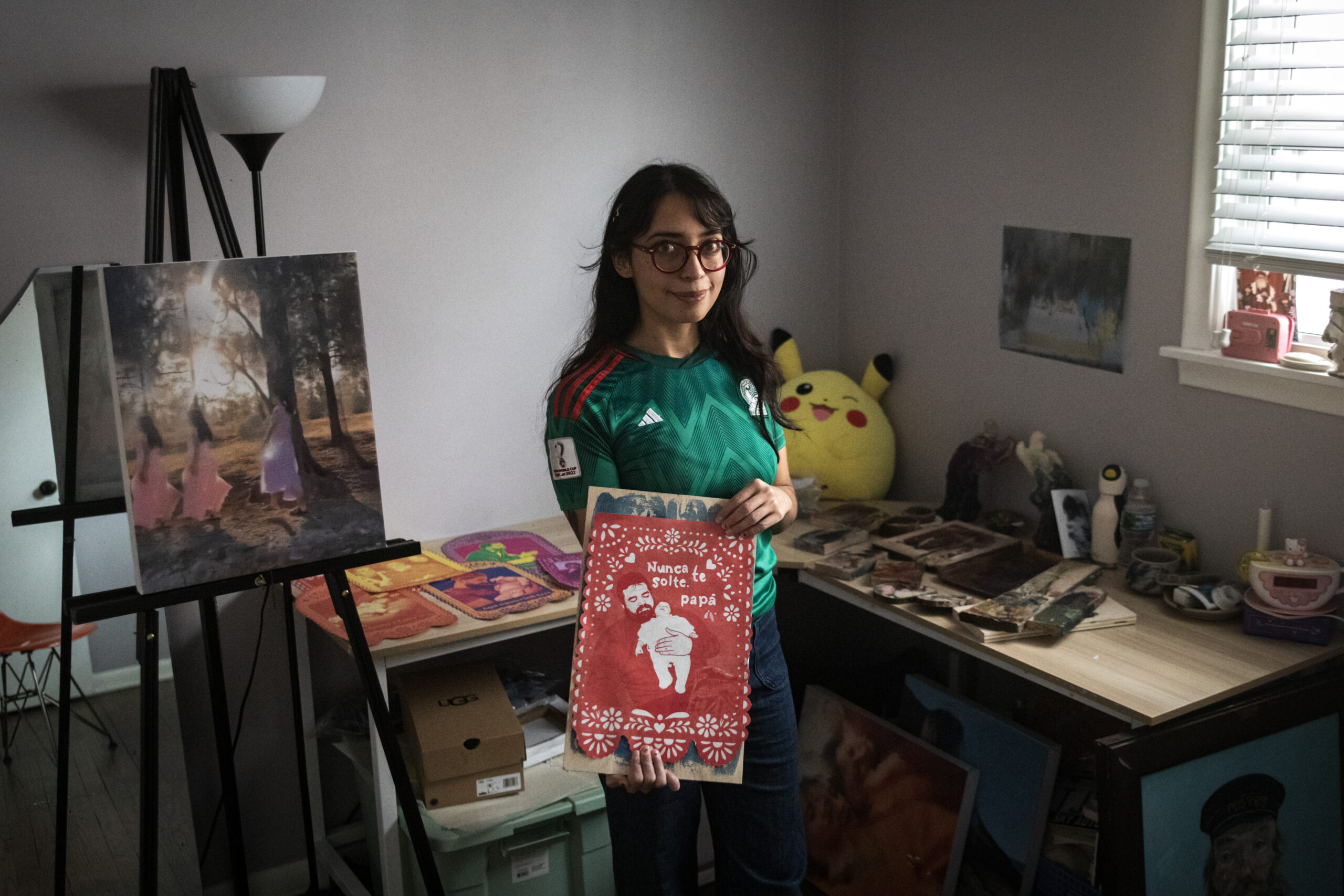
For Sanromán, an art master’s student, it is a personal matter. Her dad was arrested and deported to his native Mexico 19 years ago. “I had a dad who was very loving every day. He is. He would come home from work and carry me in his arms, watch TV with me, read books with me, and go to the park with me, but suddenly one day he didn’t come home,” says Julianna, who is now 27 years old. “How do you get over that?”
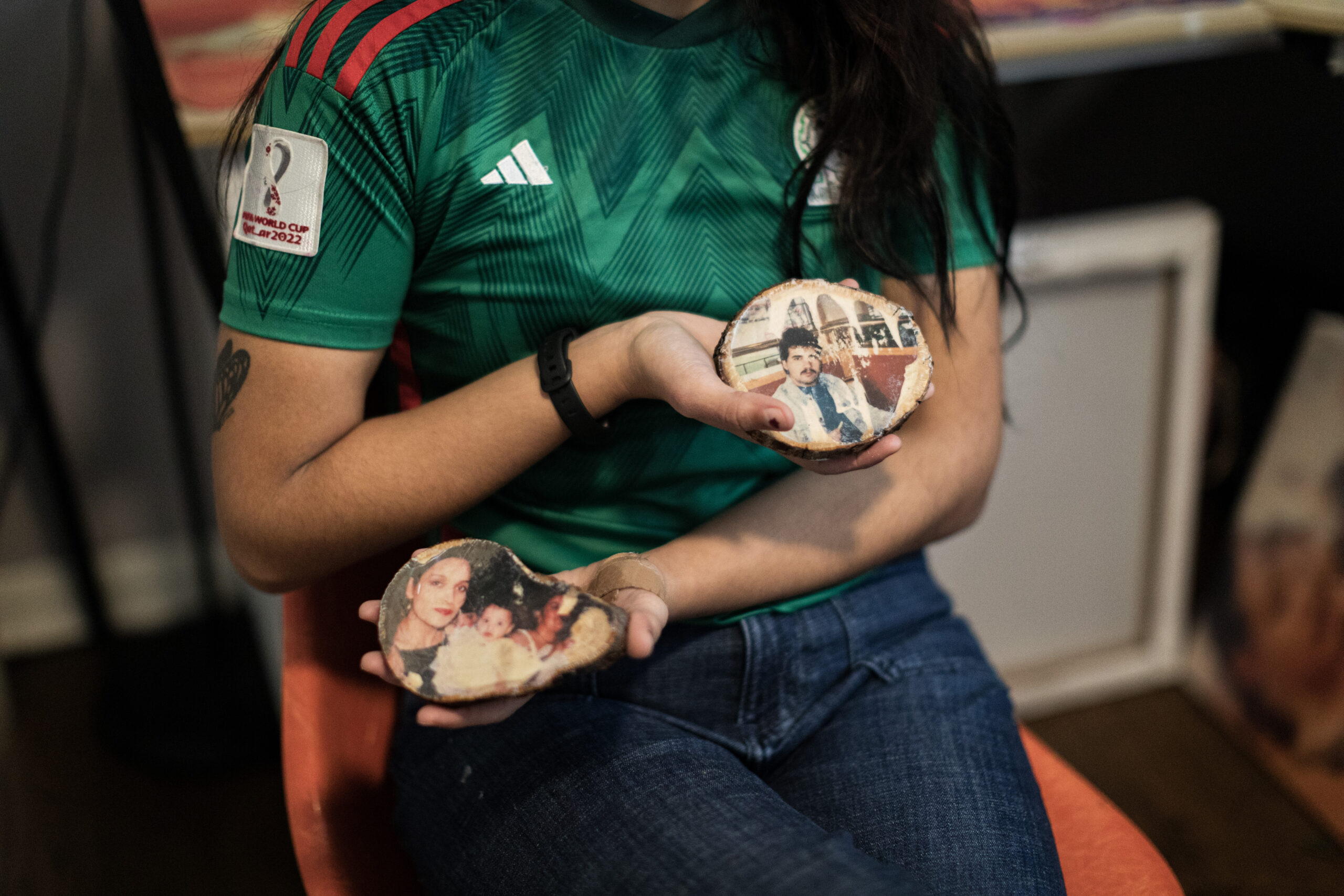
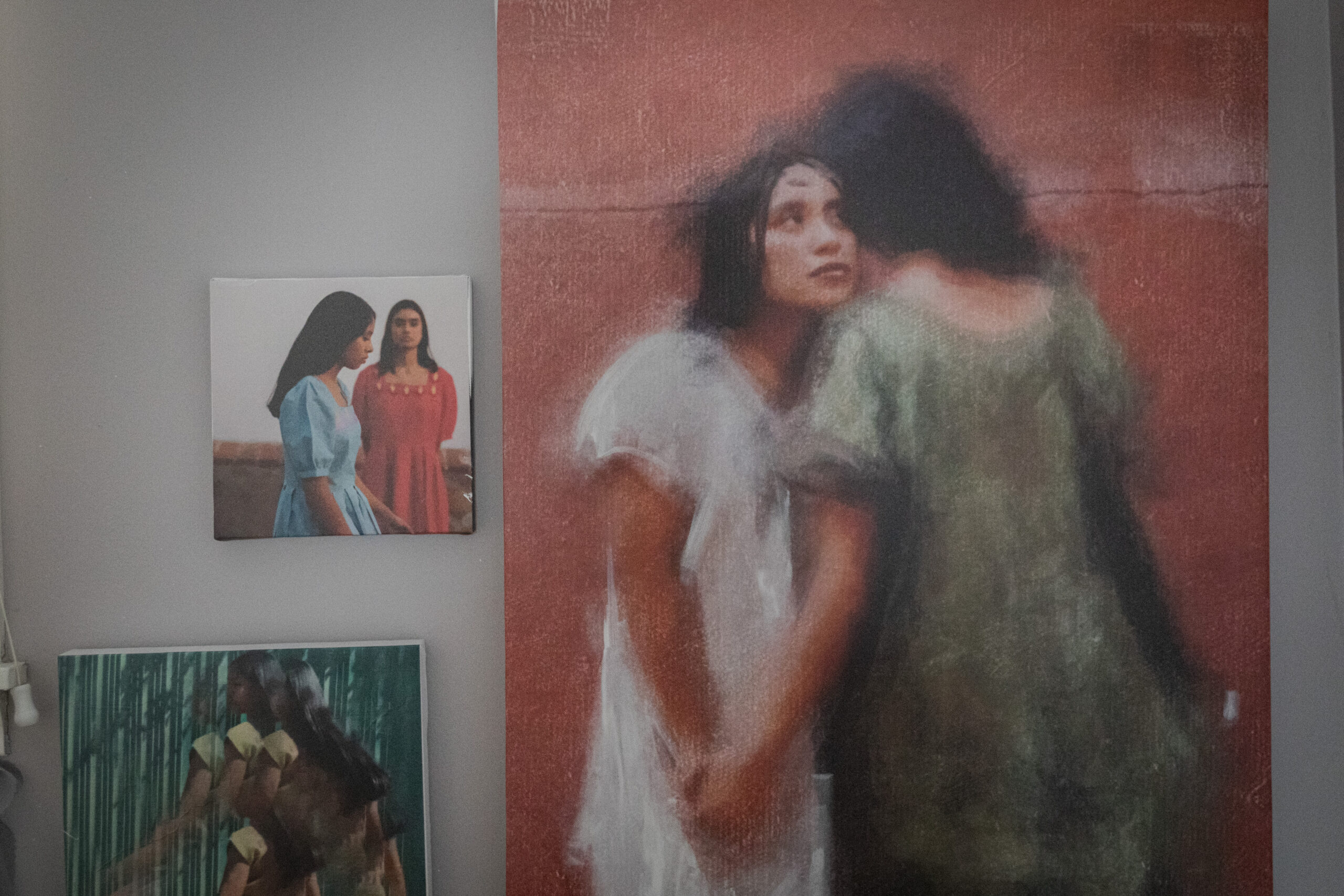
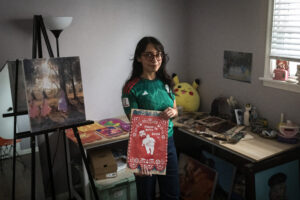
Months after her father’s deportation, her family moved to Mexico to stay together; however, she was sent back to the U.S. to continue her education. Since then, she has carried her family with her portrayed in her oil paintings and on solid materials like wood or fabric and displays them in her exhibitions. For her, it’s a way of taking them with her wherever she goes, a way of remembering them.

Beckley now has five years of experience as a hospice social worker. She explains that the idea of including images of loved ones during activities or workshops is part of narrative therapy, which is what this project aims to achieve. Through photographs on the altars, the community will be able to ritualize their grief, share their stories, and experience shared healing.
“Part of grieving is also being able to tell the story. I don’t feel like folks necessarily talk about grief when we’re talking about deportations,” Beckley says. “Looking at the photos, it kind of gives people an outlet for that grief. So that’s the goal. It’s kind of the visual part and also the ritual part.”
Although both are aware that this project will not reduce the number of deportations or ICE arrests, they seek to raise awareness of the grief caused by deportations, which often goes unnoticed in the community, and to ensure that these voices are heard around the community.
“My mom saw the work about her installed in an exhibit. And the whole hallway, she was like, ‘Wow, this is me. My daughter listens to me.’ And I am very thankful for that. But I want others to feel that emotion of seeing themselves in a space and feel listened to,” Sanromán said.
Fue una llamada telefónica de Theresa Beckley Amaya, trabajadora social en cuidados paliativos, a Julianna Sanromán Rojas, unos días antes de Navidad, lo que marcó el inicio del proyecto Altars for Collective Grief. El proyecto se define por altares con fotografías de integrantes de la comunidad que han sido deportados, los cuales se instalarán en negocios y parques de Southwest Detroit, con la esperanza de que se expanda por todo Michigan.
La motivación fue el duelo, y el arresto de cuatro estudiantes de Western International High School fue el detonante. Para Beckley, el dolor de una familia que está a punto de perder a un ser querido es similar al de quienes enfrentan la deportación de un familiar; ambos comparten patrones muy parecidos.
“Obviamente, estas personas no han desaparecido; se han ido físicamente de nuestra comunidad. Y eso es una pérdida. Es un proceso de duelo activo”, explicó Beckley. “La persona sigue viva, pero la familia aun así pasa por el enojo”.
Y ha sido un año difícil. Aunque un tercio de los arrestos de ICE involucraron a personas sin antecedentes penales, unas semanas antes de que terminara 2025, Washington elogió al Department of Homeland Security por haber deportado aproximadamente a 605,000 “los peores de los peores criminales ilegales”, además de celebrar a otros 1.9 millones que se autodeportaron de manera voluntaria.
En Michigan, desde que Trump inició su segundo mandato el 20 de enero de 2025, se han registrado aproximadamente 1,500 deportaciones de casi 2,400 arrestos de ICE hasta el 15 de octubre, según el Deportation Data Project (DDP). El DDP recopila y publica datos de agencias federales de inmigración a través de la Ley de Libertad de Información. El estudio muestra que, en Michigan, alrededor de 620 personas deportadas no tenían antecedentes penales, y que las deportaciones aumentaron un 123% en comparación con 2024, cuando se registraron 676 deportaciones.
La idea detrás del proyecto es evitar que las personas enfrenten su dolor en soledad y, en cambio, compartir la experiencia de manera colectiva, algo que Beckley aprendió de su familia cuando perdió a su hermano menor siendo joven. “La gente se aísla mucho en su duelo y piensa que se está volviendo loca. Escucho esto todo el tiempo de las familias. Me dicen: ‘¿Me estoy volviendo loco?’ Y yo les digo: ‘No, solo estás viviendo un duelo’”, agregó.
Tras la intensificación de las acciones migratorias de ICE, el dolor por la deportación de un familiar se ha vuelto cada vez más común en todo el país, y ahora se siente claramente en Southwest Detroit. Ambas coinciden en que continuar con la vida diaria sin procesar el duelo genera una profunda sensación de aislamiento, especialmente cuando el duelo impacta todas las áreas de la vida de una persona.
“Hay algo que realmente falta cuando uno vive el duelo en soledad. Llega un punto en el que te sientes profundamente solo”, añadió Sanromán. “Queríamos crear un espacio donde la gente pueda reconocer públicamente la pérdida, desde el cuidado y no desde el aislamiento”.
Para Sanromán, estudiante de una maestría en arte, este proyecto es profundamente personal. Su papá fue arrestado y deportado a su natal México hace 19 años. “Yo tenía un papá muy cariñoso todos los días. Lo es. Llegaba del trabajo, me cargaba en brazos, veía la tele conmigo, me leía libros, me llevaba al parque, y de pronto un día ya no regresó a casa”, cuenta Julianna, quien ahora tiene 27 años. “¿Cómo superas algo así?”
Meses después de la deportación de su padre, su familia se mudó a México para permanecer unida; sin embargo, ella fue enviada de regreso a Estados Unidos para continuar sus estudios. Desde entonces, ha llevado a su familia con ella, representándola en pinturas al óleo y en materiales sólidos como madera o tela, que exhibe en sus exposiciones. Para ella, es una forma de llevarlos consigo a donde vaya, una manera de recordarlos.
Beckley cuenta ahora con cinco años de experiencia como trabajadora social en cuidados paliativos. Explica que la idea de incluir imágenes de seres queridos durante actividades o talleres forma parte de la terapia narrativa, que es precisamente lo que este proyecto busca lograr. A través de las fotografías en los altares, la comunidad podrá ritualizar su duelo, compartir sus historias y vivir una sanación colectiva.
“Parte del duelo también es poder contar la historia. No siento que la gente hable necesariamente del duelo cuando se habla de deportaciones”, dijo Beckley. “Ver las fotos le da a la gente una salida para ese dolor. Ese es el objetivo: la parte visual, pero también la parte ritual”.
Aunque ambas saben que este proyecto no reducirá el número de deportaciones ni los arrestos de ICE, buscan visibilizar el duelo que causan las deportaciones, un dolor que muchas veces pasa desapercibido en la comunidad, y asegurarse de que estas voces sean escuchadas.
“Mi mamá vio el trabajo sobre su historia instalado en una exposición. Y en todo el pasillo decía: ‘Wow, esta soy yo. Mi hija me escucha’. Y estoy muy agradecida por eso. Pero quiero que otras personas sientan esa emoción de verse reflejadas en un espacio y sentirse escuchadas”, dijo Sanromán.