














Mexico is scheduled to kick-off the 2026 FIFA World Cup less than 100 days from now against South Africa. That paints a rosy picture of a spectacle in the Azteca, which has already hosted the World Cup twice. However, the shifting environment domestically and globally has cast doubts upon how that spectacle will unfold beginning in June.
Politics constantly gets in the way of sport, but this year’s World Cup will have far more than its fair share of issues in the buildup. Mexico and the United States have a lot of work to do to make sure this summer’s tournament does off without a hitch. So far, Canada has remained relatively untroubled by the chaos elsewhere.
Under pressure from the United States to take a stand against the cartels responsible for a significant portion of the illicit drug problem in the USA, Mexico made a major move by killing druglord Nemesio Oseguera Cervantes, also known as El Mencho. That produced a wild reply from his minions that included fires blocking major roads and shootings in a number of states. FIFA has expressed its concerns to Mexican President Claudia Sheinbaum and has planned a visit to review security.
Mexico is not just hosting World Cup games at three venues in June. They are also hosting the FIFA playoffs at the end of March. Those games will determine two of the remaining six spots. FIFA will have to address the security of the teams, their supporters, and the match officials quickly. Relocating the four games to a safer location, if necessary, has to be decided quickly.
While Mexico deals with the drug cartels internally, two participating teams are now at war. The United States, host of the majority
of this summer’s games, is now engaged with the Islamic Republic of Iran. The Iranians were the first team to qualify from Asia. They are set to play against Belgium, Egypt, and New Zealand during the group phase. Two of those games are scheduled for the SoFi Stadium in Los Angeles, home of one of the world’s largest Iranian expatriate populations. The Iranian football federation had also selected Tucson, Arizona for its pre-tournament training camp.
Now that the United States and Iran are at war, the Iranian football federation has cast doubt on their participation this summer. Already, Iran is one of a number of countries with severe travel restrictions on its citizens coming to the United States. What happens if Iran withdraws, refuses to send its team, or otherwise is unable to participate?
The next best team in Asian qualifying was Iraq who defeated the UAE to advance to the FIFA Playoffs scheduled for Mexico. FIFA could give the shot to Iraq. Or, if Iraq wins the playoffs they could give it to the UAE, so that the Asian Football Confederation fitss its allocated places. That’s all to be determined in the near future.
The war hasn’t just affected the United States, Iran, and Israel. Saudi Arabia, Jordan, and Qatar will be at the World Cup and have come under fire from Iranian missiles. There is also the is that the conict could widen to include other nations. The United Kingdom, which includes England, Scotland, and Wales, has already shot down a couple of drones near its base on Cyprus. Tensions are running high across the Middle East.
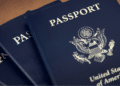
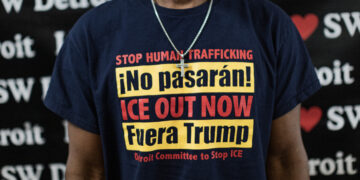
Iran is not the only country with travel restrictions. While the US government has passed legislation to ensure the participants can travel to and within the US during the World Cup, no such assurances have been provided for supporters of Haiti, Senegal, or the Ivory Coast. Citizens from those countries won’t be able to come to the United States to support their teams. Haiti already has a built in fanbase due to a long period of immigration. On a side note, Senegal will be playing the USA in a warmup game on May 31 in Charlotte, North Carolina. That may be as interesting off the field as on it.
The Olympics didn’t provide a respite from war as the conflict in Ukraine continues. It’s unlikely the World Cup will see a halt to violence either. FIFA will have its work cut out to guarantee everyone’s security this summer. The next step will be for the US based host cities, working with FIFA, to convince the US Congress
to unfreeze the budgeted funds targeted towards security. Already Foxborough, Massachusetts has refused to issue a license permitting no fewer than seven games to go ahead. The partial shutdown of the Department of Homeland Security means that FEMA cannot dispense the funds. It’s just another headache for the organizers to handle.
Eventually, there will be a World Cup this summer. It’s going to be a magnificent spectacle. There will just be a lot of stress and a variety of battles fought between now and then. Ideally, the battles on the pitches around North America will be more memorable than those outside the stadiums