






ADVERTISEMENT
82.885 °f
Detroit
EL CENTRAL Hispanic News
  • Home
  • About
    • Resources
  • Community
    Motorized tricycle taxis carrying passengers pass each other on a wide Havana street lined with weathered colonial-style buildings.

    Cubans Raise Their Voices Amidst the Darkness of Sanctions

    Frank Venegas and Ideal Steel Employee Francisco Orozco

    For 30 years, Frank Venegas Jr. has demonstrated that business success and community investment can grow together

    Assembly for Hope Ratifies Statewide Policy Platform to Support Immigrants

    Houston Welcomes the World 

    Detroit Health Department Releases Community Health Roadmap Informed by 6,000+ Detroiters 

    “With Heavy Hearts”: Venezuelans Living in Michigan React to the Earthquakes That Devastated Their Homeland

    Detroit Hometown Summit Offers Vision For Affordable Housing

    Mayor Sheffield Releases Rise Higher Community Survey Data and Resident-Driven Framework for Detroit’s Future

    Wayne County Treasurer Urges Homeowners with Delinquent Property Taxes to Enroll in Interest Reduction Payment Agreement Plan by June 30, 2026

  • Featured
    Emergency responder wearing a helmet and backpack walking across a large field of debris and rubble.

    Ann Arbor Asylum-seeker Deported Hours Before Venezuela Earthquakes Dies in Building Collapse

    Two women unveiling a green Michigan Historic Site marker reading "Dra. Lucile Gajec" by pulling away a red, green, and blue striped serape, with a young boy watching beside them.

    A Museum, A Memory, A Marker: Honoring Dr. Gajec’s Lifelong Mission

    Wide view of a crowd watching a band perform on an outdoor stage under a banner reading "We Tell These Truths: All Humans Are Created Equal," trees and buildings in the background.

    The Concert of Colors Neighborhood Series Presents “We Tell These Truths: All Humans Are Created Equal”

    “With Heavy Hearts”: Venezuelans Living in Michigan React to the Earthquakes That Devastated Their Homeland

    Medicina Scarlett Expands Bilingual Healthcare in Southwest Detroit with Help from Motor City Match

    Panelists speak during the State of Construction 2026 forum at The Edit in Detroit on Thursday, June 11, 2026. Co-hosted by READ and DFO313, the discussion provided developers, contractors, and industry professionals with practical insights on navigating today's construction market. (Photo by Brayan Gutierrez)

    Detroit’s Veteran Builders Pass Down Lessons That Cost Them

    USA and Mexico Advance in Thrilling World Cup Play 

    Oficialmente en marcha el proyecto de restauración de la Basílica de Santa Ana tras recibir la bendición

    E&L Supermercado reopening

  • Opinion
  • Culture & Arts
    • All
    • World Cultures

     United States of America

    French Guiana

    Qoyllur Rit’i: The Snow Star pilgrimage in the Peruvian Andes

    Guyana

    Why This Year’s Concert of Colors Is Different, Yet the Same

    Haiti

    Sacatepéquez, Guatemala

    Julianna Sanromán Wins Second Place in Art Exhibit

    From Metal to Monarchs: Detroit Sculptor Juan Martinez Creates Art Meant to Be Experienced

    • World Cultures
  • Latest Issue
  • Past Issues
    • Throwbacks
  • Events
  • Newsletter
  • Contact
    • Advertise
  • en English
    • en English
    • es Spanish
No Result
View All Result
EL CENTRAL Hispanic News
  • Home
  • About
    • Resources
  • Community
    Motorized tricycle taxis carrying passengers pass each other on a wide Havana street lined with weathered colonial-style buildings.

    Cubans Raise Their Voices Amidst the Darkness of Sanctions

    Frank Venegas and Ideal Steel Employee Francisco Orozco

    For 30 years, Frank Venegas Jr. has demonstrated that business success and community investment can grow together

    Assembly for Hope Ratifies Statewide Policy Platform to Support Immigrants

    Houston Welcomes the World 

    Detroit Health Department Releases Community Health Roadmap Informed by 6,000+ Detroiters 

    “With Heavy Hearts”: Venezuelans Living in Michigan React to the Earthquakes That Devastated Their Homeland

    Detroit Hometown Summit Offers Vision For Affordable Housing

    Mayor Sheffield Releases Rise Higher Community Survey Data and Resident-Driven Framework for Detroit’s Future

    Wayne County Treasurer Urges Homeowners with Delinquent Property Taxes to Enroll in Interest Reduction Payment Agreement Plan by June 30, 2026

  • Featured
    Emergency responder wearing a helmet and backpack walking across a large field of debris and rubble.

    Ann Arbor Asylum-seeker Deported Hours Before Venezuela Earthquakes Dies in Building Collapse

    Two women unveiling a green Michigan Historic Site marker reading "Dra. Lucile Gajec" by pulling away a red, green, and blue striped serape, with a young boy watching beside them.

    A Museum, A Memory, A Marker: Honoring Dr. Gajec’s Lifelong Mission

    Wide view of a crowd watching a band perform on an outdoor stage under a banner reading "We Tell These Truths: All Humans Are Created Equal," trees and buildings in the background.

    The Concert of Colors Neighborhood Series Presents “We Tell These Truths: All Humans Are Created Equal”

    “With Heavy Hearts”: Venezuelans Living in Michigan React to the Earthquakes That Devastated Their Homeland

    Medicina Scarlett Expands Bilingual Healthcare in Southwest Detroit with Help from Motor City Match

    Panelists speak during the State of Construction 2026 forum at The Edit in Detroit on Thursday, June 11, 2026. Co-hosted by READ and DFO313, the discussion provided developers, contractors, and industry professionals with practical insights on navigating today's construction market. (Photo by Brayan Gutierrez)

    Detroit’s Veteran Builders Pass Down Lessons That Cost Them

    USA and Mexico Advance in Thrilling World Cup Play 

    Oficialmente en marcha el proyecto de restauración de la Basílica de Santa Ana tras recibir la bendición

    E&L Supermercado reopening

  • Opinion
  • Culture & Arts
    • All
    • World Cultures

     United States of America

    French Guiana

    Qoyllur Rit’i: The Snow Star pilgrimage in the Peruvian Andes

    Guyana

    Why This Year’s Concert of Colors Is Different, Yet the Same

    Haiti

    Sacatepéquez, Guatemala

    Julianna Sanromán Wins Second Place in Art Exhibit

    From Metal to Monarchs: Detroit Sculptor Juan Martinez Creates Art Meant to Be Experienced

    • World Cultures
  • Latest Issue
  • Past Issues
    • Throwbacks
  • Events
  • Newsletter
  • Contact
    • Advertise
  • en English
    • en English
    • es Spanish
No Result
View All Result
EL CENTRAL Hispanic News
No Result
View All Result

Salvadorian grocery store in Southwest Detroit keeps culture, connection alive

La Cuscatleca brings Central American culture, goods to Detroit

Martina Guzman by Martina Guzman
August 22, 2024
in Español, Local Small Business
Home Español
ShareShareTweetEmail to a friend
  • Martina Guzmán. Reprinted from Bridge Detroit.
  • Alejandro Ugalde Sandoval
  • August 22, 2024
Español Abajo

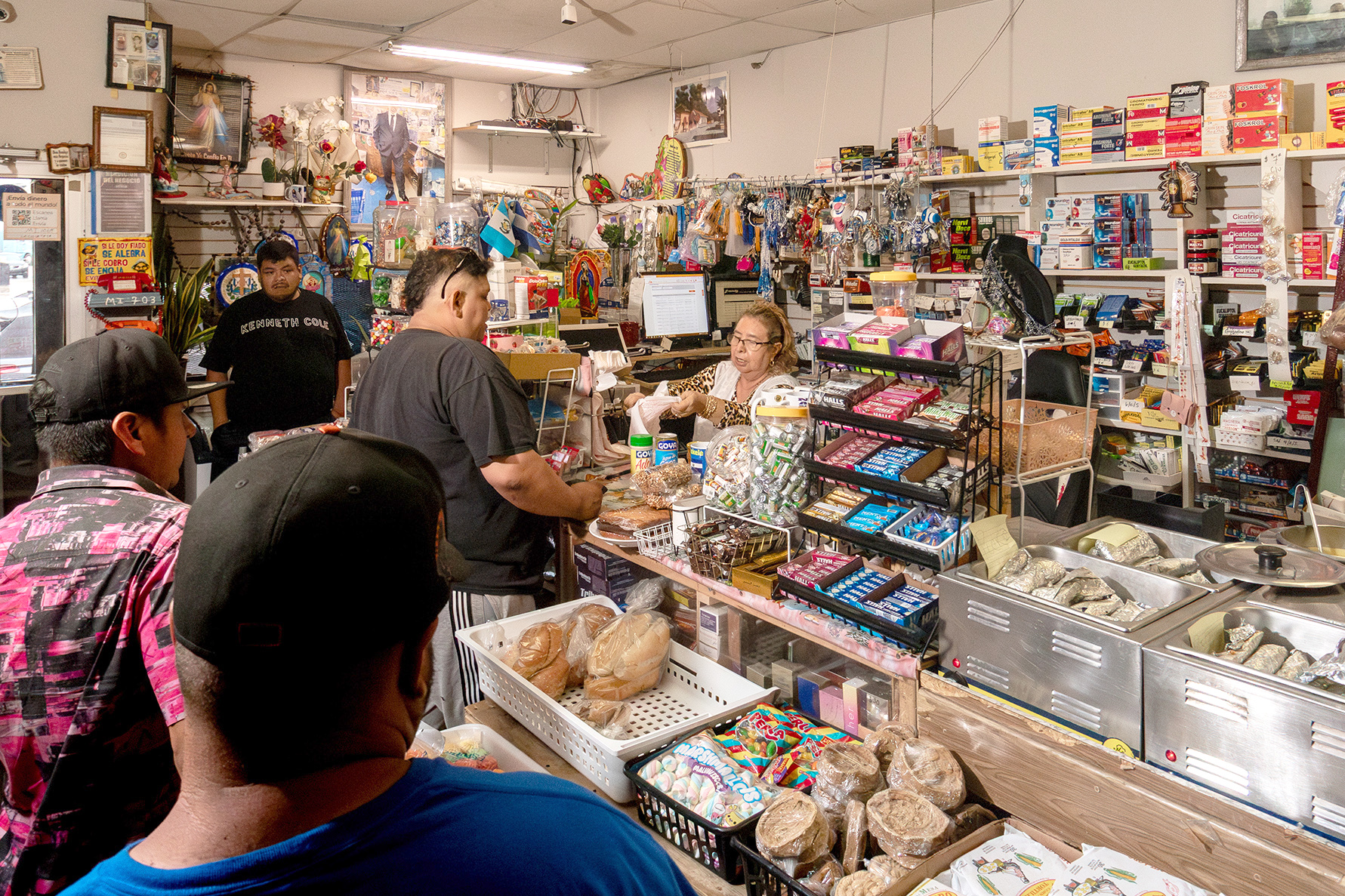
On a Saturday evening, when most small businesses are closing down, La Cuscatleca, a small grocery store in Southwest Detroit, is a hive of activity.

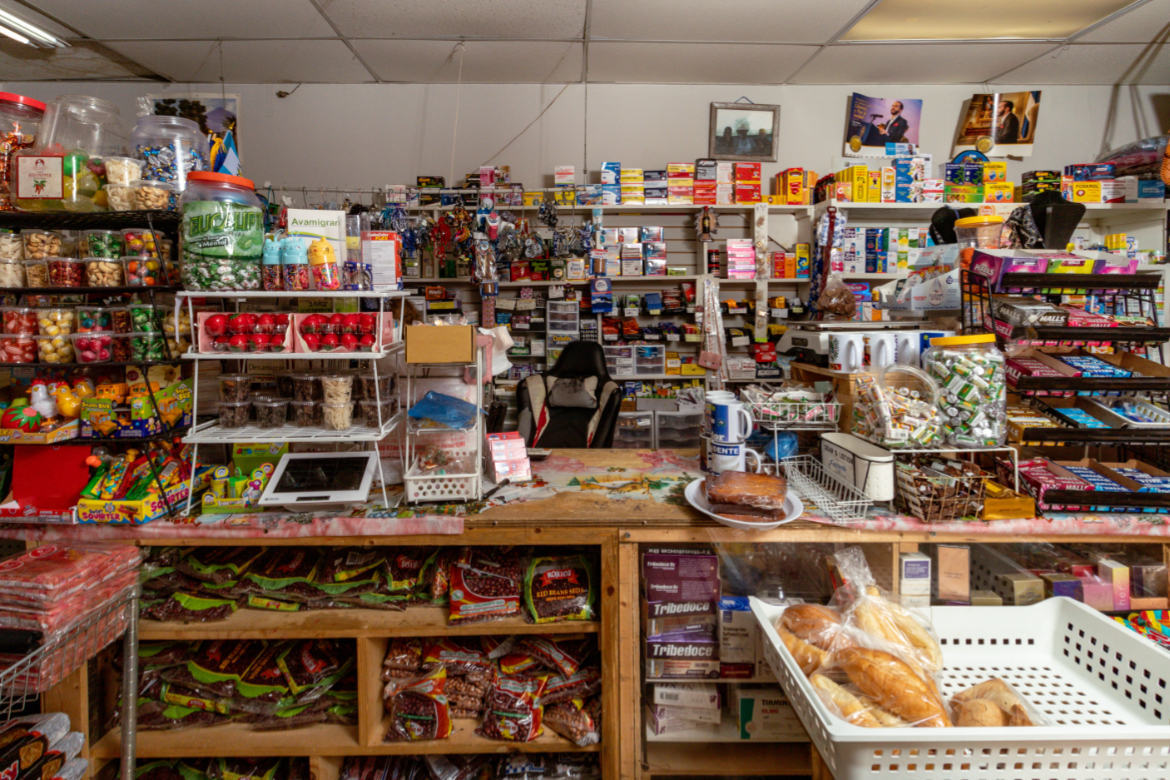
Customers bustle in and out with takeout orders while others browse shelves filled with products from Central America. Behind the counter, store owner Doña Laura Vasquez stands next to a steamer filled with tamales wrapped in a banana leaf, her hair in a bun and an apron around her waist.
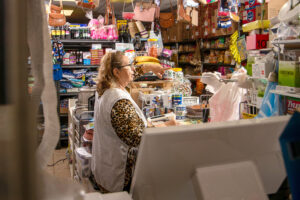
Parte tienda, parte restaurante, La Cuscatleca se ha vuelto crucial para que las comunidades centroamericanas descubran importaciones únicas.
Laura Vásquez attends customers at her store, La Cuscatleca. The Half Market, Half Restaurant on Michigan Avenue in Detroit, has become crucial for Central American communities to discover unique imports. Photo by Alejandro Ugalde Sandoval, special to BridgeDetroit

Vasquez, a long-time neighborhood resident, treats customers like extended family. La Cuscatleca is more than just a store; It’s a gathering place for Central American immigrants – and she is their connection to home.

ADVERTISEMENT

“I’ve been here for 15 years, I used to sell food from my house, now people come here to eat and to ask about jobs,” Vasquez said.

Vasquez knows many of her patrons by name and asks about their day or their family, creating a sense of community and belonging where people come to shop and connect with others.
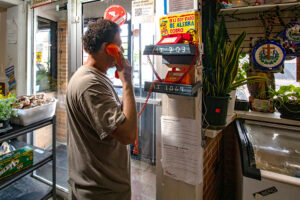
Gustavo M. envía dinero a su familia en El Salvador utilizando uno de los teléfonos exclusivos de la tienda.
Gustavo M. (54) wires money back to his family in El Salvador using one of the dedicated phones in the store. This service connects him with an operator who handles the transaction, which is essential for families in small Latin American towns without banking services. Photo by Alejandro Ugalde Sandoval, special to BridgeDetroit

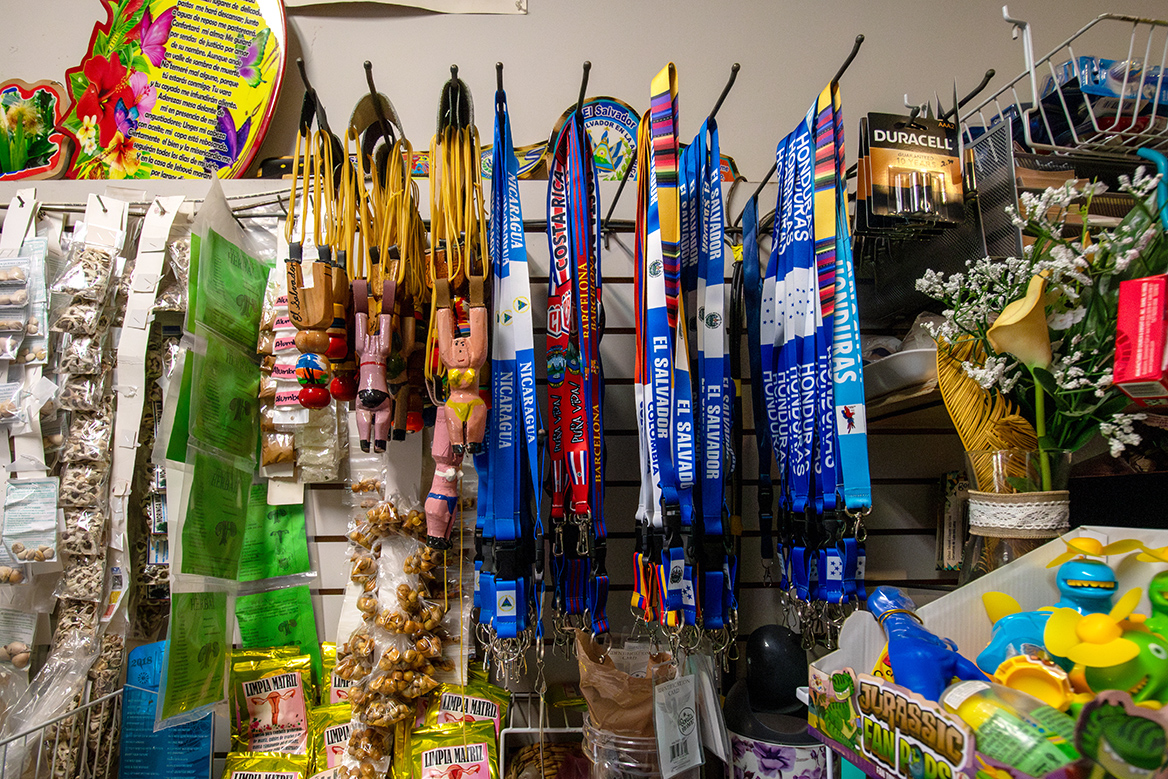
Here, customers can wire money to their families and buy hard-to-find ointments, canned food, and candy from back home, homemade specialty bread, and blue and white soccer jerseys from La Selecta, El Salvador’s national soccer team. 

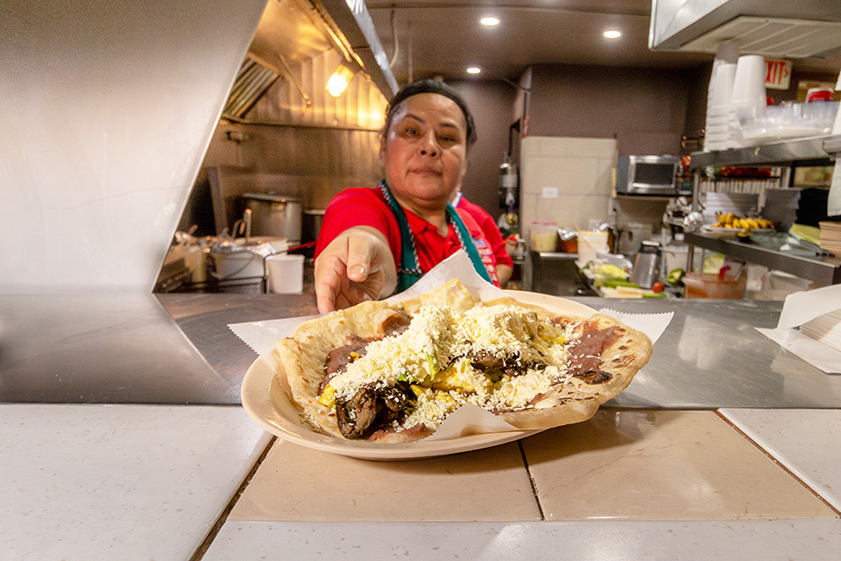
In the back of the store is a small restaurant where the scent of pupusas sizzling on the grill fills the air, and beach towels with scenes of El Salvador hang as decoration. 

Near the kitchen, workers and customers discuss El Salvadaor’s recent reelection of Nayib Bukele, the controversial president accused of dismantling democratic institutions and of mass human rights abuses for his crackdown on gangs that once terrorized the country. 
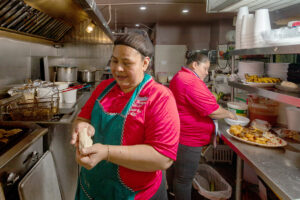
A la izquierda, Ana Vásquez de El Salvador prepara una pupusa. A la derecha, Maritza Serrano de Honduras finaliza un pedido de Yuca con Chicarrón. Según su estimación, preparan un promedio de 200 pupusas diarias.
On the left, Ana Vásquez from El Salvador prepares a fresh Pupusa. On the right, Maritza Serrano from Honduras finishes an order of Yuca con Chicharrón. According to their estimate, they prepare an average of 200 Pupusas daily. Photo by Alejandro Ugalde Sandoval, special to BridgeDetroit

“Lo amo!” “I love him,” says Anna, the cook. “He’s been able to do what several presidents before him could not, get the gangs under control.”

In the corner booth is Neto Grande, who is originally from El Salvador. He and his wife Nataly and their newborn baby drove 45 minutes to La Cuscatleca. They make the trip from Waterford a few times a year to eat and load up on groceries.

“Other than my family, this is the only restaurant that serves this kind of food,” Grande said. “We also come to buy things from my country that can only be found here.”

Eighteen-year-old Luis Adolfo Hernandez arrived from Honduras two years ago. He found a job roofing and feels lucky he can send money back home. Hernandez misses his family but says he feels like he’s back home when he visits the store.

“They speak Spanish here, and I can send packages, shop, and get food. Hernandez said. “They make my favorite dish, pollo con tajadas.”

Journey to business ownership

Doña Laura Vasquez arrived in Detroit in 1984. She left when El Salvador was at the height of its 12-year civil war when violence between the right-wing government and leftist guerillas terrorized the country. The brutality was marked by the assassination of Archbishop Oscar Romero and the murder of four Maryknoll Sisters, which caused international outrage.

Vasquez made her way to Mexico, and from there to Texas, then New York, and finally to Michigan. Months after arriving here, Vasquez fell into a deep depression. She had made the agonizing decision to leave her three little girls behind in El Salvador until she got established in the U.S. and could send for them. She couldn’t bear being without them and worried all the time. 
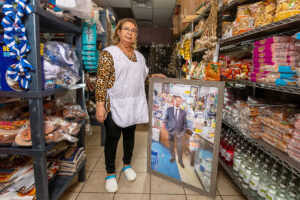
Laura Vásquez sostiene un retrato de su difunto esposo, Fidel Ángel Trejo, el fundador del negocio que falleció en 2021.
In the Market area of La Cuscatleca, Laura Vásquez holds a portrait of her late husband, Fidel Ángel Trejo, the founder of the business who passed away in 2021. Photo by Alejandro Ugalde Sandoval, special to BridgeDetroit

She said her late husband, Fidel Angel Trejo, noticed that she brightened up when she cooked and encouraged her to continue. Vasquez began making tamales, a time-consuming traditional food that kept her busy and her mind occupied for hours.

“I found a cooler that had wheels,” Vasquez said. “I would walk to Clark Park with my cooler full of food and sell tamales made of pork and chicken.” 

Her husband worked at a meatpacking plant in Eastern Market. His coworkers asked if Vasques would cook for them. Cooking kept her busy and took her mind off worrying about her daughters. 

She started out making food for five of his coworkers, but before she knew it, she was cooking for more than 50 people, including catering orders. 

The kitchen took over her life. “I would wake up at noon and cook until five or six in the morning,” Vasquez said.
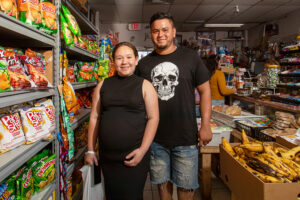
Heydi Paola de Nicaragua (izquierda) junto a Alex Alberto de El Salvador después de comprar en La Cuscatleca. “Venimos aquí desde Saline al menos dos veces al mes para encontrar productos que no podemos comprar en ningún otro lugar.”
Heydi Paola from Nicaragua (left) stands next to Alex Alberto from El Salvador after shopping at La Cuscatleca. “We come here from Saline at least twice a month to find products we cannot buy elsewhere,” said Alex Alberto. Photo by Alejandro Ugalde Sandoval, special to BridgeDetroit

But the long hours paid off. She was making money, which she invested into La Cuscatleca, her tienda at 6343 Michigan Avenue, where Central American immigrants have become part of the neighborhood. It also allowed her to reunite with her daughters and bring them to Detroit. 

Vasquez says La Cuscatleca has gotten much busier in the past two years. 

“There are a lot more people from El Salvador and Honduras and Guatemala coming,” Vasquez said. “I know, because of sales, the merchandise moves faster.”

Vasquez used to travel to El Salvador every other month to buy products. But now, she says, she sometimes needs to go back monthly to meet demand.

“By mid-month, I’m already low on merchandise; I run out of cheese, cream, and medicine,” Vasquez said.

A changing neighborhood

La Cuscatleca is a microcosm of what’s to come.

For decades, Mexicans have been the dominant immigrant group in Southwest Detroit, but as Mexicans move further south to Allen Park, Lincoln Park, and Melvindale, Central Americans from Guatemala, Honduras, and El Salvador are moving in. 

In addition, Central American grocery stores and restaurants, such as Pupuseria y Restaurant Salvadoreño and El Catracho, which serve Central American cuisine, have dotted the landscape, taking space in a community saturated with Mexican restaurants and businesses. 

The City of Detroit said it does not have data on the total number of migrants who have arrived, but signs of an influx are everywhere. 

Walking distance from La Cuscatleca is St. Hedwigs, a church that was once a religious center for the Polish community in the early 20th Century. Then, for decades, Mexicans filled the pews. Now, according to St. Hedwig’s, their congregation is more than 60% Guatemalan. 
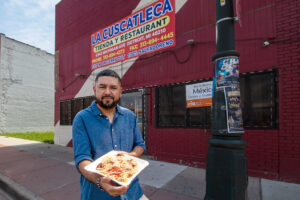
Ángel Trejo stands outside La Cuscatleca showcasing an order of Rice dough Pupusas con curtido. He helps his mother operate the market/ restaurant.
Ángel Trejo stands outside La Cuscatleca at 6343 Michigan Avenue in Detroit, showcasing an order of Rice dough Pupusas con curtido. When not working his full-time night shift, he helps his mother operate La Cuscatleca. Photo by Alejandro Ugalde Sandoval, special to BridgeDetroit

Social service agencies have also noticed a rise in Central American immigrants. About six months ago, Detroit Hispanic Development Corporation (DHDC), a Southwest Detroit nonprofit, began working with recent immigrant arrivals who had walked in off the street looking for help. 

“We’ve had families from Honduras, and we’ve heard more anecdotes from people in the community that are receiving more Central Americans, particularly Hondureños and some from Guatemala even,” said Raúl Echevarría, Director of Community Organizing & Advocacy at DHDC. 

As immigrants continue to arrive from Central America and make their way to Detroit, they will be looking for a community.

“I will be here to take care of my customers,” Vasquez said. They feel safe here.”

Una tienda salvadoreña en el suroeste de Detroit que conecta con las raíces.

La Cuscatleca trae cultura y productos centroamericanos a Detroit

Un sábado por la noche, cuando la mayoría de los pequeños negocios están cerrando, La Cuscatleca, una tiendita en el suroeste de Detroit, está muy concurrida.

Parte tienda, parte restaurante, La Cuscatleca se ha vuelto crucial para que las comunidades centroamericanas descubran importaciones únicas.
Laura Vásquez attends customers at her store, La Cuscatleca. The Half Market, Half Restaurant on Michigan Avenue in Detroit, has become crucial for Central American communities to discover unique imports. Photo by Alejandro Ugalde Sandoval, special to BridgeDetroit

Los clientes entran y salen apresuradamente con pedidos para llevar, mientras otros recorren los estantes llenos de productos de América Central. La dueña Doña Laura Vásquez, está detrás del mostrador, parada junto a una vaporera llena de tamales envueltos en hojas de plátano, con el pelo recogido en un moño y un delantal.

Doña Laura, reside en el barrio desde hace mucho y trata a sus clientes como si fueran parte de la familia. La Cuscatleca es más que una tienda; es un lugar de reunión para inmigrantes centroamericanos, y ella es su conexión con el hogar nos comentó: “He estado aquí durante 15 años, antes vendía comida desde mi casa, ahora la gente viene aquí a comer y a preguntar por trabajo”.

Ella conoce el nombre de muchos de sus clientes y les pregunta cómo les ha ido y que tal está su familia, lo que crea un sentido de comunidad y pertenencia, donde la gente va a comprar y a conectarse con los demás.

Gustavo M. envía dinero a su familia en El Salvador utilizando uno de los teléfonos exclusivos de la tienda.
Gustavo M. (54) wires money back to his family in El Salvador using one of the dedicated phones in the store. This service connects him with an operator who handles the transaction, which is essential for families in small Latin American towns without banking services. Photo by Alejandro Ugalde Sandoval, special to BridgeDetroit

Los clientes pueden enviar dinero a sus familiares, comprar ungüentos difíciles de encontrar, alimentos enlatados y dulces de su país, pan casero especial y camisetas de fútbol de La Selecta, la selección nacional de El Salvador.

En la parte trasera de la tienda hay un pequeño restaurante, donde el aroma de las pupusas chispeando en la parrilla, llena el lugar; con toallas de playa con estampas de El Salvador colgando como decoración.

Cerca de la cocina, los trabajadores y clientes comentan la reciente reelección de Nayib Bukele en El Salvador, el controvertido presidente, acusado de desmantelar las instituciones democráticas y de abusos en contra de los derechos humanos, por su ataque contra las pandillas que aterrorizaban al país.

A la izquierda, Ana Vásquez de El Salvador prepara una pupusa. A la derecha, Maritza Serrano de Honduras finaliza un pedido de Yuca con Chicarrón. Según su estimación, preparan un promedio de 200 pupusas diarias.
On the left, Ana Vásquez from El Salvador prepares a fresh Pupusa. On the right, Maritza Serrano from Honduras finishes an order of Yuca con Chicharrón. According to their estimate, they prepare an average of 200 Pupusas daily. Photo by Alejandro Ugalde Sandoval, special to BridgeDetroit

Doña Ana, la cocinera nos dijo: “¡Lo amo!, él ha hecho lo que los presidentes anteriores no pudieron; controlar a las maras”.

En una esquina se encuentra Neto Grande, originario de El Salvador, que con su esposa Nataly y su bebé recién nacido, manejaron 45 minutos hasta La Cuscatleca desde Waterford, recorrido que llevan a cabo varias veces al año comentó: “Aparte de mi familia, este es el único restaurante que sirve este tipo de comida…También venimos a comprar cosas de mi país que solo se pueden encontrar aquí”. 

Luis Adolfo Hernández, de 18 años, llegó de Honduras hace dos años. Encontró un trabajo como techador y se siente afortunado de poder enviar dinero a casa. Le hace falta su familia, pero dice que se siente como en casa cuando visita la tienda: “Aquí hablan español y puedo enviar paquetes, comprar y conseguir comida… Preparan mi plato favorito, pollo con tajadas”.

El viaje para ser la dueña de un negocio.

Doña Laura Vásquez llegó a Detroit en 1984. Salió de El Salvador cuando la guerra civil que duró 12 años estaba en su apogeo, cuando la violencia que ejercía el gobierno de derecha y la guerrilla de izquierda, aterrorizaba al país. La ferocidad estuvo marcada por el asesinato del arzobispo Oscar Romero y de cuatro hermanas Maryknoll, causando indignación internacional.

Doña Laura llegó a México, Texas, Nueva York y finalmente a Michigan; cayendo a los meses en una profunda depresión, pues había tomado la angustiosa decisión de dejar a sus tres niñas en El Salvador hasta que se estableciera en los EE. UU. y pudiera mandarlas a buscar. No podía soportar estar sin ellas y estaba preocupada todo el tiempo.

Laura Vásquez sostiene un retrato de su difunto esposo, Fidel Ángel Trejo, el fundador del negocio que falleció en 2021.
In the Market area of La Cuscatleca, Laura Vásquez holds a portrait of her late husband, Fidel Ángel Trejo, the founder of the business who passed away in 2021. Photo by Alejandro Ugalde Sandoval, special to BridgeDetroit

Comentó que su difunto esposo, Fidel Ángel Trejo, notó que se animaba cuando cocinaba y la alentó a continuar. Así que comenzó a hacer tamales, una comida tradicional que requiere mucho tiempo, manteniéndola con la mente ocupada durante horas:“Encontré una hielera con ruedas y me iba caminando hasta el Parque Clark, con mi hielera llena y vendía tamales hechos de cerdo y pollo”.

Su esposo trabajaba en una planta empacadora de carne en Eastern Market, sus compañeros de trabajo le preguntaron si su esposa cocinaría para ellos. Lo que la mantuvo ocupada y le disminuyó la preocupación por sus hijas.

Empezó preparando comida para cinco de los compañeros, pero antes de darse cuenta, estaba cocinando para más de 50 personas, incluidos los pedidos de catering.

La cocina se apoderó de su vida dijo Doña Laura: “Me despertaba al mediodía y cocinaba hasta las cinco o seis de la mañana”.

Heydi Paola de Nicaragua (izquierda) junto a Alex Alberto de El Salvador después de comprar en La Cuscatleca. “Venimos aquí desde Saline al menos dos veces al mes para encontrar productos que no podemos comprar en ningún otro lugar.”
Heydi Paola from Nicaragua (left) stands next to Alex Alberto from El Salvador after shopping at La Cuscatleca. “We come here from Saline at least twice a month to find products we cannot buy elsewhere,” said Alex Alberto. Photo by Alejandro Ugalde Sandoval, special to BridgeDetroit

Pero las largas horas dieron frutos. Ganó dinero que invirtió en La Cuscatleca, su tienda en 6343 Michigan Avenue, donde ahora, los centroamericanos se han convertido en parte del vecindario. Permitiéndole reunirse con sus hijas y traerlas a Detroit.

Ella comenta que La Cuscatleca se ha vuelto mucho más concurrida en los últimos dos años: “Viene mucha más gente de El Salvador, Honduras y Guatemala”, y añadió “Sé que, debido a las ventas, la mercancía se mueve más rápido”.

Doña Laura viajaba a El Salvador cada dos meses para comprar productos. Pero ahora, a veces necesita regresar mensualmente para suplir la demanda: “A mediados de mes, ya me falta producto; me quedo sin queso, crema y medicina.”

Un barrio cambiante

La Cuscatleca es un ejemplo de lo que se avecina.

Durante décadas, los mexicanos han sido el grupo inmigrante dominante en el suroeste de Detroit, pero a medida que los mexicanos se mudan más al sur a Allen Park, Lincoln Park y Melvindale, los centroamericanos de Guatemala, Honduras y El Salvador están llegando.

Además, las tiendas y restaurantes centroamericanos, como la Pupusería y Restaurante Salvadoreño y El Catracho, han diversificado el paisaje, en una comunidad saturada de restaurantes y negocios mexicanos.

La ciudad de Detroit mencionó que no tiene datos sobre el número total de migrantes que han llegado, pero hay señales de afluencia en todas partes.

A poca distancia de La Cuscatleca se encuentra la Iglesia Santa Eduviges, siendo un centro religioso para la comunidad polaca a principios del siglo XX. Durante décadas, los mexicanos llenaron los bancos de la iglesia, pero actualmente en la congregación hay más del 60% de guatemaltecos. 

Ángel Trejo stands outside La Cuscatleca showcasing an order of Rice dough Pupusas con curtido. He helps his mother operate the market/ restaurant.
Ángel Trejo stands outside La Cuscatleca at 6343 Michigan Avenue in Detroit, showcasing an order of Rice dough Pupusas con curtido. When not working his full-time night shift, he helps his mother operate La Cuscatleca. Photo by Alejandro Ugalde Sandoval, special to BridgeDetroit

Las agencias de servicios sociales también han notado un aumento en la cantidad de inmigrantes centroamericanos. Hace unos seis meses, Detroit Hispanic Development Corporation (DHDC), una ONG del suroeste de Detroit, comenzó a trabajar con unos inmigrantes recién llegados, que llegaron caminando en busca de ayuda.

Raúl Echevarría, Director de Organización y Defensa de la Comunidad en DHDC explicó: “Hemos tenido familias de Honduras y hemos escuchado más anécdotas de personas de la comunidad que están recibiendo a más centroamericanos, particularmente hondureños y algunos de Guatemala incluso”.

A medida que los inmigrantes sigan llegando de América Central y se dirijan a Detroit, buscarán una comunidad y tendrán a Doña Laura: “Estaré aquí para cuidar de mis clientes… ellos se sienten seguros aquí”.

Traducción por Carmen Elena Luna
Tags: latinossalvadorsmall businesses
Previous Post

Within Your Grasp

Next Post

Art Textile from Guatemala

Martina Guzman

Martina Guzman

Related Posts

Entrepreneurs

Southwest Detroit Business Association Honors Community Investment Leaders 

by Michael D. Gutierrez
July 7, 2026
0

Southwest Detroit investment is driving new opportunities for businesses, culture and residents

Read moreDetails
Education

The Morning After Graduation: What do 1,000 graduates mean for the future of Southwest Detroit?  

by EL CENTRAL
July 5, 2026
0

Southwest Detroit graduates are shaping the future of the community. Discover why graduation is only the beginning and what comes...

Read moreDetails
Emergency responder wearing a helmet and backpack walking across a large field of debris and rubble.
Español

Ann Arbor Asylum-seeker Deported Hours Before Venezuela Earthquakes Dies in Building Collapse

by Erick Díaz Veliz
July 5, 2026
0

A Michigan family's American dream ended in heartbreak after deportation and disaster in Venezuela

Read moreDetails
Two women unveiling a green Michigan Historic Site marker reading "Dra. Lucile Gajec" by pulling away a red, green, and blue striped serape, with a young boy watching beside them.
Español

A Museum, A Memory, A Marker: Honoring Dr. Gajec’s Lifelong Mission

by EL CENTRAL
July 2, 2026
0

Lucile Gajec historical marker honors the Southwest Detroit historian who preserved Latino heritage for generations

Read moreDetails
Wide view of a crowd watching a band perform on an outdoor stage under a banner reading "We Tell These Truths: All Humans Are Created Equal," trees and buildings in the background.
Español

The Concert of Colors Neighborhood Series Presents “We Tell These Truths: All Humans Are Created Equal”

by EL CENTRAL
July 2, 2026
0

Concert of Colors Detroit united Southwest Detroit with La Santa Cecilia, local artists and a celebration of culture

Read moreDetails
Español

 United States of America

by Mariana Ayón RV
July 2, 2026
0

Southwest Detroit graduates are shaping the community's future. Discover why graduation is only the beginning and what comes next

Read moreDetails
Next Post

Art Textile from Guatemala

ADVERTISEMENT
  • Trending
  • Comments
  • Latest

Volunteers Needed for Refugee Resettlement in Michigan

February 14, 2024

Why We Celebrate “CINCO DE MAYO, THE 5TH OF MAY”

May 2, 2024
Steve Nagi Vanessa and Joanna Velazquez

Infamous Highwaymen Motorcycle Club Leader Pursues a Second Chance at Life

February 1, 2024

MSHDA Opens $60 Million MI Neighborhood Applications

April 4, 2024

Community and RuboFest 2022 

0

“Vemos a México como un socio igualitario”

0

Ford Hispanic and Latino Network Beautifies Clark Park

0

Editorial Opinion “The Fifth, I take the Fifth”

0
Motorized tricycle taxis carrying passengers pass each other on a wide Havana street lined with weathered colonial-style buildings.

Cubans Raise Their Voices Amidst the Darkness of Sanctions

July 7, 2026

Southwest Detroit Business Association Honors Community Investment Leaders 

July 7, 2026
Frank Venegas and Ideal Steel Employee Francisco Orozco

For 30 years, Frank Venegas Jr. has demonstrated that business success and community investment can grow together

July 7, 2026

Assembly for Hope Ratifies Statewide Policy Platform to Support Immigrants

July 5, 2026
ADVERTISEMENT
Motorized tricycle taxis carrying passengers pass each other on a wide Havana street lined with weathered colonial-style buildings.

Cubans Raise Their Voices Amidst the Darkness of Sanctions

July 7, 2026

Southwest Detroit Business Association Honors Community Investment Leaders 

July 7, 2026
Frank Venegas and Ideal Steel Employee Francisco Orozco

For 30 years, Frank Venegas Jr. has demonstrated that business success and community investment can grow together

July 7, 2026

Assembly for Hope Ratifies Statewide Policy Platform to Support Immigrants

July 5, 2026

The Morning After Graduation: What do 1,000 graduates mean for the future of Southwest Detroit?  

July 5, 2026

Born in the U.S.A. : The Supreme Court did the right thing, but four are dangerously off their rockers

July 5, 2026
ADVERTISEMENT
ADVERTISEMENT
EL CENTRAL Hispanic News

Michigans #1. Oldest. Largest & Only
Bilingual Hispanic News for 33 Years.

Follow Us

Browse by Category

  • Business
  • Classifieds
  • Community
  • Culture & Arts
  • Education
  • Entrepreneurs
  • Español
  • Events
  • Featured
  • Finance
  • Food
  • Latest News
  • Local News
  • Local Small Business
  • Music
  • National News
  • Opinion
  • Others
  • People
  • Politics
  • Resources
  • Restaurants
  • Sports
  • Throwbacks
  • World
  • World Cultures

Recent News

Motorized tricycle taxis carrying passengers pass each other on a wide Havana street lined with weathered colonial-style buildings.

Cubans Raise Their Voices Amidst the Darkness of Sanctions

July 7, 2026

Southwest Detroit Business Association Honors Community Investment Leaders 

July 7, 2026
  • Latest Issue
  • Newsletter
  • Advertise
  • About
  • Contact
  • Privacy Policy
  • Terms
  • MHCC Member
  • Created with EyeBreatheDesign

© 2026 EL CENTRAL HISPANIC NEWS

No Result
View All Result
  • Home
  • Sections
    • Featured
    • Local News
    • Community
    • Culture & Arts
    • Español
    • Music
    • Sports
  • Events
  • Latest Issue
  • Past Issues
  • Contact
  • Advertise
  • Privacy & Cookie Policy
  • Terms of Service

© 2026 EL CENTRAL HISPANIC NEWS