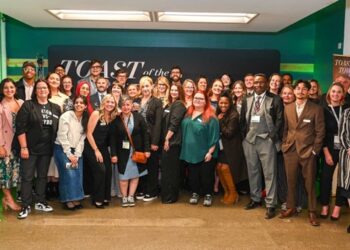
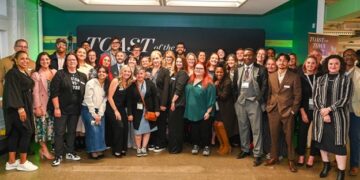



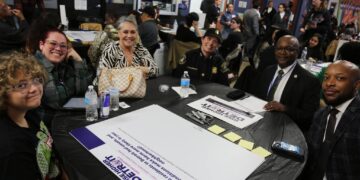









Ballet Folklórico de Wayne State University hosted “Music and Dance Rooted in Afro-Latinidad” in honor of Black History Month. BFWSU invited special guests Professor Ozzie Rivera and Ricanstruction for a second year in a row. This event highlighted and informed guests about music and dance in Latin America that has its roots in Africa. The Afro Latino experience in our homelands is oftentimes erased, although our music and dances are heavily rooted in Africa. For this reason, BFWSU has organized this event in honor of Black History Month to educate others.
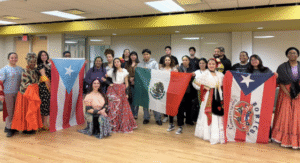
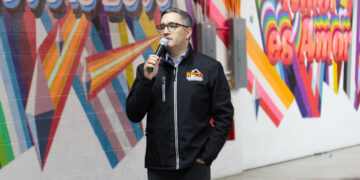
Professor Ozzie Rivera, a professor at both Wayne State University and the University of Michigan, began the event with an insightful and informative lecture that highlighted music and dance in Latin American countries with African roots. In his lecture, he highlighted dance and music forms from Brazil, Colombia, Venezuela, the Caribbean, Central America, Peru, Argentina, and Uruguay. He also highlighted Puerto Rico’s early contributions to jazz.
Following his lecture, Ricanstruction, which was founded by Ozzie Rivera, filled the room with lively sounds of bomba. Ricanstruction is a music/dance group that performs bomba- Afro-puertorican drumming and dance. Members led guests in song and dance as the group formed a batey.
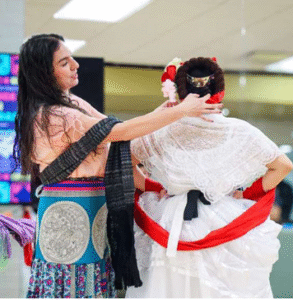
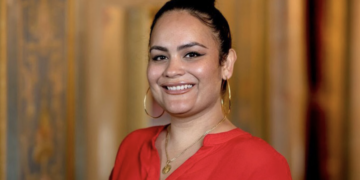
To end the evening, Ballet Folklórico de Wayne State University’s dancers presented on African heritage and influence in Mexico through a presentation & dances, specifically within the state of Veracruz. BFWSU dancers spoke about Gaspar Yanga, a Central African man who led a successful rebellion of enslaved Africans in the highlands of Veracruz against the Spanish. They highlighted the genre of Son Jarocho that has a profound African influence embedded in its syncopated rhythms, call and response vocal structures, and the use of percussive dance on a wooden platform. BFWSU closed out with simulating a fandango( community gathering of music and dancing that reflects African social, musical, and dance traditions), led by Veronica Beltran who shared her experience at a fandango in Tlacotalpan, Veracruz & who is also studying a Bachelor’s in Artistic Education with an Emphasis in Dance at an institute in Veracruz.
Ballet Folklórico de Wayne State University organizó “Music and Dance Rooted in Afro-Latinidad” en honor al Mes de la Historia Afroamericana. BFWSU invitó a los invitados especiales, el profesor Ozzie Rivera y el grupo Ricanstruction, por segundo año consecutivo. Este evento destacó e informó a los asistentes sobre la música y la danza en América Latina que tiene sus raíces en África. La experiencia afro-latina en nuestros países de origen muchas veces es borrada, aunque nuestra música y nuestras danzas están profundamente arraigadas en África. Por esta razón, BFWSU organizó este evento durante el Mes de la Historia Afroamericana para educar y visibilizar a la comunidad.
El profesor Ozzie Rivera, catedrático tanto en Wayne State University como en la University of Michigan, inició el evento con una conferencia perspicaz e informativa que resaltó la música y la danza en países latinoamericanos con raíces africanas. Durante su charla, destacó formas de baile y música de Brasil, Colombia, Venezuela, el Caribe, Centroamérica, Perú, Argentina y Uruguay. También subrayó las primeras contribuciones de Puerto Rico al jazz.
Tras su conferencia, Ricanstruction, fundado por Ozzie Rivera, llenó la sala con los sonidos animados de la bomba. Ricanstruction es un grupo de música y danza que interpreta bomba, un estilo afro-puertorriqueño de percusión y baile. Los integrantes guiaron a los asistentes en canciones y movimientos mientras formaban un batey, un espacio central en la práctica de la bomba.
Para cerrar la velada, los bailarines de Ballet Folklórico de Wayne State University presentaron la herencia e influencia africana en México mediante una exposición y bailes, enfocándose específicamente en el estado de Veracruz. Los bailarines de BFWSU hablaron sobre Gaspar Yanga, un hombre centroafricano que lideró una exitosa rebelión de esclavos africanos en las montañas de Veracruz contra los españoles. También destacaron el género Son Jarocho, que refleja una profunda influencia africana en sus ritmos sincopados, estructuras vocales de llamada y respuesta, y el uso del zapateado como percusión sobre plataformas de madera. BFWSU cerró con una simulación de fandango —una reunión comunitaria de música y baile que refleja tradiciones africanas sociales, musicales y de danza—, dirigida por Verónica Beltrán, quien compartió su experiencia en un fandango en Tlacotalpan, Veracruz, y quien actualmente estudia la Licenciatura en Educación Artística con énfasis en Danza en un instituto de Veracruz.