





















ANN ARBOR—William Lopez, clinical assistant professor of health behavior and health equity at the University of Michigan, has dedicated years to studying the effects of immigration enforcement on communities throughout the United States.
Through his research, Lopez seeks to understand how immigration raids alter the daily lives and mental health of families, particularly among children and students. Large-scale raids, heightened fears of deportation and shifting federal policies have created environments of uncertainty and anxiety among Latine families.
Lopez joins Michigan Minds to discuss his findings on the effects of immigration raids, offering insight into how intensified enforcement efforts shape the well-being and resilience of students and their communities.
Can you share some thoughts on how this has affected K-12 and college students this year?
We often think about deportation as who is being deported and that is certainly important. But what is also critical to understand is there is this fear, this chilling effect about the possibility of deportation that can change behaviors in a community.
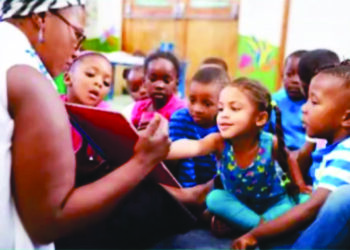
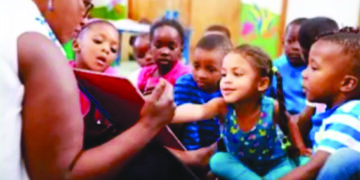
After immigration enforcement, students often stop going to school. In the week following enforcement, there are lots of absences. In my study of six worksite raids in 2018, schools continued to be impacted because parents were detained or deported and could not take their kids to school. Other parents were simply scared to drive and would not take their kids to school.
We saw a spike in absences after these raids. A colleague at Texas Tech found that more arrests can mean more absences among students, especially Latino students and lower test scores in language and math.
Deportation and the fear of deportation definitely impact attendance rates and test scores among K-12 students.
Are kids being pulled out of school completely?
That is one option. In the day after a large-scale enforcement, parents simply were not bringing their kids to school. This tends to be Latino students and these are the communities with which I worked. We are also seeing absentee and attendance discrepancies between Latino students and white students.
In the long term, sometimes students return to school, but we do see higher rates of students leaving the district. When students choose to leave and attend a different school, they tend to do well. But when students are forced to leave because of poverty, homelessness or deportation, they struggle to reintegrate.
At a minimum, in the days following enforcement, we see upticks in absences. Some students return; a smaller portion leaves the district. When students are worried about their families and their lives, they do worse in school and nothing can distract the child like the fear of parental deportation.
What are some lesser-known impacts on families and students who live with the fear of deportation?
This takes me back to one story I was told when I did my work here in Washtenaw County. One of the men detained in the raid told me his kids now refuse to sleep in their own room and wanted to sleep in his room. His son would say, “Well, dad, I am scared. When I am asleep, if I am holding your hand, no one will be able to take you away from me.”
Parents, teachers and church leaders across the country share stories of children fearful they may never see their parents again. One impact of fear of deportation is children’s attachment and relationship with parents and guardians, worrying they will not be able to see those people again.
Mass deportation affects families and also teachers, who have to explain that the parents who dropped them off may not be the parents to pick them up and have to make up for achievement gaps when Latino students do not attend school or see decreases in their grades.
If ordinary citizens with no prior experience or training in immigration procedures start working with law enforcement officers and arresting individuals, what issues or problems might arise during these arrests?
When you expand at this rate, any number of things can happen when the pieces are not in place to screen who you are hiring, for example. And we certainly see this in recent arrests in Chicago and in LA where these arrests are overtly violent.
They often involve firearms being carried unholstered with fingers on the trigger of the weapon. And they often involve lots of racial profiling, as was confirmed by Tom Homan, the former director of ICE during the first Trump administration and the current border czar under the current Trump administration. What I also want to be clear about is that from a public health perspective, deportation is always something that should concern us.
What we know from our research is that separating people from their families and their communities will always be unhealthy. So before we get even into the critique of hiring more ICE agents, I want to go back to the very beginning and say, even if the hiring went “well” and everyone was screened correctly, deportation by the nature of what it is doing is bad for individuals, families and communities.
What are some of the ways parents and students can seek help?
Schools can always have a plan for what will happen when one or multiple parents are removed. Districts had to decide who would be allowed to pick up their students and prepare bus drivers so they did not drop students off in homes where there were no parents.
Legal resources always have been and will always be needed in these situations, both low-cost legal resources, but certainly bilingual or multilingual resources that are accessible. When someone is detained at a remote location, it is often hard for the lawyer or family members to drive to visit them, so we need to find lawyers who are bilingual and low-cost and community members willing to drive to these remote locations.
Are schools and communities helping to deal with issues related to deportation?
Absolutely. One thing that I have seen in this work is that communities do not just sit by. Families and communities have always found ways to support those when someone is removed. Many of these resistance strategies were creative, were beautiful, tapped into cultural and linguistic and even musical heritages and fought the deportation, the efforts to deport community members in creative ways.
We see mutual aid networks pop up throughout the country. Sometimes providing someone or finding a lawyer for someone is only one part of the strategy. Often, the family left behind needs to find some ways to continue on as we talked about, integrating back into schools, but also simple things like filling the refrigerator with food. Churches often had food drives immediately after these worksite raids and collected food so that community members could have something to eat.
Food and diapers were constantly needed after enforcement events and mutual aid networks popped up all over the country to be able to support these families.
Have you seen an increase in classmates being bullies to some of the Hispanic or other students?
Yes, it can impact how students and children feel about their Latino classmates. I have come across instances of bullying. It is not particularly what I study in my research, but those stories have shown up. This shapes how our country feels about Latinos and this shows up in adults when these ads from ICE and DHS use overt racial and prejudice messages, discriminatory messages. This changes how we relate to each other.
They used the ASMR trend. The first one was the sounds of deportation in the morning and they focused on the sounds of shackles clinking on the ground as detainees were walked into a plane to be deported. And then the second was the ASMR, the sounds of the Venezuelan ships being blown up. So you hear the machine gun fire and you hear the explosion of the ship.
Why is this important? Because the deportation of Latinos in this case and the extra judicial elimination of this boat in international waters was presented as a joke, as a meme and people were deported and people were killed in the latter example. And this changes how our nation thinks about Latinos, about immigrants and even things like international jurisdiction and law and war.
Closing thoughts?
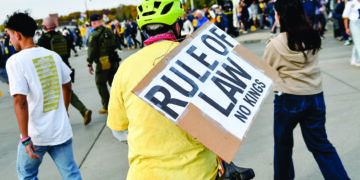
I want people to realize that this is mass deportation on a scale that we have not seen in our lifetimes and that is historic in the history of the US. The raid that happened in Ellabell, Georgia, in which nearly 500 people were detained in a single site, is the biggest raid in history. So we are in a historic moment. And just as mass deportation has started, mass resistance has started as well. And we have to decide how we are going to interact in this particular moment that is notable in our country’s history.
Michigan Minds is produced by Greta Guest and hosted by Michigan News staff. Jeremy Marble is the audio engineer and Hans Anderson provides social media animations. Listen to all episodes of the podcast.