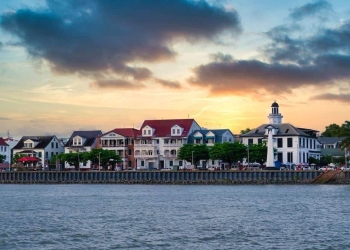













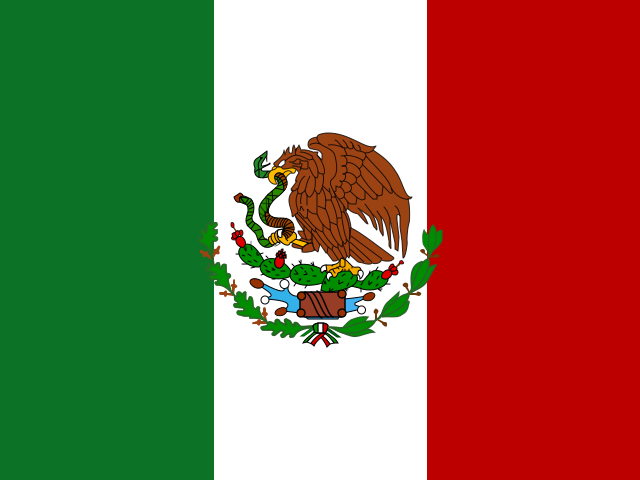


Jijoca de Jericoacoara (Ceará, Brazil) is a small municipality located in northeastern Brazil, in the state of Ceará, 300 km west of Fortaleza. It is one of the most visited tourist beaches in Brazil, and one of the most popular worldwide for thousands of tourists who love nature and sports. Travelers can admire its natural beauty, rivers, lagoons, and beaches year-round.
It is a small fishing village, popular with windsurfers and kitesurfers, known as “the Northeastern paradise” for preserving its pristine natural beauty. This place can only be reached by authorized vehicles capable of navigating the sandy paved roads and climbing the large dunes. Until about 20 years ago, Jericoacoara remained an isolated fishing village; there were no roads, electricity, or telephone service, and money was rarely used.
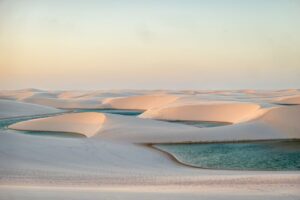
Jericoacoara, although currently preserved as a fishing village on the coast of Ceará. Its beaches were almost deserted until hippies from various parts of Brazil discovered it in the 1970s. They were followed by Europeans who came on vacation and ended up staying. It remained a paradise known to very few until about ten years ago, when it began to appear on lists of the most beautiful beaches in the world in specialized publications.
Surrounded by dunes and warm-water lagoons, Jericoara is located within a national park. There are no roads leading there, just sand everywhere. Beyond the lush nature, there is much to discover.
Nélida Piñón
Vila Isabel, Rio de Janeiro, Brazil, (1937 – 2022), daughter of the merchant Lino Piñón Muiños (Piñón Muñoz) and Olivia Cuiñas Piñón, of Spanish origin. From a very young age, she felt drawn to the world of literature.
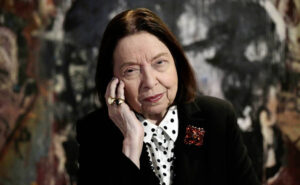
“I began to write as a child, reading the books I was given, inventing those I didn’t have at hand […] at eight years old I proclaimed myself a writer. I don’t know, however, at what moment, and from what shelter, this other writer I am today emerged later, who aspires to encompass beings and enigmas.” Nélida Piñón was a staunch defender of human rights, especially women’s rights. She has been considered by the New York Review of Books the best Brazilian writer, and World Literature Today magazine dedicated its first issue of 2005 to her. Among the awards she received are the Juan Rulfo Latin American and Caribbean Literature Prize (1995), the most important in Latin America (she was the first woman to receive it and the first Portuguese-language author); the Menéndez Pelayo Prize (2003), in recognition of her work as a teacher and researcher in the humanities and her literary creations; and the Prince of Asturias Award for Literature (2005), “for her stimulating narrative work, artistically grounded in reality and memory, and also in fantasy and dreams.”
Piñón debuted in the literary world in 1961 with *Guía-mapa de Gabriel Arcanjo* (Guide-Map of Gabriel Arcanjo), a novel about sin, forgiveness, and the relationship of mortals with God through the dialogue between the protagonist and his Guardian Angel.
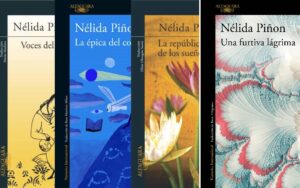
Nélida reflects sincerely: “I write for the pleasure of being happy, of being someone else. Because one cannot be oneself all one’s life; one must be many. One must have a vocation for multiplicity. And literature allows you to enter the other’s world. That is, in a way, it reduces the scope of the mystery. It doesn’t clarify the mystery because the mystery is beyond our ability to translate it. But reading seems to me like a revelation; it is the capacity to interpret what until then you didn’t know.”
She maintains that despite participating in some political gatherings to which she is invited, she “never” stops being a writer. “I spread my ideas without charging,” she says, “because I want a better world.” Finally, referring to migrants, she philosophizes: “The immigrants of the 19th and early 20th centuries had a dream, a dream that, to be realized, required extraordinary strength, a renunciation of their own lives, their own people and origins, to discover the Americas, for example.”
Her novel, *The Republic of Dreams*, is inspired by her vision of Galician emigration to Brazil. The work, which won the Brazilian Association of Art Critics Prize in 1985, is, in the author’s own words, “a deliberate novel […] I knew that to write it I had to prepare myself, and I did so over many years of my life. It was a large project that would encompass two continents, 300 years, or more, because there are aspects of that novel that reach back to the 12th century.”
Jijoca de Jericoacoara (Ceará, Brasil) es un municipio pequeño ubicado en el nordeste de Brasil, en el estado de Ceará, a 300 km al oeste de Fortaleza. Es una de las playas turísticas más visitadas de Brasil, y de las más populares en todo el mundo para los miles de turistas amantes de la naturaleza y el deporte.
Los viajeros pueden admirar durante todo el año su naturaleza, sus ríos, sus lagunas y playas. Es un pequeño pueblo de pescadores, de deportistas de windsurf y kitesurf, conocido como “el paraíso nordestino” por conservar su belleza natural intacta. Sólo se puede llegar a este lugar mediante vehículos autorizados que puedan andar por las calles pavimentadas de arena, y subir las grandes dunas.
Hasta hace unos 20 años, Jericoacoara seguía siendo un pueblo de pescadores aislado de la ciudad, no existían carreteras, ni electricidad, ni telefonía y el dinero rara vez se utilizaba. Jericoacoara, aunque actualmente se preserva como un pueblo de pescadores en la costa de Ceará.
Sus playas eran casi desiertas hasta que hippies de varios lugares de Brasil la descubrieron en la década de 1970. Los siguieron los europeos que venían de vacaciones y terminaban quedando. Siguió siendo un paraíso conocido por muy pocos hasta hace unos diez años, cuando empezó a figurar en listas de las playas más lindas del mundo en publicaciones especializadas.
Cercada de dunas y lagunas de aguas cálidas, Jericoara está ubicada dentro de un parque nacional. No hay rutas hacia allá, solo arena por todos lados. Más allá de la naturaleza exuberante, y mucho por descubrir.
Nélida Piñón, escritora extraordinaria
Vila Isabel, Río de Janeiro, Brasil, (1937 – 2022) hija del comerciante Lino Piñon Muiños (Piñón Muñoz) y de Olivia Cuiñas Piñon, de origen español. Desde muy pequeña se sintió atraída por el mundo de las letras.
“Comencé a escribir siendo aún una niña, leyendo los libros que me daban, inventando los que no tenía a mano […] con ocho años me proclamé escritora. No sé, sin embargo, en qué instante, y de qué abrigo, salió más tarde esta otra escritora que soy hoy, que aspira a abarcar los seres y los enigmas”.
Nélida Piñón fue una firme defensora de los derechos humanos, especialmente los de la mujer, ha sido considerada por la New York Review of Books la mejor escritora brasileña y la revista World Literature Today le dedicó el primer número del año 2005. Entre los galardones recibidos se cuentan el premio de literatura latinoamericana y del Caribe Juan Rulfo (1995), el más importante de América Latina (fue la primera mujer en recibirlo y el primer autor en lengua portuguesa); el premio Menéndez Pelayo (2003), en reconocimiento a su labor como docente e investigadora en el campo de las humanidades y a su obra de creación literaria, y el Príncipe de Asturias de las letras (2005), “por su incitante obra narrativa, artísticamente sustentada en la realidad y la memoria, y también en la fantasía y los sueños”.
Piñón debutó en el circuito literario en 1961 con Guía-mapa de Gabriel Arcanjo, una novela sobre el pecado, el perdón y la relación de los mortales con Dios a través del diálogo entre el protagonista y su Ángel de la Guarda.
Nélida, reflexiona con sinceridad: “Escribo por el gusto de ser feliz, de ser otro. Porque uno no puede ser uno mismo toda la vida, hay que ser muchos. Hay que tener la vocación de la multiplicidad. Y la literatura permite que tú ingreses en el mundo ajeno del vecino. O sea, de alguna manera reduce el área del misterio. No aclara el misterio porque el misterio es superior a nuestra habilidad de traducirlo. Pero la lectura me parece un deslumbramiento, es la capacidad de poder interpretar lo que hasta entonces ignorabas”.
Sostiene que a pesar de participar en algunos encuentros políticos a los que la invitan, “nunca” deja de ser escritora. “Las ideas las propago sin cobrar -dice-, porque quiero un mundo mejor”. Finalmente refiriéndose a los migrantes filosofa: “los inmigrantes del siglo XIX e inicios del XX tuvieron un sueño, un sueño que para ser concretado requería una fuerza extraordinaria, una renuncia hacia su propia vida, hacia su propio pueblo y origen para descubrir las Américas por ejemplo”.
Su novela La república de los sueños, está Inspirada en su visión de la emigración gallega a Brasil, la obra, que obtuvo el premio de la Asociación de Críticos de Arte de Brasil en 1985, es, en palabras de la propia autora, “una novela deliberada […] Yo sabía que para llegar a ella me tenía que preparar, y lo hice a lo largo de muchos años de mi vida. Era un proyecto grande que abarcaría dos continentes, 300 años, o más, porque hay aspectos en esa novela que llegan hasta el siglo XII”. Roberto Ayón Ballesteros