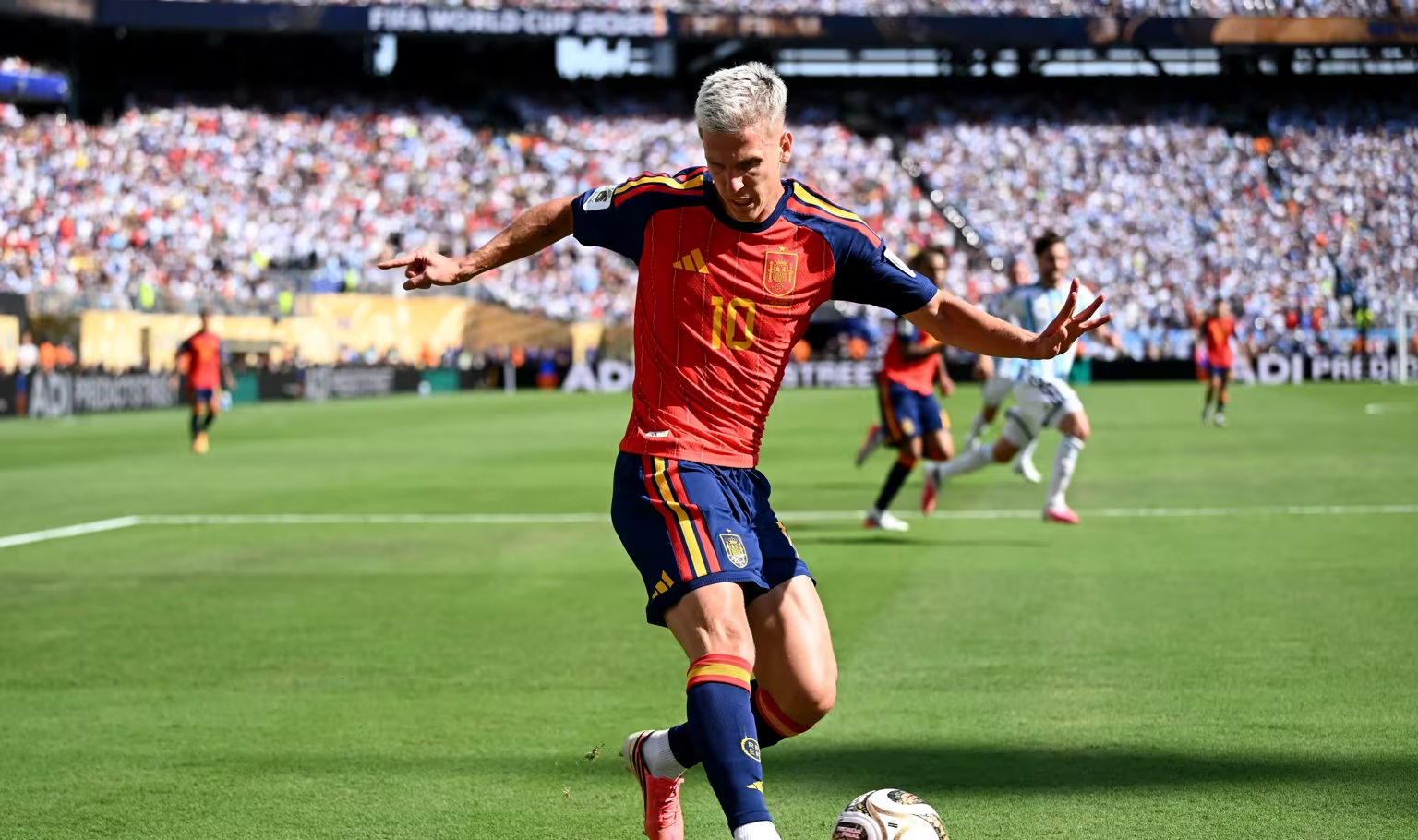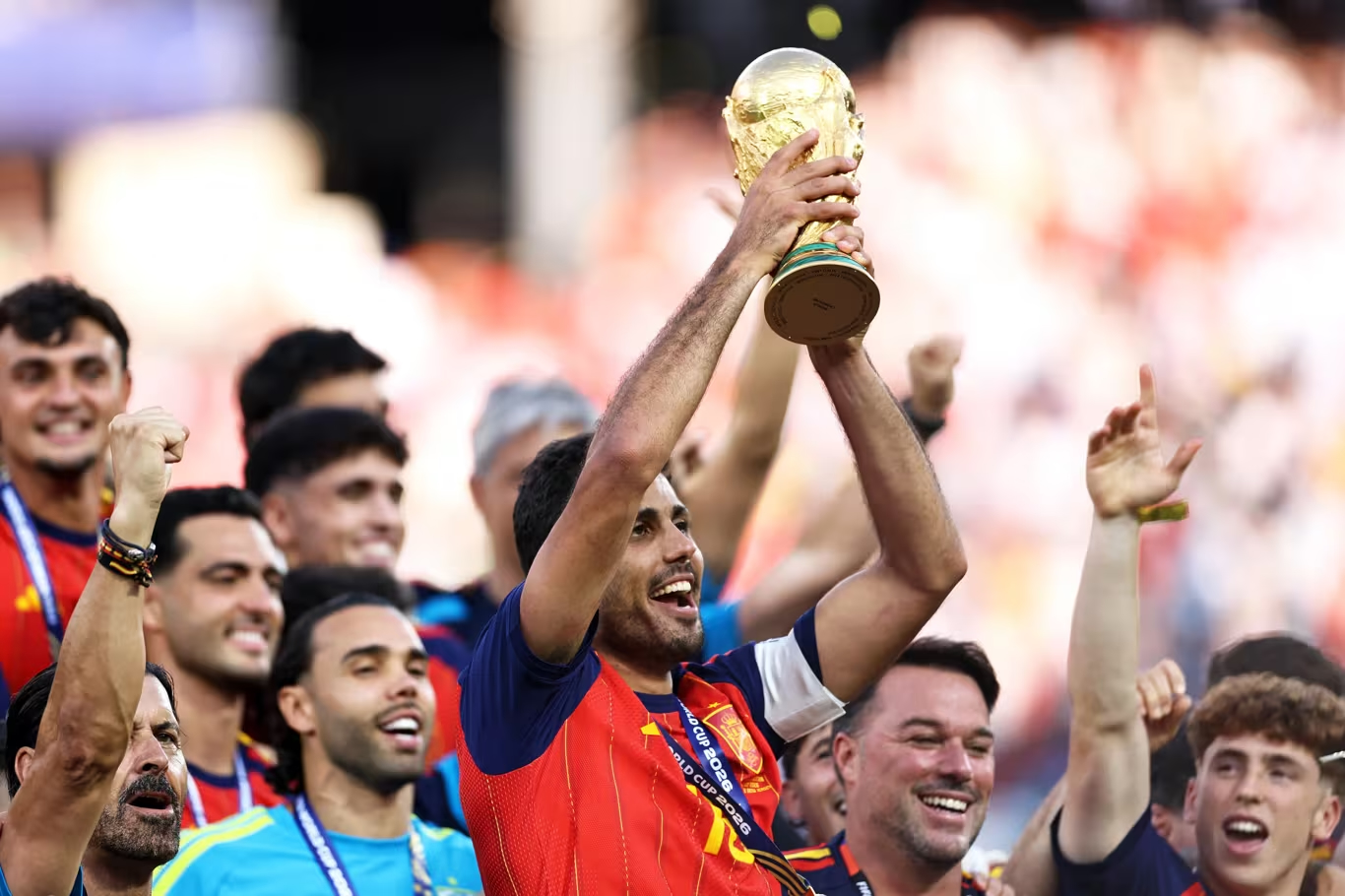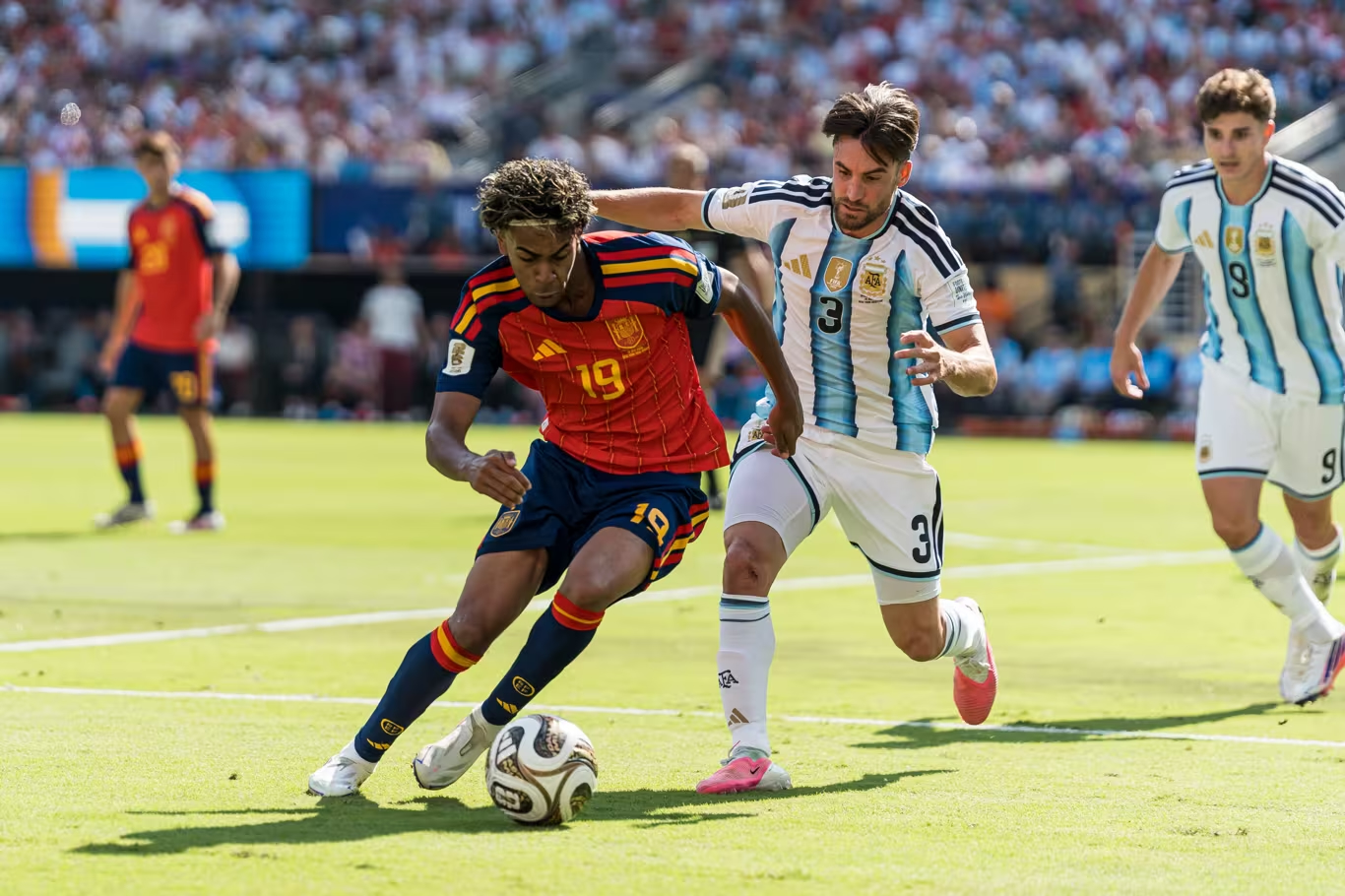
















Just seconds into the second half of extra time Ferran Torres sealed Spain’s second World Cup title. He finished off a move that included a fantastic backwards header from Niko Williams to set up the shot he fired into the roof of the net. The goal spared everyone the agony of penalty kicks for the second final in a row. It has also probably ended the international career of Argentina’s legendary leader Lionel Messi.

Spain dominated long stretches of the game with their precision passing and careful movement off the ball. This was a full field keep away game orchestrated by the imperious Rodri in the center of the pitch. Spain’s ball movement seemed to go through him with a one or two touch intervention all that was required to adjust the focus of their play. While many people waited for the likes of Lamine Yamal to do something spectacular, it was Rodri who kept Spain’s motor running smoothly and efficiently through every phase of the game. Out of possession, Rodri dedicated himself to winning the ball back. He tackled well and fouled when required. The final served as a representative example of his play in the eight games Spain played. The official voters who had a say recognized his influence and awarded him the Golden Ball as the best player in this World Cup. He can put that trophy next to his Ballon D’Or and a replica of the World Cup and European Championship trophies he has won with Spain.
Rodri could not have won the World Cup on his own. He didn’t score a goal or have an assist. Spain’s ultimate victory was a team effort. Goalkeeper Unai Simon claimed the Golden Glove after conceding just one goal in eight games. Belgium was the only team to breach the airtight Spanish defense. Simon’s most vital defender turned out to be Pau Cubarsi, a nineteen year old playing in his first senior international tournament. The Barcelona youngster chipped in with timely tackles and cultured passing as Spain showed that playing the ball out of the back can be done at the highest level. Cubarsi walked away with the Best Young Player award given the best player 21 years old or younger.
As Spain celebrated though, a lot of the world’s attention fell on Lionel Messi. The world watched as he listened to the Argentina fans sing his name and he cried. He cried, because his beloved team lost. He cried, because this will probably be his last tournament in the national colors. And he cried, because he knew he didn’t have his best game when his team and his country needed it most. He had influenced all seven of Argentina’s previous games in the World Cup. He scored eight goals and added four assists to lead his team to the final. On Sunday, Spain limited his touches and where he had them. Not once did he threaten the Spanish goal. Without Messi leading the attack, Argentina failed to register a shot on goal in 120 minutes.
Without input from Messi, the other nine field players and the substitutes who came on resorted to a more rough and tumble approach. They committed 25 fouls and the Slovenian referee let quite a few things go that in a less significant game would have certainly been whistled. The referee kept his cards in his pockets as long as he could. The Argentines tried to get the Spanish players to respond and at times the game became fractious. Enzo Fernandez’s red card, which reduced the defending champions to ten men near the end of normal time, didn’t come as a surprise. The only surprise was that it took that long to arrive.
Overall, the game will not be remembered as a classic. Spain dominated and should have found a goal in regulation time. Argentina just had no answer to Spain’s passing, the well-known “death by a thousand passes” moniker certainly applied.
Spain now holds both the men’s and women’s World Cup titles, the first country to do so. They are also the defending gold medalists from the Paris Olympics in men’s soccer. Their manager, Luis de la Fuente, has now won a championship at every age level he has coached for the national team. While he has never been a club manager, his record for the national team is remarkable. Next, he will launch Spain’s defense of the European Championship. Perhaps, he will still be in charge when Spain defend their title at home in 2030 as they share most of the hosting duties with Morocco and Portugal, while Paraguay, Argentina, and Uruguay each have a home game to commemorate the 100th anniversary of the first World Cup.
Tan solo unos segundos después de comenzar el segundo tiempo extra, Ferran Torres el segundo título mundial de España, aprovechando un balón muerto en el interior del área, que remató con fuerza para que no se pudiera detener el disparo. El gol le ahorró a todos la agonía de los penaltis por segunda final consecutiva. También ha puesto fin, muy probablemente, a la carrera internacional del legendario líder de Argentina, Lionel Messi.
España dominó largos tramos del partido con su precisión en los pases y sus cuidadosos desmarques sin balón. Fue un rondo a campo completo orquestado por el imperioso Rodri en el centro del campo. El juego de combinación de España parecía pasar siempre por él, bastando una o dos intervenciones al toque para cambiar el foco del ataque. Mientras muchos esperaban que alguien como Lamine Yamal hiciera algo espectacular, pero fue Rodri quien mantuvo el motor de España funcionando de forma fluida y eficiente en cada fase del encuentro. Sin la posesión, Rodri se dedicó a recuperar el balón: robó con solvencia y cometió faltas cuando fue necesario. La final sirvió como reflejo de su desempeño a lo largo de los ocho partidos que disputó España. El jurado reconoció su influencia y le otorgaron el Balón de Oro al mejor jugador de este Mundial. Un trofeo que ya puede colocar junto a su Balón de Oro y las réplicas de la Copa del Mundo y la Eurocopa que ha conquistado con la selección.
Sin embargo, Rodri no habría podido ganar el Mundial solo: no marcó ningún gol ni dio ninguna asistencia. La victoria final de España fue un esfuerzo colectivo. El guardameta Unai Simón se adjudicó el Guante de Oro tras encajar solo un gol en ocho partidos; Bélgica fue el único equipo capaz de batir a la infranqueable defensa española. El defensor más vital para Simón resultó ser Pau Cubarsí, un joven de 19 años que disputaba su primer torneo internacional absoluto. El canterano del Barcelona contribuyó con entradas oportunas y una salida elegante del balón, demostrando que construir el juego desde atrás es posible al máximo nivel. Cubarsí se llevó el premio al Mejor Jugador Joven, otorgado al destacado menor de 21 años.
Mientras España celebraba, gran parte de la atención del mundo se centró en Lionel Messi. Todos observaron cómo escuchaba a la afición argentina cantar su nombre mientras rompió a llorar. Lloró porque su querida selección había perdido; lloró porque este será probablemente su último torneo vistiendo la Albiceleste; y lloró porque sabía que no había tenido su mejor actuación cuando su equipo y su país más lo necesitaban. Había sido determinante en los siete partidos anteriores de Argentina en el Mundial, sumando ocho goles y cuatro asistencias para guiar a los suyos hasta la final. Sin embargo, el domingo España limitó sus intervenciones y las zonas donde intervenía. Ni una sola vez llegó a inquietar la portería española. Sin Messi liderando el ataque, Argentina no logró registrar ni un solo tiro a puerta en 120 minutos.
Sin la aportación de Messi, los otros nueve jugadores de campo y los suplentes que ingresaron recurrieron a un juego más bronco y físico. Cometieron 25 faltas y el árbitro esloveno dejó pasar bastantes acciones que en un partido de menor trascendencia habrían sido sancionadas sin duda. El colegiado guardó las tarjetas en sus bolsillos todo lo que pudo mientras los argentinos intentaban provocar la reacción de los españoles, volviendo el choque tenso por momentos. La tarjeta roja a Enzo Fernández, que dejó a la vigente campeona con diez hombres cerca del final del tiempo reglamentario, no sorprendió a nadie; la única sorpresa fue que tardara tanto en llegar.
En líneas generales, el partido no será recordado como un clásico. España dominó y debió haber encontrado el gol durante los 90 minutos. Argentina sencillamente no tuvo respuesta ante la circulación española, haciendo honor a la conocida frase de “muerte por mil pases”.
España posee ahora simultáneamente los títulos del Mundial masculino y femenino, siendo el primer país en conseguirlo. Además, son los vigentes campeones olímpicos tras su oro en los Juegos de París. Su seleccionador, Luis de la Fuente, ha ganado ya un campeonato en cada categoría de edad que ha dirigido en la federación. Aunque nunca ha entrenado a un club de élite, su balance con la selección es extraordinario. Su próximo reto será defender el título de la Eurocopa. Tal vez siga al frente cuando España defienda su corona mundial en casa en 2030, compartiendo la mayor parte de la sede con Marruecos y Portugal, mientras que Paraguay, Argentina y Uruguay albergarán un partido cada uno para conmemorar el centenario de la primera Copa del Mundo.