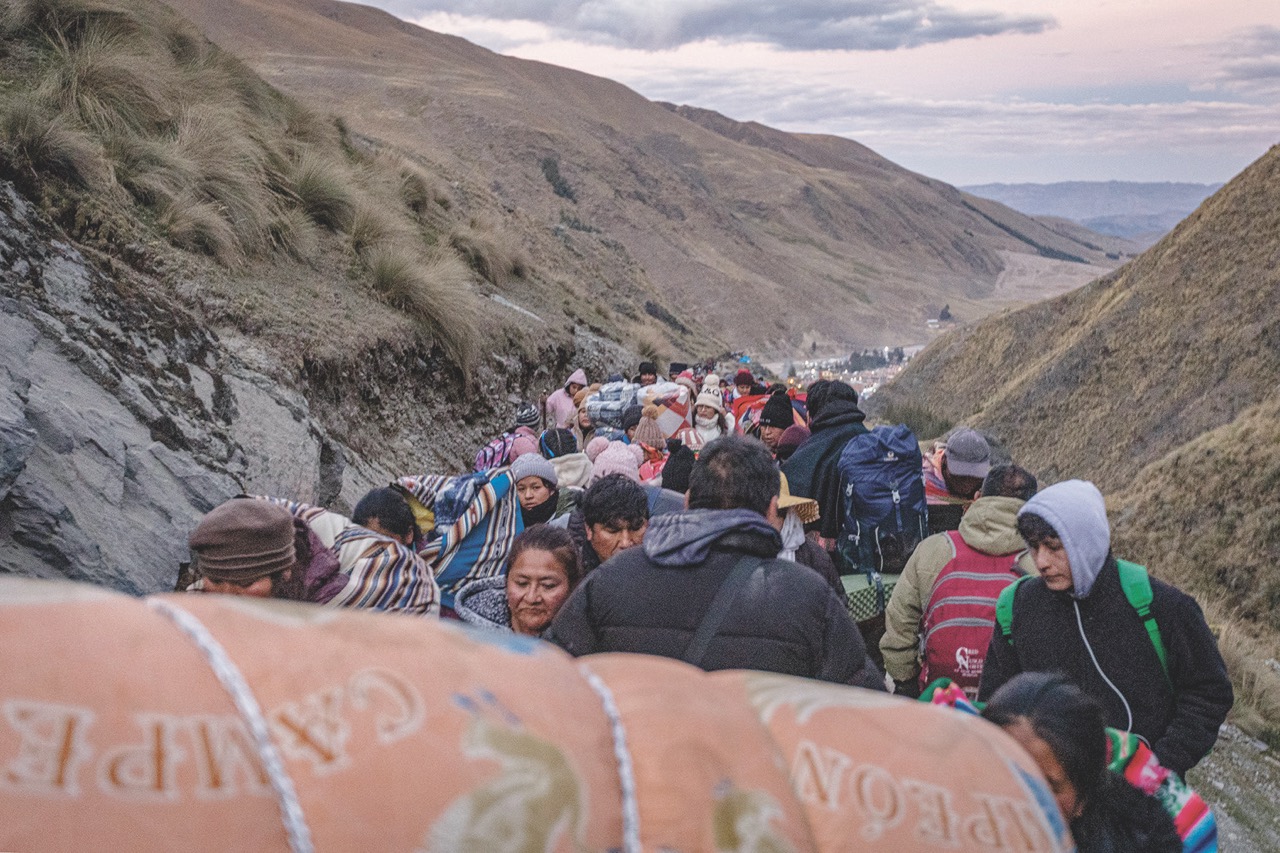













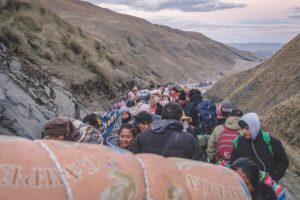
The sanctuary wasn´t too far. Lines of people moved in the same direction and surrounded me every time I stopped to take a break; when I turned around, the heads of pilgrims and mules formed a line so long that it disappeared through the mountains. We only had one last hill left, steep and crowded with street vendors, where stalls selling local food and even amulets made for an obligatory stop to cynically dispel, if only for a moment, altitude sickness, headaches, and calm our hearts.
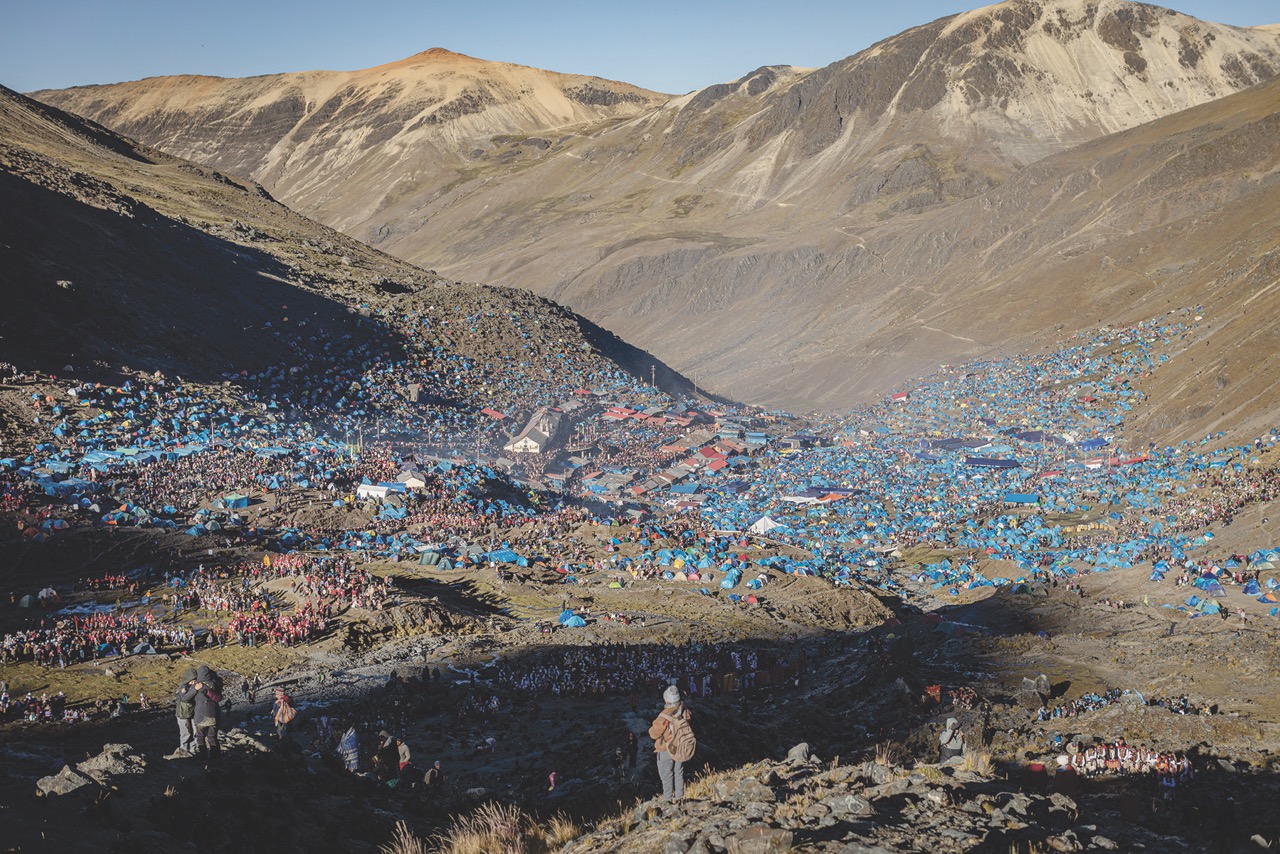
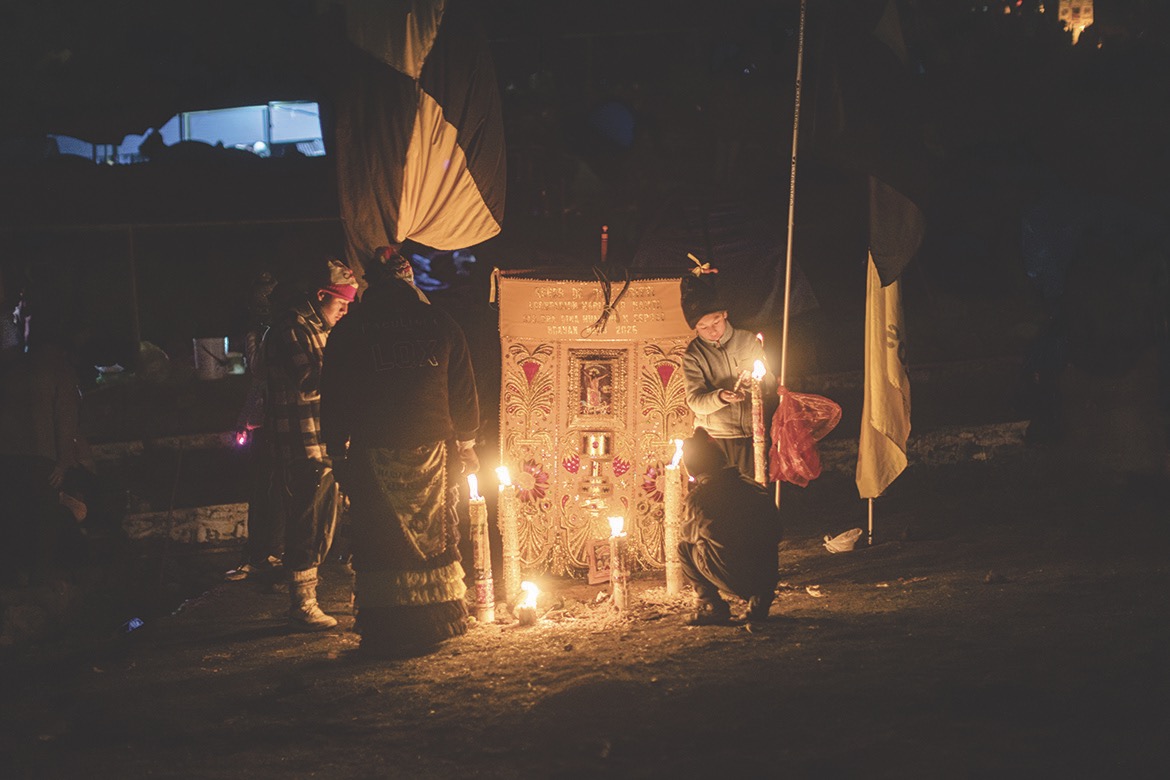
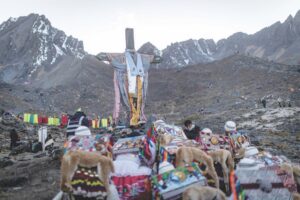
Surrounded by candles, one of the last crosses offered a scene difficult to find anywhere else: an immense valley, nearly 4,900 meters above sea level (16,080 ft), with so many pilgrims that they covered the glacial basin like a blanket of confetti that a single breath could send into the sky. A city of tents and stalls stretched across the Sinanqara Valley, temporarily inhabited by worshippers, dancers, and mythological figures from Andean religiosity who had come to venerate the Lord of Qoyllur Rit’i at the sanctuary of the same name, at the foot of the Colquepunco summit.
“What does Qoyllur Rit’i mean?” I asked.
“It means star snow, in Quechua,” Justiniano Quispe told me while accompanying me during one of my rest stops, a family man from Cusco in his sixties who has visited the sanctuary for as long as he can remember. “My parents brought me here when I was little, and their parents before them, surely. I owe a lot to Taytacha: my little car, my house, my children’s university education, everything.”
Taytacha is a warm way to say “my father” in the Quechua language, native to the South American Andes, and is used to refer to fathers, grandfathers, and male deities.
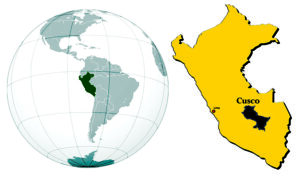
The pilgrimage takes place in the Cusco region of Peru during the full moon of late May and early June, before the winter solstice. From different parts of Cusco, Peru, and even the world, hundreds of thousands walk and ride mules for around eight kilometers from Mahuayani town, winding along mountain paths under the burning sun and illuminated by the moon at night.
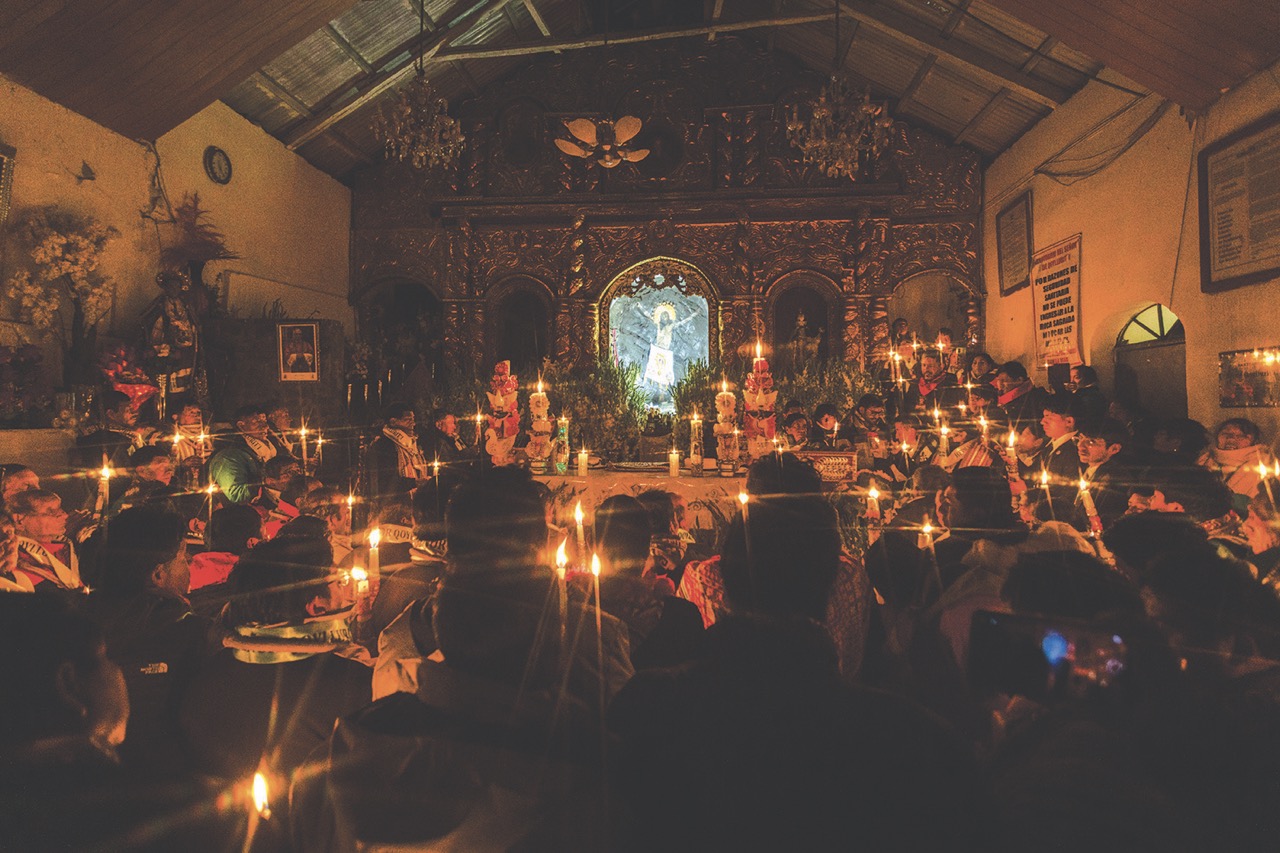
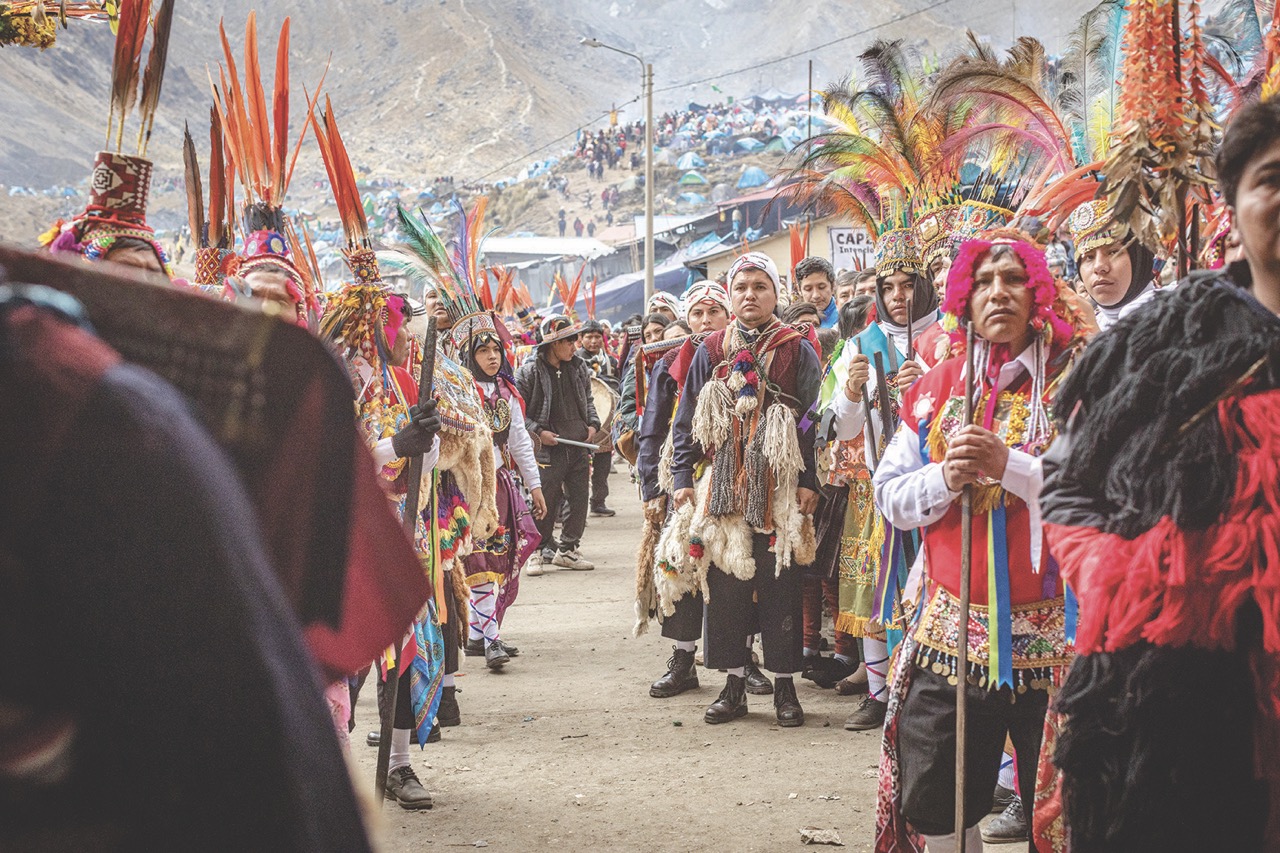
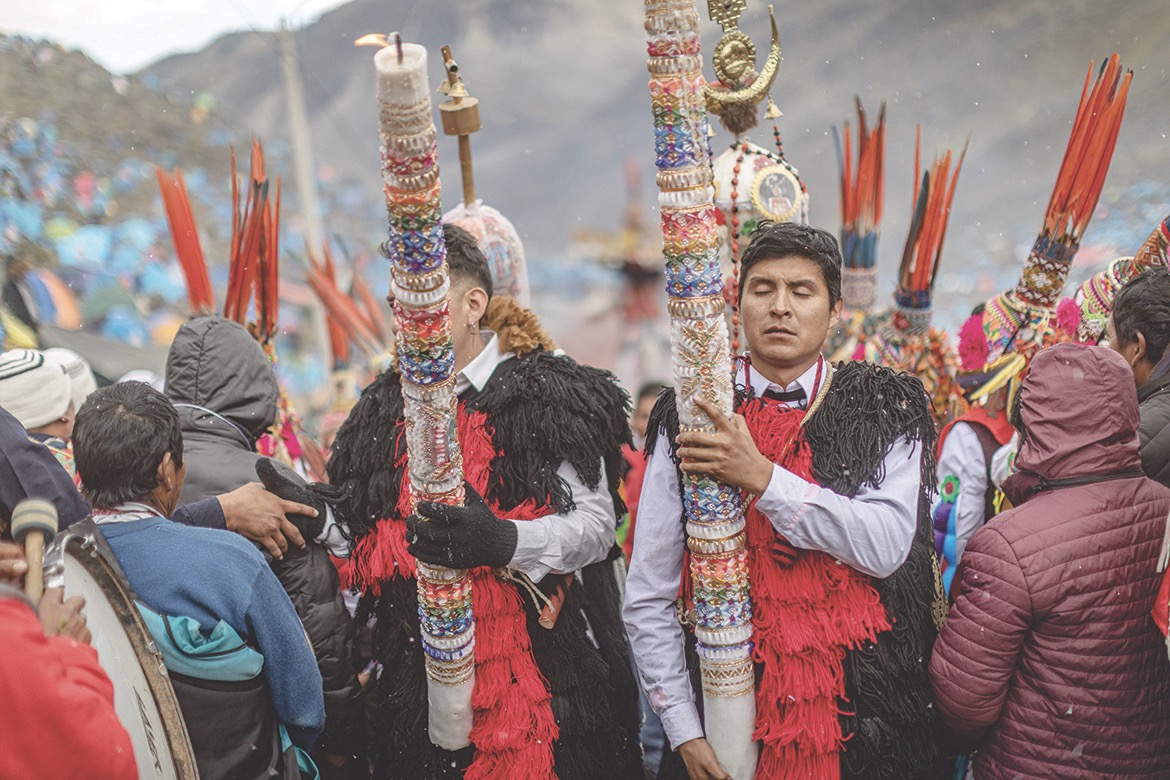
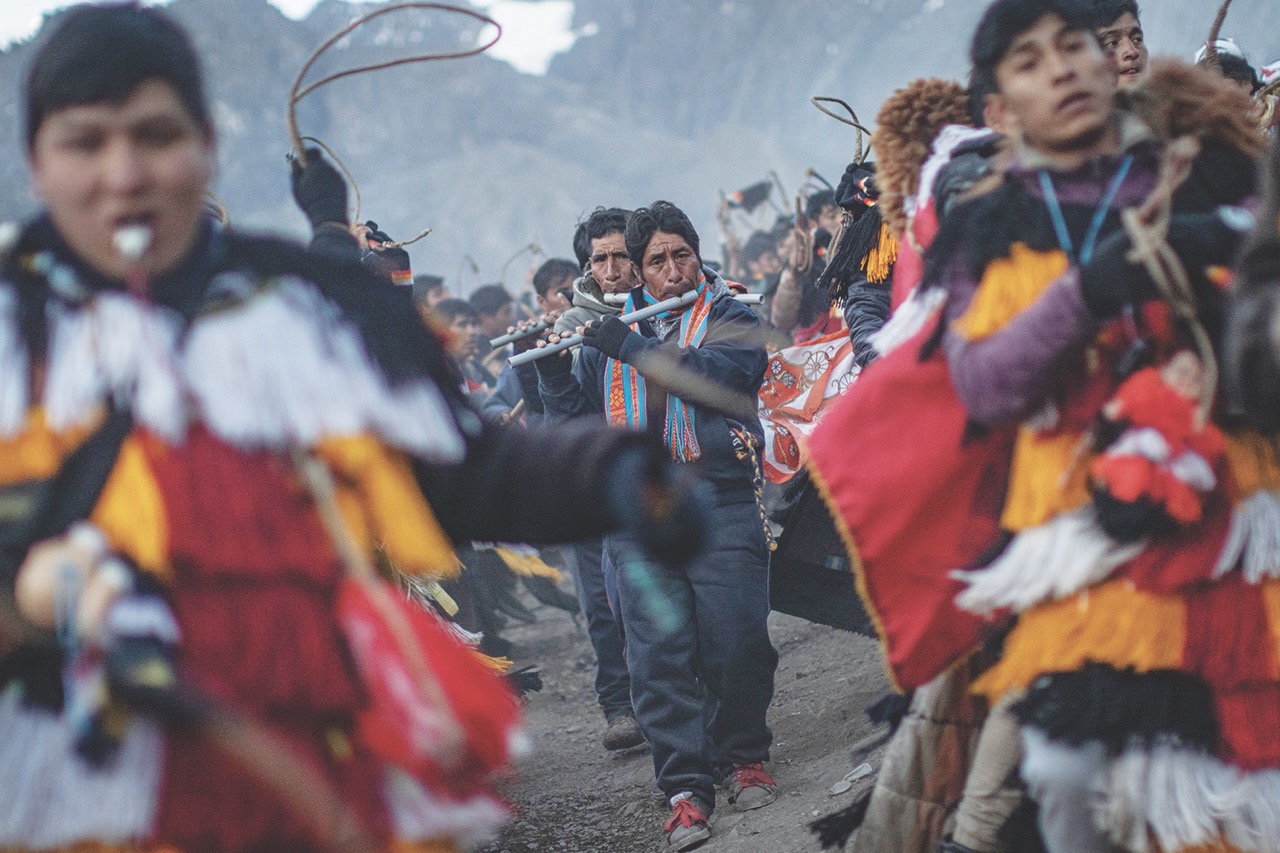
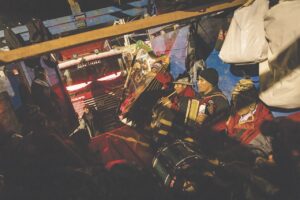
An unceasing symphony of flutes, whistles, bells, accordions, cymbals, and drums surrounded us as we arrived. Dance troupes from different places kicked up dust with their steps and whips; they spun, shouted, rose and fell, setting in motion the sequins, neon-colored scarves, ribbons, tassels, and feathers decorating their costumes. Everything happened around the chapel; it was the center. From it, lines and lines of people waited for their turn day and night, under sun or snow, to greet Christ painted on the rock.
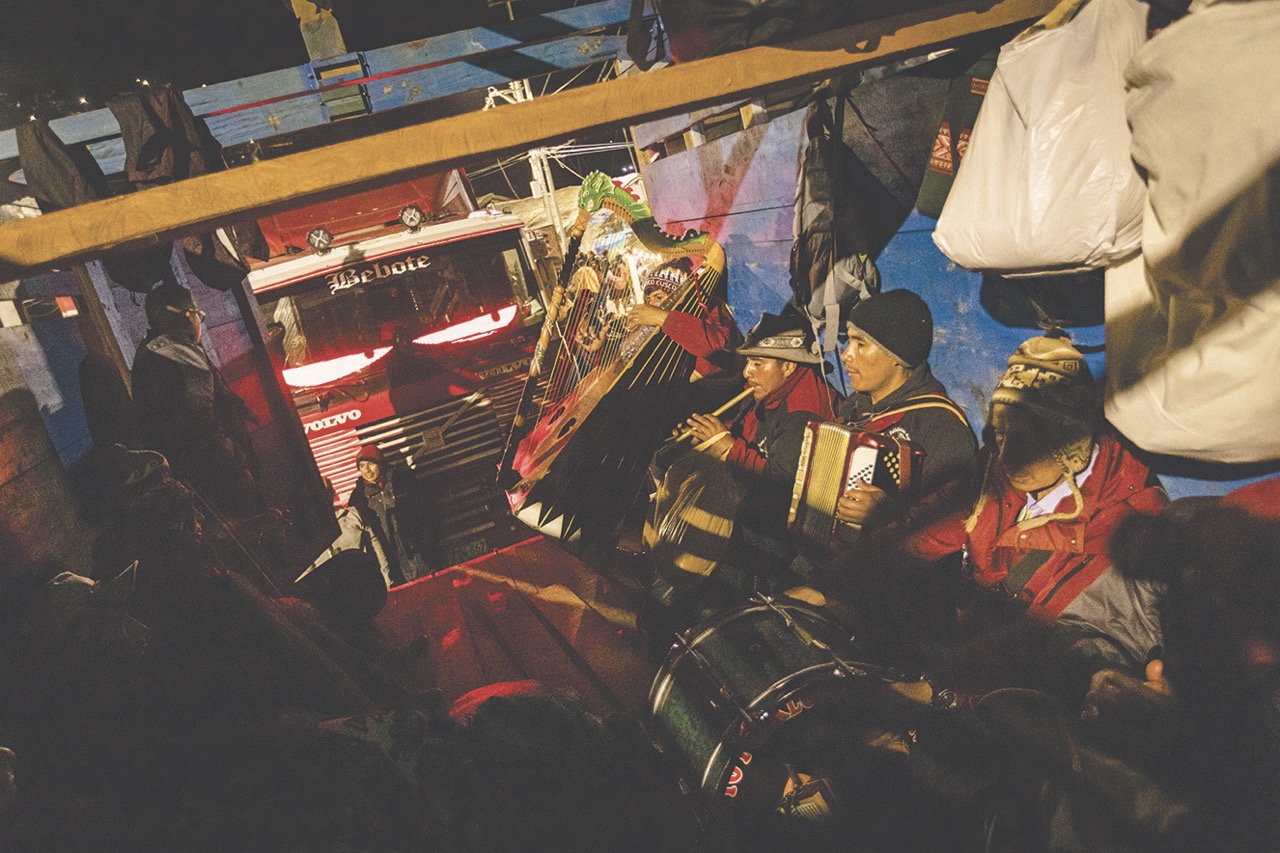
Most pilgrims from Cusco arrive in “nations,” corresponding to their place of origin within the region. They come by cargo trucks or private vehicles from agricultural areas where Quechua is predominantly spoken, or from the Aymara-speaking regions to the southeast. The nations of Paucartambo and Quispicanchi are the ones that, historically, have made the pilgrimage longer than any others.
Included on UNESCO’s Intangible Cultural Heritage of Humanity list in 2011, this celebration blends elements of Catholicism with the worship of pre-Hispanic deities. Although there are various accounts of its origin, it is said that the pilgrimage began when pre-Inca civilizations in the Cusco region sought the source of water. With the Spanish conquest of the Americas and the subsequent colonization, Catholics sought to syncretize this celebration with their religion.*
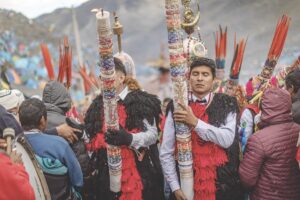
“It’s the story of little Manuelito, who appeared to Mariano while he was herding his alpacas,” Alex Quiñones told me, a dancer from the Qhapaq Qolla of Tallankani in the Paucartambo nation, while helping me settle into his troupe’s camp.
The most popular version is the one connected to the miraculous appearance of Christ on the rock in 1780. Mariano Mayta, a Quechua boy herding alpacas in the heights of the Colquepunco glacier, was visited by another boy named Manuel. The two became close friends, and as the days passed, the herd began to grow. Mariano’s father, surprised, sent for new clothes to reward the strange boy, but the fabric worn by Manuel was used exclusively by the Bishop of Cusco. A commission was therefore sent in search of the boy, led by the parish priest of Ocongate, the nearest city.
“When they were about to capture little Manuelito, he transformed into Jesus upon the rock, and that’s where they built the chapel. He is the Lord of Qoyllur Rit’i,” Quiñones told me.
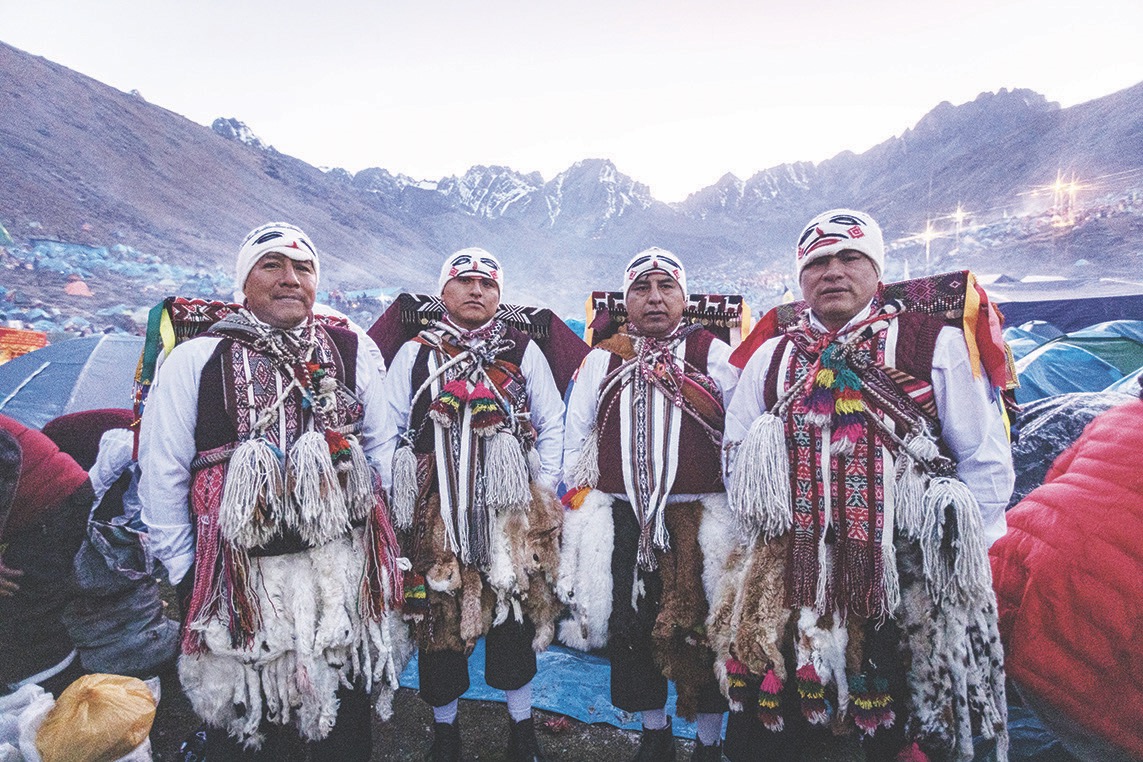
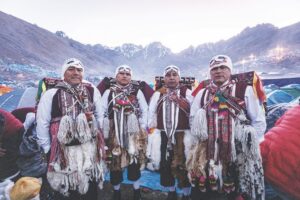
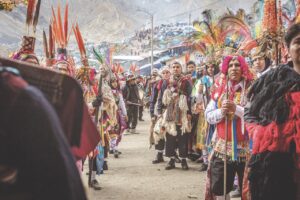
Among the historical and oldest dances are the Puka Pakuri Wayri Chunchu, who wear feathered headdresses and carry spears, representing the Indigenous communities of the Amazon rainforest near the Andes; the Qhapaq Qollas, who wear white woven masks and represent llama caravan traders from the Altiplano region of the Qollao plateau; and the Ukumaris, who wear long wool coverings over their bodies, cloth masks, whips, and whistles. They represent the bear-men: mythological beings who protect the sanctuary and maintain order during the pilgrimage.
In the early hours of the morning, it is difficult to sleep. Seas of people continue moving around the chapel as a single body; dance troupes continue performing nearby, everywhere at the same time. Fireworks and loudspeakers keep the faithful awake. After midnight, groups of Ukumaris begin their ascent of the Colquepunco summit, considered a living being and a deity, where they will spend the night and carry out a series of rituals. As mythological beings, only they are allowed to climb. At these temperatures, water freezes easily, and the cold in one’s hands and feet makes sleep impossible. Quiñones hands me a cigarette and coca leaves to chew. They numb the pain and cold, and provide some energy to continue.
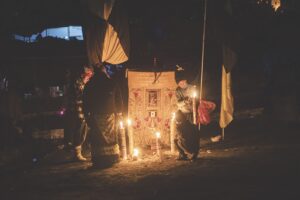
“To endure the cold,” he says. Later, together with everyone else, we drink herbal infusions mixed with liquor.
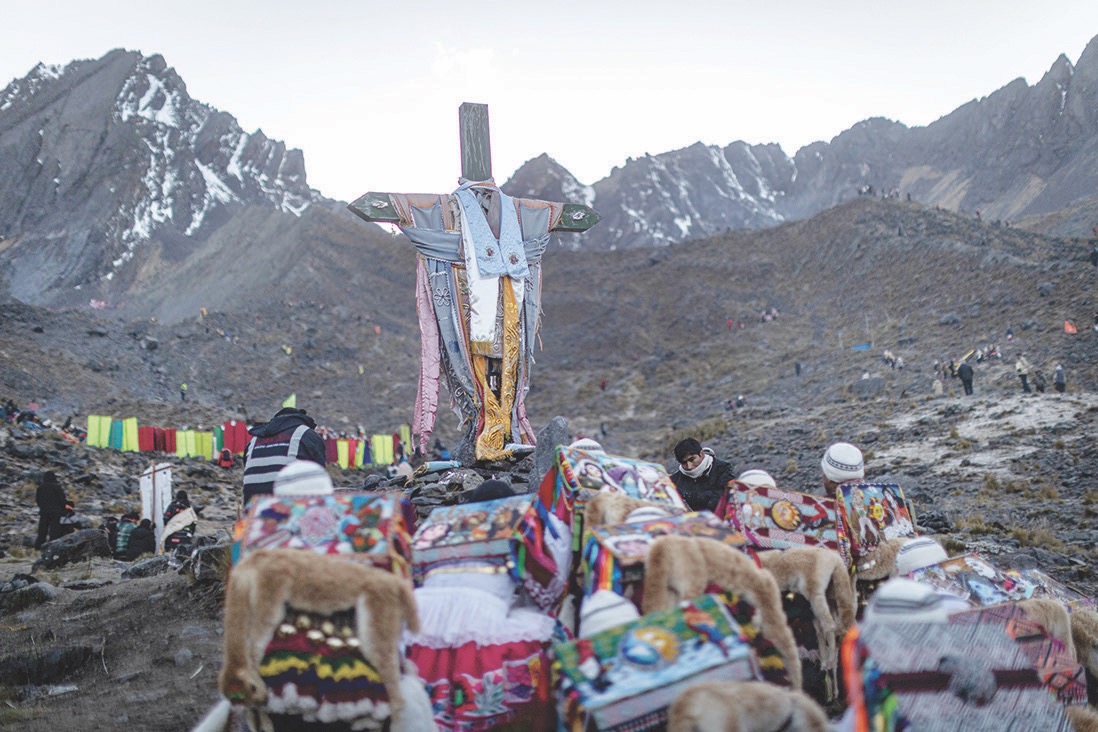
In the morning, before the sun rises above the mountains, pilgrims approach the crosses near the base of the glacier. Dancers put on their colorful costumes and make a short ascent carrying their standards and miniature images of the Lord of Qoyllur Rit’i to those crosses, where they kneel as they receive the first rays of sunlight. From above, as far as the eye can see, thousands upon thousands of those bear-men begin their descent, growling and ringing the little bells attached to their bodies as they run. They come down carrying giant wooden crosses, their flags, warning anyone attempting to climb to turn back.
“This place is sacred, brother, please go back,” one of the Ukumaris told me.
Until only a few years ago, the Ukumaris carried blocks of ice on their backs during their descent, whose melted water was considered sacred and medicinal. Along the way, they used it as holy water and transported it to their agricultural communities, where they blessed their crops. Sometimes, the ice was even taken to Cusco’s main square during the Corpus Christi celebrations, which coincided with the end of the pilgrimage. This tradition was prohibited due to the glacier’s retreat and the melting of the ice caused by global warming.
A final mass known as the blessing marks the end of the pilgrimage. Some came only for a few hours to see the image; others remained for the full three days of the celebration. Thousands of people, on foot or on muleback, begin their journey home just as they arrived, with the hope, as one pilgrim told me, that “if Father Qoyllur Rit’i allows it,” they will return the following year.
El santuario ya no estaba muy lejos. Filas y filas de personas avanzaban en la misma dirección y me envolvían cada vez que me detenía a descansar; al voltear, cabezas de peregrinos y mulas formaban una fila tan larga que se perdía entre las montañas. Solo quedaba una última lomada, empinada y abarrotada de vendedores ambulantes, donde puestos de comida local e incluso amuletos ofrecían una parada obligatoria para intentar disipar, aunque fuera por un momento, el mal de altura, los dolores de cabeza y calmar el corazón.
Rodeada de velas, una de las últimas cruces ofrecía una escena difícil de encontrar en cualquier otro lugar: un inmenso valle, a casi 4.900 metros sobre el nivel del mar, con tantos peregrinos que cubrían la cuenca glaciar como una manta de confeti que un solo soplo podría lanzar al cielo. Una ciudad temporal de carpas y puestos extendida por el valle de Sinanqara, habitada por devotos, danzantes y personajes mitológicos de la religiosidad andina sudamericana que habían llegado para venerar al Señor de Qoyllur Rit’i en el santuario del mismo nombre, al pie del nevado Colquepunco.
—¿Qué significa Qoyllur Rit’i? —pregunté.
—Significa nieve de estrella, en quechua —me respondió Justiniano Quispe mientras me acompañaba durante uno de mis descansos. Padre de familia cusqueño y sesentón, ha visitado el santuario desde que tiene memoria—. Mis padres me trajeron cuando era niño, y sus padres antes de ellos. Le debo mucho al Taytacha: mi carrito, mi casa, la universidad de mis hijos, todo.
‘Taytacha’ es una forma afectuosa de decir “mi papito” en quechua, lengua originaria de los Andes sudamericanos, y se utiliza para referirse a padres, abuelos y deidades masculinas.
Esta peregrinación se realiza en la región de Cusco, en Perú, durante la luna llena de finales de mayo e inicios de junio, antes del solsticio de invierno. Desde distintos lugares de Cusco, del Perú e incluso del extranjero, cientos de miles de personas recorren alrededor de ocho kilómetros desde el poblado de Mahuayani, avanzando por senderos de montaña bajo un sol abrasador y la iluminación de la luna durante la noche.
Una sinfonía incesante de quenas, silbatos, campanas, acordeones, platillos y tambores nos envolvía al llegar. Comparsas de distintos lugares levantaban polvo con sus pasos y látigos; giraban, saltaban y caían, poniendo en movimiento las lentejuelas, pañuelos de colores neón, cintas, borlas y plumas que adornaban sus trajes. Todo ocurría alrededor de la capilla; era el centro de todo. Desde allí, filas interminables de personas esperaban su turno día y noche, bajo el sol o la nieve, para saludar al Cristo pintado sobre la roca.
La mayoría de peregrinos cusqueños llegan organizados en “naciones”, que corresponden a sus lugares de origen dentro de la región. Arriban en camiones de carga o vehículos particulares desde zonas agrícolas donde predomina el idioma quechua, o desde las regiones de habla aimara del sureste. Las naciones de Paucartambo y Quispicanchi son las que históricamente han realizado las peregrinaciones más antiguas.
Inscrita en la Lista Representativa del Patrimonio Cultural Inmaterial de la Humanidad de la UNESCO en 2011, esta celebración combina elementos del catolicismo con el culto a deidades prehispánicas. Aunque existen diversas versiones sobre su origen, se dice que la peregrinación comenzó cuando civilizaciones preincaicas de la región de Cusco buscaban la fuente del agua. Con la conquista española de América y la posterior colonización, los católicos procuraron sincretizar esta celebración con su religión.
—Es la historia del pequeño Manuelito, que se le apareció a Mariano mientras pastoreaba sus alpacas —me contó Alex Quiñones, danzante de los Qhapaq Qolla de Tallankani, de la nación Paucartambo, mientras me ayudaba a instalarme en el campamento de su comparsa.
La versión más popular está vinculada con la aparición milagrosa de Cristo sobre la roca en 1780. Mariano Mayta, un niño quechua que cuidaba alpacas en las alturas del glaciar Colquepunco, recibió la visita de otro niño llamado Manuel. Ambos se hicieron amigos y, con el paso de los días, el rebaño comenzó a crecer. Sorprendido, el padre de Mariano envió a buscar ropa nueva para recompensar al extraño muchacho, pero las telas que usaba Manuel eran las mismas que usaba el obispo de Cusco. Por la extrañeza, se organizó una comisión para buscar al niño, encabezada por el párroco de Ocongate, la ciudad más cercana al santuario.
—Cuando estaban a punto de atrapar al pequeño Manuelito, se transformó en Jesús sobre la roca, y allí construyeron la capilla. Él es el Señor de Qoyllur Rit’i —me explicó Quiñones.
Entre las danzas más antiguas e históricas destacan los Puka Pakuri Wayri Chunchu, que usan tocados de plumas y portan lanzas, representando a las comunidades indígenas amazónicas cercanas a los Andes; los Qhapaq Qollas, que utilizan máscaras tejidas blancas y representan a los comerciantes de caravanas de llamas provenientes del Altiplano del Qollao; y los Ukumaris, que cubren sus cuerpos con gruesas prendas de lana, máscaras de tela, látigos y silbatos. Ellos representan a los hombres-oso, seres mitológicos encargados de proteger el santuario y mantener la disciplina durante la peregrinación.
En las primeras horas de la madrugada es difícil dormir. Mareas de personas continúan moviéndose alrededor de la capilla como un solo cuerpo; las comparsas siguen bailando cerca, en todas partes al mismo tiempo. Fuegos artificiales y altavoces mantienen despiertos a los fieles. Después de la misa de medianoche, grupos de Ukumaris comienzan el ascenso al nevado Colquepunco, considerado un ser vivo y una deidad, donde pasarán la noche realizando diversos rituales. Como seres mitológicos, solo ellos tienen permitido subir. A esas temperaturas el agua se congela con facilidad y el frío en las manos y los pies vuelve imposible dormir. Quiñones me ofrece un cigarrillo, un poco de licor y hojas de coca para masticar. Las hojas de coca adormecen el dolor y el frío, y proporcionan algo de energía para continuar.
—Para que aguantes el frío — me dice.
Más tarde, junto con todos los demás, bebemos infusiones de hierbas mezcladas con licor.
Por la mañana, antes de que el sol aparezca sobre las montañas, los peregrinos se acercan a cruces ubicadas cerca de la base del glaciar. Los danzantes se colocan sus coloridos trajes y realizan una breve ascensión llevando sus estandartes e imágenes en miniatura del Señor de Qoyllur Rit’i hasta aquellas cruces, donde se arrodillan para recibir los primeros rayos de luz.
Desde lo alto, hasta donde alcanza la vista, miles y miles de hombres-oso comienzan su descenso, gruñendo y haciendo sonar las pequeñas campanas sujetas a sus cuerpos mientras corren. Bajan cargando enormes cruces de madera y sus banderas, advirtiendo a cualquiera que intente subir que debe regresar.
—Este lugar es sagrado, hermano. Por favor, regresa —me dijo uno de los Ukumaris.
Hasta hace pocos años, los Ukumaris descendían cargando bloques de hielo sobre sus espaldas. El agua resultante de su deshielo era considerada sagrada y medicinal. Durante el recorrido la utilizaban como agua bendita y la llevaban a sus comunidades agrícolas para bendecir los cultivos. En ocasiones, incluso era transportada hasta la Plaza de Armas de Cusco durante las celebraciones del Corpus Christi, que coincidían con el final de la peregrinación. Esta tradición fue prohibida debido al retroceso del glaciar y al derretimiento del hielo causado por el calentamiento global.
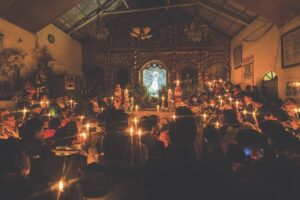
Una misa final, conocida como la bendición, marca el fin de la peregrinación. Algunos llegaron solo por unas horas para ver y tocar la imagen; otros permanecieron durante los tres días completos de celebración. Miles de personas, a pie o a lomo de mula, emprenden el regreso a casa del mismo modo en que llegaron, con la esperanza, como me dijo un peregrino, de que “si el Taytacha Qoyllur Rit’i lo permite”, volverán al año siguiente.