









“There has been an earthquake in Caracas,” was the news that Rubí Lozada Danilow, a Venezuelan political refugee living in Grosse Pointe, Michigan, received over the phone while speaking with a cousin. She immediately called her niece, who lives in La Guaira, but got no answer. Instead, she received a message saying another earthquake had struck. “That was the last communication I had with them,” Lozada Danilow said. “Then came the second earthquake in Vargas State (now La Guaira State), in the city of La Guaira, and I completely lost all contact.” Although the coastal city where Lozada Danilow was born was not the epicenter of the earthquakes, it was the hardest-hit area and was eventually declared a disaster zone by interim President Delcy Rodríguez.
For Lozada Danilow, the experience has left her with a “heavy heart and a shattered soul.” “Shattered,” Lozada Danilow said, “because with everything Venezuela was already going through, a country that was already crippled, this tragedy is a total catastrophe.”
On the afternoon of Wednesday, June 24, during the St. Juan Day holiday, Venezuela was hit by two major earthquakes that primarily affected the country’s northwestern region, including the capital, Caracas. The first, registering magnitude 7.2 on the Richter scale, struck west of the capital in Carabobo State shortly after 6:04 p.m. Almost immediately afterward, just 40 seconds later, a second, magnitude 7.5 earthquake released significantly more energy than the first, culminating in the disaster through a rare seismic phenomenon known as an “earthquake doublet.” Combined with Venezuela’s ongoing political and economic crisis, the event has become the most devastating natural disaster the country has experienced in the past century.
“We can say that La Guaira State is facing a true tragedy and has become a disaster zone,” Rodríguez said the night of the earthquakes. “Hundreds of buildings have collapsed.” Videos and photographs of the destruction quickly spread across social media as soon as the ground stopped shaking. Cracked walls, accordion-like collapsed buildings, clouds of dust, looting, disoriented residents, screams, and tears painted a grim picture of the affected communities.
Three days after the disaster, the Venezuelan government’s official death toll stands at nearly 1500, with more than 3,000 people injured and dozens of thousands displaced. However, the true number of victims remains buried beneath collapsed homes and buildings as rescue crews and volunteers continue pulling survivors and bodies from the debris day and night amid hundreds of aftershocks.
United Nations Under-Secretary-General for Humanitarian Affairs Tom Fletcher told Agence France-Presse on Friday that more than 50,000 people remain missing. Meanwhile, the U.S. Geological Survey estimated approximately 1,000 deaths while warning that the final death toll could exceed 10,000 and potentially surpass 100,000. The estimate was based on earthquake intensity combined with population density in the affected areas.
“This event was the mainshock of a severe seismic doublet sequence, occurring just 39 seconds after an M 7.2 foreshock,” the USGS said in a statement. “A doublet sequence – defined as two earthquakes of similar magnitude that occur close in time and proximity – likely indicates a complex, rupture-interaction process.”
Once Venezuela stopped shaking, ordinary citizens armed with cellphone flashlights immediately began searching through the rubble using buckets, shovels, and their bare fingers. By the weekend, the air in La Guaira had begun to smell putrid as collected bodies were placed on the streets without being removed and others remained trapped beneath concrete and steel. According to the United Nations, 44 international urban search-and-rescue teams from 28 countries have been deployed, bringing 2,245 specialists and 140 search dogs to rescue those trapped and provide emergency medical care.
Families of the missing continue waiting for news beside collapsed buildings while excavators tear through concrete and international rescue teams race against time. After 72 hours, the likelihood of finding survivors declines dramatically due to dehydration, lack of oxygen, and untreated injuries. For Venezuelans living abroad, communication outages made the uncertainty even more unbearable.
“It wasn’t until twelve hours later, the next day, that I finally heard from my niece and her children,” Lozada Danilow said after reaching one of her brothers. “They had been in a parking garage and survived, but their house completely collapsed. It was a three-story building, and like so many others, it came down entirely.”
Venezuelan Health Minister Carlos Alvarado said in a televised address that the government had mobilized thousands of healthcare professionals in a unified response involving military, public, and private hospitals. The Venezuelan administration also announced the deployment of 11,500 security personnel to La Guaira to “guarantee public order,” along with hundreds of heavy machinery units. Access to the disaster zone has been restricted to facilitate rescue operations and prevent congestion.
Although the minister cited encouraging figures regarding the number of patients treated, the disaster has further exposed the already deteriorating state of Venezuela’s healthcare system. Hospitals in both the disaster zone and Caracas remain overwhelmed, facing severe shortages of supplies and personnel. Injured residents continue arriving, in any way they can, improvising treatment for wounds and fractures, also, in any way they can.
Sariam Molina Contreras worked as a nurse in Venezuela before moving to Pontiac, Michigan, with her mother and brother nearly two years ago. The 26-year-old says it is “no secret” that Venezuela’s healthcare system, described by government officials as weakened by international sanctions, is unprepared for disasters of this magnitude.
“Beyond the lack of supplies, there is also a severe shortage of both nurses and doctors,” she said. “There are simply too few trained professionals to provide the level of care needed for so many injured people. But despite all the shortages, I know Venezuela’s healthcare workers literally work 24/7 with love, passion, dedication, and whatever resources they have.”
Her fellow Venezuelan, Lozada Danilow, agrees. “We have to speak honestly,” she said. “When it comes to Venezuela’s medical professionals and their humanity, as we say back home, I take my hat off to them. With my eyes closed, I can say they are exceptional because I experienced it firsthand. But there are no medicines, there are no hospitals, there is simply no way to truly care for everyone. Still, they will keep working. The day has twenty-four hours, and they’ll somehow make it twenty-eight.”
Molina Contreras’ father still lives in Caracas, but on the day of the earthquakes, he happened to be outside the capital and was able to answer his daughter’s desperate phone call to reassure her that he was safe. Now she is trying to help from afar by sharing links for missing-person reports and donation collection sites.
“As a healthcare worker, we truly appreciate any help, whether it comes from ordinary citizens or international organizations,” she said. “Anyone who can contribute in any way should do so, regardless of political beliefs, because I believe this is simply a humanitarian act.”
The most urgently needed donations include nonperishable food, clean drinking water, essential medications, and personal hygiene products. However, collecting, shipping, and distributing these supplies may take days or even weeks. The fastest way to assist is through financial contributions to humanitarian organizations already operating in Venezuela with established logistical capacity.
The website terremoto.hazlohoy.org allows people to make donations, register and search for missing individuals, report damaged buildings, and coordinate free transportation to medical centers.
Donations can also be made through PayPal to Cáritas Venezuela. International Medical Corps and Save the Children are likewise accepting monetary donations to provide aid to families affected by the disaster.
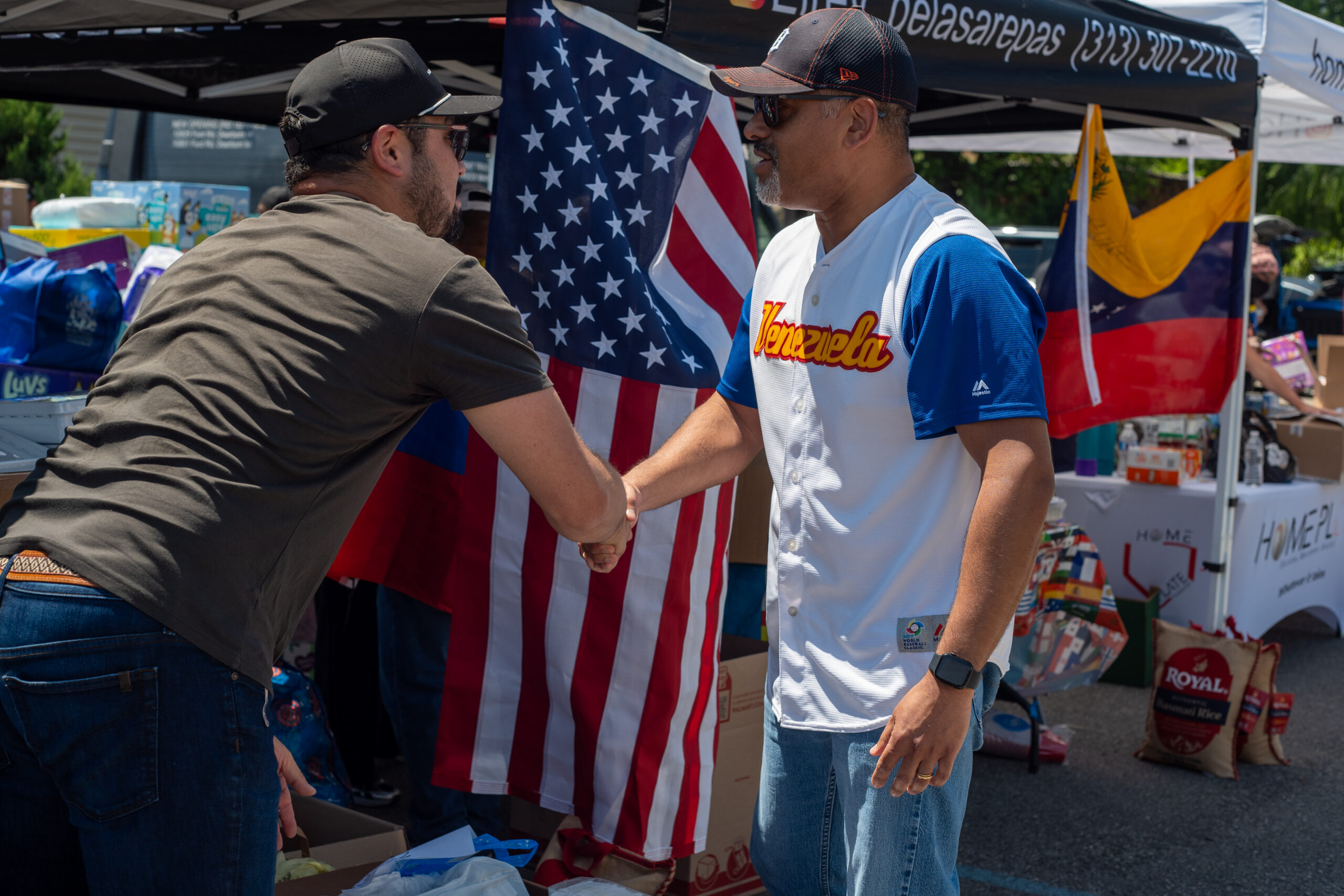
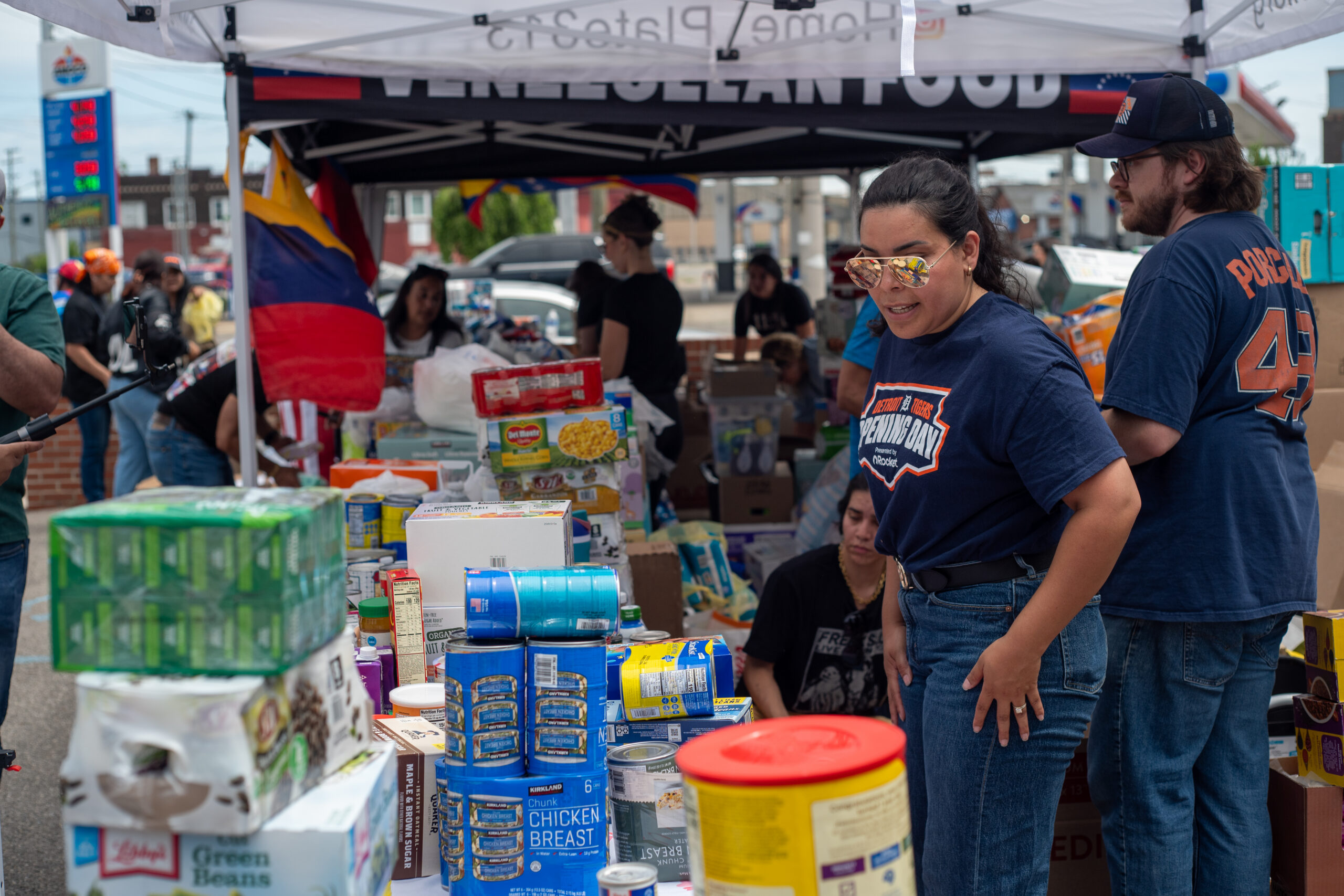
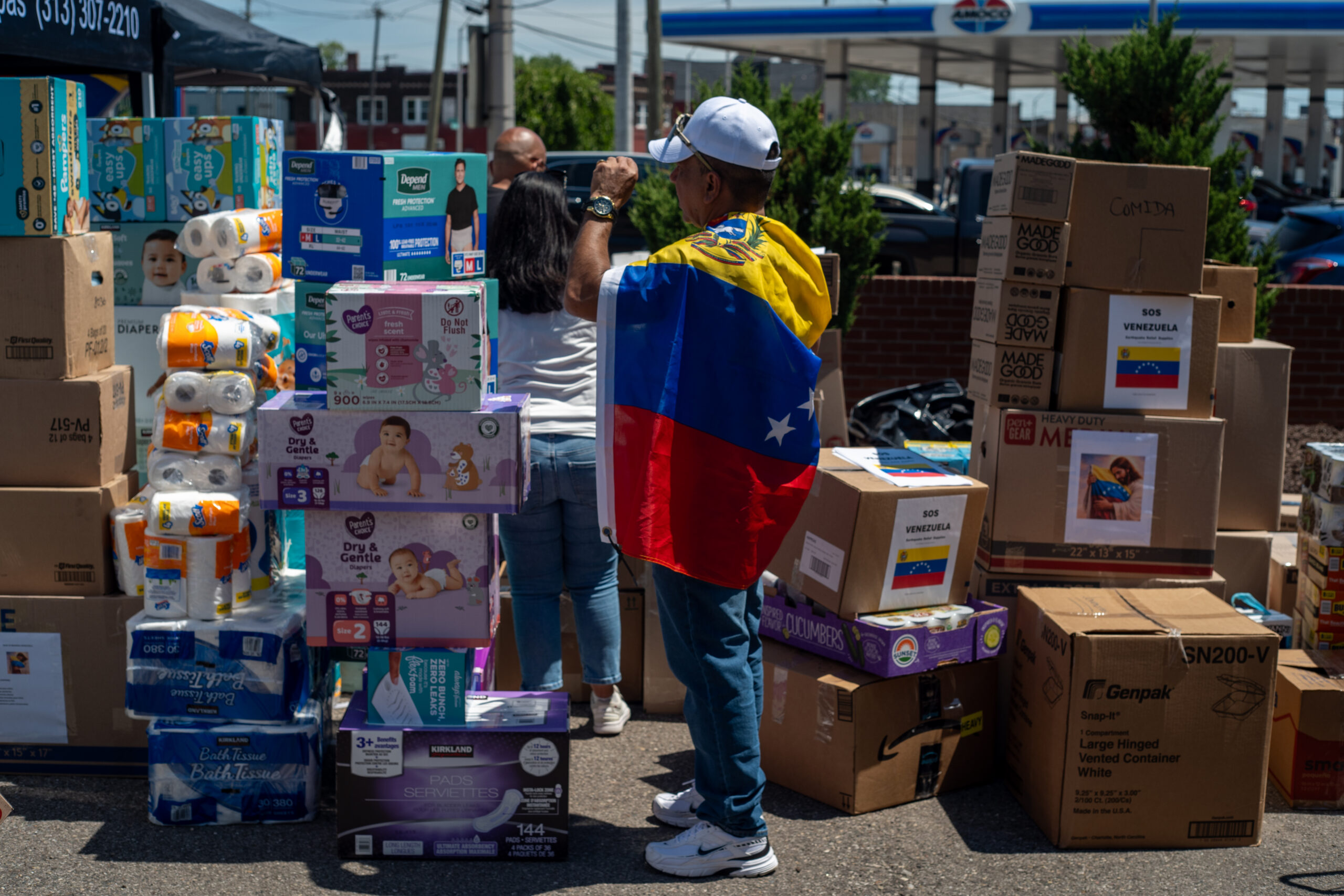
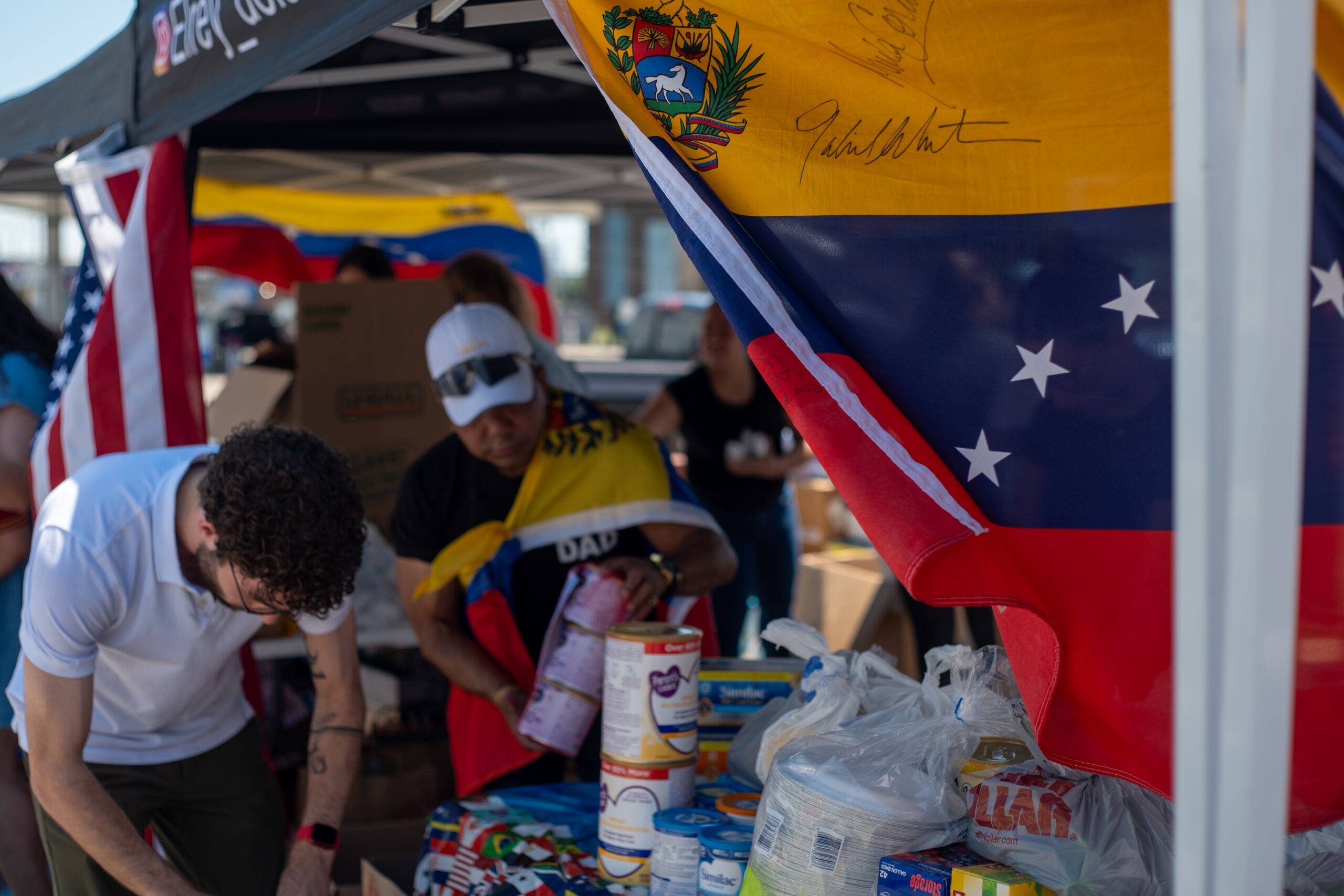
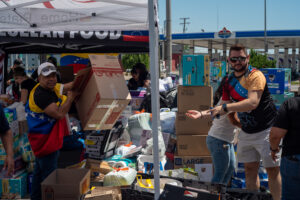
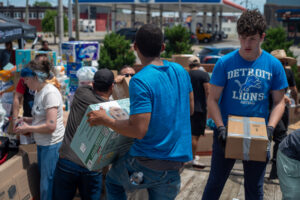
Meanwhile, donation drives have also been organized across the U.S. and Michigan, including collection centers in Pontiac, Ann Arbor, Grand Rapids and Detroit
“Ha habido un terremoto en Caracas”, fue la noticia que recibió Rubí Lozada Danilow, refugiada política venezolana y residente en Grosse Pointe, MI, por teléfono mientras hablaba con una prima. Inmediatamente llamó a su sobrina, quien vive en La Guaira, pero no le contestó; solo recibió un mensaje indicando que había ocurrido otro terremoto. “Hasta ahí yo perdí comunicación con ellos”, dijo Lozada Danilow. “De allí fue el otro terremoto que hubo en el estado Vargas (ahora Estado La Guaira), en la ciudad de La Guaira y perdí completamente todo contacto.” Aquella ciudad portuaria, donde Lozada Danilow es natural, no fue el epicentro de los terremotos, pero sí la más golpeada y, eventualmente, fue declarada zona de desastre por la presidenta interina Delcy Rodríguez.
Para la guaireña es estar con el “corazón apretado y el alma destrozada”. “Destrozada”, dice Lozada Danilow, “porque ya con lo que se está viviendo en Venezuela, un país que estaba totalmente en mengua, esta tragedia es una catástrofe total.”
La tarde del miércoles 24 de junio, durante el feriado por el día de San Juan, Venezuela fue sacudida por dos terremotos de gran magnitud, que afectaron principalmente las regiones del noroeste del país, incluida su capital, Caracas. El primero, de magnitud 7,2 en la escala de Richter, ocurrió al oeste de la capital, en el estado de Carabobo, poco después de las 6:04 p.m. Casi de inmediato, 40 segundos después, un segundo sismo, de magnitud 7,5, liberó mucha más energía que el primero y terminó por zanjar el desastre en un infrecuente evento telúrico conocido como “doblete sísmico”. Esto, sumado a la crisis política y económica que atraviesa Venezuela, constituye el fenómeno más devastador que ha sufrido el país llanero en el último siglo.
“Podemos decir que el estado de La Guaira es una verdadera tragedia y se convierte en zona de desastre”, dijo la mandataria la noche del desastre. “Se han derrumbado cientos de edificios”. Videos y fotos de los destrozos y el caos comenzaron a hacerse virales apenas el suelo dejó de temblar. Paredes resquebrajadas, edificios colapsados como acordeón, polvaredas, saqueos, habitantes desorientados, gritos y llantos fueron el retrato de las zonas afectadas.
El balance oficial de víctimas en toda Venezuela, por parte del gobierno, arroja hasta ahora, tres días después del desastre, un saldo de casi 1500 muertos, heridos por encima de los 3000 y decenas de miles de damnificados. Sin embargo, el número real aún yace bajo los escombros de edificios y casas derrumbadas mientras las labores de rescate y ciudadanos comunes siguen retirando cuerpos empolvados de sobrevivientes y fallecidos, día y noche, ante las centenares de réplicas desde el miércoles.
El secretario general de Asuntos Humanitarios de las Naciones Unidas, Tom Fletcher, aseguró el viernes, en entrevista con la agencia de noticias AFP, que más de 50.000 personas están desaparecidas. Mientras el Servicio Geológico de Estados Unidos ofreció una estimación de 1.000 fallecidos, añadiendo que es probable que se superen los 10.000 muertos y que no se descarten cifras por encima de los 100.000. El análisis combinó la intensidad del terremoto con la densidad de población en las áreas afectadas.
“Este evento fue el sismo principal de una secuencia sísmica doble severa, ocurriendo tan solo 39 segundos después de un sismo precursor de magnitud 7.2”, dijo el USGS en un comunicado. “Una secuencia doble, definida como dos terremotos de magnitud similar que ocurren en un corto intervalo de tiempo y en estrecha proximidad, probablemente indica un proceso complejo de interacción de rupturas.”
Cuando Venezuela dejó de temblar, los mismos ciudadanos, con linternas de celular en mano, comenzaron la búsqueda bajo los escombros con baldes, palas y hasta sus propios dedos. Durante el fin de semana, el aire que se respira en La Guaira ya comienza a oler a putrefacción por los cadáveres apilados en las calles y por los que aún permanecen sepultados entre el hormigón y el acero de los edificios colapsados. Para el domingo, equipos de rescate de diversos países ya estaban trabajando. Según la ONU, 44 equipos internacionales de búsqueda y rescate urbano de 28 países han sido desplegados; 2245 especialistas y 140 perros de búsqueda han sido movilizados para extraer a aquellos atrapados y brindar atención médica.
Familiares de desaparecidos siguen esperando noticias sobre los suyos junto a escombros mientras las excavadoras devoran el hormigón y los primeros grupos internacionales de rescate batallan contra el reloj para rescatar la mayor cantidad posible de personas, ya que pasadas las 72 horas se reducen las probabilidades de encontrarlos con vida por falta de agua, aire o heridas. Para aquellos que viven fuera del país, la caída de las comunicaciones hacía eterna la angustia por saber del bienestar de sus familiares y por poder apoyar de cualquier forma.
“Después de doce horas, al día siguiente, fue cuando pude saber de mi sobrina y sus hijos”, dijo Lozada Danilow, quien logró comunicarse con un hermano. “Estaban en un estacionamiento y salieron vivos, pero la casa se desplomó por completo. Era una edificación de tres plantas y, como muchos edificios, se vino abajo en su totalidad.”
El ministro de Salud de Venezuela, Carlos Alvarado, dijo en un alentador discurso a una televisora local que el gobierno ya había movilizado a miles de profesionales de la salud en una respuesta unificada, donde se habían integrado hospitales militares, públicos y privados. Además, el Gobierno chavista anunció el despliegue de 11.500 agentes de seguridad en La Guaira para “garantizar la paz”, centenares de equipos de maquinaria pesada y restringió la circulación hacia la zona de desastre para facilitar las labores de rescate y evitar obstaculizaciones.
Aunque el ministro dio cifras alentadoras de miles de pacientes atendidos, la situación no ha hecho más que exponer el ya deteriorado sistema de salud venezolano y la realidad contradice sus palabras. Los hospitales en la zona de desastre y en Caracas están colapsados, con falta de suministros y personal; los heridos siguen llegando, en lo que pueden, cubriéndose las heridas y fracturas, también, con lo que pueden.
Sariam Molina Contreras trabajaba de enfermera en Venezuela antes de llegar a Pontiac, MI, con su madre y su hermano hace casi 2 años. La joven de 26 años relata que “no es un secreto” que el sistema de salud venezolano, desgastado y descuidado según la presidenta por las sanciones internacionales, no está preparado para catástrofes de grandes magnitudes.
“Aparte de los insumos, hay mucha escasez tanto de personal enfermero como de médicos”, menciona. “Es muy poco el personal capacitado para dar la atención necesaria a la gran cantidad de heridos.Y yo sé que a pesar de las carencias el personal de salud de Venezuela trabaja literalmente 24/7 con amor, con pasión, con vocación y con lo que tienen a su alcance.”
Su compatriota, Lozada Danilow, coincide y dice que se debe hablar con la realidad. “A la calidad humana y profesional de Venezuela, yo, como decimos en Venezuela, me quito el sombrero”, menciona. “Con los ojos cerrados puedo decir que era de calidad. Porque la viví, la palpitaba, pero no hay medicinas, no hay hospitales, no hay cómo atender realmente. Sin embargo, ellos trabajarán con los ojos cerrados. El día tiene veinticuatro horas y ellos harán veintiocho. Eso sí lo puedo decir.”
El padre de Molina Contreras aún vive en Caracas, pero el día de los terremotos, él estaba lejos de la capital y pudo coger el teléfono a tiempo ante la llamada desesperada de su hija para decir que todo estaba bien. Ahora la joven trata de ver la forma de ayudar a la distancia compartiendo links de personas desaparecidas y lugares de acopio de donaciones. “Como personal de salud, realmente apreciamos mucho cualquier ayuda, tanto de los civiles como de las ayudas internacionales”, mencionó. “Toda la persona que pueda sumarse, de la manera en que se pueda apoyar, que lo haga independientemente de la posición política, pues yo creo que es un acto humano.”
Por ahora se requieren donaciones de alimentos no perecederos, agua potable, medicamentos esenciales y productos de higiene personal. Sin embargo, estos pueden tardar días o semanas en ser recolectados, ser enviados y llegar a cada afectado. La forma más rápida de ayudar es mediante donaciones económicas a organizaciones humanitarias con presencia y capacidad logística en el país.
La página terremoto.hazlohoy.org/ permite hacer donaciones, registrar y buscar a personas desaparecidas, reportar edificaciones dañadas y concretar traslados gratuitos a centros de salud. También se pueden hacer donaciones mediante PayPal a la organización Cáritas Venezuela. La organización International Medical Corps, así como Save the Children, también está recibiendo donaciones monetarias para llevar ayuda a las familias en Venezuela.
Por otro lado, en Michigan se han organizado diversos centros de acopio de donaciones en Pontiac, Ann Arbor, Grand Rapids y Detroit.