















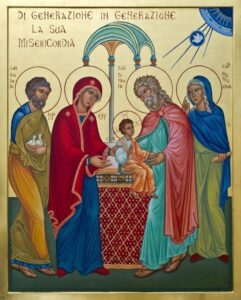
Each year begins with the celebrations following Christmas, starting with Three Kings’ Day, when a small figurine is found inside the Rosca de Reyes (Three Kings’ Bread). According to Mexican tradition, this symbolizes when Jesus was hidden from Herod. Nowadays, the tradition is celebrated by bringing gifts; in this case, tamales for the Virgin of Candelaria, which marks forty days after the birth of Jesus. On Candlemas, the day commemorates when Mary and Joseph took the baby Jesus to the temple to present him. There they met Simeon, to whom the Holy Spirit had revealed that he would see the Messiah before his death, the one who would bring light and salvation to all peoples. Upon seeing Mary and Joseph arrive with the child in their arms, Simeon took him in and was able to rest in peace.
As we mentioned at the beginning, in Mexico the tradition of Candlemas is strongly linked to Three Kings’ Day, as it indicates that on this day those who found the baby Jesus figurine in the Rosca de Reyes (Three Kings’ Bread) go to church to present it so that both the baby Jesus and the godparents receive the priest’s blessing. After the religious ceremony, the godparents, that is, those who found the baby Jesus figurine in the Rosca de Reyes on January 6th, hold a gathering where they offer tamales. To present the baby Jesus, in some communities in Mexico the celebration is a procession with music and fireworks. It is important to understand that for Mexico the central part of the celebration is the baby Jesus; therefore, this is when the Christmas festivities conclude, and the following day the Nativity scene and Christmas decorations are taken down from the houses.
In Peru, the celebration of February 2nd centers in the city of Puno, in the Titicaca River region. The festivities begin in January with thousands of dancers performing cultural and, above all, religious activities that frame the celebration. The festival lasts 21 days, with February 2nd being the main day of veneration. Among these activities are: the novena, which runs from January 24th to February 1st, during which nine liturgical ceremonies are held, culminating on February 1st, the eve of the festival, with the entrance of the candles and the arrival of the “K’apos,” the firewood that will be used to light the bonfire for the main celebration.
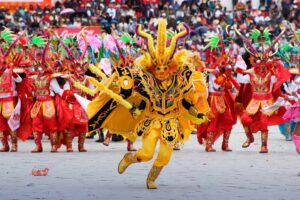
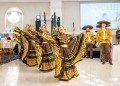
February 2nd is the principal day, being Candlemas. On this day, the Procession of the Virgin of Candelaria takes place, accompanied by various dancers wearing their respective masks. February 3rd, while not the main day of the festival, is also filled with color, music, and dance. A competition is held to honor the Virgin of Candelaria. This is a lively celebration brimming with music, dance, and culture. The competition’s participants are adorned in native attire and eccentric masks. The same day, February 3rd, marks the beginning of the octave, which concludes with a Mass, the Grand Parade, a costume contest, and the Cacharpari, or farewell to the Virgin of Candelaria.
Cada año comienza con las celebraciones que dejó la navidad, empezando el día de Reyes en que se encuentra una figurita dentro de las roscas de reyes, acorde a la celebración mexicana, que simboliza cuando se escondió a Jesús para que Herodes no lo encontrara, así, en la actualidad la tradición llegó a festejarse a través de traer regalos, en este caso, los tamales para la Virgen de la Candelaria, que es cuando se cumplen los cuarenta días posteriores al nacimiento del niño Jesús.
En este día de la Candelaria se conmemora cuando María y José llevaron al niño Jesús a presentarlo al templo, donde se encontraron con Simeón, a quien el Espíritu Santo le había revelado que vería antes de su muerte al Mesías, quien traería la luz y salvación de todos los pueblos. Simeón al ver llegar a María y José con el niño en brazos, Simeón lo cargó y después de eso pudo descansar en paz.
Como mencionamos al principio, en México la tradición de la candelaria está fuertemente ligada al día de reyes, pues indica que este día quienes sacaron al niño en la rosca de reyes, van a la iglesia a presentarlo para que tanto el niño Jesús, como los padrinos y madrinas reciban la bendición del sacerdote. Después de la ceremonia religiosa, los padrinos y madrinas, es decir, quienes sacaron al niño en la rosa de reyes el 6 de enero, hacen una reunión en la que ofrecerán tamales. Para llevar a presentar al niño, en algunas comunidades de México la fiesta se hace en procesión con música y pirotecnia. Es importante entender que para México la parte central de la celebración es el niño Jesús, por ello es cuando se dan por concluidas las fiestas navideñas, siendo así al día siguiente se levanta el nacimiento y los adornos navideños de las casas.
En Perú, el día 2 de febrero tiene su centro de celebración en la ciudad de Puno, en la región del río Titicaca, dando inicio su celebración desde el mes de enero con la presentación de miles de danzantes con actividades culturales y, sobre todo, religiosas que enmarcan la festividad. La festividad dura 21 días, siendo el día central de veneración es el 2 de febrero. Entre estas actividades podemos encontrar: La novena, que va de 24 de enero al 1 de febrero, es cuando se llevan a cabo las nueve ceremonias litúrgicas y que concluyen el 1 de febrero, día de la víspera, con la entrada de los cirios y la llegada de los «K’apos», la leña que ese mismo día servirá para encender el fuego de la festividad.
El día 2 de febrero, que es día principal al ser el día de la candelaria. En este día se lleva a cabo la Procesión de la Virgen de la Candelaria acompañada de los diferentes danzantes, con sus respectivas máscaras. El 3 de febrero, no siendo éste el día principal de la fiesta, está también lleno de color, música y danza se lleva a cabo una competencia para honrar a la Virgen de la Candelaria. Esta es una celebración divertida llena de música, danza y cultura. Los concursantes de la competencia están decorados con atuendos nativos y máscaras excéntricas. El mismo 3 de febrero se inicia con la octava, que concluye con una misa, la Gran Parada, un concurso de trajes de luces y el Cacharpari o despedida de la Virgen de la Candelaria.