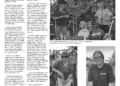























There is a distinct energy that fills the historic Detroit Repertory Theatre. For 69 seasons, this cultural anchor has remained resilient, serving as a sanctuary for stories that reflect the beautiful, deeply diverse reality of our community. As the Rep prepares to close out its current season, it isn’t bowing out quietly. Instead, it is throwing its doors wide open for a world premiere that promises to leave audiences laughing, squirming, and thinking long after the house lights come up.
Opening Friday, May 29, 2026, Spit in Your Face, co-written by Paul Heller and Alberto Lomnitz, is a bombastic, unapologetic satire that takes a sledgehammer to the egos of modern politics and the performative nature of cultural representation. The production hits close to home, tackling a dynamic that many within Detroit’s Latino and Indigenous communities know all too well, and that’s the exhaustion of having well-meaning, self-proclaimed “allies” dictate our struggles for us.
The spark for this script actually came from a real-life encounter at an international festival where an American organizer pressured the writers to deliver a land acknowledgment.
“It doesn’t really make a lot of sense from where we stand in Mexico City,” Lomnitz explains.
“Who am I supposed to acknowledge? The Aztec Empire? Who were conquerors of others? There’s such a long chain of conquerors. The whole idea of a land acknowledgment to me was absurd, seemed highly hypocritical.”
Instead of staying frustrated, they turned that hypocrisy into theatrical gold, creating a story centered on Liliana, a young Mexican-American theater major caught in the crossfire of ideologies. On one side is Tom, the earnest, progressive American producer.
On the other hand, Fernando Calderón is a wild, avant-garde Mexican director. As these two men clash over who holds the moral high ground, neither actually listens to the woman standing right in front of them. Both want to claim her, but neither sees her.
Lomnitz notes that Fernando is a sharp critique of the privileged Mexican elite.
“He still is a privileged white… what in Mexico we call a ‘whitexican.’ He speaks as if he were the representative of poor Mexico exploited by the United States, and Liliana says, ‘You’re upper class… part of the ruling class who have oppressed my parents.'”
Heller found a therapeutic irony in writing Tom’s character.
“I really do believe in the progressive ideas of Tom, and it was fun to put my ideas in his mouth and to see how silly some of them are, but how heartfelt, a progressive innocent.”
For the local actors bringing this madness to life, the text feels revolutionary. Henry Ballesteros, making his highly anticipated Rep debut as the outrageous Fernando, recalls his immediate connection to the pages.
“When I first read the script, I kind of, like the first time I felt seen as a Latino,” Ballesteros said.
“I’ve gone to countless shows where people who look like me are in the ensemble or have one or two lines, and this play really talks about that. It really brings to light not really the Latino struggle, but anyone of color’s struggle where they are not highlighted correctly, cast correctly, or their stories aren’t told. Sometimes the only way to grab your attention is being loud.”
Co-director Maurizio Dominguez emphasizes that keeping the focus on these inflated egos was essential to ensuring the satire didn’t undermine the reality of today’s political climate.
“We wanted very much to keep the humor mostly on the characters, and more or less kind of like the two male characters in particular,” Dominguez said.
“I think a lot of the humor comes from just the egos of the two male characters, and just kind of how absurd some of the things they want to do or say or try on stage are… as opposed to making fun about the issues. We’re not making fun about the issues, but rather, what happens when the people who are trying to fight against or speak up for these issues don’t involve people from the community they are trying to represent.”
Anette Orellana, a recent BFA acting graduate from Wayne State University, plays Liliana. Orellana balances the play’s wild satire with the reality of a young woman navigating her own identity and power. For Orellana, the stage is a vehicle to demand true nuance from the audience.
“I want everyone to see that we are not a monolith,” Orellana emphasizes.
“I want people to see our humanity, that we are human, and that we’re not this image that people paint us out to be. For Liliana, I want people like me, who aren’t American, but also have roots somewhere else, I want them to see themselves in her, know you can be both and that you don’t have to choose and it’s okay.”
By centering a Mexican-American woman who must actively fight to find her voice, both as an American progressive and a Mexican elitist, the play strikes a deep chord. It reminds us that our stories belong to us, and true solidarity cannot happen when one party treats the other as a political prop.
Ultimately, Liliana’s dual identity becomes her greatest strength.
Detroit Rep’s Executive Artistic Director Leah Smith, who is co-directing the production alongside Maurizio Dominguez, knew the theater needed this piece.
“This play is fall-on-the-floor, spit-take funny,” Smith shares.
“The marrying of the two, comedy that makes you pee your pants and political discourse, is so on point right now.”
Heller and Lomnitz hope the laughter gives the audience a bit of fighting spirit.
“Humor is the best way to really approach almost any subject matter… It can get through to the audience,” Lomnitz says.
“I know a play’s not gonna change the administration, but maybe it will say some things to people… and they go, ‘Okay, my mind’s changed a little bit,'” Heller says.
The world premiere celebration kicks off on Friday, May 29, 2026, at 8:00 PM with the Rep’s legendary Opening Night Champagne Afterglow. The production runs through June 28, 2026, with performances on Fridays at 8:00 PM, Saturdays at 3:00 PM and 8:00 PM, and Sundays at 2:00 PM
‘Spit in Your Face’, la sátira de Detroit Rep que conecta arte, trabajo e identidad latina
Hay una energía muy particular que llena el histórico Detroit Repertory Theatre. Durante 69 temporadas, este espacio cultural ha resistido el paso del tiempo, convirtiéndose en un refugio para historias que reflejan la realidad diversa y profundamente humana de nuestra comunidad. Y mientras Detroit Rep se prepara para cerrar su temporada actual, no lo hace en silencio. Al contrario, abre sus puertas para el estreno mundial de una obra que promete hacer reír, incomodar y dejar pensando al público mucho después de que se apaguen las luces.
A partir del viernes 29 de mayo de 2026, llega Spit in Your Face, escrita por Paul Heller y Alberto Lomnitz, una sátira explosiva y sin disculpas que golpea directamente los egos de la política moderna y la manera performativa en que muchas veces se representa la cultura. La producción toca temas muy cercanos para muchas comunidades latinas e indígenas de Detroit: el cansancio de ver cómo personas que se llaman “aliadas” terminan hablando por nosotros y definiendo nuestras luchas.
La chispa para escribir esta obra surgió de una experiencia real durante un festival internacional, cuando un organizador estadounidense presionó a los autores para hacer un “land acknowledgment” o reconocimiento territorial.
“No tenía mucho sentido desde nuestra perspectiva en Mexico City”, explicó Lomnitz.
“¿A quién se supone que debo reconocer? ¿Al Imperio Azteca? Ellos también conquistaron a otros pueblos. Hay una cadena larguísima de conquistadores. Toda la idea del reconocimiento territorial me parecía absurda y muy hipócrita”.
En lugar de quedarse frustrados, transformaron esa contradicción en oro teatral, creando una historia centrada en Liliana, una joven mexicoamericana estudiante de teatro atrapada entre dos ideologías. De un lado está Tom, un productor estadounidense progresista y bien intencionado. Del otro, Fernando Calderón, un director mexicano extravagante y de vanguardia. Mientras ambos hombres pelean por demostrar quién tiene la superioridad moral, ninguno escucha realmente a la mujer que tienen enfrente. Los dos quieren apropiarse de su voz, pero ninguno la ve de verdad.
Lomnitz señala que Fernando es una crítica directa a la élite privilegiada mexicana.
“Sigue siendo un hombre blanco privilegiado… lo que en México llamamos un ‘whitexican’. Habla como si representara al México pobre explotado por Estados Unidos, y Liliana le responde: ‘Tú eres de clase alta… eres parte de la clase dominante que ha oprimido a mis padres’”.
Para Heller, escribir el personaje de Tom tuvo cierta ironía terapéutica.
“Yo sí creo en las ideas progresistas de Tom, y fue divertido poner mis ideas en su boca y ver qué tan ridículas pueden sonar algunas, aunque vengan de un lugar sincero e inocente”.
Para los actores locales que están dando vida a esta historia, el texto se siente revolucionario. Henry Ballesteros, quien debuta en Detroit Rep interpretando al exagerado Fernando, recordó la conexión inmediata que sintió con la obra.
“Cuando leí el guion por primera vez, fue como la primera vez que realmente me sentí visto como latino”, dijo Ballesteros.
“He participado en muchísimas obras donde las personas que se parecen a mí solo están en el fondo o tienen una o dos líneas. Esta obra habla justamente de eso. Expone no solo la lucha latina, sino la de cualquier persona de color que no es representada correctamente, no es elegida correctamente o cuya historia nunca se cuenta. A veces, la única manera de llamar la atención es haciendo ruido”.
El codirector Maurizio Dominguez explicó que era importante mantener el enfoque en los egos inflados de los personajes para que la sátira no minimizara la realidad política actual.
“Queríamos que el humor estuviera principalmente en los personajes, especialmente en los dos hombres”, dijo Dominguez.
“Mucho del humor nace de sus egos y de lo absurdas que son algunas de las cosas que quieren hacer o decir en el escenario… no nos estamos burlando de los problemas reales. Nos burlamos de lo que pasa cuando las personas que dicen luchar por estas causas no incluyen a la comunidad que dicen representar”.
Anette Orellana, recién graduada del programa de actuación de Wayne State University, interpreta a Liliana. Su personaje equilibra la sátira exagerada de la obra con la realidad de una joven tratando de entender su identidad y encontrar su voz.
“Quiero que todos entiendan que no somos un solo estereotipo”, enfatizó Orellana.
“Quiero que vean nuestra humanidad, que entiendan que somos personas reales y no esa imagen simplificada que muchas veces pintan de nosotros. Para Liliana, quiero que personas como yo, que no son completamente estadounidenses pero tienen raíces en otro lugar, puedan verse reflejadas en ella. Que sepan que pueden ser ambas cosas y que no tienen que escoger”.
Al poner al centro a una mujer mexicoamericana que lucha por encontrar su propia voz frente tanto al progresismo estadounidense como al elitismo mexicano, la obra logra tocar una fibra profunda. Recuerda que nuestras historias nos pertenecen y que la verdadera solidaridad no puede existir cuando una persona usa a otra como accesorio político.
Al final, la identidad dual de Liliana termina convirtiéndose en su mayor fortaleza.
La directora artística ejecutiva de Detroit Rep, Leah Smith, quien codirige la producción junto a Maurizio Dominguez, supo desde el principio que este era el tipo de obra que el teatro necesitaba.
“Esta obra es tan chistosa que te hace escupir la bebida de la risa”, compartió Smith.
“La combinación entre comedia y discurso político se siente totalmente necesaria en este momento”.
Heller y Lomnitz esperan que la risa también despierte algo más en el público.
“El humor es la mejor manera de acercarse a casi cualquier tema… puede llegarle a la gente”, dijo Lomnitz.
“Sé que una obra no va a cambiar una administración política, pero quizá sí haga que alguien piense diferente aunque sea un poquito”, agregó Heller.
La celebración del estreno mundial comienza el viernes 29 de mayo de 2026 a las 8:00 p.m. con el tradicional Opening Night Champagne Afterglow de Detroit Rep. La producción estará en cartelera hasta el 28 de junio de 2026, con funciones los viernes a las 8:00 p.m., sábados a las 3:00 p.m. y 8:00 p.m., y domingos a las 2:00 p.m.