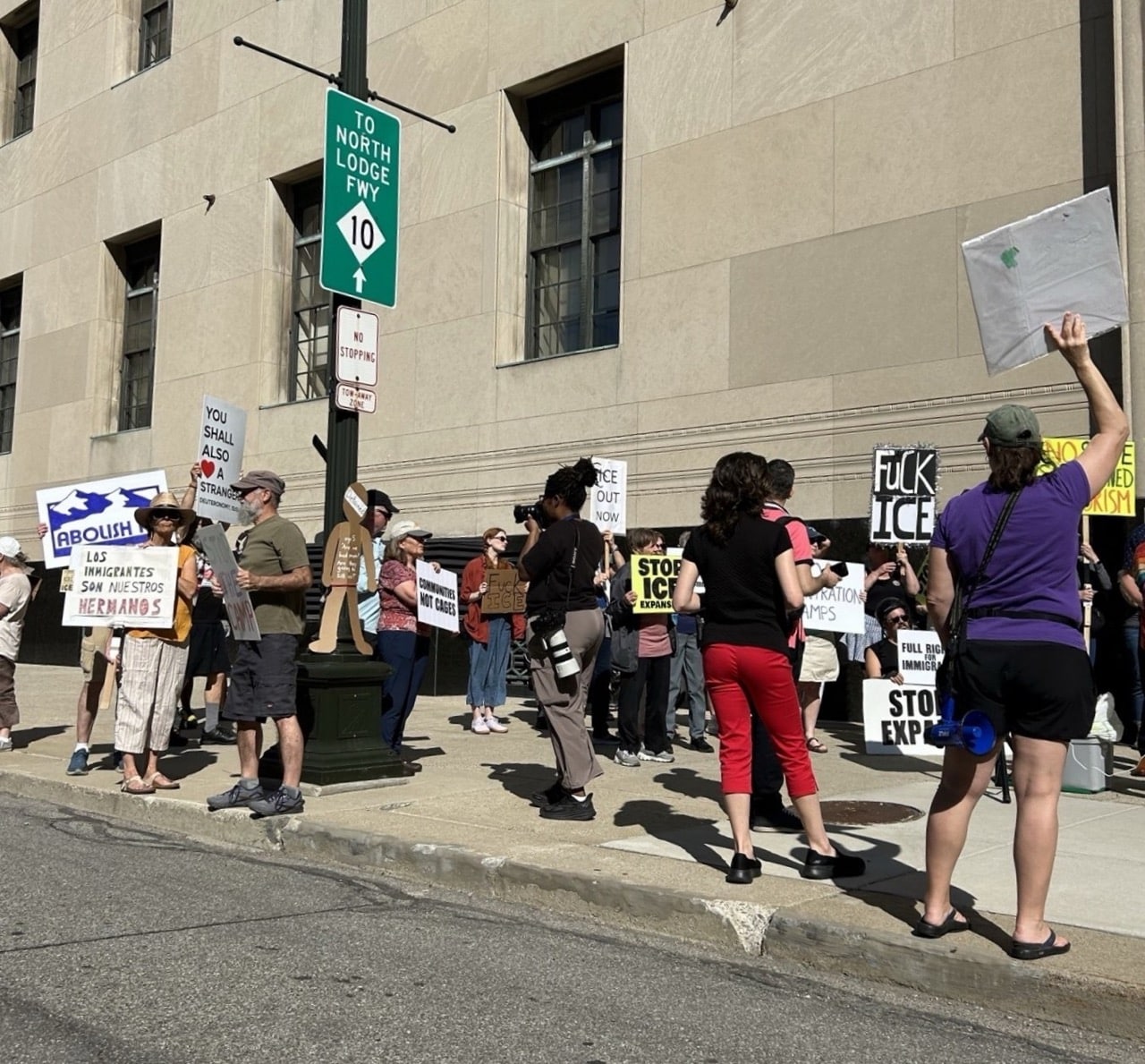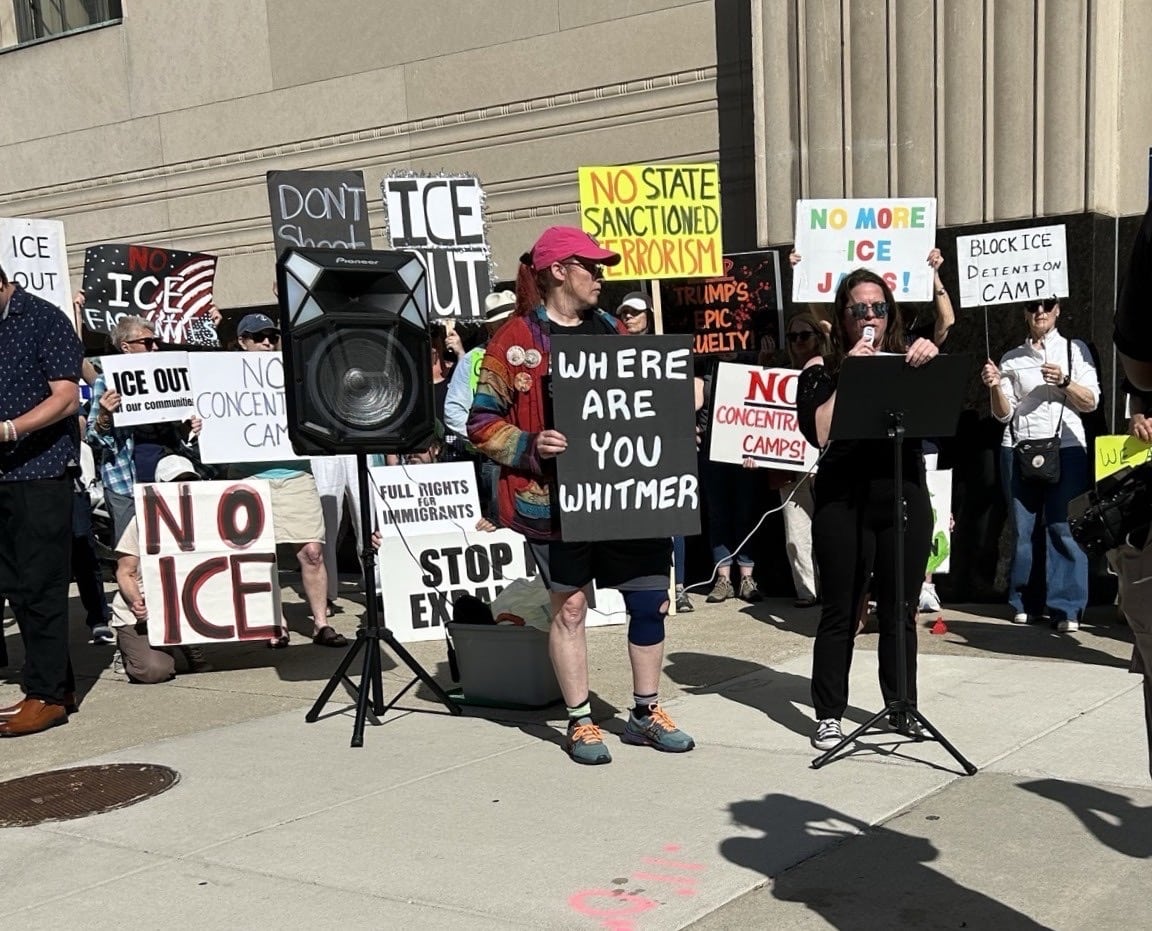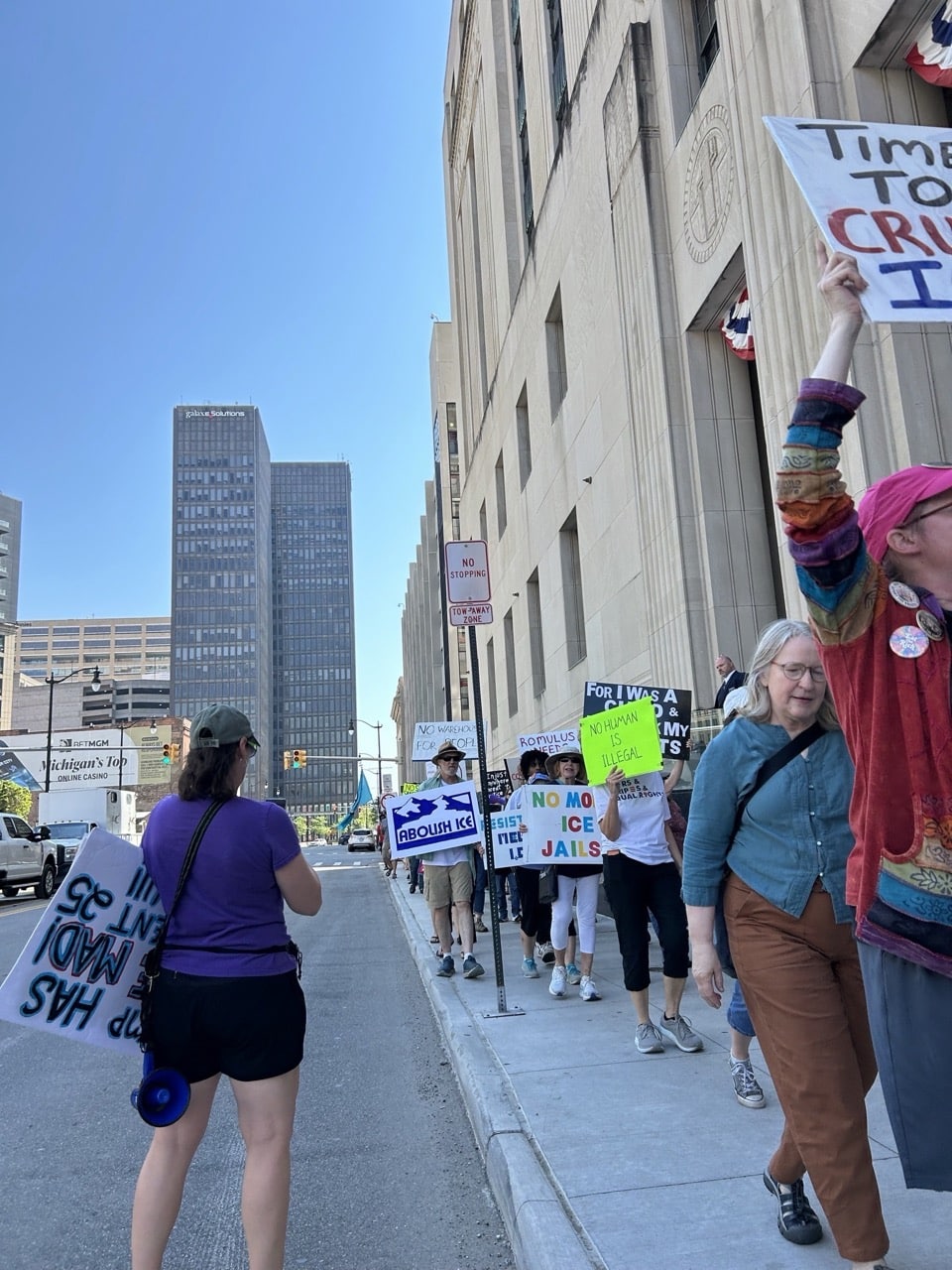





















A group of nearly 50 protesters gathered this past Monday, May 18 in front of the Theodore Levin Federal Courthouse in Detroit to express their support for a federal lawsuit filed by State Attorney General Dana Nessel and the City of Romulus, which was scheduled to be heard inside the courthouse that morning.
It was rescheduled. A status conference has been scheduled for Wednesday (after EL CENTRAL went to press), where a new hearing date may be set, according to Danny Wimmer, Nessel spokesman, who spoke to the Detroit Free Press. He also highlighted that, according to the Department of Justice, ICE and the Department of Homeland Security (DHS) will not issue a construction contract for the Romulus Warehouse before the end of the month.
Melody Simmons with Coalition to Shut the Camps said the hearing is being delayed by the DHS. “You do not ask for a delay when you have a strong case. You ask for a delay when you are losing,” she said. “They can move the date on a docket. They cannot move this community. We are still here.”
“The lawsuit is still alive. The camp is still illegal. And we are not going anywhere,” Simmons added.
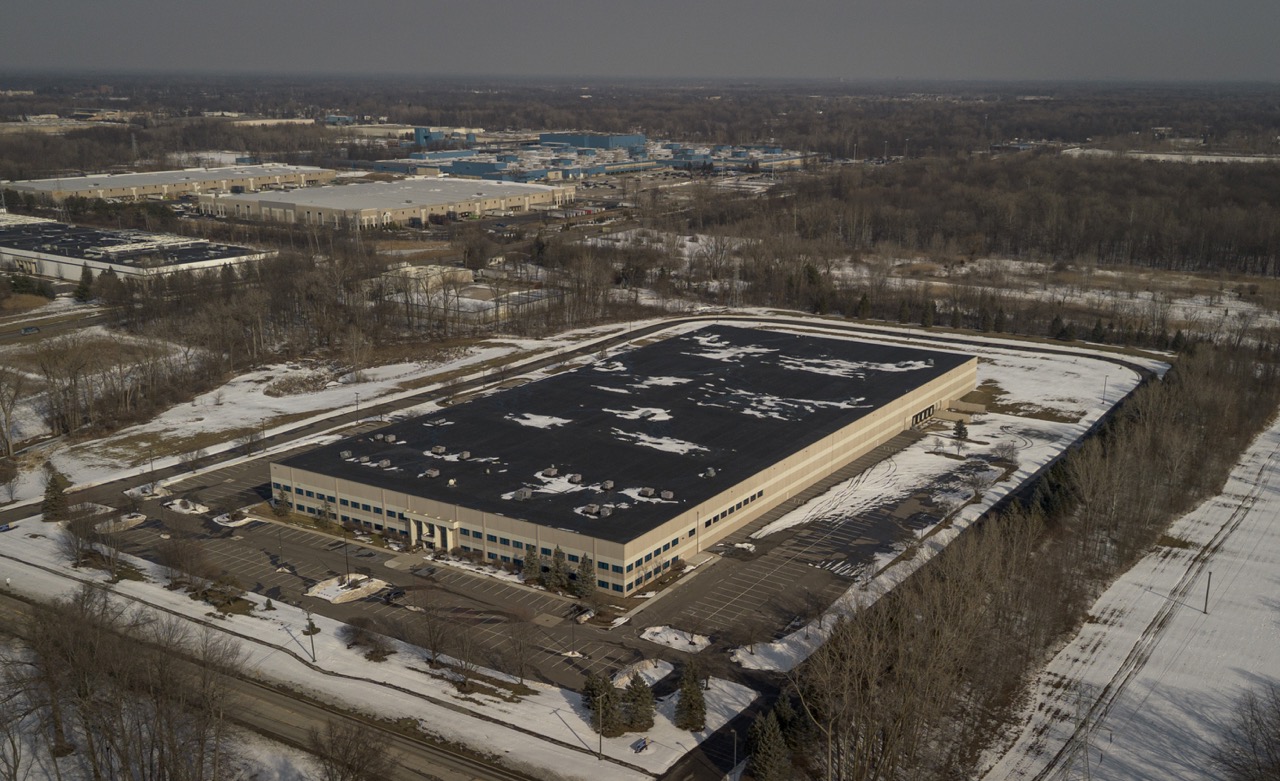
Filed on March 24, this lawsuit challenges the DHS plan to convert a 261,450-square-foot warehouse located at 7525 Cogswell Street, near Detroit Metropolitan Airport, into a 500-bed capacity ICE detention center. The lawsuit argues that DHS and ICE violated federal procedures by moving forward with the conversion of a warehouse in Romulus into a detention center without sufficient environmental review or coordination with state and local authorities.

It also claims the site is unsuitable for detainees because it is near schools and residential areas, sits in a flood-prone zone, and lacks adequate infrastructure and basic services.
“This lawsuit makes clear the urgent need to prevent the expansion into Romulus of an inherently racist, cruel, and deadly system that is already tearing families apart and putting lives at risk in Michigan every day,” said Ale Rojas with No Detention Centers in Michigan. “In the last month, we have seen hundreds of people held at the GEO Group’s North Lake Processing Center in Baldwin participate in a hunger strike that spanned multiple units.”
Protesters, led by the Coalition to Close the Camps and other advocacy groups, also marched through downtown Detroit, where they urged state authorities, including Governor Gretchen Whitmer, and other elected officials to deny the permits, water service, sewer connections, and infrastructure approvals required by the facility.
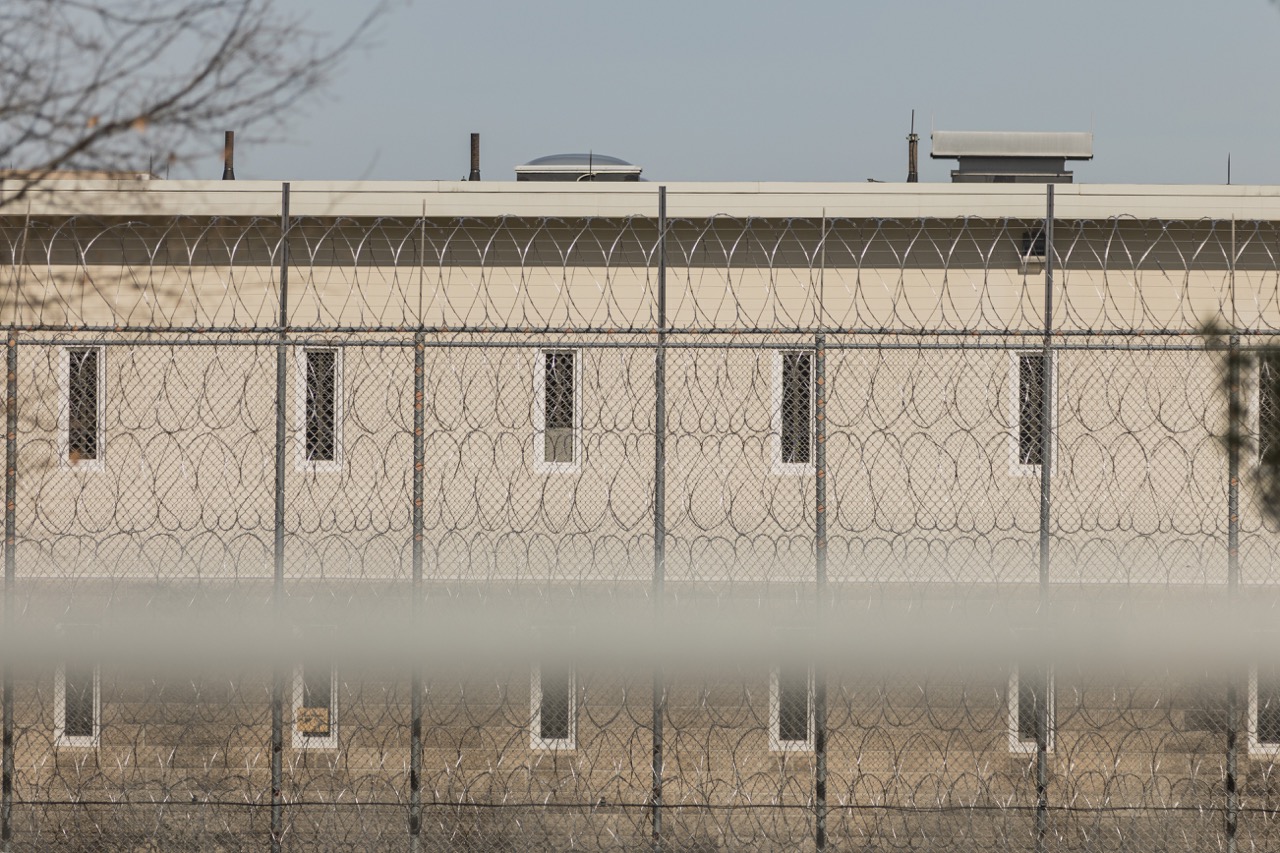
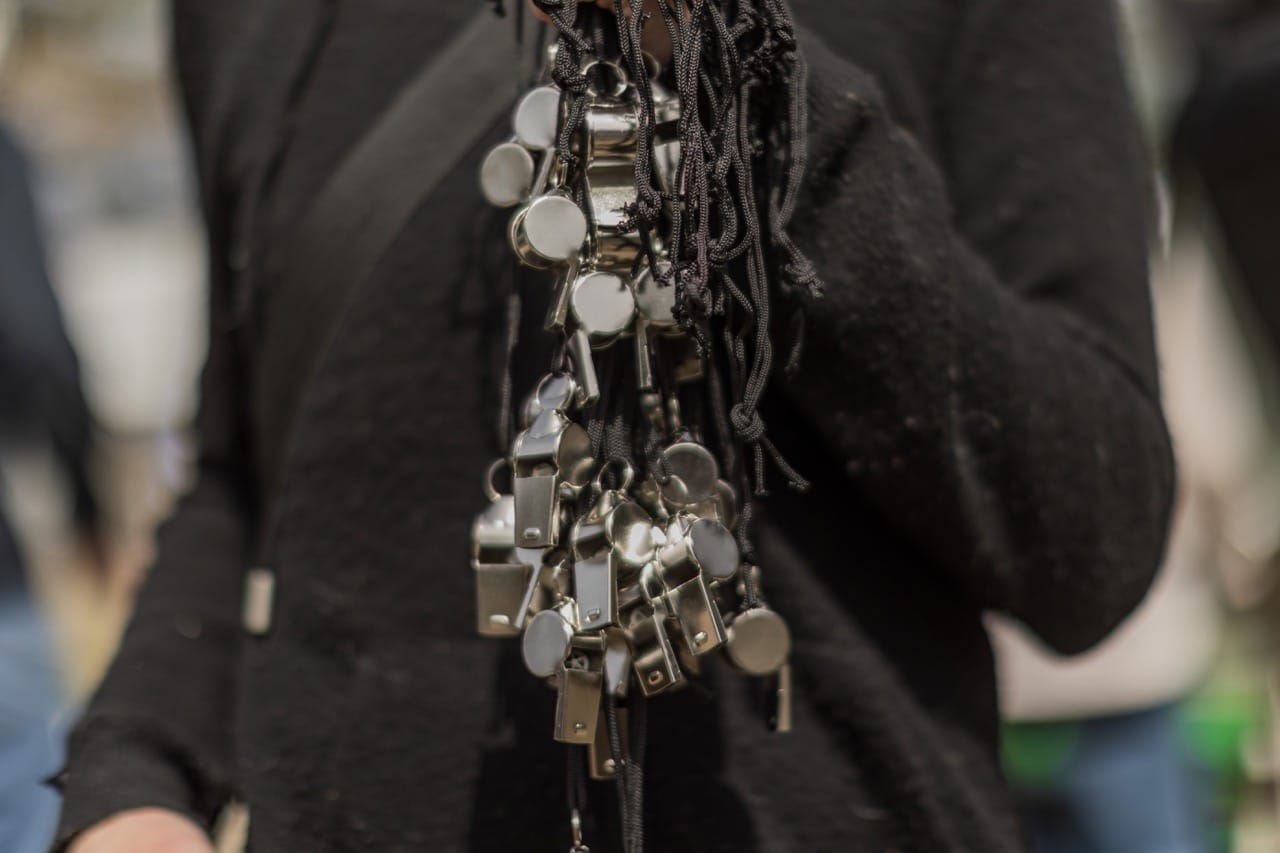
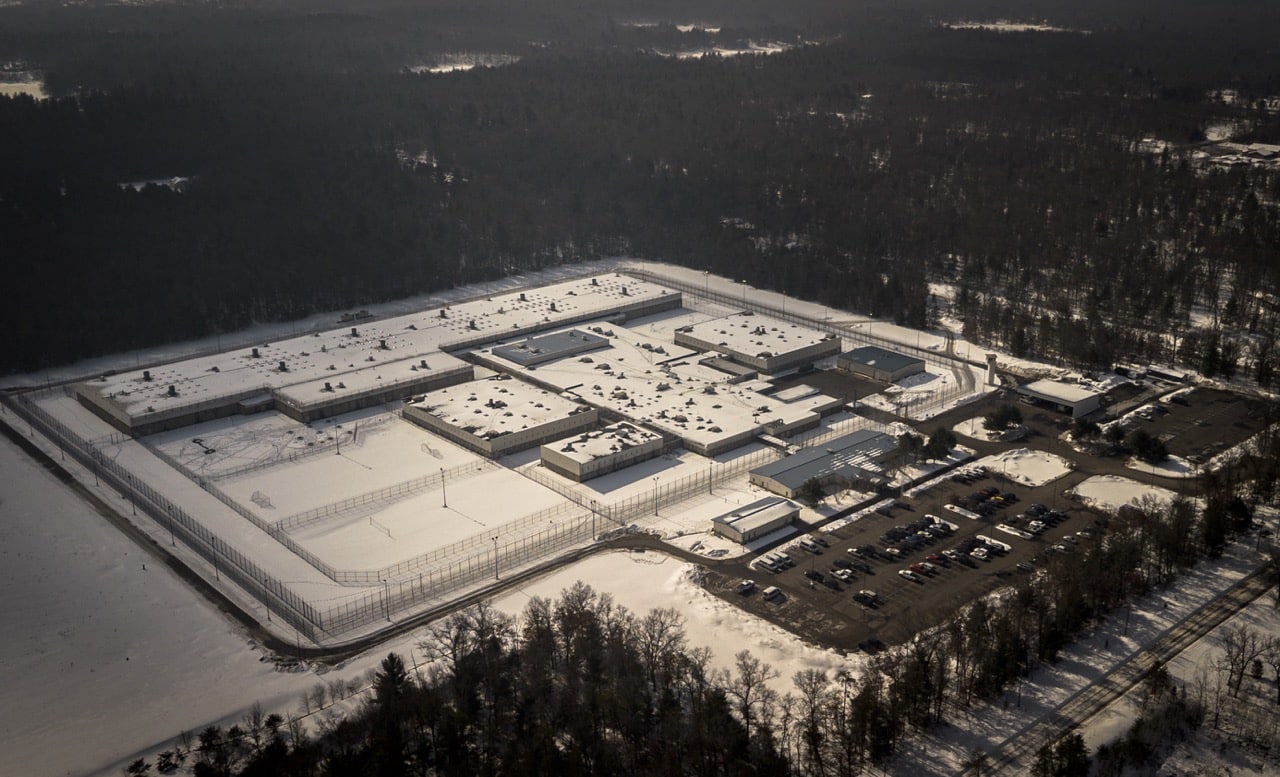
On Sunday afternoon, just as they had for several weeks, another dozen protesters gathered outside the ICE North Lake processing center in Baldwin, MI carrying horns, rattles, snare drums, megaphones, and trumpets. Some masked, some not. Tangled metal fences separated them from the walls with narrow windows that held inside those detainees for whom they had been demanding, for weeks and months, proper medical care, better living conditions, and transparency on their immigration cases.
Both demonstrations are preceded by a public letter sent by the American Civil Liberties Union of Michigan (ACLU of Michigan) and the Michigan Immigrant Rights Center (MIRC) to ICE, in which they denounce in detail “dangerous medical conditions and limited access to legal counsel for people detained” at the 1,800-bed capacity Baldwin Processing Center, where several detentions have extended for more than six months, and many cases have been denied for release on bond; bonds that exceed thousands of dollars.

Employing pseudonyms to protect detainees from potential reprisals for sharing their cases, the letter not only cites immigrant detainees reporting health issues, such as high blood pressure, physical weakness, or mental health conditions like schizophrenia and bipolar disorder, but also denounces the lack of medical attention provided for these ailments, the guards’ insensitivity in providing care, and medical negligence, citing one case in which a female inmate requiring mammograms received nothing but ibuprofen.
A woman identified as Heydi C. spoke about her young son, detained in North Lake, from whom she has heard nothing since the end of November. Through a GPS tracker, she knows he is still alive and where he is; ICE gives her no further information about him except when he is transferred. Her son has been held in more than three different ICE detention centers in Florida, Texas, and Louisiana. Heydi C., with the help of an interpreter, described this situation as indescribable torture.
“I begged for information about his mental health,” Heydi said. “I told them that he was doing very poorly, that he needed medical attention, and that his condition was not normal. But many times, no one would give me any kind of response. They would hang up on me, or they would say, ‘Ma’am, just have patience. They’re going to call you.’ But that call never came.”
Many detainees have experienced serious failures in receiving adequate medical care, causing severe health consequences for our clients and worry for their loved ones, said Ruby Robinson, Senior Managing Attorney at the Michigan Immigrant Rights Center, who also represents Heydi’s son and many other Baldwin detainees.
“Additionally, attorneys encounter arbitrary barriers, legal calls are restricted, and some clients are not receiving information about their hearings,” Robinson said. “It is critical that our local ICE field office exercise its authority to review and address these concerns and implement the necessary changes to protect health and legal access.”
Robinson also told reporters that Heydi’s son has gone mute. The mother accuses that the transfer of her son from one prison to another, chained hand and foot, damaged his mental health to the point of deteriorating it. According to ICE Enforcement and Removal Operations, Heydi’s son is in a medical facility to receive additional care.
“[My son is] a very vulnerable young man who was confused and in a very profound emotional crisis; [they are] treating him as if he were not a human being,” she said. “But this system has dehumanized him, humiliated him, and taken him away from his mother and family, who miss him so much. My son is not a criminal,” she added.
Un grupo de casi 50 manifestantes se reunió este pasado lunes 18 de mayo frente a la Theodore Levin Federal Courthouse en Detroit para expresar su apoyo a una demanda federal presentada por la Ministra de Justicia Estatal Dana Nessel y la ciudad de Romulus, la cual estaba programada para ser escuchada dentro del tribunal esa mañana.
La audiencia fue reprogramada. Se ha fijado una conferencia de estado para el miércoles (después de que EL CENTRAL entró a imprenta), donde se podría establecer una nueva fecha de audiencia, según Danny Wimmer, portavoz de Nessel, quien habló con el Detroit Free Press.
También destacó que, según el Departamento de Justicia, ICE y el Departmento de Seguridad Nacional (DHS) no emitirán un contrato de construcción para el Romulus Warehouse antes de finales de mes.
Melody Simmons, de la Coalition to Shut the Camps, señaló que el DHS está retrasando la audiencia. “Uno no pide un retraso cuando tiene un caso sólido. Pides un retraso cuando estás perdiendo”, afirmó. “Ellos pueden cambiar la fecha en la agenda de la corte. Pero no pueden mover a esta comunidad. Aquí seguimos”.
“La demanda sigue viva. El campamento sigue siendo ilegal. Y no nos vamos a ir a ninguna parte”, añadió Simmons.
Presentada el 24 de marzo, esta demanda cuestiona el plan del DHS de convertir un almacén de 261,450 pies cuadrados ubicado en el 7525 de la calle Cogswell Street, cerca del Detroit Metropolitan Airport, en un centro de detención de ICE con capacidad para 500 camas. La demanda argumenta que el DHS e ICE violaron los procedimientos federales al avanzar con la conversión del almacén en Romulus sin una revisión ambiental suficiente ni coordinación con las autoridades estatales y locales.
También afirma que el lugar no es apto para los detenidos porque está cerca de escuelas y zonas residenciales, se encuentra en una zona propensa a inundaciones y carece de la infraestructura adecuada y de los servicios básicos.
“Esta demanda deja clara la urgente necesidad de evitar la expansión hacia Romulus de un sistema inherentemente racista, cruel y mortal que ya está separando a familias y poniendo vidas en riesgo en Michigan todos los días”, dijo Ale Rojas, de No Detention Centers in Michigan. “En el último mes, hemos visto a cientos de personas retenidas en el North Lake Processing Center de GEO Group, en Baldwin, participar en una huelga de hambre que se extendió por múltiples unidades”.
Los manifestantes, encabezados por la Coalition to Close the Camps y otros grupos defensores, también marcharon por el centro de Detroit, donde instaron a las autoridades estatales, incluida la Gobernadora Gretchen Whitmer, y a otros funcionarios electos a negar los permisos, el servicio de agua, las conexiones de alcantarillado y las aprobaciones de infraestructura que requiere la instalación.
El domingo por la tarde, tal como lo habían hecho durante varias semanas, otra docena de manifestantes se reunió a las afueras del centro de procesamiento de ICE North Lake en Baldwin, MI, cargando cornetas, sonajas, tarolas, megáfonos y trompetas. Algunos con mascarillas, otros no. Vallas de metal entrelazadas los separaban de las paredes con ventanas estrechas que albergaban en su interior a aquellos detenidos para quienes habían estado exigiendo, durante semanas y meses, atención médica adecuada, mejores condiciones de vida y transparencia en sus casos de inmigración.
Ambas manifestaciones son precedidas por una carta pública enviada por la American Civil Liberties Union of Michigan (ACLU of Michigan) y el Michigan Immigrant Rights Center (MIRC) a ICE, en la que denuncian en detalle las “peligrosas condiciones médicas y el acceso limitado a asesoría legal para las personas detenidas” en el Baldwin Processing Center, que cuenta con una capacidad de 1,800 camas, donde varias detenciones se han prolongado por más de seis meses y a muchos casos se les ha negado la libertad bajo fianza; fianzas que superan los miles de dólares.
Utilizando seudónimos para proteger a los detenidos de posibles represalias por compartir sus casos, la carta no solo cita a inmigrantes detenidos que reportan problemas de salud como presión alta, debilidad física o condiciones de salud mental como esquizofrenia y trastorno bipolar, sino que también denuncia la falta de atención médica para estos padecimientos, la insensibilidad de los guardias al brindar cuidados y la negligencia médica, citando el caso de una interna que requería mamografías y no recibió más que ibuprofeno.
Una mujer identificada como Heydi C. habló sobre su hijo joven, detenido en North Lake, de quien no sabe nada desde finales de noviembre. A través de un rastreador GPS, sabe que sigue vivo y dónde está; ICE no le da más información sobre él, excepto cuando es trasladado. Su hijo ha estado recluido en más de tres centros de detención de ICE diferentes en Florida, Texas y Louisiana. Heydi C., con la ayuda de un intérprete, describió esta situación como una tortura indescriptible.
“Supliqué por información sobre su salud mental”, dijo Heydi. “Les dije que estaba muy mal, que necesitaba atención médica y que su condición no era normal. Pero muchas veces, nadie me daba ningún tipo de respuesta. Me colgaban o me decían: -Señora, solo tenga paciencia. Le van a llamar-. Pero esa llamada nunca llegó”.
Muchos detenidos han experimentado graves fallas al recibir atención médica adecuada, lo que ha provocado severas consecuencias de salud para nuestros clientes y una gran preocupación para sus seres queridos, señaló Ruby Robinson, abogada administradora principal del Michigan Immigrant Rights Center, quien también representa al hijo de Heydi y a muchos otros detenidos en Baldwin.
“Además, los abogados se enfrentan a barreras arbitrarias, las llamadas legales están restringidas y algunos clientes no reciben información sobre sus audiencias”, dijo Robinson. “Es fundamental que nuestra oficina local de campo de ICE ejerza su autoridad para revisar y abordar estas preocupaciones e implementar los cambios necesarios para proteger la salud y el acceso legal”.
Robinson también dijo a los reporteros que el hijo de Heydi se ha quedado mudo. La madre acusa que el traslado de su hijo de una prisión a otra, encadenado de pies y manos, dañó su salud mental hasta el punto de deteriorarla. Según ICE Enforcement and Removal Operations, el hijo de Heydi se encuentra en una instalación médica para recibir cuidados adicionales.
“Mi hijo es un joven muy vulnerable que estaba confundido y en una crisis emocional muy profunda; lo están tratando como si no fuera un ser humano”, expresó. “Pero este sistema lo ha deshumanizado, lo ha humillado y lo ha alejado de su madre y de su familia, que lo extrañamos tanto. Mi hijo no es un criminal”, añadió.