




















Spain officially known as the Kingdom of Spain occupies most of the Iberian Peninsula in southwestern Europe. Its territory also includes the Balearic Islands in the Mediterranean Sea off the coast of Valencia and the Canary Islands in the Atlantic Ocean near the African continent.
The name Spain does not come directly from Latin. One of the most accepted theories suggests that it derives from the Phoenician term i spn ya. For the Phoenicians the prefix “i” referred to “coast” or “island”; “spn” meant “rabbits”; and “ya” meant “region.” Because of this the Iberian Peninsula was known as the “land” or “coast of rabbits” a name later adopted by the Romans as Hispania”.
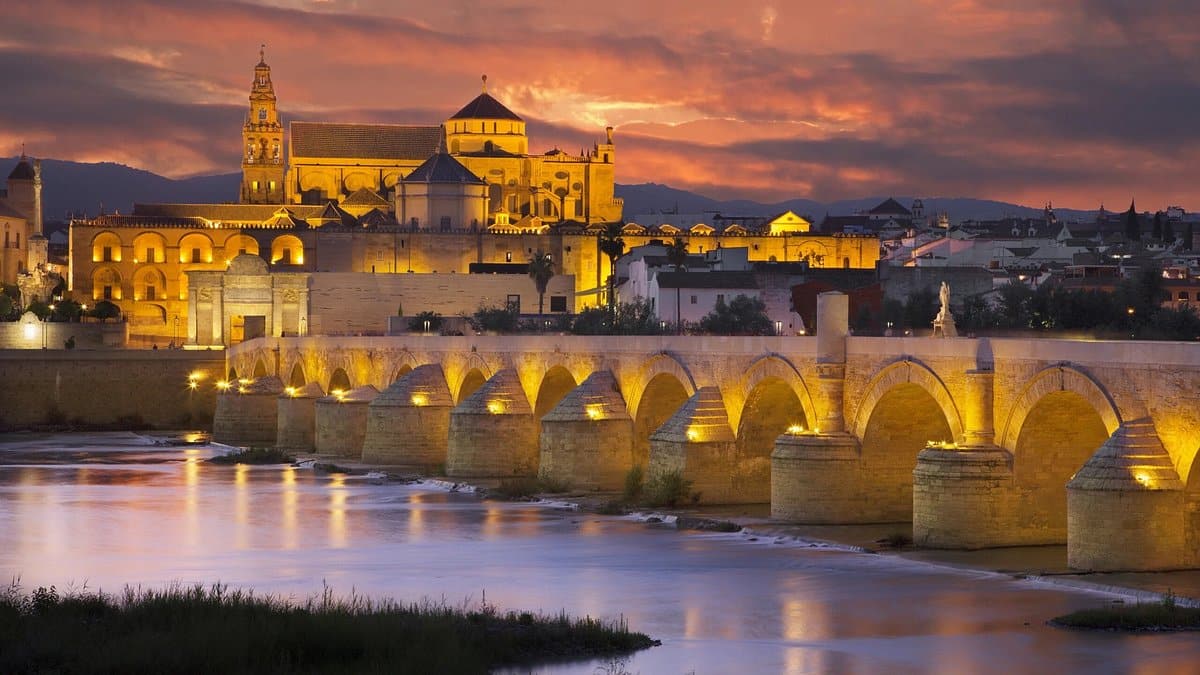
The territory of present-day Spain became the setting for disputes and domination by several empires and kingdoms throughout history. Among them were the Roman Empire the Byzantine Empire the Visigothic Kingdom and the Muslim monarchies of Al Andalus Córdoba and Granada. Meanwhile in the northern part of the peninsula several Christian kingdoms emerged including Portugal Aragón Asturias León Galicia and Castile.
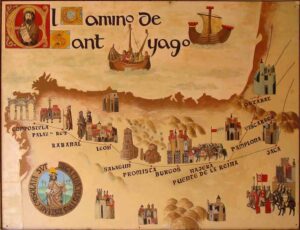
In the fifteenth century the marriage between Isabella I of Castile and Ferdinand II of Aragon marked the beginning of the unification of several territories under one crown. Queen Isabella sought to complete the reconquest of the Iberian Peninsula and strengthen Catholic rule under the protection of Saint James who became deeply connected to the campaigns of reconquest. This explains the historical and spiritual importance of the Camino de Santiago in Spanish identity.
The consolidation of the kingdom depended not only on territorial expansion but also on the existence of a common language. In this context the work of Antonio de Nebrija became highly significant. He wrote the “Castilian Grammar” considered the first grammar of a Romance language in Europe. For the Spanish monarchy language became a tool for political and cultural unity as well as an instrument of imperial expansion.
The political project initiated by Isabella and Ferdinand expanded enormously after the arrival of the Spanish in the American continent. During the reign of Philip II the Spanish Empire reached territories in Europe America Africa and Asia. Later Spanish expeditions arrived in the archipelago that eventually became known as the Philippines in honor of the Spanish monarchy.
Philip II famously declared “In my empire the sun never sets.” The statement was not an exaggeration since Spanish territories extended across four continents making it possible for sunlight to shine on some part of the empire at all times.

The territorial power of the Spanish Empire began to decline during the nineteenth century when the colonies in the Americas started their independence movements. Later during the twentieth century Spain lost most of its African territories while retaining regions such as the Canary Islands.
One of the most representative traditions in Spain continues to be walking the Camino de Santiago a pilgrimage route leading to the Cathedral of Santiago de Compostela in northern Spain. There are several routes that can be followed many of which were used during the Middle Ages by pilgrims and travelers from different parts of Europe.
España, su nombre oficial es Reino de España, abarca gran parte de la península ibérica al suroeste de Europa, al que se le suma las islas mediterráneas Baleares frente a las costas de Valencia y las islas africanas Canarias en el Océano Atlántico.
El nombre de España, no vienen del latín y una de las teorías es que deriva del fenicio hispania: i-spn-ya; pues, para los fenicios el prefijo i refería a “costa” o “isla”; spn “conejos”; ia ya “región”; así, para los fenicios la península ibérica era conocida como “costa de conejos”, “región donde abundan los conejos”; nombre que pasó a ser utilizado por los Romanos como Hispania.
El territorio de la actual España fue escenario de disputas de grandes imperios como el Romano, Bizantino, el imperio germánico Visigodo, las monarquías de los califatos del Al-Ándalus, Córdoba y Granada, y en el norte los diferentes reinos cristianos católicos del norte: Reino de Portugal, Reino de Aragón, Reino de Asturias, Reino de Suevos, Reino de León, Reino de Galicia, Reino de Castilla.
Sin embargo, en el siglo XV la reina Isabel I de Castilla y el rey Fernando II de Aragón se unieron en matrimonio, unificando con ello los reinos: Castilla, Navarra y Aragón.
La reina Isabel tenía como visión que su mandato lograra la reconquista de la península ibérica a partir de la unificación de todos los reinos y la extensión de los dominios católicos, bajo el favor de Santo Santiago, a quien invocaban en las batallas de reconquista, de ahí la importancia del camino de Santiago para España.
La reina Isabel de Castilla tenía un claro propósito, hacer del reino de Hispania un estado consolidado y fuerte, para ello, no sólo era suficiente contar con un vasto territorio, sino también con un idioma, una lengua que les unificara. De ahí la aceptación, pese al escepticismo inicial, sobre el proyecto de Antonio de Nebrija con la redacción de la Gramática Castellana, el primer estudio de una lengua romance no latina en Europa fuese de tal importancia.
España era un reino antiguo y a su vez naciente, la lengua que reconquistara y conquistara sería la lengua del imperio.
El proyecto que inició Isabel creció tanto, pues alcanzó a llegar al continente americano, que para el reinado de Felipe II las expediciones transcontinentales ya llegaban a Asia, posteriormente su hijo conquisto las islas que llevaron su nombre las islas Filipinas.
Felipe II decía: “en mi imperio nunca se pone el sol”, no es de sorprenderse, pues el imperio español se extendía por cuatro continentes: Europa, África, Asia y América, lo cual permitía que aquella pretensiosa frase fuese más real de lo esperado.
La inmensidad del imperio español se mantuvo hasta el siglo XIX, cuando comenzaron las independencias de las colonias que tenía el imperio español en el continente americano. Para el siglo XX, algunas regiones del continente africano se independizaron, a excepción de las Islas Canarias.
Una de las actividades más significativas e identitarias en España es realizar El Camino de Santiago, la peregrinación que se hace a la iglesia de Santiago en Compostela, al norte de España, que puede hacerse desde diferentes puntos del país. A las diferentes rutas se les ha denominado acorde a quienes recorrían ese recorrido durante la época de las cruzadas.