

















DETROIT — On Friday, January 30th, the sound of footsteps echoed through the halls of Cass Technical High School as students made a collective decision to leave their classrooms and step into the cold. What they carried with them wasn’t just signs or chants, it was fear, anger, pride, and a deep sense of responsibility.
The student-led walkout was organized to protest the actions of U.S. Immigration and Customs Enforcement (ICE) and to draw attention to how immigration enforcement directly impacts students and families within the Cass Tech community.
Senior Hailee Hallmann, a youth organizer and the walkout’s lead organizer, said the protest wasn’t about disruption, it was about being heard.
“Even if the school doesn’t implement changes immediately, protests are built on one another,” Hallmann said. “This walkout shows that we care. It shows that we’re angry, and that we need the school and the system to do more.”
Students gathered outside despite freezing temperatures, standing shoulder to shoulder as they held signs and shared chants. For many, the issue was deeply personal.
“These are people we see every day,” Hallmann said. “Friends. Classmates. People we sit next to in class. Knowing that it could be anyone, it’s terrifying.”
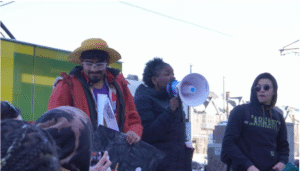
Support for the students extended beyond their peers. Mrs. Wiley, a tenth-grade English teacher at Cass Tech and a longtime community organizer, said the walkout reflected something essential about student leadership.
“Students have a right to organize. They have a right to agency. They have a right to speak truth to power,” Wiley said. “My job is to help them understand how to navigate these spaces safely because being an activist and being an organizer are not the same thing.”
Wiley also spoke about the fear many families live with daily. While Detroit Public Schools Community District operates as a sanctuary district, meaning ICE cannot enter school grounds without district permission, she said that protection doesn’t erase the anxiety students carry with them.
“Parents are scared to drive their kids to school because they don’t want to risk being detained,” she said. “Students are worried about what happens once they leave campus. That fear follows them into the classroom.”
Despite the heaviness of the issue, Wiley said she felt pride watching students step into leadership roles.
“You should be able to be kids,” she said. “You shouldn’t have to worry about ICE. But I’m proud of you for organizing even though I hate that this is the reality you’re growing up in.”
The students participated in the walkout with a mix of determination and urgency, knowing the protest was about more than just leaving class; it was about making their voices heard on issues that directly affected their friends, families, and community.
Many students, like Hailee Hallmann, organized the walkout to show that even if immediate change doesn’t happen, ongoing action is necessary.
Hallmann said. The students carried signs, chanted, and stood together in the freezing cold, aware that ICE’s presence still affects families outside of school grounds.
Teachers like Mrs. Wiley guided students in understanding their rights, helping them navigate the risks of activism and reminding them that their safety and dignity mattered.
For students, the walkout was a chance to take action, to share their stories, and to send a message that fear would not silence them, a message that their voices, no matter how young, could demand accountability and change.
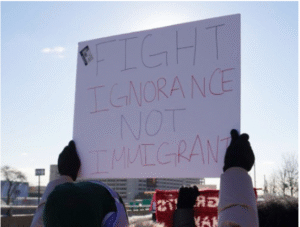
For Hallmann, the walkout was not meant to be a one-time event, but a spark.
“I hope people see this and feel inspired to get involved,” she said. “If students can organize a walkout in the freezing cold for something this important, then others can step up too.”
As students returned to class later that day, organizers said the walkout marked the beginning not the end of their efforts. More than anything, they hoped their message would linger.
“No matter how young you are, no matter where you are from, you have a voice and you should use it,” Hallmann said. “If you look at the backbone of every political movement that has ever happened, students have been the backbone whether it was the civil rights movement or now. We will always be there.”
DETROIT — El viernes 30 de enero, el sonido de pasos resonó en los pasillos de Cass Technical High School cuando estudiantes tomaron una decisión colectiva: salir de sus salones y enfrentar el frío. Lo que llevaban no eran solo carteles o consignas, sino miedo, coraje, orgullo y un profundo sentido de responsabilidad.
La salida estudiantil, organizada por los propios alumnos, buscó protestar las acciones de U.S. Immigration and Customs Enforcement (ICE) y llamar la atención sobre cómo la aplicación de leyes migratorias afecta directamente a estudiantes y familias dentro de la comunidad de Cass Tech.
Hailee Hallmann, estudiante de último año, organizadora juvenil y principal coordinadora de la protesta, dijo que no se trataba de causar desorden, sino de ser escuchados.
“Aunque la escuela no implemente cambios de inmediato, las protestas se construyen una sobre otra,” dijo Hallmann. “Esta salida muestra que nos importa. Muestra que estamos molestos y que necesitamos que la escuela y el sistema hagan más.”
Los estudiantes se reunieron afuera pese a las temperaturas bajo cero, hombro con hombro, sosteniendo carteles y coreando consignas. Para muchos, el tema era profundamente personal.
“Son personas que vemos todos los días,” dijo Hallmann. “Amigos. Compañeros de clase. Personas que se sientan a nuestro lado. Saber que podría ser cualquiera da mucho miedo.”
El apoyo no vino solo de otros estudiantes. La Sra. Wiley, maestra de inglés de décimo grado en Cass Tech y organizadora comunitaria desde hace años, dijo que la protesta reflejó algo esencial sobre el liderazgo estudiantil.
“Los estudiantes tienen derecho a organizarse. Tienen derecho a tomar iniciativa. Tienen derecho a decir la verdad frente al poder,” dijo Wiley. “Mi trabajo es ayudarles a entender cómo moverse en estos espacios de manera segura, porque ser activista y ser organizador no es lo mismo.”
Wiley también habló del miedo con el que muchas familias viven todos los días. Aunque Detroit Public Schools Community District opera como un distrito santuario —lo que significa que ICE no puede entrar a las escuelas sin permiso del distrito— dijo que esa protección no borra la ansiedad que cargan los estudiantes.
“Muchos padres tienen miedo de llevar a sus hijos a la escuela porque no quieren arriesgarse a ser detenidos,” dijo. “Los estudiantes se preocupan por lo que pasa cuando salen del campus. Ese miedo entra con ellos al salón.”
A pesar de la gravedad del tema, Wiley dijo que sintió orgullo al ver a los estudiantes asumir roles de liderazgo.
“Deberían poder ser niños,” dijo. “No deberían tener que preocuparse por ICE. Pero estoy orgullosa de ustedes por organizarse, aunque me duele que esta sea la realidad en la que están creciendo.”
Los estudiantes participaron con determinación y urgencia, sabiendo que no se trataba solo de salir de clase, sino de hacer escuchar sus voces sobre temas que afectan directamente a sus amigos, familias y comunidad.
Muchos alumnos, como Hailee Hallmann, organizaron la salida para demostrar que, aunque el cambio no llegue de inmediato, la acción constante es necesaria.
Hallmann dijo que los estudiantes llevaron carteles, corearon consignas y permanecieron unidos bajo el frío intenso, conscientes de que la presencia de ICE sigue afectando a las familias fuera de los terrenos escolares.
Maestros como la Sra. Wiley orientaron a los estudiantes sobre sus derechos, ayudándolos a entender los riesgos del activismo y recordándoles que su seguridad y su dignidad importan.
Para los estudiantes, la salida fue una oportunidad para actuar, compartir sus historias y enviar un mensaje claro: el miedo no los va a callar. Un mensaje de que sus voces, aunque jóvenes, pueden exigir responsabilidad y cambios.
Para Hallmann, la protesta no fue pensada como un evento de un solo día, sino como una chispa.
“Espero que la gente vea esto y se inspire a involucrarse,” dijo. “Si los estudiantes pueden organizar una salida en pleno frío por algo tan importante, otros también pueden dar el paso.”
Cuando los estudiantes regresaron a clase más tarde ese día, los organizadores dijeron que la protesta marcó el inicio, no el final, de sus esfuerzos. Sobre todo, esperaban que el mensaje permaneciera.
“No importa qué tan joven seas ni de dónde vengas, tienes una voz y debes usarla,” dijo Hallmann. “Si miras la base de todos los movimientos políticos que han existido, los estudiantes siempre han sido parte central, ya sea en el movimiento por los derechos civiles o ahora. Siempre vamos a estar ahí.”