





















Deniedied drinking water. Timed bathroom breaks. Threatened or fired for bruising apples while picking them. Unsafe exposure to chemicals and pesticides. Working into the middle of night or in extreme heat or rain. Unpaid or unfairly paid wages with no recourse.
This sampling of experiences was shared by farmworkers who work in Michigan crop fields, greenhouses and packing plants and who were interviewed for the Michigan Farmworker Project, a community-based participatory research project led by University of Michigan social epidemiologists Lisbeth Iglesias-Rios and Alexis Handal.
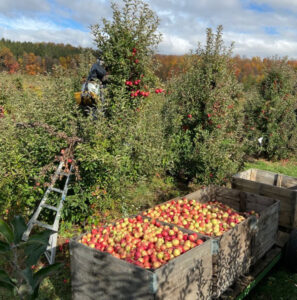
Their latest research, published in the Labor Studies Journal, documents a range of dehumanizing, stressful, unsafe and unhealthy workplace and living conditions. In their qualitative research effort, the researchers specifically explore the effects of precarious employment and labor exploitation on how they affect the health of farmworkers.
“There are multisystem failures in the protection of farmworkers in Michigan,” said Iglesias-Rios, a research investigator at the U-M School of Public Health. “We identified dimensions of precarious employment and labor exploitation that involve lacking access to fundamental labor and social rights,including dehumanization, discriminatory occupational practices and insufficient access to health careand social benefits.”
The study comes as Michiganders reap the benefits of annual fall harvests made possible by thousands of farmworkers whose work each year and in every season is critical to the states’ agricultural industry, which contributes nearly $105 billion annually to the economy, according to the Michigan Department of Agriculture and Rural Development.
The researchers’ goal is to shine a light on changes that could right commonplace abuses against a group of workers who are denied workplace protections afforded most U.S. employees.
Other conditions and situations reported by farmworkers in the research include hostile and abusivework environments that include workers being denied basic rights such as drinking water or using therestroom, threats of being reported to Immigration Customs and Enforcement, and disregard for the health and safety of workers overall.
The 35 farmworkers in four Michigan counties interviewed for the study work with a variety of crops and food production: strawberries, blueberries, apples and asparagus, among other fruits and vegetables. The researchers collaborated with the Office of Migrant Affairs, which is part of the Michigan Department of Health and Human Services, the Michigan Immigrants Rights Center and Farmworker Legal Services, organizations which have a long history of working with the farmworker community.
Michigan is second to California when it comes to diversity of commodities grown and produced.
“I think when people think of farmworkers being treated in these ways, they think it is a California ora Florida problem, but this is very much a Michigan problem also,” Iglesias-Rios said. “I think people don’t make the connection between the amount of commodities produced in Michigan, the people who do the work, and the labor and living conditions.”
It’s important, she says, for consumers to know where and how food is produced.
“A system where consumers can learn of farms with labor violations or of workers’ complaints may convince more employers to change their labor practices and allow consumers to make informed decisions when purchasing products,” Iglesias-Rios said.
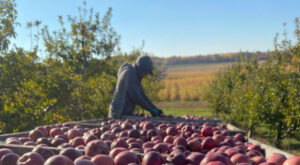
Currently, there is a need for stronger laws and better enforcement of existing laws, the researcherssay. For example, the U.S. Occupational Health and Safety Administration currently has 850 inspectors responsible for the health and safety of 130 million workers employed at more than 8 million worksites around the nation. This translates to about one compliance officer for every 70,000 workers.
Iglesias-Rios and Handal recommend transparency, accountability and higher fines for the industry and farms with labor violations, and accessible information for consumers. They say legal and regulatory definitions are limited and often don’t apply to conditions that should be deemed labor violations and labor exploitation, including using deportation and other threats to control workers.
“This focus is even more critical as legal proceedings in cases of labor violations orexploitative laborpractices, including labor trafficking, for farmworkers are lengthy, complex, emotionally draining for the worker and can even jeopardize other employment opportunities,” Iglesias-Rios said.
It is also important to continue institutional support and funding for academic-community research, as it is “key in identifying conditions such as precarious employment and labor exploitation, both public health issues that contribute to unfair, unjust and avoidable causes of disease and unsafe conditions for farmworkers,” said Handal, associate professor of epidemiology and global public health at the U-M School of Public Health.
“The struggles of farmworkers are not new but are in fact the legacy of slavery and theplantation system in America that has created oppressive social and economic systems that are driven by racism, discrimination, economic interests and politics creating unequal opportunities and benefits forworkers,” Handal said.
She says progress reports by the Michigan Civil Rights Commission show little improvement in the working and living conditions of farmworkers in the state. The U-M research corroborates those reports, which document an array of abuses, lack of enforcement and low fines, even in cases of serious harm or injuries.

Handal and Iglesias-Rios also endorse the formation of a community-based model that supports farmworkers organizing in unions to advocate for workers’ rights and the development of farmworker leaders. That, along with the support of state and community agencies and other organizations, couldbe an important step forward to improve industry standards and protections for farmworkers, they say.
“Our community-academic research approach provides a voice for an invisible and often ignored population of workers,” Handal said.
Ultimately, precarious employment and labor exploitation intersect with many other key social determinants of health, including housing access, food security, access to health care and structural racism, the researchers say.
“Policy reform is fundamentally needed,” Iglesias-Rios said. “It needs to address the shortcomings with current occupational health and safety standards for farmworkers and the long-lasting health effects across generations.”


Negar acceso para beber agua. Minutos contados cuando usan el baño. Amenazas o despidos si el trabajador no pizca la manzana de forma correcta. Exposiciones peligrosasa químicos y pesticidas. Trabajar hasta altas horas de la noche o en condiciones de calor extremo o lluvia. Falta de pagos al trabajador o salarios injustos sin posibilidad de hacer reclamos al empleador.
Estas son algunas de las experiencias que fueron compartidas por trabajadores agrícolas que laboran en campos de cultivo, invernaderos y empacadoras en Michigan, entrevistados en el Proyectode Trabajadores Agrícolas de Michigan. Un proyecto de investigación participativo y comunitario dirigido por las epidemiólogas sociales de la Universidad de Michigan, Lisbeth Iglesias-Rios y Alexis Handal.
El estudio reciente publicado en el Labor Studies Journal, documenta una gama de condiciones laborales y de vida deshumanizante, estresante, insegura y poco saludable. La investigación cualitativa de las investigadoras explora específicamente los efectos del empleo precario y la explotación laboral en la salud de los trabajadores agrícolas.
“Hay múltiples fallas sistémicas en la protección de los trabajadores agrícolas en Michigan”, dijo Iglesias-Rios, investigadora de la Escuela de Salud Pública de la U-M. “Identificamos distintas dimensiones de empleo precario y explotación laboral caracterizados por la falta de acceso a derechos laborales y sociales fundamentales, incluyendo la deshumanización, prácticas ocupacionales discriminatorias y un acceso insuficiente a la atención médica y a los beneficios sociales.”
El estudio se realizó mientras habitantes de Michigan disfrutan de los beneficios de las cosechas delotoño que son posibles gracias a miles de trabajadores agrícolas cuyo trabajo es fundamental para la industria agrícola del estado, que contribuye casi 105 mil millones de dólares anualmente a la economía, según el Departamento de Agricultura y Desarrollo Rural de Michigan.
El objetivo de las investigadoras es dar luz a los cambios que podrían mejorar los abusos comunes contra un grupo de trabajadores a quienes se les niegan las protecciones laborales otorgadas a la mayoría de los trabajadores en los Estados Unidos.
Otras condiciones y situaciones reportadas por los trabajadores agrícolas en la investigación incluyen un ambiente laboral hostil y abusivo incluyendo la negación de derechos laborales básicos, como acceso a agua para beber o usar el baño, amenazas de ser reportados a la Oficina de Aduanas y Protección Fronteriza y la faltade atención en general a la salud y la seguridad de los trabajadores.
La investigación entrevistó a 35 trabajadores agrícolas en cuatro condados de Michigan que laboraban en una variedad de cultivos y producción de alimentos: fresas, arándanos, manzanas y espárragos, entre otras frutas y verduras. Las investigadoras colaboraron con la Oficina de Asuntos de Migrantes que es parte del Departamento de Salud y Servicios Humanos de Michigan, el Centro de Derechos de los Inmigrantes de Michigan y Servicios Legales para Trabajadores Agrícolas, organizaciones con una larga historia de trabajo con la comunidad agrícola en Michigan.Michigan es el segundo estado en diversidad de productos cultivados y producidos, después de California.
“Creo que cuando las personas piensan en los trabajadores agrícolas siendo tratados de esta manera, piensan que es un problema de California o Florida, pero esto es también un problema de Michigan”, dijo Iglesias-Rios. “Creo que la gente no establece la conexión entre la cantidad de productos producidos en Michigan, las personas que realizan el trabajo, las condiciones laborales y las condiciones de vida de estos trabajadores”.
Es importante, dice ella, que los consumidores sepan de dónde y cómo se producenlos alimentos.
“Un sistema donde los consumidores puedan informarse acerca de las granjas con violaciones laborales o de las quejas de los trabajadores, puede convencer a más empleadores a cambiar sus prácticas laborales y permitir a los consumidores tomar decisiones informadas al comprar productos”,dijo Iglesias-Rios.
Actualmente, se requiere una legislación más sólida y una mejor aplicación de las leyes existentes, según las investigadoras. Por ejemplo, la Administración de Seguridad y Salud Ocupacional de EE. UU.(OSHA, por sus siglas en inglés), una de las dos agencias federales encargadas del cumplimiento, cuenta actualmente con 850 inspectores responsables de la salud y seguridad de 130 millones de trabajadores en más de 8 millones de lugares de trabajo en todo el país. Esto significa que hay aproximadamente un inspector de cumplimiento por cada 70,000 trabajadores.
Iglesias-Rios y Handal recomiendan transparencia, responsabilidad y multas más altas para la industria y lasgranjas con violaciones laborales, así como información accesible para los consumidores. Aseguran que las definiciones legales y regulatorias son limitadas y a menudo no se aplican a condiciones que deberían considerarse violaciones laborales o prácticas laborales explotadoras, incluyendo deportar a los trabajadores u otrasamenazas para controlar a los trabajadores.
“Este enfoque es aún más crítico en los procesos legales en casos de violaciones o prácticas laborales explotadoras, incluyendo la trata de trabajadores agrícolas. En estas instancias de trata laboral los procesos legales son largos, complejos, agotadores emocionalmente para el trabajador y pueden incluso poner en peligro otras oportunidades de empleo para el trabajador”, dijo Iglesias-Rios.
También es importante mantener el apoyo institucional y la financiación para la investigación académica-comunitaria, ya que es “clave para identificar condiciones como el empleo precario y la explotación laboral, ambos problemas de salud pública que contribuyen a causas injustas y evitables de enfermedades y condiciones inseguras para los trabajadores agrícolas”, dijo Handal, profesora asociada de epidemiología y salud pública global en la Escuela de Salud Pública de la U-M.
“La lucha de los trabajadores agrícolas no son nuevas, sino que son, de hecho, el legado de la esclavitud y el sistema de plantaciones en América que han creado sistemas sociales y económicos opresivos impulsados por el racismo, la discriminación, los intereses económicos y la política, generando oportunidades y beneficios desiguales para los trabajadores”, afirma Handal.
Handal dice que los informes de progreso de la Comisión de Derechos Civiles de Michigan muestran escasa mejoría en las condiciones laborales y de vida de los trabajadores agrícolas en el estado. Estainvestigación corrobora esos informes, que documentan una serie de abusos, falta de aplicación de laley y multas bajas, incluso en casos de graves daños o lesiones.
Iglesias-Rios y Handal también respaldan la formación de un modelo comunitario que apoye la organización sindical de los trabajadores agrícolas para abogar por los derechos de los trabajadores yel desarrollo de líderes entre los trabajadores agrícolas. Esto, junto con el apoyo de agencias estatales y comunitarias y otras organizaciones, podría ser un paso importante para mejorar los estándares de la industria y la protección de los trabajadores agrícolas, comentan las investigadoras.
Nuestra metodología comunitaria-académica de investigación proporciona voz a una población de trabajadores que permaneceninvisibles y son frecuentemente ignorados”, dijo Handal.
En última instancia, la precariedad y la explotación laborales se entrelazan con muchos otros determinantes sociales clave de la salud, incluido el acceso a la vivienda, la seguridad alimentaria, el acceso a la atención médica y el racismo estructural, según las investigadoras.
“Se necesita una reforma de políticas de manera fundamental”, afirmó Iglesias-Rios. “Es necesario abordar las deficiencias en las normas actuales de salud y seguridad ocupacional para los trabajadores agrícolas y los efectos duraderos en la salud a lo largo de las generaciones”.
Estudio: The Michigan Farmworker Project: A Community-Based Participatory Approach to Research on Precarious Employment and Labor Exploitation of Farmworkers