




56 °f
Detroit
EL CENTRAL Hispanic News
  • Home
  • About
    • Introducing the partnership with the Race and Justice reporting Initiative
    • Resources
  • Español
    ​​Bad Bunny Makes Grammy History With Album of the Year Win

    ​​Bad Bunny Makes Grammy History With Album of the Year Win

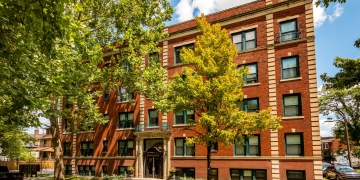
    The Bagley-West Vernor Historic District Is Now Listed in the National Register of Historic Places

    The Bagley-West Vernor Historic District Is Now Listed in the National Register of Historic Places

    MANA de Metro Detroit 2026 Scholarship Applications are Now Open

    MANA de Metro Detroit 2026 Scholarship Applications are Now Open

    “In the Cold, We Chose to Be Heard”

    “In the Cold, We Chose to Be Heard”

    Journalism Camp 2026

    Journalism Camp 2026

    The 2025-26 “No Kings” Movement: The Fourth American Revolution

    The 2025-26 “No Kings” Movement: The Fourth American Revolution

    Chile and its textil art

    Chile and its textil art

    The Brutal Cold Siege in the Midwest

    The Brutal Cold Siege in the Midwest

    Announcing National Commemoration of Mexican American Heritage Day 

    Announcing National Commemoration of Mexican American Heritage Day 

  • Community
    The “Real Fear” Driving People into the Streets

    The “Real Fear” Driving People into the Streets

    Super Bowl XL – 2006 – Detroit – Unforgettable after 20 Years

    Super Bowl XL – 2006 – Detroit – Unforgettable after 20 Years

    The Bagley-West Vernor Historic District Is Now Listed in the National Register of Historic Places

    The Bagley-West Vernor Historic District Is Now Listed in the National Register of Historic Places

    MANA de Metro Detroit 2026 Scholarship Applications are Now Open

    MANA de Metro Detroit 2026 Scholarship Applications are Now Open

    “In the Cold, We Chose to Be Heard”

    “In the Cold, We Chose to Be Heard”

    Journalism Camp 2026

    Journalism Camp 2026

    The Brutal Cold Siege in the Midwest

    The Brutal Cold Siege in the Midwest

    Announcing National Commemoration of Mexican American Heritage Day 

    Announcing National Commemoration of Mexican American Heritage Day 

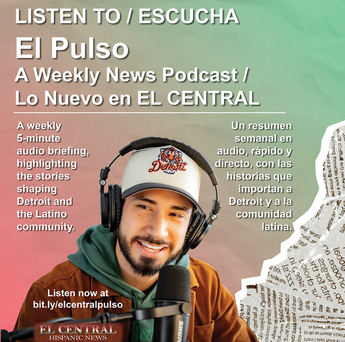
    EL CENTRAL Launches Weekly News Podcast “El Pulso”

  • Featured
    The “Real Fear” Driving People into the Streets

    The “Real Fear” Driving People into the Streets

    Super Bowl XL – 2006 – Detroit – Unforgettable after 20 Years

    Super Bowl XL – 2006 – Detroit – Unforgettable after 20 Years

    ​​Bad Bunny Makes Grammy History With Album of the Year Win

    ​​Bad Bunny Makes Grammy History With Album of the Year Win

    The Brutal Cold Siege in the Midwest

    The Brutal Cold Siege in the Midwest

    Announcing National Commemoration of Mexican American Heritage Day 

    Announcing National Commemoration of Mexican American Heritage Day 

    Local Leaders Unite in Welcoming Miguel Rodriguez as New DHDC Executive Director

    Local Leaders Unite in Welcoming Miguel Rodriguez as New DHDC Executive Director

    Fighting for the Right to Live in Peace

    Fighting for the Right to Live in Peace

    Detroit Auto Manufacturers Win Top Awards at 2026 Detroit Auto Show

    Detroit Auto Manufacturers Win Top Awards at 2026 Detroit Auto Show

    The Sun Shined Brightly on this Year’s Clark Park Winter Carnival!

    The Sun Shined Brightly on this Year’s Clark Park Winter Carnival!

  • Opinion
  • Culture & Arts
    • All
    • World Cultures
    Chile and its textil art

    Chile and its textil art

    Día de la Candelaria

    Día de la Candelaria

    Dunes of Jericoara and Nélida Piñón

    Dunes of Jericoara and Nélida Piñón

    Explore Michigan connections, Latino history of black velvet paintings at new museum exhibit

    Explore Michigan connections, Latino history of black velvet paintings at new museum exhibit

    The Grief of Remembering the Absent One, the Deported One

    The Grief of Remembering the Absent One, the Deported One

    Teaching Artist Dr. Saraí Aboites accompanying students during ensemble rehearsal at the Cesar Chavez Academy Upper Elementary Classroom on December 5, 2025

    Southwest Detroit Violin Ensemble to Perform on National Stage

    Argentina

    Argentina

    Antigua and Barbuda

    Antigua and Barbuda

    From Guns to Paintbrushes

    From Guns to Paintbrushes

    • World Cultures
  • Latest Issue
  • Past Issues
    • Throwbacks
  • Events
  • Contact
  • Advertise
  • en English
    • en English
    • es Spanish
No Result
View All Result
EL CENTRAL Hispanic News
  • Home
  • About
    • Introducing the partnership with the Race and Justice reporting Initiative
    • Resources
  • Español
    ​​Bad Bunny Makes Grammy History With Album of the Year Win

    ​​Bad Bunny Makes Grammy History With Album of the Year Win

    The Bagley-West Vernor Historic District Is Now Listed in the National Register of Historic Places

    The Bagley-West Vernor Historic District Is Now Listed in the National Register of Historic Places

    MANA de Metro Detroit 2026 Scholarship Applications are Now Open

    MANA de Metro Detroit 2026 Scholarship Applications are Now Open

    “In the Cold, We Chose to Be Heard”

    “In the Cold, We Chose to Be Heard”

    Journalism Camp 2026

    Journalism Camp 2026

    The 2025-26 “No Kings” Movement: The Fourth American Revolution

    The 2025-26 “No Kings” Movement: The Fourth American Revolution

    Chile and its textil art

    Chile and its textil art

    The Brutal Cold Siege in the Midwest

    The Brutal Cold Siege in the Midwest

    Announcing National Commemoration of Mexican American Heritage Day 

    Announcing National Commemoration of Mexican American Heritage Day 

  • Community
    The “Real Fear” Driving People into the Streets

    The “Real Fear” Driving People into the Streets

    Super Bowl XL – 2006 – Detroit – Unforgettable after 20 Years

    Super Bowl XL – 2006 – Detroit – Unforgettable after 20 Years

    The Bagley-West Vernor Historic District Is Now Listed in the National Register of Historic Places

    The Bagley-West Vernor Historic District Is Now Listed in the National Register of Historic Places

    MANA de Metro Detroit 2026 Scholarship Applications are Now Open

    MANA de Metro Detroit 2026 Scholarship Applications are Now Open

    “In the Cold, We Chose to Be Heard”

    “In the Cold, We Chose to Be Heard”

    Journalism Camp 2026

    Journalism Camp 2026

    The Brutal Cold Siege in the Midwest

    The Brutal Cold Siege in the Midwest

    Announcing National Commemoration of Mexican American Heritage Day 

    Announcing National Commemoration of Mexican American Heritage Day 

    EL CENTRAL Launches Weekly News Podcast “El Pulso”

  • Featured
    The “Real Fear” Driving People into the Streets

    The “Real Fear” Driving People into the Streets

    Super Bowl XL – 2006 – Detroit – Unforgettable after 20 Years

    Super Bowl XL – 2006 – Detroit – Unforgettable after 20 Years

    ​​Bad Bunny Makes Grammy History With Album of the Year Win

    ​​Bad Bunny Makes Grammy History With Album of the Year Win

    The Brutal Cold Siege in the Midwest

    The Brutal Cold Siege in the Midwest

    Announcing National Commemoration of Mexican American Heritage Day 

    Announcing National Commemoration of Mexican American Heritage Day 

    Local Leaders Unite in Welcoming Miguel Rodriguez as New DHDC Executive Director

    Local Leaders Unite in Welcoming Miguel Rodriguez as New DHDC Executive Director

    Fighting for the Right to Live in Peace

    Fighting for the Right to Live in Peace

    Detroit Auto Manufacturers Win Top Awards at 2026 Detroit Auto Show

    Detroit Auto Manufacturers Win Top Awards at 2026 Detroit Auto Show

    The Sun Shined Brightly on this Year’s Clark Park Winter Carnival!

    The Sun Shined Brightly on this Year’s Clark Park Winter Carnival!

  • Opinion
  • Culture & Arts
    • All
    • World Cultures
    Chile and its textil art

    Chile and its textil art

    Día de la Candelaria

    Día de la Candelaria

    Dunes of Jericoara and Nélida Piñón

    Dunes of Jericoara and Nélida Piñón

    Explore Michigan connections, Latino history of black velvet paintings at new museum exhibit

    Explore Michigan connections, Latino history of black velvet paintings at new museum exhibit

    The Grief of Remembering the Absent One, the Deported One

    The Grief of Remembering the Absent One, the Deported One

    Teaching Artist Dr. Saraí Aboites accompanying students during ensemble rehearsal at the Cesar Chavez Academy Upper Elementary Classroom on December 5, 2025

    Southwest Detroit Violin Ensemble to Perform on National Stage

    Argentina

    Argentina

    Antigua and Barbuda

    Antigua and Barbuda

    From Guns to Paintbrushes

    From Guns to Paintbrushes

    • World Cultures
  • Latest Issue
  • Past Issues
    • Throwbacks
  • Events
  • Contact
  • Advertise
  • en English
    • en English
    • es Spanish
No Result
View All Result
EL CENTRAL Hispanic News
No Result
View All Result

Rarámuris / Tarahumaras 

Mariana Ayón RV by Mariana Ayón RV
July 10, 2025
in Español, World Cultures
Reading Time: 7 mins read
Home Español
ShareShareTweetEmail to a friend
Español Abajo

The Rarámuri are an indigenous people, also known as Tarahumara, who live in northern Mexico, in the Sierra de Chihuahua region, at over 3,000 meters above sea level in the Copper Canyon. The name Rarámuri means “light-footed.” This name is due to their habit of running in the mountains to carry out their activities.

They inhabit the part of the Sierra Madre Occidental that crosses the states of Chihuahua, Durango, and Sonora. They share this territory with the Tepehuanes, Pimas, Guarojíos, and Mexican mestizos. Of the region’s indigenous groups, they are the most numerous, with a population of 50,000, occupying most of the mountain range, which is why this region is called the Sierra Tarahumara.
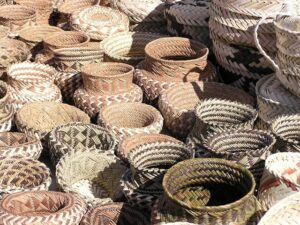
The Rarámuri language is part of the Uto-Aztecan language family, a language family that extends from Utah in the United States to Central America. Along with Concho and Guarojío, it is considered part of the Cahita-Opata-Tarahumara subgroup, related to the Pima-Tepehuan subgroup and the Cora-Huichol subgroup.

There are dialectal differences in the Tarahumara language that, while not profound, allow for a certain degree of intelligibility among all Tarahumara speakers.

From the perspective of this group, health reflects the quality of an individual’s relationships with other beings in the universe, as protection or harm from them depends on the interaction between humans and supernatural beings.

The Tarahumara believe that a human being is composed of a body and one or more souls. The body is made up of sapá (fleshy parts or muscles), ochí (bones), and lá (blood), animated by one or more souls.

The most serious illnesses are those that can cause the permanent loss of souls and are usually caused by a sorcerer or by the ingestion of the jícuri or bakánowi plants.
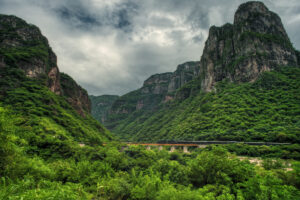
The Tarahumara live in ranches; their dwelling consists of a house, a barn, and a wooden corral. The houses are built with wood, adobe, quarry, or stone, depending on the material available in the region. The most common dwellings are made of pine logs arranged horizontally, one on top of the other, with a canoe-like or gabled roof; the logs are joined at the corners, and the cracks are filled with a mud mixture.

The origin of the Rarámuri and the Chabochis

According to the Rarámuri creation myth, Onorúame, the sun god, wanted to test the world he had created. He took some ears of corn, husked them, and formed the figure of a man from the kernels, blowing on it three times to give it life. Then, he formed the figure of a woman and blew on it four times, one more time to give her the strength she needed to give birth to her children. This is how the Rarámuri, the children of the corn, were created.

However, in the realm of darkness, another creation was taking place. The Devil, envious of the creation of the Tarahumara, wanted to create his own race of men. Since there was no corn in his kingdom, he took a handful of ashes and blew on it once to create the Chabochi, which is what the Rarámuri call the white man.

Tarahumara Soup

Ingredients
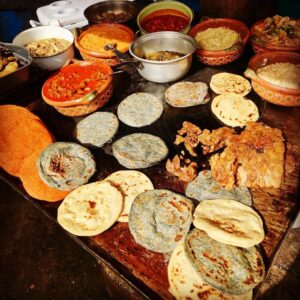
  • 2 tablespoons oil
  • 1 onion, chopped
  • 2 cloves garlic, minced
  • 1 cup tender corn kernels
  • 1 1/2 liters chicken broth
  • 1 sprig of epazote
  • 1 cup chopped green beans
  • 6 zucchini, chopped
  • 500 grams squash blossoms, trimmed and chopped
  • 4 sprigs chard, stemmed and chopped
  • 4 sprigs spinach, leaves chopped
  • 3 poblano peppers, roasted, peeled, deseeded, and diced

Preparation

  1. Heat the oil in a pot over medium heat. Add the onion and garlic and sauté until translucent. Add the broth and let it boil for 5 minutes.
  2. Add the green beans, zucchini, squash blossoms, chard, spinach, and chiles. Continue cooking over medium heat until all the vegetables are cooked.

Rarámuris / Tarahumaras

Los Rarámuris son un pueblo indígena, también conocidos como Tarahumaras, viven en el norte de México, en la región de la sierra de Chihuahua a más de 3,000 metros sobre el nivel del mar en las Barrancas del cobre. El nombre rarámuri significa “de los pies ligeros”. Esta denominación se debe a la costumbre que tienen de correr en las montañas para llevar a cabo sus actividades. 

Habitan la parte de la Sierra Madre Occidental que atraviesa el estado de Chihuahua, Durango y Sonora. Comparten este territorio con los Tepehuanes, Pimas, Guarojíos y mexicanos mestizos. De los grupos originarios de la región es el más numeroso, con una población de 50,000 habitantes, ocupando así la mayor parte del territorio de la sierra, por lo que a esta región se le denomina sierra Tarahumara.

La lengua rarámuri forma parte de la familia yuto-azteca, familia de lenguas que se extiende desde Utah en los Estados Unidos hasta Centroamérica y está considerada junto con el Concho y el Guarojío dentro del subgrupo cahíta-ópata-tarahumara, emparentado con el subgrupo pima-tepehuano y el cora-huichol.

Existen diferencias dialectales en la lengua tarahumara que, sin llegar a ser muy profundas, provocan una cierta inteligibilidad entre todos los hablantes de tarahumara.

Desde la perspectiva de este grupo, la salud refleja la calidad de las relaciones del individuo con otros seres del universo, pues el que sean protegidos o dañados por ellos, depende de la interacción del hombre con los seres sobrenaturales.

Los tarahumaras consideran que el ser humano se compone de un cuerpo y de una o más almas. El cuerpo está constituido por sapá (partes carnosas o músculos), ochí (huesos) y lá (sangre), animados por una o más almas.

Las enfermedades más serias son aquellas que pueden causar la pérdida definitiva de las almas y que suelen ser provocadas por algún hechicero o por la ingestión de las plantas jícuri o bakánowi. 

Los tarahumaras habitan en ranchos; su vivienda consiste en una casa-habitación, un granero y un corral de madera. Las casas se construyen con madera, adobe, cantera o piedra, dependiendo del material que haya en la región. Lo más común es encontrar viviendas hechas de troncos de pino dispuestos de manera horizontal, uno sobre otro, con techo de canoa o de vigas de dos aguas; los troncos son ensamblados en las esquinas y las rendijas son tapadas con una mezcla de lodo.

De cómo Dios creó a los Rarámuris y a los Chabochis

De acuerdo con el mito de creación de los Rarámuri, Onorúame, dios del sol, quiso poner a prueba el mundo que había creado. Tomó algunas mazorcas de maíz, las desgranó y formó con los granos una figura de hombre, a la cual sopló tres veces para darle vida. Después, formó una figura de mujer y sopló cuatro veces, un soplo más para darle la fuerza que necesitaba para dar a luz a sus hijos. Así es como fueron creados los Rarámuri, los hijos del maíz.

Sin embargo, en el reino de la oscuridad, otra creación se estaba gestando. El Diablo, al sentir envidia por la creación de los tarahumaras, quiso hacer a su propia raza de hombres. Como no había maíz en su reino, tomó un puñado de ceniza y sopló una sola vez para crear a los Chabochis, que es como los Rarámuri llaman al hombre blanco.

Sopa Tarahumara

Ingredientes

  • 2 cucharadas de aceite
  • 1 cebolla, picada
  • 2 dientes de ajo, picados
  • 1 taza de granos de elote tiernos
  • 1 1⁄2 litros de caldo de pollo
  • 1 rama de epazote
  • 1 taza de ejotes picados
  • 6 calabacitas, picadas
  • 500 gramos de flor de calabaza, limpia y picada
  • 4 ramas de acelgas, sin tallos y picadas
  • 4 ramas de espinacas, sus hojas picadas
  • 3 chiles poblanos, asados, pelados, desvenados y cortados en cuadritos

Preparación

  1. Calienta el aceite en una olla a fuego medio. Agrega la cebolla y el ajo, y sofríe hasta que se vean transparentes. Añade el caldo y deja que hierva durante 5 minutos.
  2. Incorpora los ejotes, calabacitas, flor de calabaza, acelgas, espinacas y chiles. Sigue cocinando a fuego medio hasta que todas las verduras se hayan cocido.
Tags: Mexico
Previous Post

Linzie and Jesse Venegas of Ideal Group Recognized as Entrepreneurs Of The Year 2025

Next Post

That Sinking Feeling Hits DCFC

Mariana Ayón RV

Mariana Ayón RV

Mexican poet and writer. Interested in hispanic-latinamerican cultures. Settled in Mexico, she is currently studying a Master's Degree in History.

Related Posts

​​Bad Bunny Makes Grammy History With Album of the Year Win
Español

​​Bad Bunny Makes Grammy History With Album of the Year Win

by Juanita Zuniga
February 5, 2026
0

Bad Bunny makes GRAMMY history with first all-Spanish Album of the Year win, leading a landmark night for Latino artists...

Read moreDetails
The Bagley-West Vernor Historic District Is Now Listed in the National Register of Historic Places
Community

The Bagley-West Vernor Historic District Is Now Listed in the National Register of Historic Places

by EL CENTRAL
February 5, 2026
0

Detroit’s Bagley-West Vernor Historic District in Mexicantown earns National Register status, celebrating Latinx heritage, commerce, and community history.

Read moreDetails
MANA de Metro Detroit 2026 Scholarship Applications are Now Open
Community

MANA de Metro Detroit 2026 Scholarship Applications are Now Open

by EL CENTRAL
February 5, 2026
0

MANA de Metro Detroit opens 2026 scholarships for Latina students, offering $2,000 awards to support college, trade, and leadership opportunities.

Read moreDetails
“In the Cold, We Chose to Be Heard”
Community

“In the Cold, We Chose to Be Heard”

by EL CENTRAL
February 5, 2026
0

Detroit Cass Tech student walkout protests ICE enforcement, highlighting immigrant student fears, school safety, and youth activism in Michigan schools.

Read moreDetails
Journalism Camp 2026
Community

Journalism Camp 2026

by EL CENTRAL
February 5, 2026
0

Detroit Writing Room Journalism Camp 2026 trains high school students in reporting, media skills, and public interest journalism at Wayne...

Read moreDetails
The 2025-26 “No Kings” Movement: The Fourth American Revolution
Español

The 2025-26 “No Kings” Movement: The Fourth American Revolution

by Jose Cuello
February 5, 2026
0

Español Abajo Today's "No Kings" Movement is the fourth political revolution in the troubled history of democracy in the United...

Read moreDetails
Next Post
That Sinking Feeling Hits DCFC

That Sinking Feeling Hits DCFC

ADVERTISEMENT
  • Trending
  • Latest
The “Real Fear” Driving People into the Streets

The “Real Fear” Driving People into the Streets

February 5, 2026
“In the Cold, We Chose to Be Heard”

“In the Cold, We Chose to Be Heard”

February 5, 2026
Announcing National Commemoration of Mexican American Heritage Day 

Announcing National Commemoration of Mexican American Heritage Day 

February 2, 2026
​​Bad Bunny Makes Grammy History With Album of the Year Win

​​Bad Bunny Makes Grammy History With Album of the Year Win

February 5, 2026
The “Real Fear” Driving People into the Streets

The “Real Fear” Driving People into the Streets

February 5, 2026
Super Bowl XL – 2006 – Detroit – Unforgettable after 20 Years

Super Bowl XL – 2006 – Detroit – Unforgettable after 20 Years

February 5, 2026
​​Bad Bunny Makes Grammy History With Album of the Year Win

​​Bad Bunny Makes Grammy History With Album of the Year Win

February 5, 2026
The Bagley-West Vernor Historic District Is Now Listed in the National Register of Historic Places

The Bagley-West Vernor Historic District Is Now Listed in the National Register of Historic Places

February 5, 2026

Recent News

Super Bowl XL – 2006 – Detroit – Unforgettable after 20 Years

Super Bowl XL – 2006 – Detroit – Unforgettable after 20 Years

February 5, 2026
Early Signs of Spring

Early Signs of Spring

February 5, 2026
The 2025-26 “No Kings” Movement: The Fourth American Revolution

The 2025-26 “No Kings” Movement: The Fourth American Revolution

February 5, 2026
Chile and its textil art

Chile and its textil art

February 5, 2026
EL CENTRAL Hispanic News

Michigans #1. Oldest. Largest & Only
Bilingual Hispanic News for 33 Years.

Follow Us

Browse by Category

  • Business
  • Classifieds
  • Community
  • Culture & Arts
  • Education
  • Entrepreneurs
  • Español
  • Events
  • Featured
  • Finance
  • Food
  • Latest News
  • Local News
  • Local Small Business
  • Music
  • National News
  • Opinion
  • Others
  • People
  • Politics
  • Resources
  • Restaurants
  • Sports
  • Throwbacks
  • World
  • World Cultures

Recent News

The “Real Fear” Driving People into the Streets

The “Real Fear” Driving People into the Streets

February 5, 2026
Super Bowl XL – 2006 – Detroit – Unforgettable after 20 Years

Super Bowl XL – 2006 – Detroit – Unforgettable after 20 Years

February 5, 2026
  • Latest Issue
  • About
  • Newsletter
  • Advertise
  • Contact
  • Menu Item
  • Created with EyeBreatheDesign

© 2025 EL CENTRAL HISPANIC NEWS

No Result
View All Result
  • Home
  • Sections
    • Featured
    • Local News
    • Community
    • Culture & Arts
    • Español
    • Music
    • Sports
  • Events
  • Latest Issue
  • Past Issues
  • Contact
  • Advertise

© 2025 EL CENTRAL HISPANIC NEWS