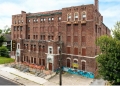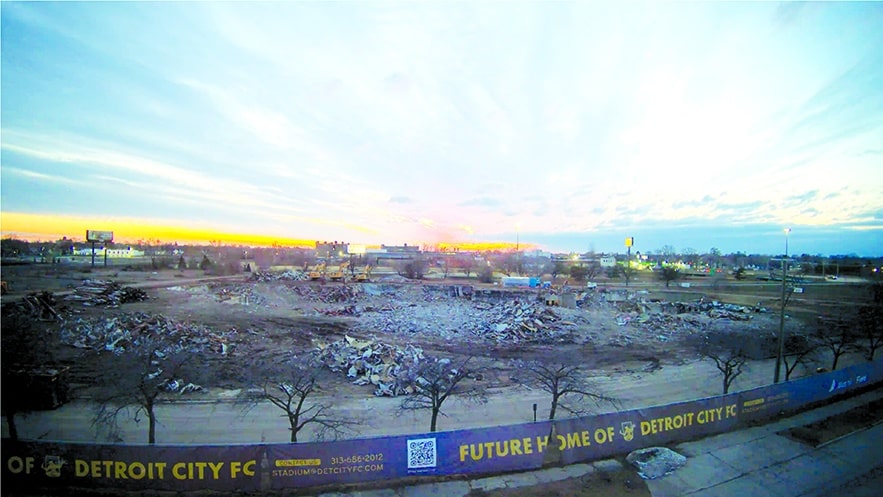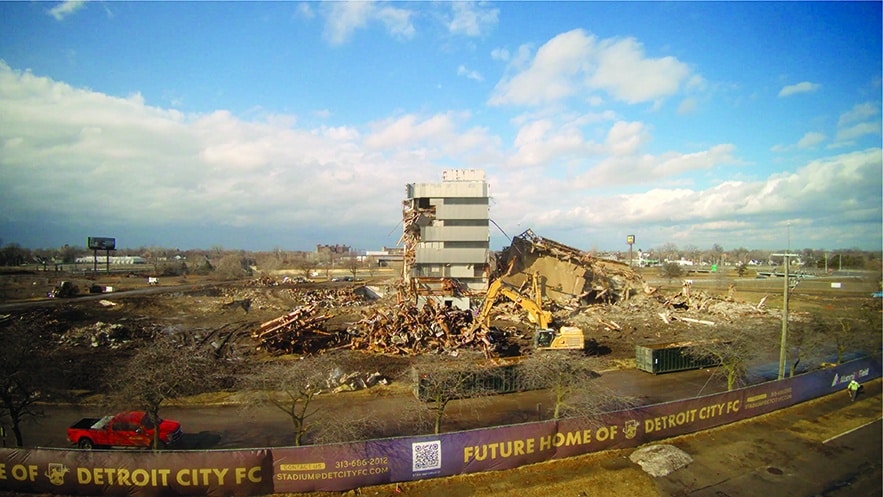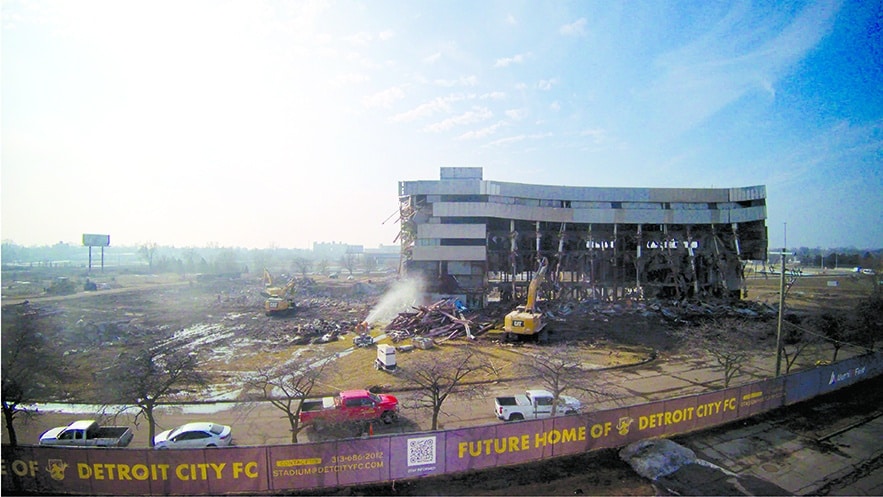














As the old Southwest Detroit Hospital comes down and the debris is cleared, we mark a milestone years in the making. A visible sign that change is truly underway on this site. DCFC does so with deep respect for the generations of patients, families and staff whose lives were shaped within those walls, and with gratitude for the role the hospital played in our community’s life.
Now that the land is being prepared for construction, it is only a matter of time before steel starts rising and a new chapter begins on this ground. When that happens, you can expect more frequent updates, behind-the-scenes looks, job opportunities, updates and progress stories as the project moves from site work to a new forever home for soccer.

As dramatic as the demolition timelapse looks, some of the most important work has actually happened after the walls came down. Sorting, hauling and reclaiming the thousands of yards of material that once made up Southwest Detroit Hospital. The debris you see disappearing isn’t just being pushed aside; it’s being carefully removed from the site and, wherever possible, given a second life through recycling and reuse.
At first glance, 2,500 yards of construction debris sounds like a simple cleanup number, but picture it instead as enough material to fill well over 250 full-size backyard pools or to lay tens of thousands of Detroit-style pizza boxes end to end from the Spirit of Detroit all the way to the Redford Theatre. Every bit of that waste has been managed so the site can start fresh, turning a once-dormant block into ground that’s ready for what comes next.
From that debris, about 2,000 yards of hardfill, including masonry, asphalt, tile, sand and dirt, has been recycled, the equivalent of repurposing the weight of hundreds of fully loaded DDOT buses, rather than sending it to a landfill. Add in 1,500 tons of recycled steel scrap, enough metal to create well over a hundred sculptures the size of the massive red “Orion” outside the DIA, plus 500 yards of recycled concrete, enough material to match the volume of hundreds of thousands of bottles of Faygo, and you start to see how this project is quietly building the future while reusing the past.