









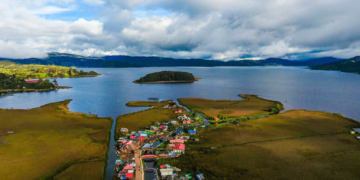
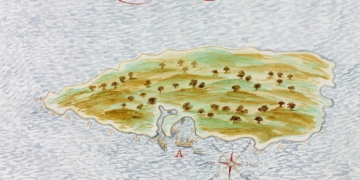


Haiti is located in the Caribbean Sea on the largest island of the Greater Antilles, sharing the territory of the island of Hispaniola with the Dominican Republic. Its official language is Haitian French Creole. One of its most distinctive musical expressions is Kompa or Konpa, a rhythm that it’s danced in pairs, slowly, with figure-eight hip movements. It is a sensual and careful dance that somewhat resembles the movements of bachata, but even more slowly, alternating three steps to one side and three steps forward, with continuous circular hip movements.
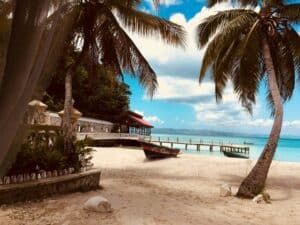
Tourism in Haiti tends to focus on its beaches, while its mountains, waterfalls, and underground caves make Haiti an exceptional country. However, following earthquakes and hurricanes, tourism activity has declined significantly.
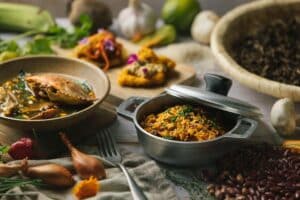
Haitian cuisine is a fusion of continents and cultures, drawing from African, Arab, Spanish, native Caribbean, and Asian traditions, making the most of both influence and exchange. Visitors can enjoy fried plantains, dishes made with cassava, rice and beans, seafood, okra, and African foutou or fufu, among others.
The island was populated thousands of years before the arrival of Europeans, called Ayti or Ayiti in the Arawak language, meaning “land of mountains,” due to the island’s mountainous landscape. It was also called Quisqueya, “mother of all lands,” perhaps because of its great natural diversity. The Arawaks inhabited the island before the Taínos and the Ciboneyes. Later, with the arrival of Europeans, the territory was given the name Hispaniola, a name that the island still retains today.
Haiti was the first nation in the world to abolish slavery and prohibit enslavement in 1794, demonstrating an attitude that was remarkably progressive for its time, as other parts of the world still used this system to oppress people and concentrate wealth among colonizers. Despite this initial achievement, because Haiti had not yet secured its independence, France pressured for the restoration of the slave system in 1798, and friction over independence and slavery continued until 1804.
Its revolution for independence from the French colony began at the end of the eighteenth century, in 1791. It was driven by maroon rebel movements of enslaved Africans. The war lasted twelve years, culminating in the expulsion of the French from the western part of the island at the end of 1803, although the achievement has been celebrated since January 1, 1804.
Once independence was achieved, the first president and ruler of the independent nation issued an order against the French for their crimes of enslavement, persecution, and colonization.
One of the reasons that facilitated Haiti’s anti-colonial movements was the strong economy it enjoyed during the eighteenth century, as it was recognized as a major sugar-producing power, supplying a product that was widely consumed by the newly independent Thirteen American Colonies. However, after independence, the country faced major difficulties and economic blockades imposed by European powers.
Haití se ubica en el océano Caribe en la más grande de las Antillas, compartiendo el territorio de la isla La Española con República Dominicana. Su lengua oficial es el criollo francés haitiano, una de sus expresiones musicales identitarias es el Kompa o Konpa, un ritmo que se baila en pareja lentamente con movimientos de cadera de ocho. Es un baile sensual y cuidadoso que semeja un tanto los movimientos de la bachata, pero aún más lento, e intercambiando tres hacia un lado y tres hacia adelante, con movimientos circulares.
El turismo en Haití tienda a concentrarse en sus playas, sus montañas con cascadas y grutas subterráneas hacen de Haití un país excepcional. Sin embargo, tras terremotos y huracanes la actividad ha bajado significativamente.
La gastronomía Haitiana es una fusión entre continentes y culturas, desde la tradición africana, la tradición árabe, la española, la nativa del caribe y la asiática, sacando tanto provecho como intercambio. Se pueden probar los plátanos fritos, platillos con yuca, arroz y frijoles, mariscos, la okra, y el Foutou o fufú africano, entre otros.
Antes de la llegada de los europeos, la isla era llamada en lengua arawak Ayti o Ayiti, que significa “tierra de montañas”, dado el paisaje montañoso de la isla; aunque también le llamaban Quisqueya, “madre de todas las tierras”, quizá por la gran diversidad natural. Los arahuacos poblaban la isla antes de los taínos y los ciboneyes, posteriormente con la llegada de los europeos al territorio la bautizaron con el nombre de La Española, nombre que conserva el territorio hasta la fecha.
Haití es la primera nación del mundo en abolir esclavitud y prohibir la esclavización en 1794, lo que denotó su actitud profundamente avanzada para la época en que lo determinó, pues en otras partes del mundo aún se utilizaba este sistema para oprimir y concentrar la riqueza entre colonizadores. A pesar de este primer logro, como Haití aún no concretaba su independencia, Francia presionó para restituir el sistema de esclavitud en 1798, y de ahí se mantuvo la fricción hasta 1804 con respecto a la independencia y la esclavitud.
Su revolución independentista de la colonia francesa inició a finales del siglo XVIII, en 1791, fue impulsada por los movimientos rebeldes cimarrones de esclavizados africanos, la guerra duró trece años, alcanzando la expulsión de los franceses del occidente de la isla a finales de 1803, aunque se festeja desde el 1 de enero de 1804.
Una vez lograda la independencia el primer presidente y gobernante de la nación independiente levantó una orden contra los franceses por sus crímenes de esclavización, persecución y colonización.
Una de las razones que le facilitaron a Haití sus movimientos contracoloniales fue la fuerte economía de la que gozaba durante el siglo XVIII, pues era reconocida como una potencia productora de azúcar, grandemente consumida por las recién independizadas 13 colonias estadounidenses. Sin embargo, posterior a la independencia, el país enfrentaba grandes dificultades y bloqueos económicos por parte de las potencias europeas.