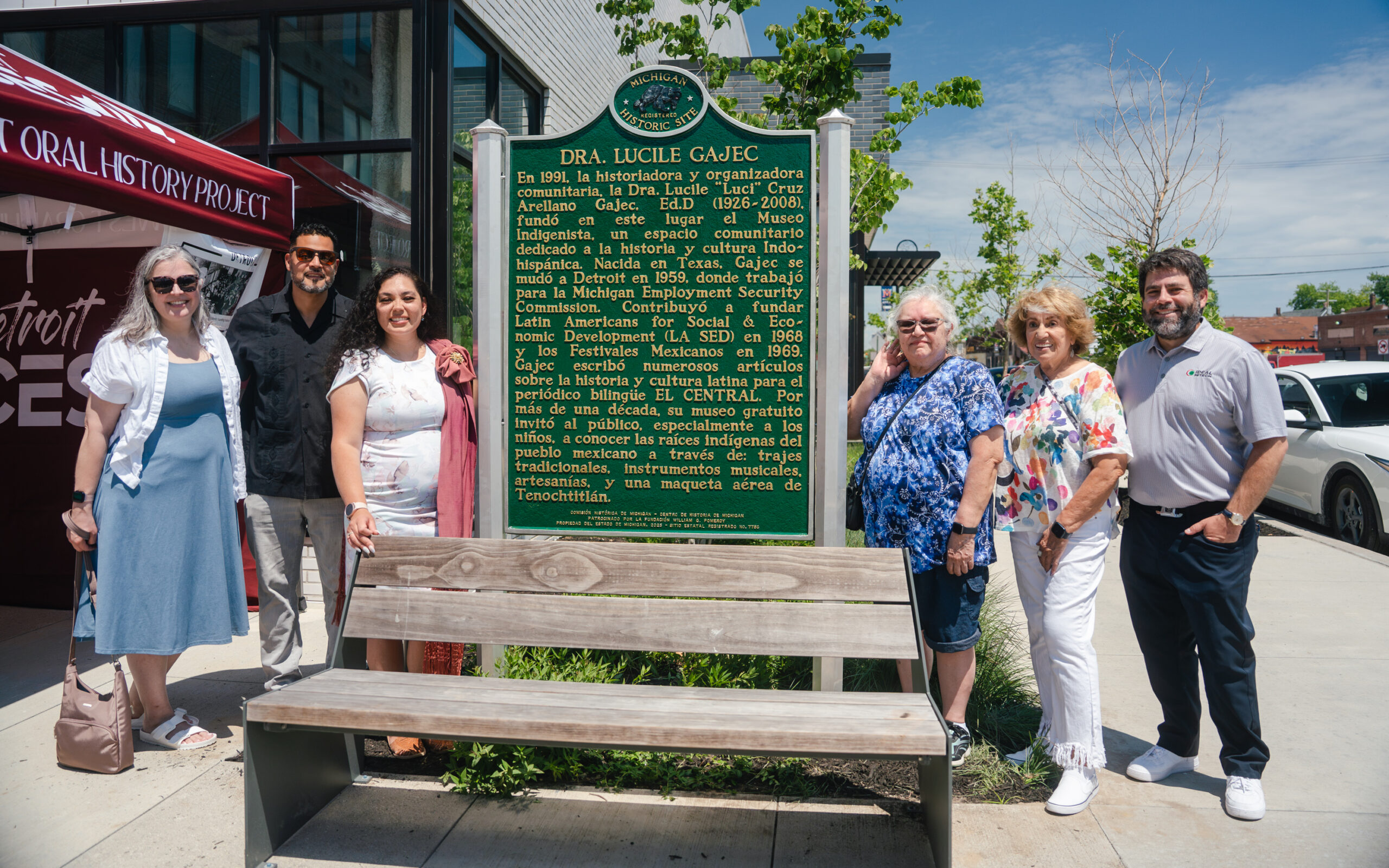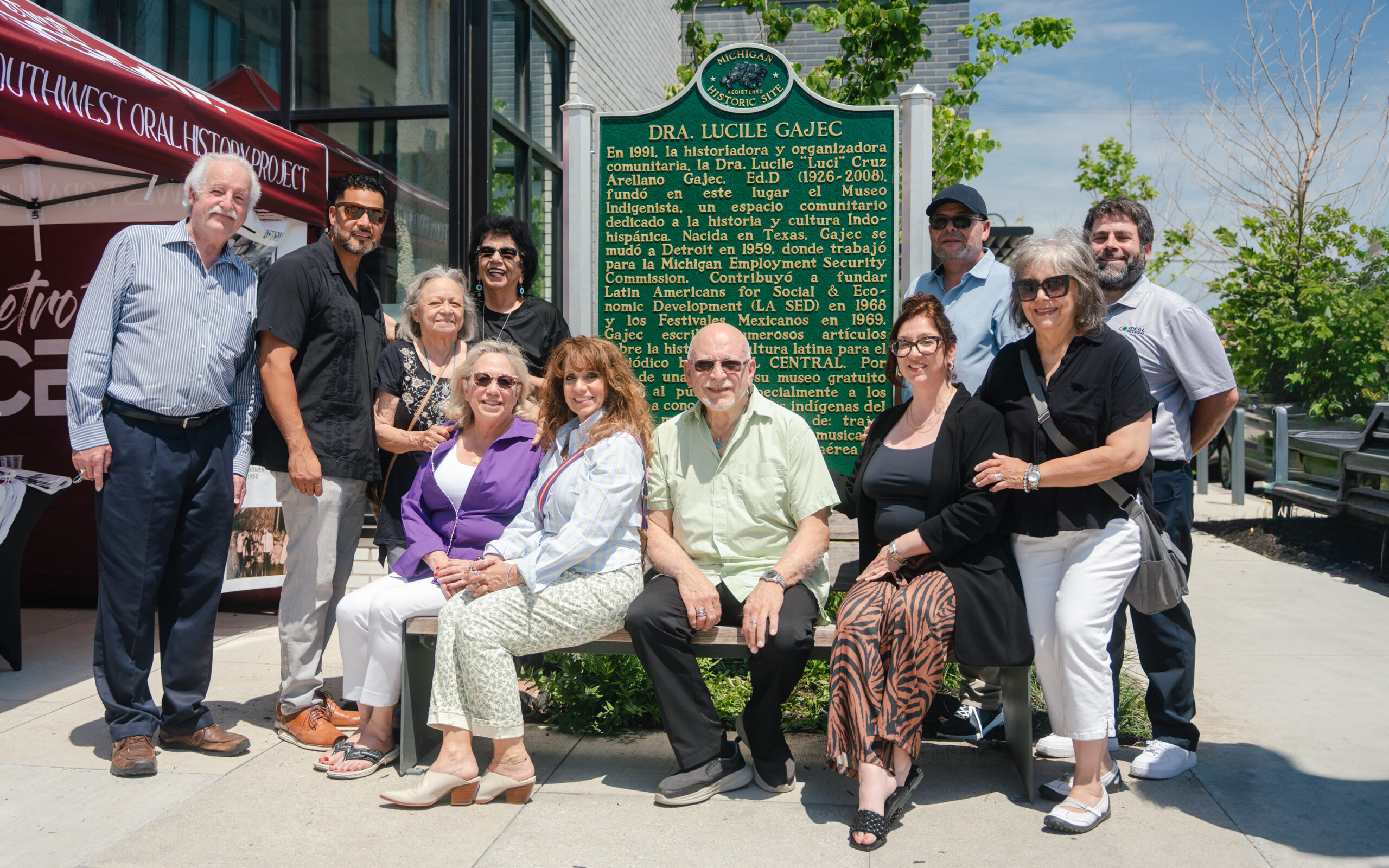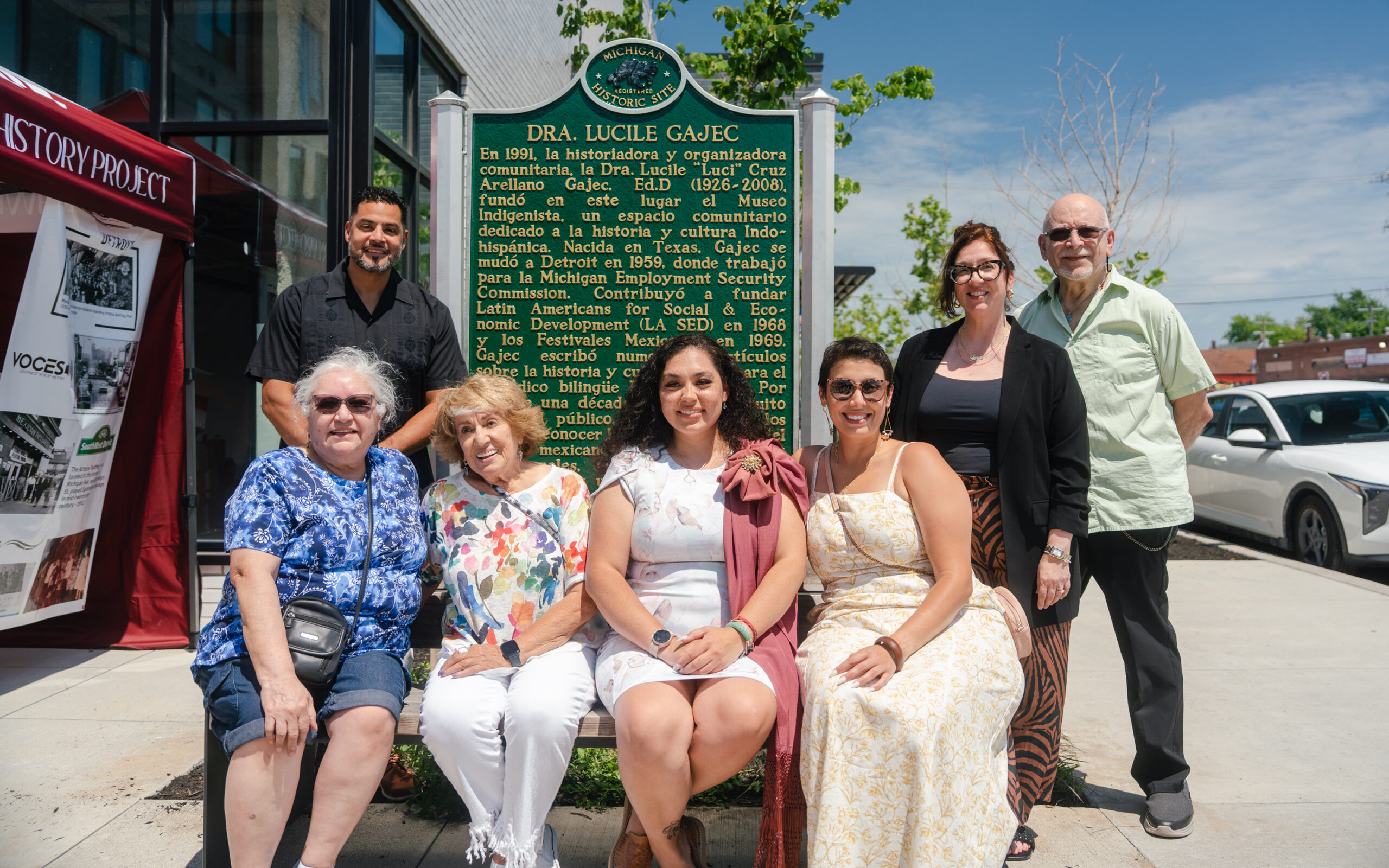















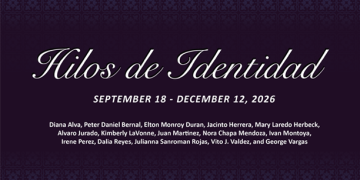




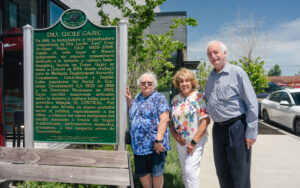
On a beautiful Sunday afternoon, June 28, more than sixty people gathered at La Joya Gardens to celebrate history– and “herstory”. The official unveiling of a State of Michigan Historical Marker honoring the life and legacy of Dr. Lucile “Luci” Cruz Gajec. The marker stood covered in a Mexican sarape, a vibrant, woven blanket that once belonged to Dr. Gajec herself. The sarape draped over the marker like a warm embrace wrapped her legacy around the marker before it was ever revealed to the crowd.
The celebration began at 1 p.m. with live music by the COMPÁS Ensemble Group, whose youthful energy and skill set a vibrant tone. As attendees enjoyed the students’ performance, they mingled and reconnected. Families, community organizers, historians, journalists, business owners, and teachers coming together as one. There was a palatable feeling of joy and pride in the air, a collective recognition that Dr. Gajec had touched nearly everyone present in some profound way.
The connection between the student performers and Dr. Gajec’s legacy was especially poignant. Dr. Gajec and her husband, Edward Gajec, once ran Academia De La Cruz, a music school where Mr. Gajec taught youth guitar, violin, and other instruments. Having students perform at the unveiling of her marker felt like a full circle moment.
“We are proud that COMPÁS is part of today’s celebration, because our youth, our music, our stories, and our cultural traditions are all part of the living legacy Dr. Gajec worked so hard to preserve,” said Ali.
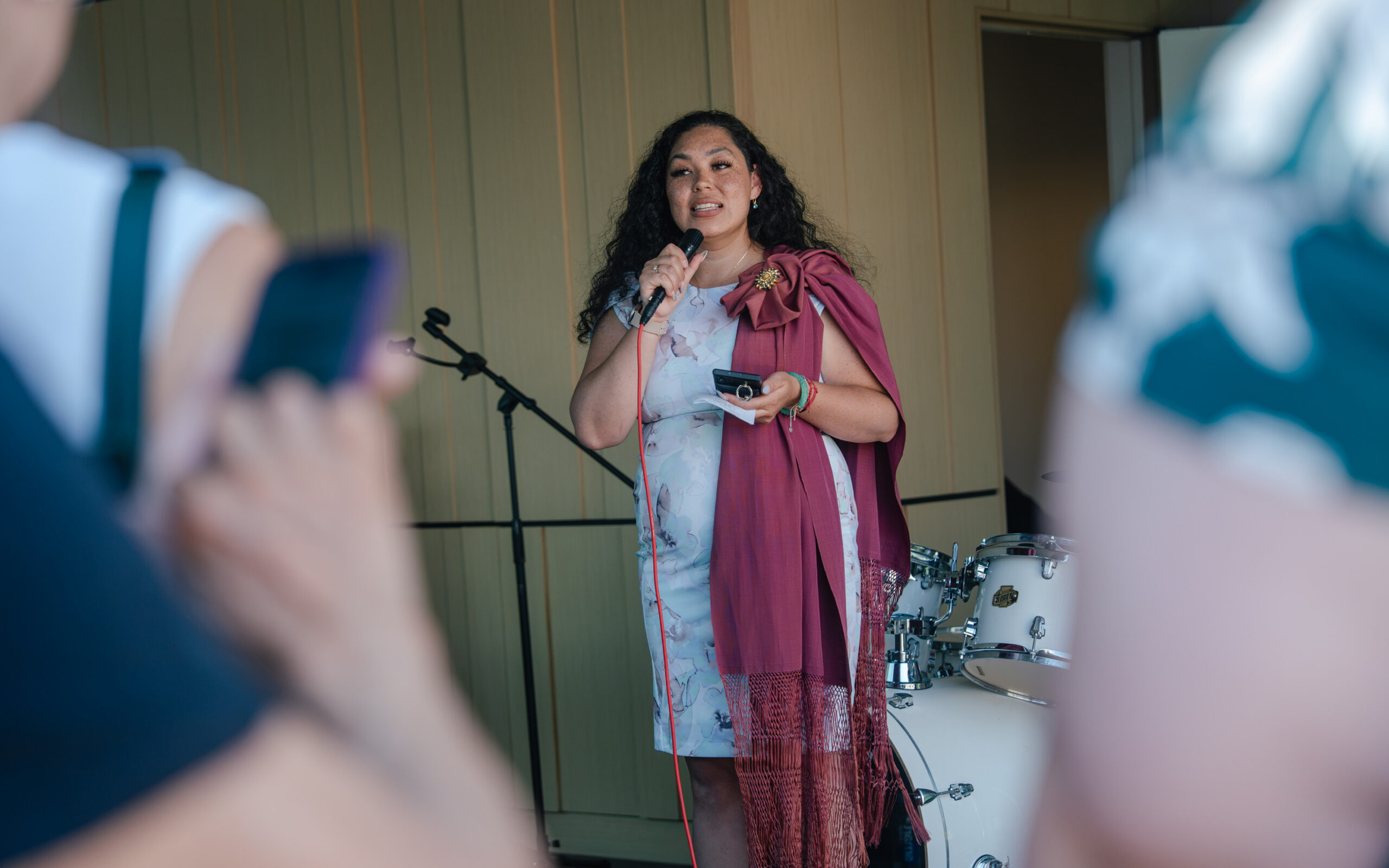
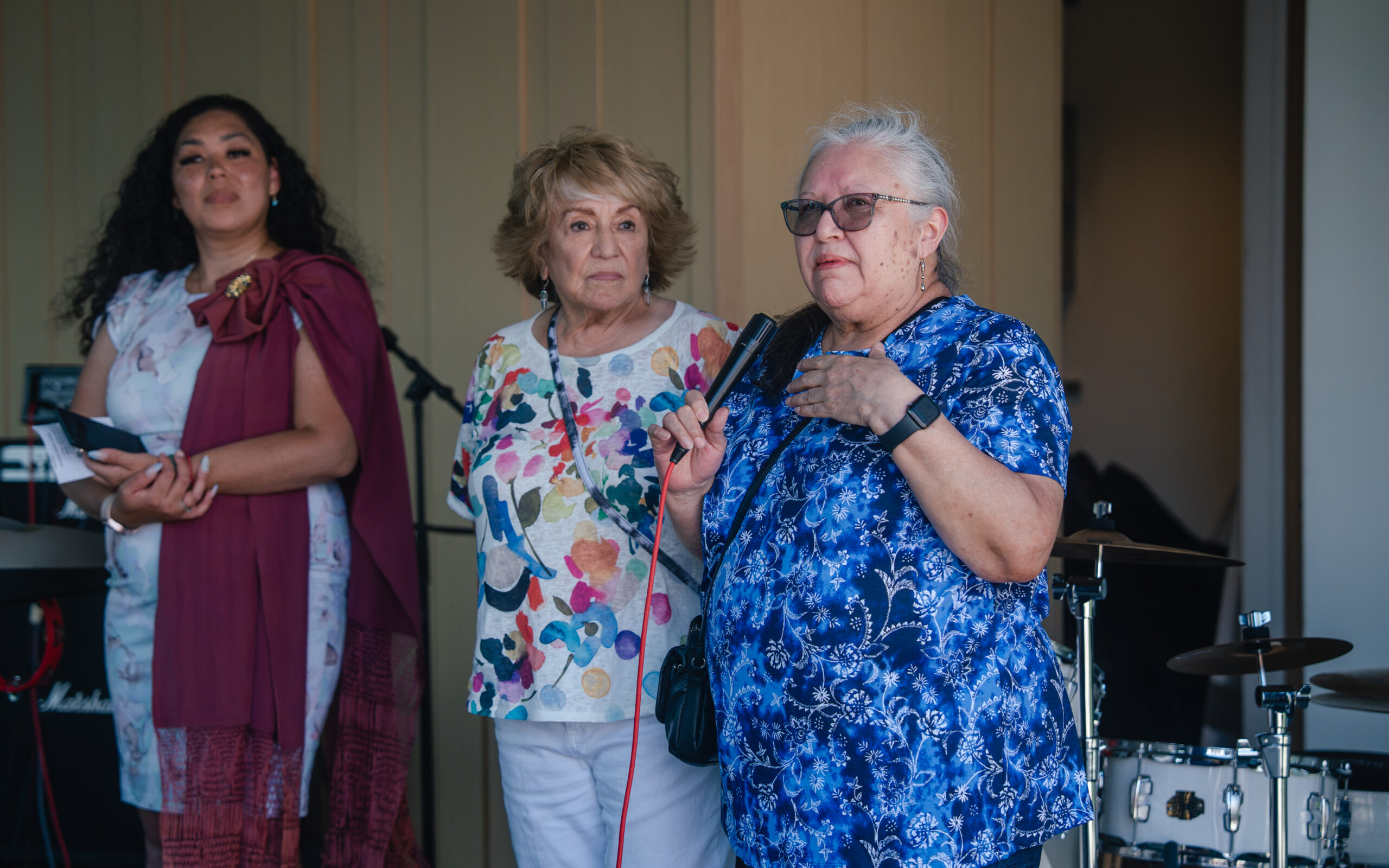
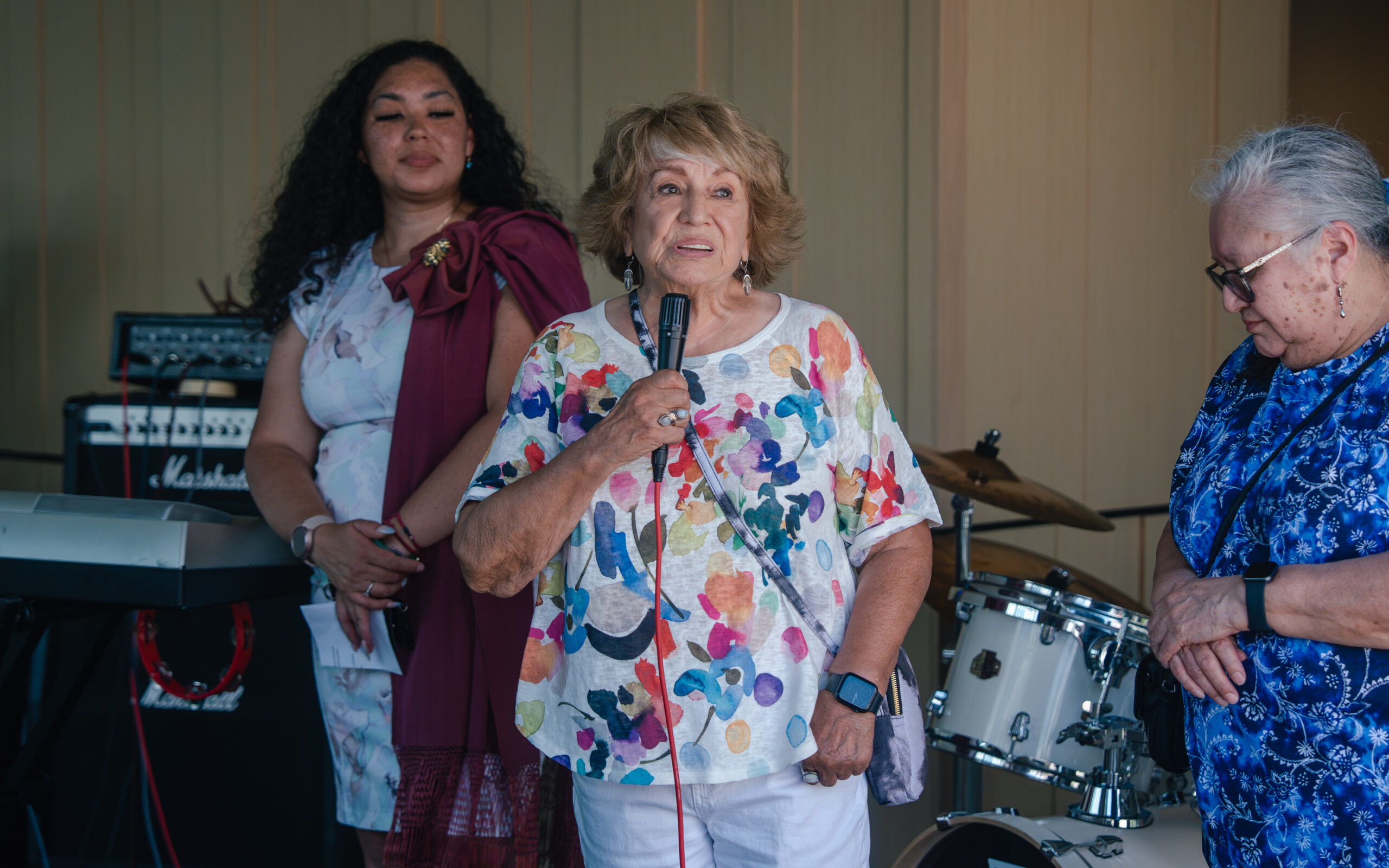
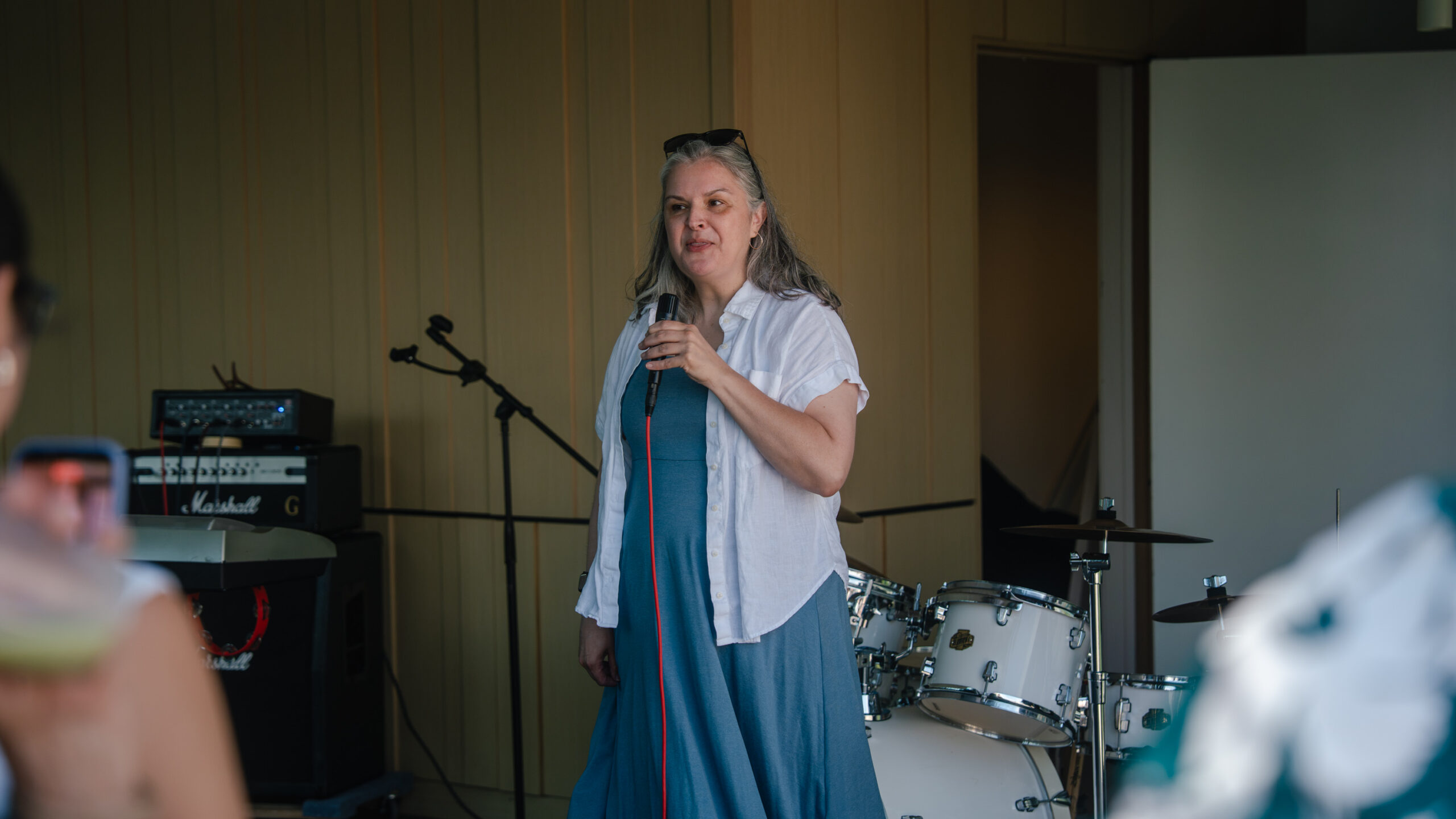
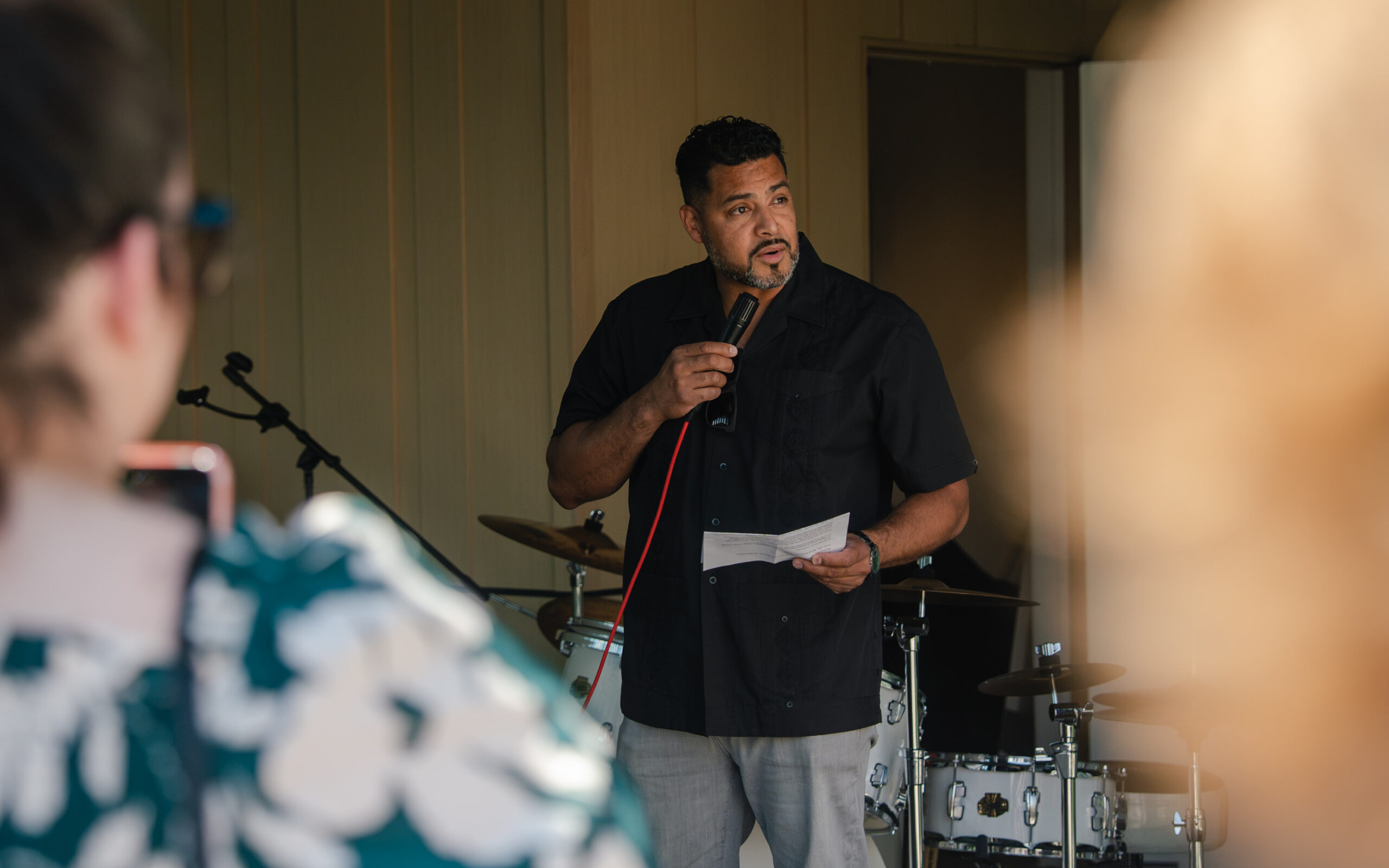
At 2 p.m., attendees gathered for a dedication and unveiling ceremony. Speakers at the dedication included Luis Ali, Board Chair of SDBA and owner of AGI Construction, Jesse Venegas of Ideal Group, Tobi Voigt of the Michigan History Center, myself on behalf of Detroit VOCES Collective, Rachel Harness & Dolores Sanchez representing the Gajec family.
Ali emphasized the significance of the occasion. “For SDBA, this marker represents more than recognition of one remarkable person. It is also a reminder of the strength, culture, creativity, and resilience of Southwest Detroit’s Mexican-American and Latino communities, and of the responsibility we all share to carry history forward”, Ali said.
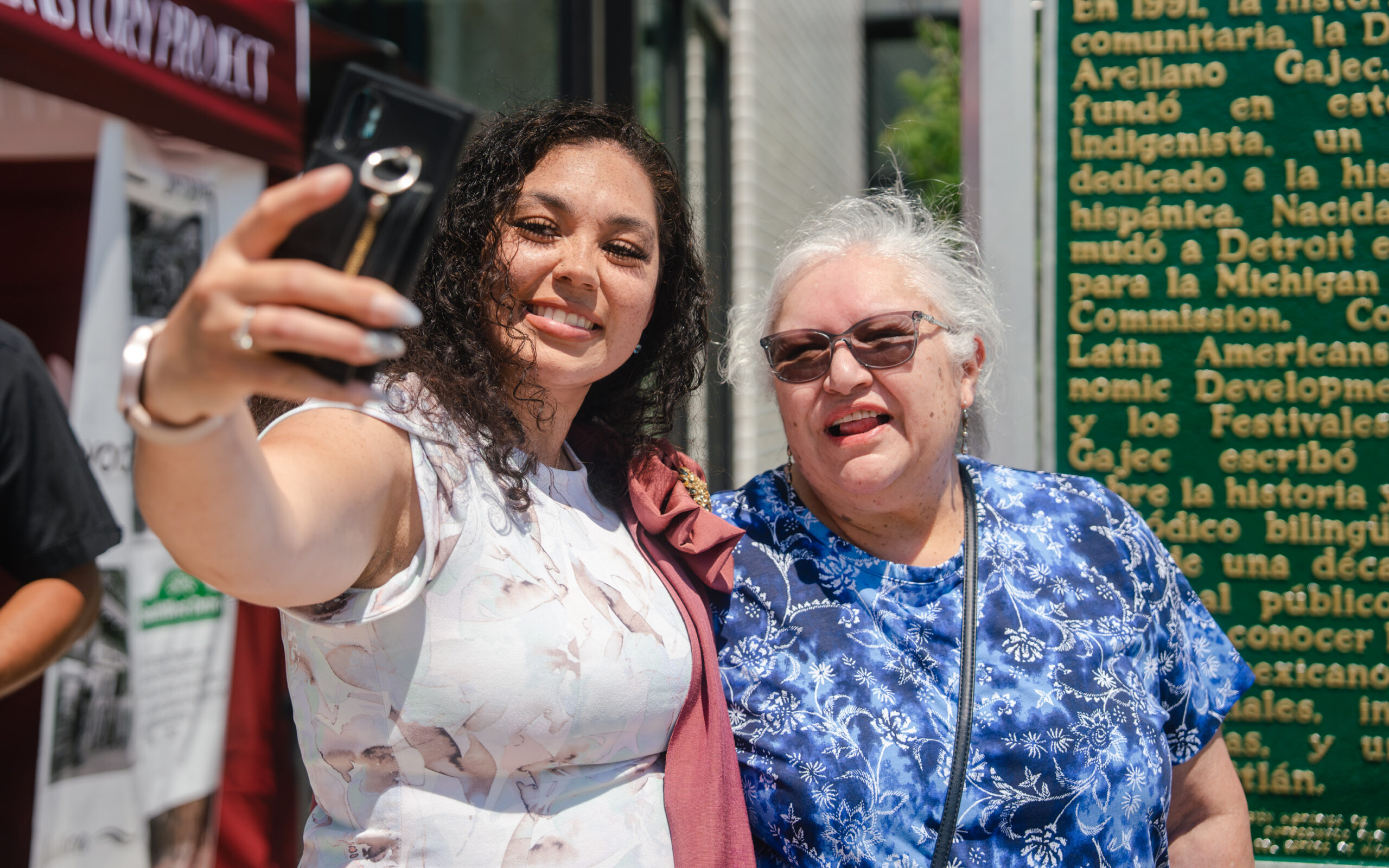
I spent two years working on this marker, and through the process it was like remembering a dream that turned out to be true. Years after visiting Museo Indigenista during a Maybury Elementary field trip, the artifacts and displays continue to be a core memory for me. I never imagined I would one day help ensure that memory is preserved for generations to come.
Rachel Harness, Dr. Gajec’s daughter, spoke with emotion about her mother’s dedication. “My mom spent so much time reading, traveling, and absorbing all this knowledge to share with her community. When we had to pack up her exhibits, my mom was there guiding us with the hope that things could one day be redisplayed.”, Harness said.
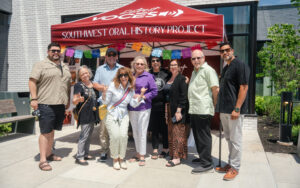
Attendees were invited to share their favorite memories of Dr. Gajec and reflect on what it means to have historical markers in the neighborhood. Sarah Cushing, her granddaughter, wrote “I always loved to run through the museum. When I was a kid I would hide under the tables. I also loved to try on and dance around in the dresses.” One community member wrote, “She made us feel seen. She made our history matter.”
When answering the question about what it means to have historical markers in the neighborhood someone noted, “Glad to finally be getting some historical markers in Southwest Detroit to recognize people who lived and worked here.” Another community member shared, “Reconocer el trabajo de una Latina y que las generaciones conozcan sus logros. [It’s recognizing the work of a Latina and making it so generations know of her accomplishments]”.
I hope to catalog and reexhibit Dr. Gajec’s collection of more than 1,500 artifacts once on display at Museo Indigenista. This work is labor intensive and the first step has to be updating the storage materials to ensure the collection is preserved and accessible to future generations.
The collection is currently being stored by Ideal Group. Jesse Venegas reaffirmed the company’s commitment, “We have a whole room full of artifacts, and we’ll continue to store them until something meaningful can be done with it. This history belongs to the community, and we’re honored to safeguard it.”
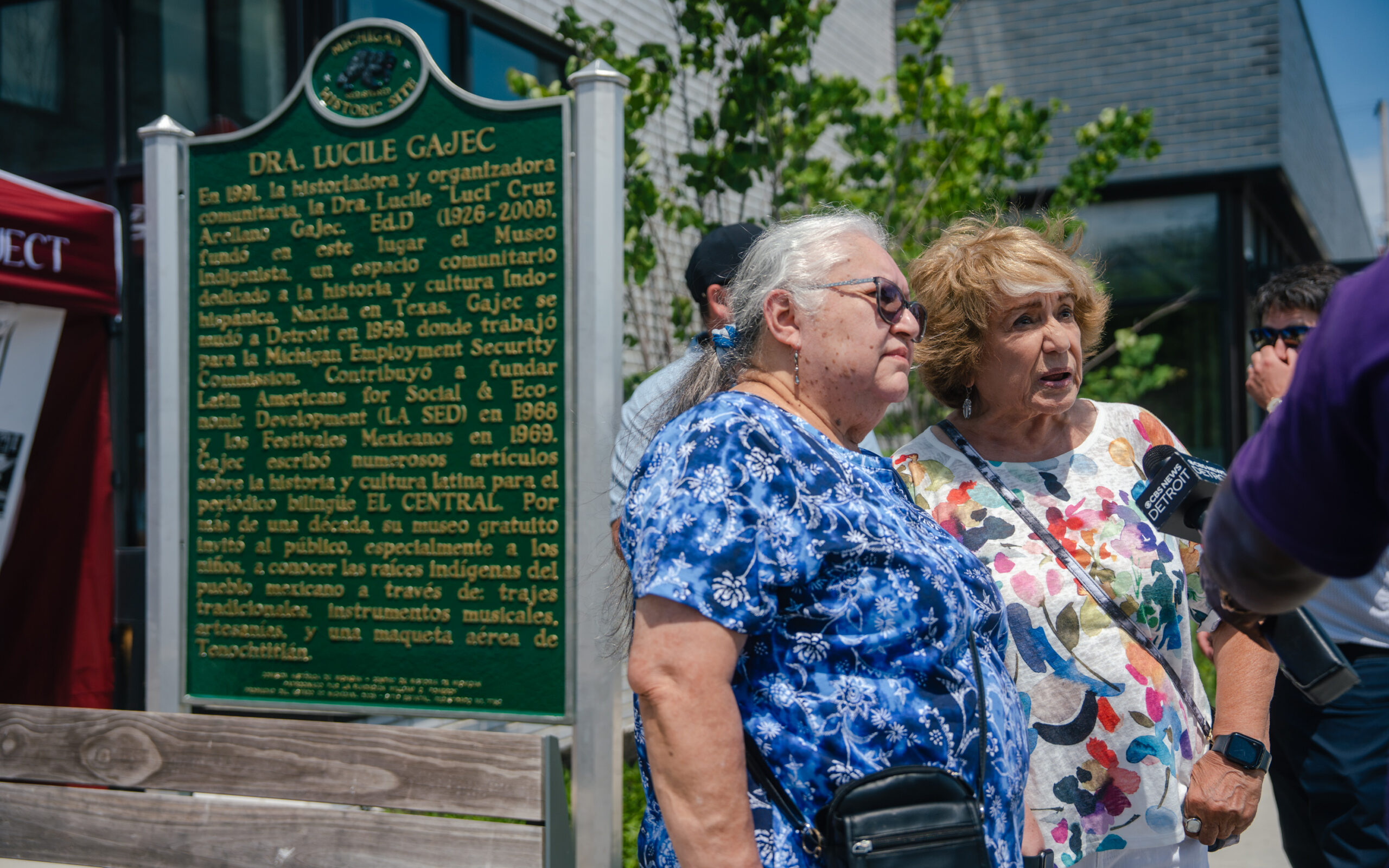
The marker itself is located near the corner of W. Vernor Hwy and Hubbard St. It stands on the former site of Museo Indigenista, the community museum Dr. Gajec founded in 1991. Notably, this marker is among the first in Michigan to highlight LatinX history and to feature a Spanish/English translation.
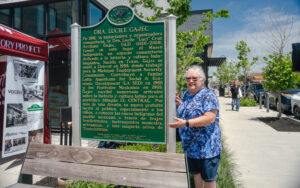
The inscription on the marker reads :
- LUCILE GAJEC
In 1991 historian and community organizer Dr. Lucile “Luci” Cruz Arellano Gajec, Ed.D, (1926-2008) founded Museo Indigenista, a community space for Indohispanic history and culture, on this site. Born in Texas, Gajec moved to Detroit in 1959, where she worked for the Michigan Employment Security Commission. She became a founding member of Latin Americans for Social & Economic Development (LA SED) in 1968, and Detroit’s Mexican Festival in 1969. Gajec authored numerous articles on Latino history and culture for the bilingual newspaper EL CENTRAL. For more than a decade, her free public museum invited all visitors, particularly children, to learn about the Indigenous roots of Mexican people through traditional costumes, pottery, instruments, masks, dolls, Indigenous sculptures, and an aerial-view replica of the Aztec city of Tenochtitlan.
Cafe Clark, which will soon operate out of La Joya Gardens, catered the celebration. Their menu featured a Mate Refresher drink (a twist on the classic agua de jamaica), Matcha horchata, the Lonche Clasico sandwich, and a delicious Southwest Orzo salad. “We are really intentional about the ingredients we use,” said Eduardo Salas. “Our Lonche Clasico is inspired by food my dad would make for us, and the cilantro for the salad is grown in our garden” Cafe Clark plans to open to the public later this fall.
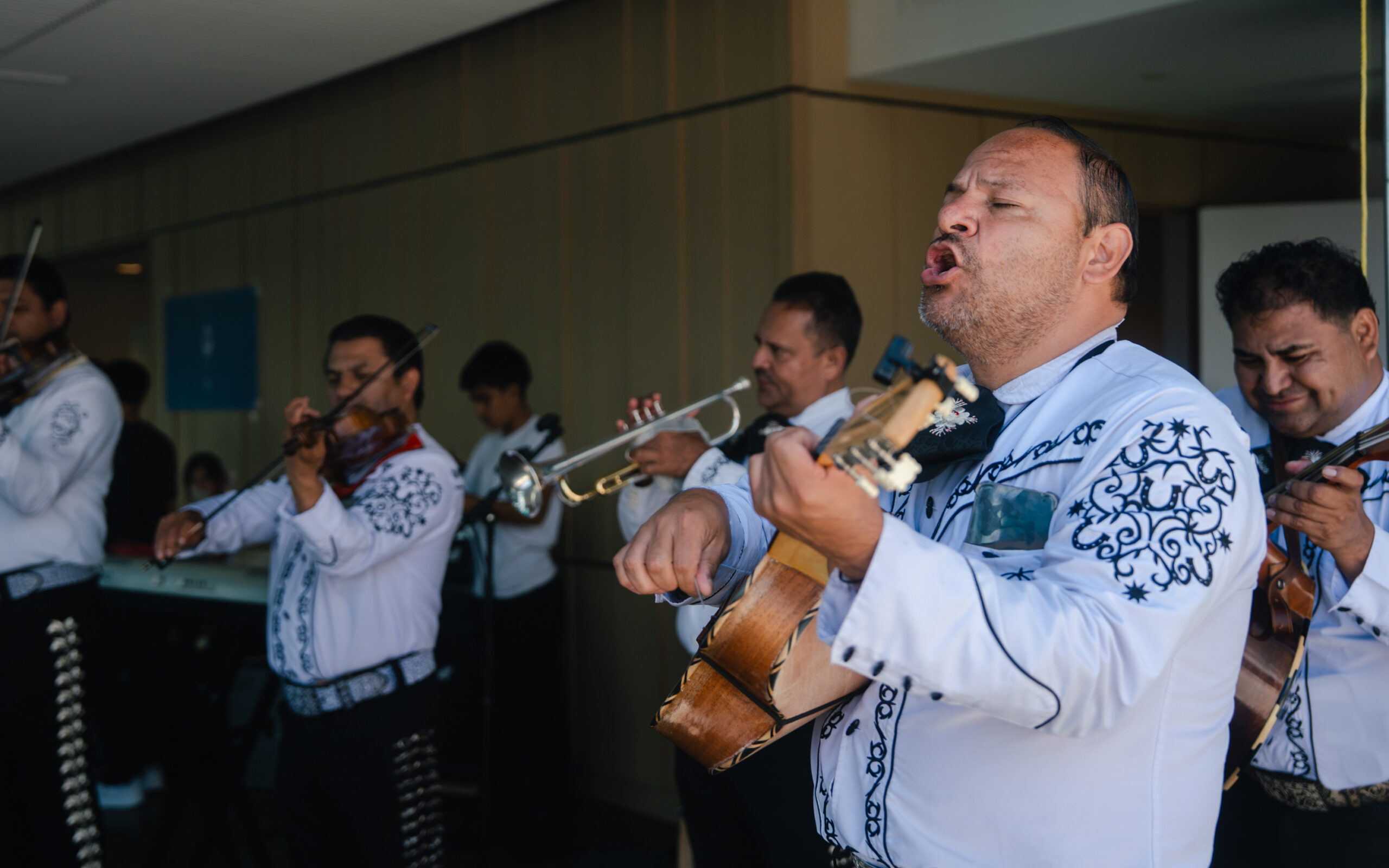
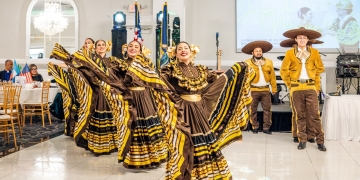
Dr. Lucile “Luci” Cruz Gajec passed away on April 29, 2008, but with this marker, her name and legacy will live on permanently in the heart of Southwest Detroit. Mariachi Mexico 2020 closed out the celebration filling the air with sounds that echoed the rich cultural heritage Dr. Gajec dedicated her life to preserving.
The marker was made possible through the Michigan History Center with generous support from the William G. Pomeroy Foundation. For more information on Dr. Gajec’s legacy or to contribute an oral history interview, email iandrade@umich.edu.
En una hermosa tarde de domingo, el 28 de junio, más de sesenta personas se reunieron en La Joya Gardens para celebrar un momento histórico. Ahí se llevó a cabo la develación de un Marcador Histórico del Estado de Michigan en honor a la vida y el legado de la Dra. Lucile “Luci” Cruz Gajec. Al comenzar el evento, el marcador estaba cubierto con un sarape, una prenda colorida y tejida que perteneció a la propia Dra. Gajec. El sarape parecía envolver su legado antes de que el público pudiera verlo.
La celebración comenzó a la 1 p.m. con música en vivo del grupo COMPÁS Ensemble, cuya energía juvenil y talento llenaron de vida el ambiente. Mientras el público disfrutaba de la música, la gente conversaba. Familias, organizadores comunitarios, historiadores, periodistas, maestros y comerciantes convivan como una sola comunidad. Se sentía un profundo sentimiento de alegría y orgullo, ya que la Dra. Gajec había dejado huella con casi todos los presentes.
La vinculo entre los jóvenes músicos y el legado de la Dra. Gajec fue especialmente emotiva. La Dra. Gajec y su esposo, Edward Gajec, dirigieron la Academia De La Cruz, una escuela de música donde él enseñaba guitarra, violín y otros instrumentos a la juventud. Escuchar a estudiantes tocar durante el evento se sintió como un momento que cerraba un ciclo de manera muy significativa.
“Nos da mucho orgullo que COMPÁS forme parte de la celebración de hoy, porque nuestra juventud, nuestra música, nuestras historias y nuestras tradiciones culturales son parte del legado vivo que la Dra. Gajec dedicó su vida a preservar”, comentó Ali.
A las 2 p.m., la gente se reunió para la dedicación y develación. Entre las personas que ofrecieron palabras estuvieron Luis Ali, presidente de la junta directiva de SDBA y dueño de AGI Construction, Jesse Venegas de Ideal Group, Tobi Voigt del Michigan History Center, yo, en representación deDetroit VOCES Collective; así como Rachel Harness y Dolores Sánchez, representantes de la familia Gajec.
Ali subrayó el significado del momento: “Para SDBA, este marcador representa más que el reconocimiento de una persona excepcional. También es un recordatorio de la fortaleza, la cultura, la creatividad y la resiliencia de las comunidades mexicoamericanas y latinas del Suroeste de Detroit, y de la responsabilidad que todos compartimos de mantener viva nuestra historia”.
Yo dediqué dos años a este proyecto, y durante el proceso fue como recordar un sueño que resultó ser real. Años después de haber visitado el Museo Indigenista en una excursión escolar de Maybury Elementary, los artefactos y exhibiciones siguen siendo uno de mis recuerdos más vivos. Nunca imaginé que un día ayudaría a preservar esa memoria para las futuras generaciones.
Rachel Harness, hija de la Dra. Gajec, habló con profunda emoción sobre la dedicación de su madre. “Mi mamá pasó muchísimo tiempo leyendo, viajando y aprendiendo para compartir ese conocimiento con su comunidad. Cuando nos tocó empacar sus exhibiciones, ella nos guiaba con la esperanza de que algún día pudieran volver a mostrarse”, recordó Harness.
La gente fue invitada a compartir sus recuerdos favoritos de la Dra. Gajec y a reflexionar sobre la importancia de tener marcadores históricos en el vecindario. Su nieta, Sarah Cushing, escribió: “Siempre me encantaba correr por el museo. Cuando era niña me escondía debajo de las mesas. También me gustaba ponerme los vestidos y bailar”. Otra persona compartió: “Ella nos hizo sentir vistos. Hizo que nuestra historia importara”.
Al hablar sobre la importancia de estos marcadores, alguien comentó: “Qué bueno que finalmente tengamos marcadores históricos en el Suroeste de Detroit que reconozcan a la gente que vivió y trabajó aquí”. Otra persona agregó: “Reconocer el trabajo de una Latina y que las generaciones conozcan sus logros”.
Mi meta es catalogar y volver a exhibir la colección de más de 1,500 artefactos que la Dra. Gajec mostró en el Museo Indigenista. Este es un trabajo muy laborioso. El primer paso es actualizar los materiales de almacenamiento para garantizar que la colección se preserve y pueda ser accesible para las generaciones que vienen.
La colección está siendo resguardada por Ideal Group. Jesse Venegas reafirmó el compromiso de la empresa: “Tenemos un cuarto lleno de artefactos y los seguiremos resguardando hasta que pueda hacerse algo significativo con ellos. Esta historia le pertenece a la comunidad y para nosotros es un honor protegerla”.
El marcador se encuentra cerca de la esquina de W. Vernor Hwy y Hubbard St., en el lugar donde antes estuvo el Museo Indigenista, fundado por la Dra. Gajec en 1991. Es importante resaltar que este marcador es uno de los primeros en Michigan en destacar la historia Latina y en incluir texto en español e inglés.
La inscripción del marcador dice:
DRA. LUCILE GAJEC
En 1991, la historiadora y organizadora comunitaria, la Dra. Lucile “Luci” Cruz Arellano Gajec, Ed.D (1926-2008), fundó en este lugar el Museo Indigenista, un espacio comunitario dedicado a la historia y cultura Indohispánica. Nacida en Texas, Gajes se mudó a Detroit en 1959, donde trabajó para la Michigan Employment Security Commission. Contribuyó a fundar Latin Americans for Social & Economic Development (LA SED) en 1968 y los Festivales Mexicanos en 1969. Gajes escribió numerosos artículos sobre la historia y cultura latina para el periódico bilingüe EL CENTRAL. Por más de una década, su museo gratuito invitó al público, especialmente a los niños, a conocer las raíces indígenas del pueblo mexicano a través de: trajes tradicionales, instrumentos musicales, artesanías, y una maqueta aérea de Tenochtitlan.
Café Clark, que próximamente abrirá en La Joya Gardens, estuvo a cargo de la comida del evento. Su menú incluyó la bebida Agua Mate (una variación del agua de jamaica), Matcha Horchata, el sándwich Lonche Clásico y una deliciosa ensalada Suroeste Orzo. “Somos muy intencionales con los ingredientes que usamos”, comentó el dueño Eduardo Salas. “El Lonche Clásico está inspirado en el lonche que mi papá nos preparaba, y el cilantro para la ensalada lo cultivamos en nuestro propio jardín”. Café Clark planea abrir al público este otoño.
La Dra. Lucile “Luci” Cruz Gajec falleció el 29 de abril de 2008, pero gracias a este marcador, su nombre y su legado permanecerán para siempre en el corazón del Suroeste de Detroit. Mariachi México 2020 cerró la celebración llenando el ambiente con música que evocaba la herencia cultural que la Dra. Gajec dedicó su vida a preservar.
El marcador fue posible gracias al Michigan History Center, con el generoso apoyo de la William G. Pomeroy Foundation. Para más información sobre el legado de la Dra. Gajec o para contribuir con una entrevista de historia oral, puedes escribir a iandrade@umich.edu.