

















Fleeing violence and threats from cartels against his family, Brian Chavez entered the United States through the southern border with his mother during the early years of the Trump administration. Chavez was only 15 years old and spoke no English when, at the border, officials separated him from his mother after she signed some documents.
“I was told my mother had given me up and that she was going to prison”, Chavez said in a virtual press conference on July 31. “I barely understood English. I was terrified, confused, and alone. As a child, I couldn’t understand why I was being separated from my mother.”
A few days later, Chavez was sent to a government shelter, little knowing what was happening. A month later, he was able to reunite with his brother, and three years after that with his mother. Immigration lawyers helped him understand and know the system he was trapped in, connected him with legal resources, and now, almost 10 years later, he works as a paralegal at the Immigrant Advocates Legal Center to help migrant children in the same situation he was in.
As Chavez recounts, he wouldn’t have achieved anything he has today without the help of these lawyers. His family wouldn’t have been able to afford legal aid, he wouldn’t have obtained legal status, they would have been deported, and he might not be alive now, he said.
However, by August 1st, the contracts that had been funding these lawyers by the federal government expired, leaving an estimated 26,000 children across the country without legal representation. The Department of Health and Human Services (HHS) has provided funding since 2003 to support the Office of Refugee Resettlement (ORR), a national network of 100 organizations that provides care and legal services to unaccompanied children who crossed the border alone or whose parents were separated at the border.
“Children who have fled violence, trafficking, and abuse will wake up tomorrow without the legal support they were promised. They won’t know the legal rights they may be entitled to without a lawyer by their side,” wrote Shaina Aber, Executive Director of the Washington-based nonprofit organization Acacia Center for Justice, in a statement. The Acacia Center maintained a legal services contract with ORR and allocated the received funds to legal service providers nationwide who also represent thousands of unaccompanied immigrant children.
The current immigration landscape for unaccompanied immigrant children has already experienced a critical breakdown; the HHS terminated its federal contract with Acacia Center in March last year. A California federal judge overturned the decision and ordered the reinstatement of the contract and the return of the funds to the organization. The contract has been extended and expires on August 1.
Since November last year, the HHS has withheld payment for the Acacia Center and other organizations because they didn’t comply with giving them attorney-client privileged information about the children. The action forced these organizations to turn away new clients and left the future of existing cases in doubt while they explore ways to fill the federal funding gap with independent financing. Around 40 other organizations are expecting to close their doors and cut services. The government owes $65 million to these organizations that defend unaccompanied minors.
Aber emphasized the immediate danger to the workforce, stating, “Across our network, attorneys are at the brink of legal organizations, at the brink of laying off staff.” She warned that these disclosures could provide the government with a road map for the mass deportation of children. “The government is withholding payment for work that has already been performed to extract confidential information about kids, information the government has no right to,” Acacia Center for Justice wrote in a statement.
The HHS told several media outlets that the ORR offered the Acacia Center for Justice the opportunity to receive a temporary contract based on certain requirements, such as providing information about whom they represent and submitting expense invoices when filing asylum applications. “Acacia refused to accept this temporary contract,” the agency stated. They added that since November 2025, they have tried to return to a full contract with the organizations, but each time the request for proposals is published, it is challenged by the Office of Government Accountability.
On the other hand, on July 29, Acacia said they received notice from the federal government that the ORR was considering a new contract, potentially with different legal providers. “It is not clear who the new contractor will be. They have not answered the questions that we have put to them,” said Bettina Rodriguez Schlegel of Acacia, to NPR news. “And so there remains a lot of uncertainty and a great deal of concern.”
At the same time, Erin Maxwell, Co-Director, Detained Immigrant Children’s Project, Legal Services for Children, stated in a press conference that without these attorneys, children who have fled complex and persistent trauma will lose access to due process and teams of supportive adults looking out for their legal and psychosocial needs, which would leave them stuck in the system under worse conditions. Unlike criminal courts, immigration courts are not required to guarantee legal representation, even for minors.
“Even with counsel, we have seen children choose to return to extremely unsafe situations in their countries of origin because of detention fatigue,” said Maxwell. “A 10-year-old child does not understand this legal language. A 10-year-old child developmentally cannot comprehend the gravity of what was being shared in this courtroom. It was painful to watch these children alone in a courtroom and to know that with the cuts to this vital funding, there will be so many more children in their situation.”
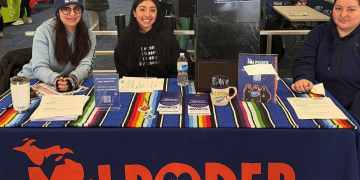
In Michigan only, the Michigan Immigrant Rights Center (MIRC) has assisted over 1,100 children who have fled violence, trafficking, and abuse. “They arrive frightened, alone, and often unable to understand the language,” said Ana Devereaux, Senior Managing Attorney with MIRC. “For many of these children, a MIRC lawyer is the first adult whose sole responsibility is to protect their rights, explain the process, and ensure their story is heard. Taking that away does not make the system more efficient. It abandons vulnerable children. The young people we’ve met. Have been through so much to get to our country.”
“The Trump administration”, said Devereaux. “Is working to strip unaccompanied children of legal representation so they can be deported faster and with less scrutiny. We cannot allow that to happen. Since the start of this administration, we’ve seen multiple attacks on unaccompanied children.”
By July 30, several elected officials had sent letters to HHS Secretary Robert F. Kennedy Jr., speaking out against the defunding of child protection organizations and the potential for a surge in deportations of minors.
On July 16, Congresswoman Veronica Escobar (TX-16) spearheaded a letter from the entire Texas Democratic Delegation, demanding answers from Kennedy regarding when the long-delayed funding would be released, or, failing that, what the federal government’s plans were for children left without legal assistance, among other questions. On July 31, Congressional representatives Summer L. Lee (PA-12) and Chris Deluzio (PA-17) also addressed the same concerns with HHS in a letter to Kennedy, outlining how they would ensure that minors received due process.
What is expected now, as the affected organizations struggle to avoid abandoning the children, is a hearing scheduled by a federal judge in Oakland, California, for August 6, in which child legal service providers will attempt to reverse the Trump administration’s attempts to defund the program.
La administración Trump pone fin al contrato con los proveedores de asistencia legal para niños migrantes no acompañados
Huyendo de la violencia y de las amenazas de los cárteles contra su familia, Brian Chávez ingresó a Estados Unidos por la frontera sur junto con su madre durante los primeros años de la administración Trump. Chávez tenía apenas 15 años y no hablaba inglés cuando, al llegar a la frontera, oficiales fronterizos lo separaron de su madre después de que ella firmara unos documentos.
“Me dijeron que mi madre me había abandonado y que iba a ir a prisión”, recordó Chávez durante una conferencia de prensa virtual el 31 de julio. “Apenas entendía inglés. Estaba aterrorizado, confundido y solo. Siendo un niño, no podía comprender por qué me estaban separando de mi madre.”
Pocos días después, Chávez fue enviado a un albergue del gobierno sin entender realmente lo que estaba ocurriendo. Un mes más tarde logró reunirse con su hermano y, tres años después, con su madre. Fueron abogados de inmigración quienes lo ayudaron a comprender el sistema en el que estaba atrapado, lo conectaron con recursos legales y, casi diez años después, hoy trabaja como asistente legal en el Immigrant Advocates Legal Center para ayudar a niños migrantes que atraviesan la misma situación que él vivió.
Según contó Chávez, nada de lo que ha logrado habría sido posible sin la ayuda de esos abogados. Su familia no habría podido costear asistencia legal, él no habría obtenido un estatus migratorio, habrían sido deportados y, probablemente, ni siquiera estaría vivo, afirmó.
En cualquier caso, Chavez cuenta que no habría logrado lo que es ahora sin la ayuda de aquellos abogados. Sin embargo, hacia el 1 de agosto vencieron los contratos mediante los cuales el gobierno federal financiaba a esos abogados, dejando a aproximadamente 26.000 niños en todo el país sin representación legal. Desde 2003, el Departamento de Salud y Servicios Humanos (HHS, por sus siglas en inglés) había financiado a la Oficina de Reasentamiento de Refugiados (ORR), una red nacional integrada por unas 100 organizaciones encargadas de brindar atención y servicios legales a menores no acompañados que cruzaron la frontera solos o cuyos padres fueron separados de ellos en la frontera.
“Los niños que huyeron de la violencia, la trata y los abusos despertarán mañana sin el apoyo legal que se les había prometido. Sin un abogado a su lado, no sabrán qué derechos legales podrían tener”, escribió en un comunicado Shaina Aber, directora ejecutiva de la organización sin fines de lucro Acacia Center for Justice, con sede en Washington. Acacia mantenía un contrato de servicios legales con la ORR y distribuía esos fondos entre organizaciones de todo el país que representan a miles de niños inmigrantes no acompañados.
El panorama actual para estos menores ya atravesaba una crisis significativa. En marzo del año pasado, el HHS canceló el contrato federal con Acacia Center. Posteriormente, un juez federal de California revocó esa decisión y ordenó restablecer el contrato y devolver el financiamiento a la organización. El contrato fue prorrogado y expiró el 1 de agosto.
Desde noviembre del año pasado, el HHS retuvo los pagos a Acacia Center y a otras organizaciones porque estas se negaron a entregar información protegida por el privilegio abogado-cliente sobre los menores que representan. La medida obligó a estas organizaciones a rechazar nuevos casos y dejó en incertidumbre el futuro de los expedientes ya abiertos, mientras buscan alternativas para reemplazar el financiamiento federal con recursos independientes. Alrededor de otras 40 organizaciones también esperan verse obligadas a cerrar sus puertas o reducir drásticamente sus servicios. El gobierno adeuda aproximadamente 65 millones de dólares a estas organizaciones que defienden a menores no acompañados.
Aber también advirtió sobre el impacto inmediato en el personal de estas organizaciones: “En toda nuestra red, los abogados y las organizaciones de asistencia legal están al borde de despedir a su personal”. Además, alertó que entregar esa información confidencial daría al gobierno una hoja de ruta para facilitar deportaciones masivas de menores. “El gobierno está reteniendo el pago por un trabajo que ya fue realizado para obligarnos a entregar información confidencial sobre niños, información a la que el gobierno no tiene derecho”, señaló Acacia Center for Justice en otro comunicado.
Por su parte, el HHS dijo a varios medios de comunicación que la ORR ofreció a Acacia Center for Justice la posibilidad de recibir un contrato temporal sujeto al cumplimiento de ciertos requisitos, entre ellos informar a quiénes representan y presentar facturas de gastos cuando se tramitan solicitudes de asilo. “Acacia se negó a aceptar este contrato temporal”, sostuvo la agencia. También afirmó que, desde noviembre de 2025, ha intentado restablecer un contrato completo con las organizaciones, pero que cada vez que publica una convocatoria para propuestas, esta es impugnada ante la Oficina de Responsabilidad Gubernamental.
Por otro lado, el 29 de julio, Acacia informó que recibió una notificación del gobierno federal indicando que la ORR estaba considerando adjudicar un nuevo contrato, posiblemente con diferentes proveedores de servicios legales. “No está claro quién será el nuevo contratista. No han respondido las preguntas que les hemos planteado”, declaró Bettina Rodríguez Schlegel, de Acacia, a NPR. “Por eso sigue existiendo mucha incertidumbre y una gran preocupación.”
Al mismo tiempo, Erin Maxwell, codirector del Proyecto para Niños Inmigrantes Detenidos de Legal Services for Children, afirmó durante una conferencia de prensa que, sin estos abogados, los menores que han huido de traumas complejos y persistentes perderán el acceso al debido proceso y al acompañamiento de equipos de profesionales que velan por sus necesidades legales y psicosociales, lo que los dejaría atrapados en el sistema en condiciones aún peores. A diferencia de los tribunales penales, los tribunales de inmigración no están obligados a garantizar representación legal, ni siquiera para los menores de edad.
“Incluso con representación legal, hemos visto a niños decidir regresar a situaciones extremadamente peligrosas en sus países de origen debido al agotamiento que les provoca la detención”, dijo Maxwell. “Un niño de 10 años no entiende este lenguaje jurídico. Desde el punto de vista de su desarrollo, un niño de 10 años no puede comprender la gravedad de lo que se está diciendo en una sala de audiencias. Fue doloroso ver a estos niños solos en un tribunal y saber que, con los recortes a este financiamiento vital, habrá muchos más menores en esa misma situación.”
Solo en Michigan, el Michigan Immigrant Rights Center (MIRC) ha brindado asistencia a más de 1.100 niños que huyeron de la violencia, la trata de personas y los abusos.
“Llegan asustados, solos y, muchas veces, sin poder entender el idioma”, afirmó Ana Devereaux, abogada principal del MIRC. “Para muchos de estos niños, un abogado del MIRC es el primer adulto cuya única responsabilidad es proteger sus derechos, explicarles el proceso y garantizar que su historia sea escuchada. Quitarles eso no hace que el sistema sea más eficiente. Significa abandonar a niños vulnerables. Los jóvenes que hemos conocido han pasado por muchísimo para llegar a nuestro país.”
“La administración Trump”, añadió Devereaux, “está trabajando para despojar a los niños no acompañados de su representación legal para que puedan ser deportados más rápidamente y con un menor escrutinio. No podemos permitir que eso ocurra. Desde el inicio de esta administración hemos visto múltiples ataques contra los menores no acompañados.”
Hasta el 30 de julio, varios funcionarios electos habían enviado cartas al secretario de Salud y Servicios Humanos, Robert F. Kennedy Jr., manifestando su rechazo al retiro del financiamiento para las organizaciones dedicadas a la protección de la niñez y advirtiendo sobre el riesgo de un aumento en las deportaciones de menores.
El 16 de julio, la congresista Veronica Escobar (demócrata por el distrito 16 de Texas) encabezó una carta firmada por toda la delegación demócrata de Texas en la que exigía respuestas a Kennedy sobre cuándo se liberaría el financiamiento, retrasado desde hacía meses, o, en caso contrario, cuáles eran los planes del gobierno federal para los niños que quedarían sin asistencia legal, entre otros cuestionamientos.
El 31 de julio, los congresistas Summer L. Lee (demócrata por el distrito 12 de Pensilvania) y Chris Deluzio (demócrata por el distrito 17 de Pensilvania) enviaron otra carta al HHS expresando las mismas preocupaciones y solicitando explicaciones sobre cómo el gobierno garantizaría que los menores recibieran el debido proceso.
Mientras las organizaciones afectadas luchan por evitar abandonar a miles de niños, la atención ahora está puesta en una audiencia programada para el 6 de agosto ante un juez federal en Oakland, California. En esa audiencia, los proveedores de servicios legales para menores intentarán revertir los esfuerzos de la administración Trump por eliminar el financiamiento del programa.