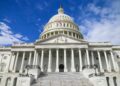

















On Tuesday, June 30, the Supreme Court struck down Trump’s Day One executive order canceling the right to birthright citizenship. Good. That executive order declared that children born in the U.S. would not be considered citizens if their parents were living in the country illegally or were visiting the country on temporary visas.
The executive order never took effect. It was quickly blocked by multiple lower courts because it appeared to directly conflict with the 14th Amendment, which states that “all persons born or naturalized in the United States, and subject to the jurisdiction thereof, are citizens of the United States.”
The Trump regime appealed the lower-court rulings, contending that the 14th Amendment’s citizenship provision had been misunderstood for more than a century. The administration argued that the drafters of the amendment were focused on guaranteeing citizenship for the children of former slaves—and that the amendment was never intended to extend citizenship to the children of people who weren’t living in the country legally.
Trump and his Solicitor General, who argued this case before the Court, also said that narrowing birthright citizenship was necessary to prevent “birth tourism”—the practice of immigrants coming to the U.S. to give birth here and obtain citizenship for their child.
Trump has been vowing to try to change the law since entering politics in 2015, arguing the 14th Amendment was written specifically to enshrine the rights of freed slaves. His critics have countered that it was always designed to apply to the children of immigrants too. A 1898 Supreme Court decision confirmed that U.S.-born children of immigrant parents are entitled to American citizenship.
Writing for the majority opinion, Chief Justice John Roberts wrote that the deeply-rooted understanding that virtually everyone born on American soil is automatically a U.S. citizen was enshrined in the Constitution with the passage of the 14th Amendment in in 1868: “Citizenship, then and now, was the right to have rights—to freely participate in our political community,” Roberts wrote. “The Framers of the Fourteenth Amendment extended that promise to every free-born person in this land. We keep that promise today.”
In another era, this would have been a no-brainer. No constitutional lawyer I know thought the Court would decide otherwise. The lower federal courts had consistently and unanimously ruled against Trump.
Had Trump won, it would have probably caused panic among recent immigrants and their families.
Although Trump has insisted his policy would apply only to future births, it was far from clear that the logic of any win for Trump wouldn’t apply retrospectively if a future president (JD Vance? perish the thought) wanted to go there.
What I find troubling is that the decision was 5 to 4 rather than unanimous or nearly so, as it should have been.
Only five of the nine justice ruled against Trump on constitutional grounds. Brett Kavanaugh dissented on statutory grounds; while agreeing that Trump’s executive order was unlawful, he argued that the court should have resolved the case under federal immigration law rather than the Constitution.
The Court’s three most conservative justices — Clarence Thomas, Neil Gorsuch, and Samuel Alito — dissented. Thomas wrote for the group: “The Court adds to the sad history of the Fourteenth Amendment, which was designed and understood to secure equal rights for the freed blacks but has instead been repurposed for political projects that the Reconstruction Congress did not support.”
Pure and utter claptrap.
Thomas, Gorsuch, and Alito are so far to the right of America that their views on this case and other matters should be presumed bonkers. Yet what’s particularly sobering is that Trump is only one justice away from having a Supreme Court majority that would have gone his way on this absurd reading of the 14th Amendment.
Clearly, the Supreme Court must be changed — either by expanding the number of justices or by invoking term limits on Supreme Court justices. The Constitution would permit both remedies.
Perhaps the best thing about this majority decision is that it’s such a direct repudiation of Trump, who has long taken a personal interest in the issue. During his 2024 campaign, he made curtailing birthright citizenship a key element of his immigration platform.
When the high court heard arguments on the case in April, Trump took the unprecedented step of showing up in person for the hearing, making him the first sitting president ever to attend a Supreme Court argument. For the Court to so directly reject his position today is surely a humiliation for Trump.
Born in the U.S.A.
La Corte Suprema actuó correctamente, pero cuatro magistrados están peligrosamente fuera de sus cabales.
El martes 30 de junio, la Corte Suprema anuló la orden ejecutiva que Trump había emitido apenas asumió el cargo, la cual pretendía eliminar el derecho a la ciudadanía por nacimiento. Excelente. Dicha orden establecía que los niños nacidos en Estados Unidos no serían considerados ciudadanos si sus padres residían en el país de forma ilegal o se encontraban de visita con visas temporales.
La orden ejecutiva nunca llegó a entrar en vigor. Fue rápidamente bloqueada por varios tribunales inferiores, ya que parecía contravenir directamente la Enmienda 14, la cual estipula que “todas las personas nacidas o naturalizadas en los Estados Unidos, y sujetas a su jurisdicción, son ciudadanos de los Estados Unidos”.
El gobierno de Trump apeló los fallos de los tribunales inferiores, argumentando que la disposición sobre ciudadanía de la Enmienda 14 había sido malinterpretada durante más de un siglo. La administración sostuvo que los redactores de la enmienda buscaban garantizar la ciudadanía para los hijos de antiguos esclavos, y que la enmienda nunca tuvo la intención de extender dicho derecho a los hijos de personas que no residían legalmente en el país.
Trump y su Procurador General —quien defendió el caso ante la Corte— también afirmaron que restringir la ciudadanía por nacimiento era necesario para evitar el llamado “turismo de nacimiento”: la práctica mediante la cual inmigrantes viajan a Estados Unidos para dar a luz y obtener así la ciudadanía para sus hijos.
Trump ha prometido intentar cambiar la ley desde que incursionó en la política en 2015, argumentando que la Enmienda 14 se redactó específicamente para consagrar los derechos de los esclavos liberados. Sus críticos, por el contrario, han señalado que la norma siempre estuvo diseñada para aplicarse también a los hijos de inmigrantes. Un fallo de la Corte Suprema de 1898 confirmó que los hijos de padres inmigrantes nacidos en Estados Unidos tienen derecho a la ciudadanía estadounidense.
Al redactar la opinión mayoritaria, el presidente del Tribunal Supremo, John Roberts, señaló que la convicción profundamente arraigada de que prácticamente toda persona nacida en suelo estadounidense es automáticamente ciudadana de Estados Unidos quedó consagrada en la Constitución con la aprobación de la Enmienda 14 en 1868: “La ciudadanía, tanto entonces como ahora, representaba el derecho a tener derechos: a participar libremente en nuestra comunidad política”, escribió Roberts. “Los autores de la Enmienda 14 extendieron esa promesa a toda persona nacida libre en esta tierra. Hoy mantenemos esa promesa”.
En otra época, esta decisión habría sido obvia y sencilla. Ningún abogado constitucionalista que yo conozca pensaba que el Tribunal decidiría lo contrario. Los tribunales federales de instancias inferiores habían fallado sistemática y unánimemente en contra de Trump.
Si Trump hubiera ganado, probablemente habría cundido el pánico entre los inmigrantes recientes y sus familias.
Aunque Trump ha insistido en que su política se aplicaría únicamente a los nacimientos futuros, distaba mucho de estar claro que la lógica de una victoria suya no se aplicaría con carácter retroactivo si un futuro presidente (¿JD Vance? ¡Dios no lo quiera!) quisiera seguir ese camino.
Lo que me resulta inquietante es que la decisión se tomara por 5 votos a 4 en lugar de ser unánime o casi unánime, como debería haber sido.
Solo cinco de los nueve magistrados fallaron en contra de Trump basándose en argumentos constitucionales. Brett Kavanaugh emitió un voto particular basado en cuestiones legales estatutarias; aunque coincidía en que la orden ejecutiva de Trump era ilegal, argumentó que el Tribunal debería haber resuelto el caso conforme a la legislación federal de inmigración en lugar de la Constitución.
Los tres magistrados más conservadores del Tribunal —Clarence Thomas, Neil Gorsuch y Samuel Alito— discreparon de la decisión. Thomas escribió en nombre del grupo: «El Tribunal se suma a la triste historia de la Enmienda XIV, que fue concebida y entendida para garantizar la igualdad de derechos de los negros liberados, pero que, en cambio, ha sido reutilizada para proyectos políticos que el Congreso de la Reconstrucción no respaldaba».
Pura y absoluta palabrería.
Thomas, Gorsuch y Alito están tan a la derecha del espectro político estadounidense que sus opiniones sobre este caso y otros asuntos deberían considerarse disparatadas. Sin embargo, lo que resulta especialmente aleccionador es que a Trump le falta solo un magistrado para contar con una mayoría en el Tribunal Supremo que habría fallado a su favor basándose en esta interpretación absurda de la Enmienda XIV.
Está claro que el Tribunal Supremo debe reformarse, ya sea ampliando el número de magistrados o estableciendo límites a la duración de sus mandatos. La Constitución permitiría ambas medidas.
Quizás lo mejor de esta decisión mayoritaria sea que supone un rechazo tan directo a Trump, quien lleva mucho tiempo mostrando un interés personal en esta cuestión. Durante su campaña de 2024, convirtió la restricción de la ciudadanía por derecho de nacimiento en un elemento clave de su programa migratorio.
Cuando el alto tribunal escuchó los argumentos del caso en abril, Trump dio el paso inédito de asistir en persona a la vista, convirtiéndose así en el primer presidente en ejercicio que acudía a una audiencia de alegatos ante el Tribunal Supremo. Que el Tribunal rechace hoy de manera tan directa su postura es, sin duda, una humillación para Trump.