



















Another immigrant died Monday morning during a shootout involving ICE agents; this time in Biddeford, Maine.
The victim, identified by neighbors and immigrant rights groups as Joan Sebastian Duran Guerrero, was a 26-year-old Colombian father who was legally authorized to work in the United States and had been issued a Social Security number, according to The Maine Immigrants’ Rights Coalition and Presente!, both local advocacy groups. The Department of Homeland Security said an ICE agent fired his weapon “out of fear for public safety” when Duran Guerrero “attempted to flee the scene” in his vehicle. The explanation was first provided by Maine Independent Senator Angus King, who stated that DHS Secretary Markwayne Mullin told him the agent opened fire after Duran Guerrero attempted to attack the pursuing agents with his vehicle. “He drove off in the vehicle and, in the Secretary’s own words, turned the vehicle into a weapon and was shot by an ICE agent,” King emphasized.
The death of the Colombian immigrant happened just six days after another fatal shooting of Lorenzo Salgado Araujo in Houston, Texas. According to the DHS, neither of these men were the agents’ targets.
The life of 52-year-old Mexican immigrant Salgado Araujo was not much different from that of many immigrants before he was shot by ICE agents on his way to work. He crossed the U.S. border before he was even 20 years old, settled in Houston, Texas, built a family, raised children, and established deep roots in the community. Every morning, he woke up early, ate breakfast prepared by his wife, packed the lunch she made for him, and, as the sun came up, headed to his job as a contract construction worker alongside other immigrants in the same van. On the morning of Tuesday, July 7, following his usual routine, his children say he had likely just picked up the last of his coworkers for the day’s job. Yet what happened shortly before 7 a.m. remains unclear.
“At 6:55, without any of us knowing, my father had been shot inside his van near the intersection of Wayside and Canal by ICE agents driving unmarked vehicles,” his son, Ronaldo Salgado, said during a press conference.
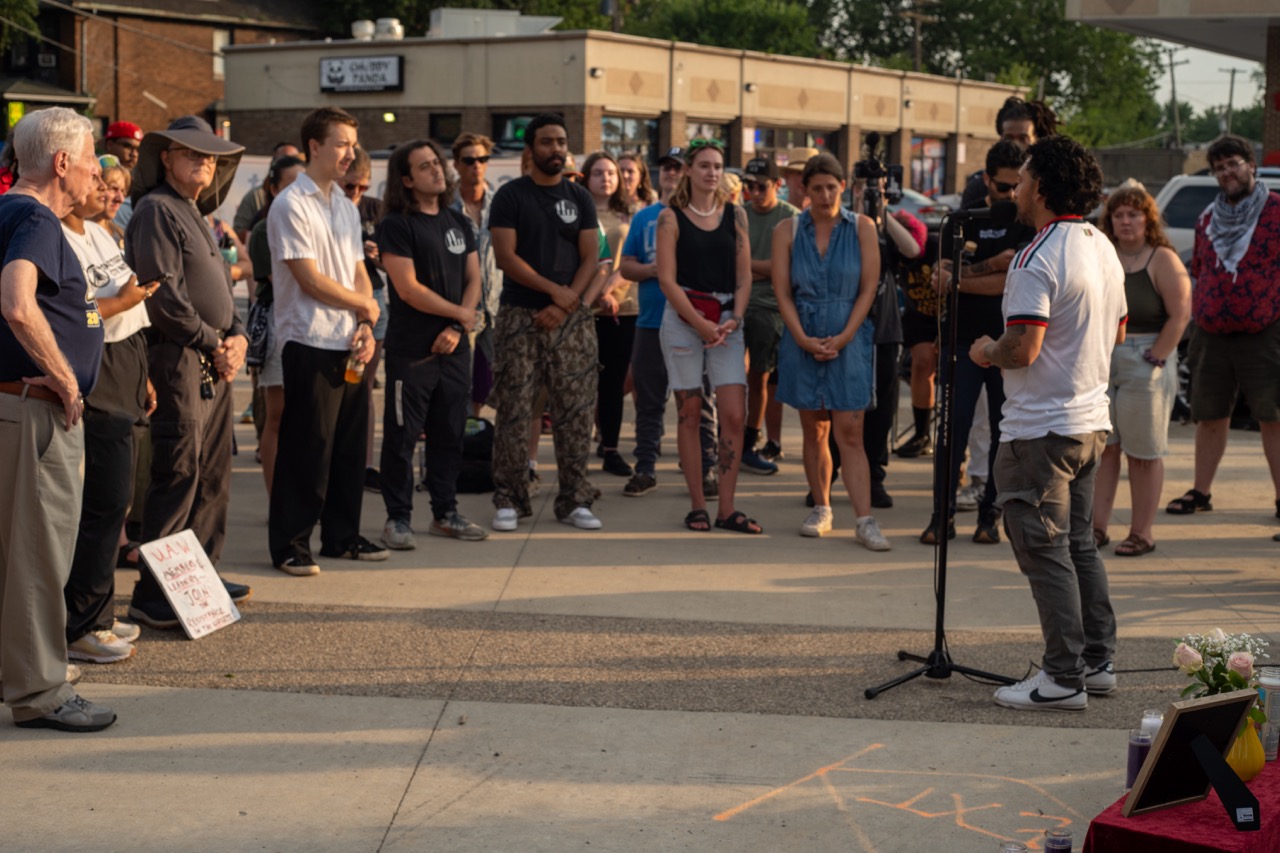
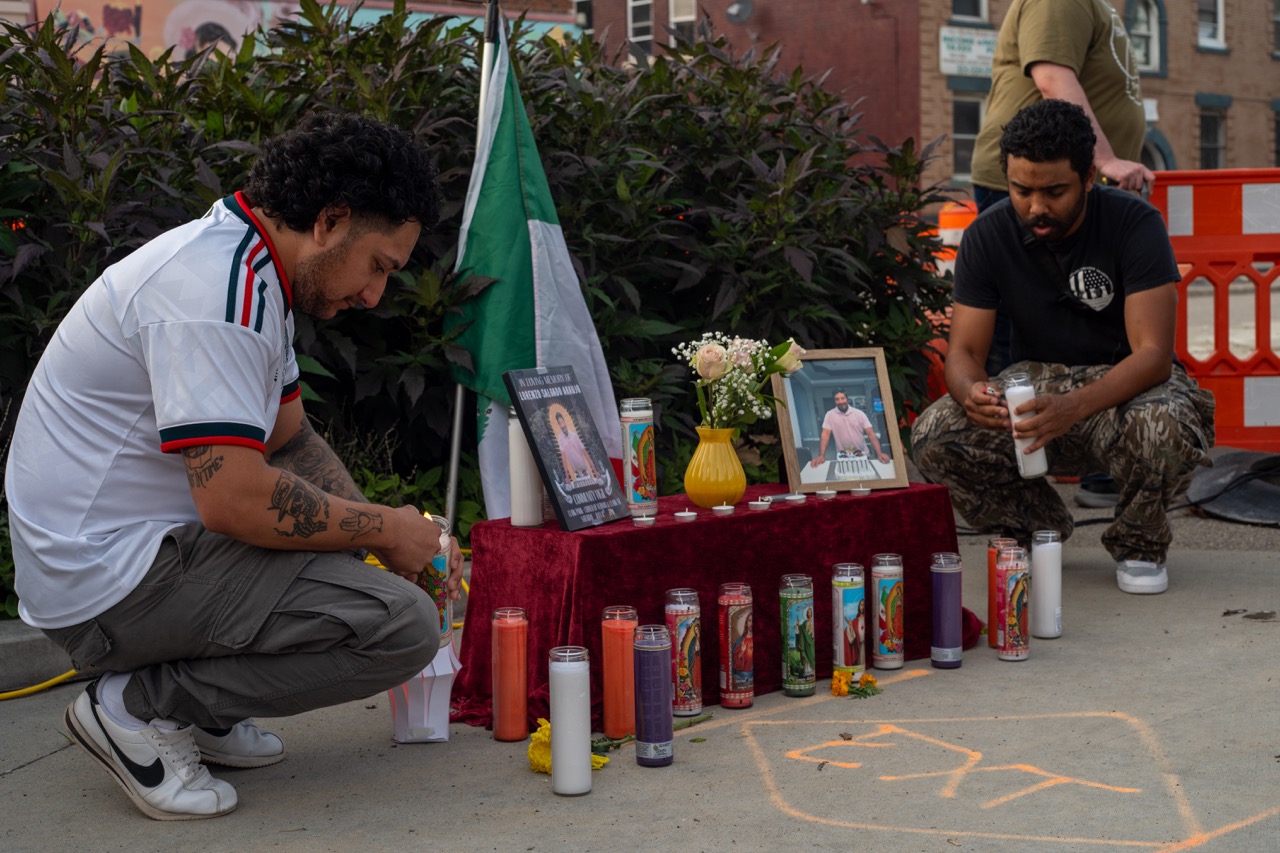
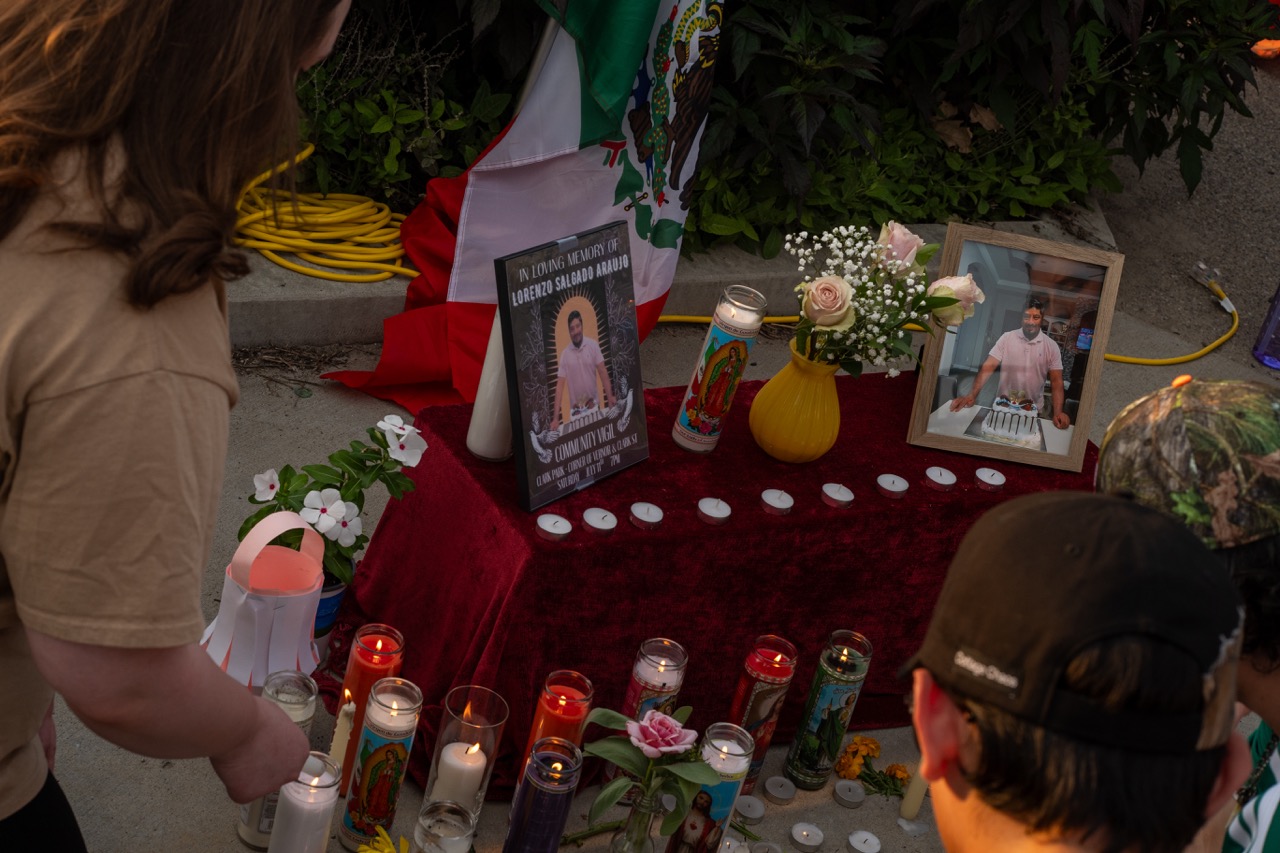
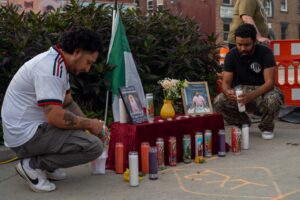
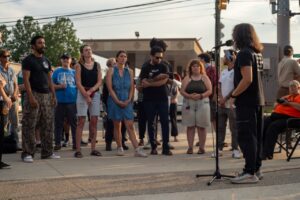
Just as in Houston, dozens of people gathered in Detroit on Saturday afternoon for a vigil at Clark Park to honor Salgado Araujo’s memory. Carrying candles, flowers, and photographs, neighbors, community leaders, and immigrant rights advocates remembered the man who had lived in the United States for nearly 35 years and owned a small construction business.
“Our communities continue to live in fear, isolated from the world,” said James, a member of the Detroit Community Action Committee. “And once this administration is gone and we return to normal, people in these communities will continue to feel the consequences of ICE for generations. The lack of protection, accountability, and oversight is not limited to the federal level. We see it here, in the communities we care about.”
On July 10, Detroit officials called on the Department of Homeland Security to end ICE vehicle pursuits in residential neighborhoods following two incidents in May and June that left people injured and caused property damage. During one arrest on May 19, Venezuelan asylum seeker Yerlys Moreno López was hospitalized and underwent knee surgery at Detroit Receiving Hospital after being seriously injured during an ICE operation in Detroit. While ICE maintains that Moreno López fled an attempted arrest, crashed her vehicle, and then tried to escape on foot, her husband says her injuries occurred when agents violently tackled her to the ground and ripped out part of her hair during the arrest.
Detroit City Council member Denzel McCampbell said both pursuits involved people who were merely suspected of lacking legal immigration status, a civil, not criminal, matter, and argued that it was unjustifiable to endanger residents, including children and pedestrians. In a letter to DHS, city officials asked ICE to suspend the practice, make its pursuit policy public, and release information about the investigations into both incidents.
Unlike the shootings of Renée Good and Alex Pretti, however, Trump administration officials did not immediately characterize the actions of those killed as “domestic terrorism.”
However, as in previous cases, federal officials argued that ICE agents acted in self-defense and that the immigrants endangered officers’ lives. According to DHS, as agents attempted to stop Salgado Araujo’s van, he ignored their commands and rammed their vehicles. An officer then drew his firearm and shot the Mexican immigrant in the stomach. A video posted on social media showed a man lying face down in the street, moaning in pain with his hands behind his back as two agents stood over him.
Holding back tears, Ronaldo Salgado told reporters that he first learned of his father’s shooting through these videos. In the footage, Salgado Araujo could be heard lying on the ground, crying out for help. He recognized his father’s voice. Neither the police, the immigration agents at the scene, nor the hospital staff where his father was taken provided the family with information.
The Mexican became the tenth person fatally shot by ICE during the current administration, while the Colombian became the eleventh. Both deaths marked the continuous fatal ICE shooting since the killings of Good and Pretti in Minneapolis in January. Twenty-one people have died in ICE detention centers so far this year.

Following Salgado Araujo’s death, the Mexican government announced it would escalate its response, moving beyond diplomatic protests to legal action in the United States. President Claudia Sheinbaum said her administration would pursue criminal investigations and support civil lawsuits related to his case and the deaths of other Mexican citizens connected to ICE operations and immigration detention centers.
“The Embassy and the Consulate of Mexico in Houston are providing continuous assistance in this case and will hold meetings with the appropriate U.S. authorities and members of Congress as part of these efforts,” Carlos Torres of the Mexican Embassy in the United States told EL CENTRAL. “The Government of Mexico is implementing a legal strategy to strengthen the protection of the human rights of Mexican nationals in the United States following the recent deaths of our citizens linked to ICE detention centers and enforcement operations.”
Salgado Araujo is the sixth Mexican national to die under the Trump administration’s immigration enforcement apparatus in 2026. During the first months of the year, Heber Sánchez, Alberto Gutiérrez, Royer Pérez, José Guadalupe Ramos, Alejandro Cabrera, and Lorenzo Salgado all died while in the custody of U.S. immigration authorities.
For his part, the President of Colombia referred to the murder of Duran Guerrero as “persecution and exclusion against a civilian population group for ethnic and cultural reasons.” He also called for swift legal action to bring the agents involved to justice. “They killed him because they believed he was an inferior being without rights,” the president condemned on social media. “And as a person, he had all the rights that a human being is entitled to simply by being born, and he was a citizen with full rights in the United States.
The Trump administration’s fierce battle against immigrants has once again attracted the attention of the media and citizens, and is in the media spotlight. In late June, ICE arrested approximately 10,000 people over five days, averaging about 2,000 arrests per day, marking a sharp acceleration of this administration’s deportation campaign. According to data obtained by The Associated Press, the increase came after the agency shifted away from large-scale raids in specific cities in favor of lower-profile enforcement operations while substantially increasing the pace of arrests. Although the DHS said the operations primarily targeted immigrants with criminal records, the number of people held in ICE detention also rose from roughly 30,000 to 39,000 during June, reflecting the administration’s expanding detention and deportation capacity.
Otro inmigrante murió la mañana del lunes durante un tiroteo en el que estuvieron involucrados agentes del Servicio de Inmigración y Control de Aduanas (ICE), esta vez en Biddeford, Maine.
La víctima, identificada por vecinos y organizaciones defensoras de los derechos de los inmigrantes como Joan Sebastian Guerrero, era un padre colombiano de 26 años que contaba con autorización legal para trabajar en Estados Unidos y tenía un número de Seguro Social, según informaron The Maine Immigrants’ Rights Coalition y Presente!, dos organizaciones locales. El Departamento de Seguridad Nacional (DHS) afirmó que un agente de ICE disparó su arma “por temor a la seguridad pública” cuando Guerrero “intentó huir del lugar” en su vehículo. La explicación fue adelantada por el senador independiente de Maine, Angus King, quien señaló que el secretario del DHS, Markwayne Mullin, le informó que el agente abrió fuego después de que Guerrero presuntamente intentara embestir con su vehículo a los agentes que lo perseguían. “Se alejó conduciendo el vehículo y, en palabras del propio secretario, convirtió el vehículo en un arma y fue abatido por un agente de ICE”, enfatizó King
La muerte del inmigrante colombiano ocurrió apenas seis días después del tiroteo mortal de Lorenzo Salgado Araujo en Houston, Texas. Según el DHS, ninguno de los dos hombres era el objetivo original de los agentes.
La vida de Lorenzo Salgado Araujo, inmigrante mexicano de 52 años, no era muy distinta a la de muchos inmigrantes antes de ser baleado por agentes migratorios en su camino al trabajo. Cruzó la frontera hacia los Estados Unidos de forma irregular sin siquiera cumplir los 20 años; se instaló en Houston, Texas; hizo familia, tuvo hijos, echó raíces. Se levantaba temprano, comía un buen desayuno por parte de su esposa, cogía un buen almuerzo preparado por ella y, a la par que salía el sol, Salgado Araujo se encaminaba a su trabajo de constructor por contrato junto a otros inmigrantes en una misma van. La mañana del martes 7 de julio, fiel a sus rutinas, tal como describen sus hijos, debió haber recogido al último de sus faenados para la jornada del día. Sin embargo, lo ocurrido hasta poco antes de las 7am sigue sin esclarecerse.
“A las 6:55, sin que ninguno de nosotros lo supiera, mi padre había recibido un disparo dentro de su camioneta, cerca de la intersección de Wayside y Canal, por parte de agentes del ICE que iban en vehículos sin identificación”, dijo su hijo Ronaldo Salgado en una conferencia de prensa.
Al igual que en Houston, en Detroit, decenas de personas se reunieron en una vigilia para honrar la memoria de Salgado Araujo en Clark Park la tarde del sábado. Con velas, flores y fotografías de Salgado Araujo, familiares, vecinos, líderes comunitarios y activistas recordaron al hombre, quien había vivido en Estados Unidos durante casi 35 años y era propietario de un pequeño negocio de construcción. Durante el acto, los asistentes reclamaron una investigación independiente sobre el uso de la fuerza por parte de los agentes federales y cuestionaron la versión oficial del gobierno.
“Las comunidades siguen viviendo con miedo, aisladas del mundo”, dijo James, miembro del Comité de Acción Comunitaria de Detroit. “Y una vez que esta administración sea destituida y volvamos a la normalidad, la gente de estas comunidades seguirá sintiendo las repercusiones del ICE durante generaciones. La falta de protección, rendición de cuentas y supervisión no se limita al ámbito federal. La vemos aquí, en las comunidades que nos importan.”
El 10 de julio, funcionarios de Detroit exigieron al DHS que detuviera las persecuciones vehiculares de ICE en barrios residenciales, tras dos incidentes ocurridos en mayo y junio que dejaron personas heridas y daños materiales. Durante un arresto el 19 de mayo, la solicitante de asilo venezolana Yerlys Moreno López fue hospitalizada y sometida a una cirugía de rodillas en el Detroit Receiving Hospital tras resultar gravemente herida durante un operativo de ICE en Detroit. Mientras ICE sostiene que Moreno López huyó de un intento de detención, chocó su vehículo y luego intentó escapar a pie, su esposo asegura que las lesiones ocurrieron cuando los agentes la derribaron violentamente y le arrancaron parte del cabello al arrestarla.
El concejal Denzel McCampbell afirmó que ambas persecuciones involucraban a personas únicamente sospechosas de encontrarse en el país sin autorización legal, un asunto de carácter civil y no penal, por lo que consideró injustificado poner en riesgo a residentes, incluidos niños y peatones. En una carta dirigida al DHS, funcionarios municipales solicitaron que ICE suspenda estas tácticas, haga pública su política sobre persecuciones e informe sobre las investigaciones de ambos casos.
A diferencia de los tiroteos de Renée Good y Alex Pretti, funcionarios de la administración Trump no calificaron de inmediato las acciones de las personas fallecidas como “terrorismo interno”.
Sin embargo, como en casos anteriores, funcionarios federales sostuvieron que los agentes de ICE actuaron en defensa propia y que los inmigrantes pusieron en peligro la vida de los oficiales. Según el DHS, cuando los agentes intentaban detener la camioneta de Salgado Araujo, este ignoró las órdenes y embistió los vehículos oficiales. Un agente desenfundó su arma y disparó al inmigrante mexicano en el estómago. Un video difundido en redes sociales mostraba a un hombre tendido boca abajo en la calle, gimiendo de dolor, con las manos a la espalda mientras dos agentes permanecían sobre él.
Entre lágrimas, Ronaldo Salgado relató que se enteró de que su padre había sido baleado a través de esos videos publicados en redes sociales. En las imágenes se escuchaba a Salgado Araujo pidiendo ayuda mientras permanecía tendido en el suelo. Lo reconoció por su voz. Ni la policía, ni los agentes migratorios presentes en la escena, ni el personal del hospital al que fue trasladado ofrecieron información a la familia.
El mexicano se convirtió en la décima persona abatida por disparos de ICE durante la actual administración, mientras que el colombiano fue la undécima. Ambas muertes se suman a la serie de tiroteos mortales protagonizados por agentes de ICE desde las muertes de Good y Pretti en Minneapolis, ocurridas en enero.
Tras la muerte de Salgado Araujo, el Gobierno de México anunció un endurecimiento de su respuesta al pasar de las protestas diplomáticas a acciones legales en EE.UU. La presidenta Claudia Sheinbaum informó que su administración promoverá investigaciones penales y respaldará demandas civiles relacionadas con el caso y con otras muertes de ciudadanos mexicanos vinculadas a operativos o centros de detención migratoria.
“La Embajada y el Consulado de México en Houston mantienen una atención permanente al caso y sostendrán reuniones con las autoridades estadounidenses competentes y con integrantes del Congreso como parte de estas gestiones”, declaró Carlos Torres de la embajada de México en los EE.UU. a este periódico. “El Gobierno de México está poniendo en marcha una estrategia jurídica para fortalecer la protección de los derechos humanos de las personas mexicanas en Estados Unidos, a raíz de los recientes fallecimientos de connacionales relacionados con centros de detención y operativos del ICE.”
Y es que Salgado Araujo es el sexto mexicano en morir bajo la maquinaria antimigratoria de Trump en lo que va de 2026. En los primeros meses de 2026, Heber Sánchez, Alberto Gutiérrez, Royer Pérez, José Guadalupe Ramos, Alejandro Cabrera y Lorenzo Salgado han muerto bajo custodia de las autoridades migratorias en EE. UU.
La Secretaría de Relaciones Exteriores instruyó al Consulado de México en Houston a brindar asistencia a la familia y dar seguimiento a la investigación, mientras el gobierno exigió una indagatoria independiente sobre el uso de la fuerza por parte de los agentes de ICE. Sheinbaum afirmó que el objetivo es “ir más allá de las notas diplomáticas” y sostuvo que México no puede permitir el maltrato de sus ciudadanos en este país.
La ofensiva migratoria de la administración Trump ha vuelto a concentrar la atención pública y mediática. A finales de junio, ICE arrestó aproximadamente 10.000 personas en apenas cinco días, un promedio de unas 2.000 detenciones diarias, lo que representa una aceleración significativa de la campaña de deportaciones.
Según datos obtenidos por The Associated Press, el incremento ocurrió después de que la agencia abandonara las redadas masivas en ciudades específicas para dar paso a operativos de menor perfil, pero con un ritmo mucho mayor de arrestos. Aunque el DHS aseguró que las operaciones se enfocaban principalmente en inmigrantes con antecedentes penales, el número de personas detenidas en centros de ICE también aumentó de aproximadamente 30.000 a 39.000 durante junio, reflejando la expansión de la capacidad de detención y deportación del gobierno.