









The Kaqchikel people are one of the 21 ethnic groups of Mayan descent that are located in Guatemala. The Kaqchikel economy is based on small-scale agriculture, in rural and suburban areas, almost all families grow corn, beans, vegetables and legumes, for their own consumption, and some, the most fortunate, sell their surplus crops , which is an important source of income; in addition to handicrafts. In Chimaltenango, with wicker and hard fiber fabrics they make baskets, hammocks, cargo nets and a variety of ropes; in Sacatepéquez it is in religious imagery where they have distinguished themselves for their work, colonial-type constructions, candy store and leather products; silver items are made in Comalapa and Tecpán Guatemala. In urban areas with informal trade, in small and medium-sized enterprises, among other jobs, where they are also financially supported; Among the Kaqchikel there is a significant number of migrants who often send money remittances to their families.
Regarding its language, Kaqchikel, it is the one that gives its name to the town and during pre-Columbian history it had the category of Frankish and official language, both in state activities and at other levels. It belongs to the K’iche branch, which today is made up of the K’iché, Kaqchikel, Tz’utujil, Sipakapense, Sakapulteco, Uspanteko, Poqomchi and Poqoman languages, but which more than 3,000 years ago was only one. Kaqchikel children today receive a bilingual education in primary schools.
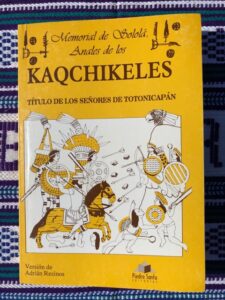
The history of the Kaqchikel people is told in the “Anales de los Kaqchikel”, also known as “Anales de los Xahil”, “Memorial de Tecpán-Atitlán” or “Memorial de Sololá”. This document was originally written and kept in the city of Sololá, near Lake Atitlán, in the Kaqchikel language and by members of the Xahil lineage, including Francisco Hernández Arana Xajilá (1560 – 1583) and his grandson, Francisco Rojas (1583-1604). However, this text was found until 1844, in the archives of the San Francisco de Guatemala convent, where it was later translated by Abbot Charles Étienne Brasseur de Bourbourg, in 1855.
In this document the history and mythology of the Kaqchikel is reflected, preserved orally by successive generations of the members of this ethnic group until it was collected in the manuscript. Among its lines can be found the wars, achievements and conquests of the Kaqchikel kings and their warriors, the internal rebellions of the K’iche ‘, how and when their settlements or villages were founded, the emigration to the Razamut mountains where they founded Iximché, the Kaqchikel capital, until the arrival of the Spanish, as well as the successions of rulers until the time of the conquest. It collects and identifies the document to Tulán, as the original place of the Kaqchikel, but from that point of history backwards it differs from other historical documents, such as Historia de los Xpantzay de Tecpán Guatemala, the Title of Totonicapán and the Popol Vuh, in the one that is collected that the ancestors arrived at Tulán “by sea” (ch’aqa palow), “where the sun descends” (uqajib’al q’ij), that is to say, by the west.
Even today the archaeological ruins of what was its political center, Iximché, a fortress in present-day Tecpán Guatemala, Chimaltenango, are preserved. History tells that they were a people of brave warriors, and that they allied with the Spanish in the fight against the K’chés when they arrived on the continent, but that later two insurrections were fought against foreigners, in the first half of the 16th century. There is no doubt that the Spanish conquest affected in a decisive way against the way of life, customs and beliefs of the Kaqchikels, especially diseases were shown as an added danger that caused havoc among the indigenous population. Even so, they showed off their physical and emotional strength to face the new pressures and preserved their cultural identity to this day.
Kak’ik Recipe
Ingredients
- 2 lb turkey cut into large pieces
- 1/2 pound of tomato
- 4 ounces of miltomate
- 2 large guaque chilies
- 1 chili raisin big
- 1 large red pepper chili
- 6 large garlic cloves
- 1 medium onion
- 4 sprigs of coriander
- 10 sprigs of peppermint
- 1/2 ounce of sesame
- 4 grains of allspice or allspice
- 4 to 5 peppercorns
- 1 ounce of pepitoria
- Onion stalks
- Achiote
- Salt
- Cobanero chili powder
Preparation
- You cook the turkey with a little salt and a bouquet made with onion stalks, mint and coriander in plenty of water.
- Make sure the water covers the meat as it will have to boil and some of it will be consumed.
- To run the errand, first brown the pepitoria, sesame and peppercorns.
- Roast the chili pepper, chili peppers, garlic, onion, tomato and miltomate.
- Then, dry the errand liquefy and strain it.
- You remove the bouquet with which the turkey was cooked and add the message.
- Boil for 10 minutes and season with a little salt, achiote and cobanero pepper to taste.
- Take care that the turkey is not overcooked.
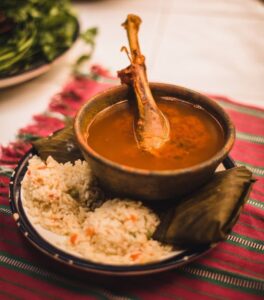
- Finally, you serve in large pieces of turkey with a little rice, tortillas or tamales to taste.
Parts of the human body in Kaqchikel: Ri ch’akulaj
Head: jolomaj / wi ‘aj.
Neck or throat: qulaj.
Nape: rij qulaj.
Trunk: ruche1el ijaj.
Shoulder: telemaj / tele’n.
Hand or arm: q’ab’aj.
Forearm: rub’axb’ojil q ’ab’ aj.
Wrist: ruqül q’ab’aj
Palm of the hand: ruwach q’ab’aj.
Body: ch’akulaj.
Mouth: chi’aj.
Lip: rub ’’ olojil chi ’aj.
Language: aq’aj.
Tooth: eyaj.
Elbow: tz’ikaj.
Jaw or chin: kaxtate ‘/ kaxkate.
Face: paläj.
Cheek: tyojchi’aj.
Front: wachaj.
Temple: xexikinaj.
Hip: rutza’n achäq.
Waist: xinb’al.
Armpit: k’alk’a’x.
Fingers: ruwi ’q’ab’aj.
Back: huh.
Nose: tzamaj.
Ear or ear: xikinaj / ak’axab’al.
Be careful: runaq ’wachaj.
Navel: muxu’x.
Foot: aqanaj.
Sole of the foot: ruwach aqanaj.
Toes: ruwi ’aqanaj.
Knee: ch’ekaj.
Heel: uxtuxil.
Nail: ixk’äq.
Molars: ka’eyaj
Breasts: tz’umaj.
Bone: b’aqil.
Leg: aqanaj.
Buttocks: ruk’ojachäq.
Double chin: juqinaj.
Ankle: ruqul aqanaj / runaq ‘ruwa aqanaj.
Abdomen or belly: rute ’pamaj.
Thigh: tyojil.
Calf: corduroy.
Heel: uxtuxilaj.
Internal parts
Heart: k’uxaj.
Stomach: pamaj.
Intestine: ixkilob ‘.
Lung: postponed.
Kidneys: kinäq ‘.
Brain: katas.
Bladder: yakchula.
Blood: kik ‘.
Sweat: tz’ojp il.
Vein: iboch ‘.
Saliva: chub’aj.
Other words
Hair: rusumal wi’aj / risimal wi’aj
Skin: tz´um.
Mustache or beard: usmachi ‘.
Eyebrows: Metz ‘.
El pueblo Kaqchikel es uno de los 21 grupos étnicos de ascendencia maya que se localizan en Guatemala. La economía kaqchikel se basa en la agricultura a pequeña escala, en las áreas rurales y suburbanas, casi todas las familias cultivan maíz, frijol, verduras y legumbres, para el consumo propio, y algunos, los más afortunados, venden sus excedencias de las cosechas, que supone una importante fuente de ingresos; además de las artesanías. En Chimaltenango, con mimbre y tejidos de fibras duras elaboran canastas, hamacas, redes para carga y variedad de cuerdas; en Sacatepéquez es en la imaginería religiosa donde se han distinguido por sus trabajos, construcciones de tipo colonial, dulcería y productos del cuero; en Comalapa y Tecpán Guatemala se elaboran artículos de plata. En las zonas urbanas con el comercio informal, en la pequeña y mediana empresa, entre otros empleos, donde también se apoyan económicamente; entre los kaqchikeles existe un número importante de emigrantes que suelen enviar remesas de dinero para sus familiares.
Respecto a su idioma, el Kaqchikel, es el que le da nombre al pueblo y durante la historia precolombina tenía categoría de idioma franco y oficial, tanto en actividades de estado como a otros niveles. Pertenece a la rama K’iche, que hoy la conforman los idiomas K’iché, Kaqchikel, Tz’utujil, Sipakapense, Sakapulteco, Uspanteko, Poqomchi y Poqoman, pero que hace más de 3,000 años era uno solo. Los niños kaqchikeles reciben hoy día una educación bilingüe en las escuelas de primaria.
La historia del pueblo kaqchikel se cuenta en los “Anales de los kaqchikeles”, también conocidos como “Anales de los Xahil”, “Memorial de Tecpán-Atitlán” o “Memorial de Sololá”. Este documento fue escrito y guardado en un principio en la ciudad de Sololá, cerca del lago Atitlán, en idioma kaqchikel y por miembros del linaje Xahil, entre los que se cuentan Francisco Hernández Arana Xajilá (1560 – 1583) y su nieto, Francisco Rojas (1583 – 1604). Sin embargo, este texto fue encontrado hasta 1844, en los archivos del convento San Francisco de Guatemala, donde posteriormente fueron traducidos por el abad Charles Étienne Brasseur de Bourbourg, en 1855.
En este documento se halla reflejada la historia y mitología de los kaqchikeles, conservada por vía oral por generaciones sucesivas de los miembros de esta etnia hasta que fue recogida en el manuscrito. Entre sus líneas se puede encontrar las guerras, logros y conquistas de los reyes kaqchikeles y sus guerreros, las rebeliones internas de los k’iche’, cómo y cuándo fueron fundados sus asentamientos o aldeas, la emigración hacia las montañas Razamut donde fundaron Iximché, la capital kaqchikel, hasta la llegada de los españoles, así como las sucesiones de gobernantes hasta la época de la conquista. Recoge e identifica el documento a Tulán, como el lugar originario de los kaqchikeles, pero desde ese punto de la historia hacia atrás difiere de otros documentos históricos, como Historia de los Xpantzay de Tecpán Guatemala, el Título de Totonicapán y el Popol Vuh, en el que se recoge que los ancestros llegaron a Tulán “por mar”(ch’aqa palow), “donde el sol desciende”(uqajib’al q’ij), es decir, por el oeste.
Aún hoy se conservan las ruinas arqueológicas de lo que fue su centro político, Iximché, una fortaleza en el actual Tecpán Guatemala, Chimaltenango. La historia cuenta que fueron un pueblo de bravos guerreros, y que se aliaron con los españoles en la lucha contra los k’chés cuando llegaron al continente, pero que después se libraron dos insurrecciones contra los extranjeros, en la primera mitad del siglo XVI. No cabe duda que la conquista española afectó de una manera determinante contra la forma de vida, costumbres y creencias de los kaqchikeles, especialmente las enfermedades se mostraron como un peligro añadido que causó estragos entre la población indígena. Aun así, hicieron alarde de su fortaleza física y emocional para enfrentarse a las nuevas presiones y conservaron su identidad cultural hasta nuestros días.
Receta Kak’ik
Ingredientes
- 2 lb de pavo cortado en pedazos grandes
- Media lb de tomate
- 4 onzas de miltomate
- 2 chiles guaques grandes
- 1 chile pasa grande
- 1 chile pimiento rojo grande
- 6 dientes de ajo grandes
- 1 cebolla mediana
- 4 ramas de cilantro
- 10 ramas de hierbabuena
- Media onza de ajonjolí
- 4 granos de pimienta gorda o pimienta de chapa
- 4 a 5 granos de pimienta
- 1 onza de pepitoria
- Tallos de cebolla
- Achiote
- Sal
- Chile cobanero en polvo
Preparación
- Cocinas el pavo con un poco de sal y un ramo hecho con tallos de cebolla, hierbabuena y cilantro en suficiente agua.
- Asegúrate de que el agua cubra la carne ya que habrá de hervir y una parte se consumirá.
- Para hacer el recado, primero doras la pepitoria, el ajonjolí y los granos de pimienta.
- Asas el chile pimiento, los chiles, ajo, cebolla, el tomate y el miltomate.
- Luego, licuas en seco el recado y colarlo.
- Retiras el ramo con el que se cocinó el pavo y agregas el recado.
- Dejas hervir durante 10 minutos y sazonas con un poco de sal, achiote y chile cobanero al gusto.
- Cuida que el pavo no se recueza.
- Finalmente, sirves en pedazos grandes de pavo con un poco de arroz, tortillas o tamalitos al gusto.
Partes del cuerpo humano en Kaqchikel: Ri ch’akulaj
Cabeza: jolomaj / wi ‘aj.
Cuello o garganta: qulaj.
Nuca: rij qulaj.
Tronco: ruche1el ijaj.
Hombro: telemaj / tele’n.
Mano o brazo: q’ab’aj.
Antebrazo: rub’axb’ojil q’ ab’ aj.
Muñeca: ruqül q’ab’aj
Palma de la mano: ruwach q’ab’aj.
Cuerpo: ch’akulaj.
Boca: chi’aj.
Labio: rub’ olojil chi’ aj.
Lengua: aq’aj.
Diente: eyaj.
Codo: tz’ikaj.
Quijada o mentón: kaxtate’ / kaxkate.
Cara: paläj.
Mejilla: tyojchi’aj.
Frente: wachaj.
Sien: xexikinaj.
Cadera: rutza’n achäq.
Cintura: xinb’al.
Axila: k’alk’a’x.
Dedos de la mano: ruwi’ q’ab’aj.
Espalda: ijaj.
Nariz: tzamaj.
Oído u oreja: xikinaj / ak’axab’al.
Ojo: runaq’ wachaj.
Ombligo: muxu’x.
Pie: aqanaj.
Planta del pie: ruwach aqanaj.
Dedos del pie: ruwi’ aqanaj.
Rodilla: ch’ekaj.
Talón: uxtuxil.
Uña: ixk’äq.
Muelas: ka´eyaj
Senos: tz´umaj.
Hueso: b’aqil.
Pierna: aqanaj.
Nalgas: ruk’ojachäq.
Papada: juqinaj.
Tobillo: ruqul aqanaj / runaq’ ruwa aqanaj.
Abdomen o vientre: rute’ pamaj.
Muslo: tyojil.
Pantorrilla: pana’aj.
Talón: uxtuxilaj.
Partes internas
Corazón: k’uxaj.
Estómago: pamaj.
Intestino: ixkilob’.
Pulmón: pospo’y.
Riñones: kinäq’.
Cerebro: katas.
Vejiga: yakchula.
Sangre: kik’.
Sudor: tz’ojp il.
Vena: iboch’.
Saliva: chub’aj.
Otras palabras
Cabello: rusumal wi’aj / risimal wi’aj
Piel: tz´um.
Bigote o barba: usmachi’.
Cejas: Metz’.