
















Nélida Ayay Chilón was born in 1984 in the agricultural community of Porcón, Peru.

When she was seven years old, a multinational company established operations in her area and contaminated springs and lagoons with cyanide and arsenic as a result of the mining extraction process.
After earning her law degree in Cajamarca, she became involved in struggles to defend the territory, including the fight to protect Quilish Hill, a sacred place for the Quechua people.
The Quechua speak the Quechua language, the language of the Incas, and its name means “the speech of the valley.”
Nélida watched as that small mine grew exponentially until it became the largest open-pit mine in Latin America, but the consequences of its economic expansion came at the expense of nature. The more medicinal plants dried up, the more pharmacies filled up; crops became worse and, despite the promises, poverty increased. All of this led to the deterioration of life in her community.
On February 6, 2013, Nélida Ayay Chilón addressed a letter to former Peruvian president Ollanta Humala:
“I ask you, in the name of Pachamama [Mother Earth], to stop these acts of destruction, and to stop exploiting and poisoning our natural resources. Do you know why? Because the water and the land suffer when they are dirty and sick. Our mountains feel pain when they are destroyed, similar to how a human being feels when an organ is removed. Wild animals can no longer find a place to live. And the farmers, both men and women, who defend [our water, our land], feel abandoned when no one listens to us. That is why I ask you to stop this, because with all the gold that is extracted, people cannot live or eat [everything is poisoned]…”
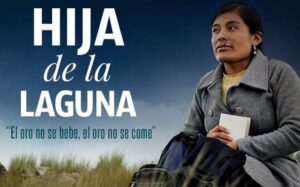
In 2015, Guarango Producciones premiered the story of this woman who overcame her fears to defend Mother Water. Nélida became the protagonist of Hija de la Laguna, a documentary that tells her story, which is also the story of peasant resistance in the Andes.
Roberto Ayón Ballesteros
Ingredients
- 1/2 red bell pepper
- 1 sprig of chincho
- Cilantro to taste
- 1/2 cup oil
- 2 garlic cloves
- 1 tomato
- 1 cup green beans
- 1 bay leaf
- 2 teaspoons mishkina
- 1/2 red onion
- 1 pound desalted and blanched paiche fish
- Garlic paste to taste
- Black pepper to taste
- Salt to taste
Preparation

- Place the fish in a pot and bring it to a brief boil. Remove the fish from the water, shred it, and set aside.
- Heat the oil in a frying pan over low heat. Add a little garlic paste, the bell pepper cut into strips, the sliced green beans, and the bay leaf.
- Peel the onion and cut it into strips. Peel the tomato, remove the core, and cut it into cubes. Then add it to the sauté and fry for a few more minutes.
- Add the mishkina and the shredded fish. Season with pepper. Chop some cilantro and add it.
- If the sauté becomes too dry, add a splash of water and cook for 1 more minute.
- Remove from the heat and serve.
Nélida Ayay Chilón nació en 1984 en el pueblo agrícola Porcón (Perú).
Cuando tenía siete años, se instaló en su zona una multinacional que envenenó manantiales y lagunas por el cianuro y el arsénico producto del proceso de extracción de las minas.
Tras terminar la licenciatura en Derecho en Cajamarca, participó en las luchas por la defensa del territorio, entre ellas, la del cerro Quilish, lugar sagrado para el pueblo quechua.
Los quéchua hablan la lengua quechua, idioma de los incas y significa “el hablar del valle”.
Nélida vio cómo esa pequeña mina, creció exponencialmente hasta transformarse en la más grande a cielo abierto de América Latina, pero las consecuencias de su desafío económico fueron contra la naturaleza, pues cuánto más se secaron las plantas medicinales, más se llenaron las farmacias; empeoró la cosecha y, a pesar de las promesas, creció la pobreza. Lo que llevó al deterioro de la vida de su comunidad.
El 6 de febrero de 2013, Nélida Ayay Chilón dirigió una carta al ex presidente de Perú Ollanta Humala: “Le pido en nombre de la Pachamama [Madre Tierra] que detenga estas destrucciones, que ya no se sigan explotando y envenenando nuestros recursos naturales. ¿Sabe por qué? Porque el agua, la tierra, sufren al verse sucias y enfermas. Nuestros cerros cuando los destruyen sienten dolor, (semejante a) como un ser humano cuando le quitan un órgano. Los animales silvestres ya no encuentran lugar donde vivir. Y los campesinos y campesinas que defendemos (nuestra agua, nuestra tierra) nos sentimos abandonados cuando no nos escuchan. Es por esto que le pido que detenga esto, porque con tanto oro que se sac, no se vive y no se come [todo está envenenado]…”.
En 2015, Guarango Producciones estrenó la historia de esta mujer que transgredió sus miedos para defender a la madre agua. Nélida se convirtió en la protagonista de Hija de la Laguna, documental que cuenta su historia, que es también, la historia de resistencia campesina en los Andes.
Roberto Ayón B.
Ingredientes
- 1/2 Unidad Pimiento rojo
- 1 ramita Chincho
- Cilantro al gusto
- 1/2 taza Aceite
- 2 dientes Ajo
- 1 pieza Tomate
- 1 taza de Habas verdes
- Laurel 1 hoja
- 2 cditas Mishkina
- ½ Cebolla morada
- 1 libra Pescado Paiche desalado y escaldado
- 1 cdita Pasta de ajo al gusto
- Pimienta negra al gusto
- Sal al gusto
Preparación:
- En una olla, colocar el pescado y darle un pequeño hervor. Retirar el pescado del agua, desmenuzar y reservar.
- En una sartén, poner a calentar el aceite a fuego mínimo. Añadir un poco de pasta de ajo, el pimiento cortado en julianas, las habas cortadas y la hojita de laurel.
- Pelar la cebolla y cortar en juliana. Pelar el tomate, retirar el corazón y cortar en cubos. Luego agregar al sofrito y freír por unos minutos más.
- Incorporar la mishkina y el pescado desmenuzado. Condimentar con pimienta. Picar un poco de cilantro y añadir.
- Si el sofrito queda muy seco, verter 1 chorro de agua y dejar cocer 1 minuto más.
- Retirar del fuego y servir.