












Mario David Coronado Juárez, a Guatemalan immigrant in his 30s, had accepted extra construction shifts on Sunday, September 20; it was supposed to be his day off. Married and the father of three, he had moved to the United States to work and send money home so his family could build a house in their hometown village of Tuichilupe in Guatemala. It was early morning, and it was pouring rain across the Grand Rapids area, where Mario had lived for six years without legal immigration status. Just minutes later, videos posted on social media showed Mario’s car engulfed in flames and lodged against a tree south of the city, near U.S. 131. An official statement from the Grand Rapids Police Department reported that Mario, “the driver and sole occupant of the vehicle, was pronounced deceased at the scene,” and that the crash occurred after “ICE personnel attempted to stop the vehicle involved, and the driver fled.”

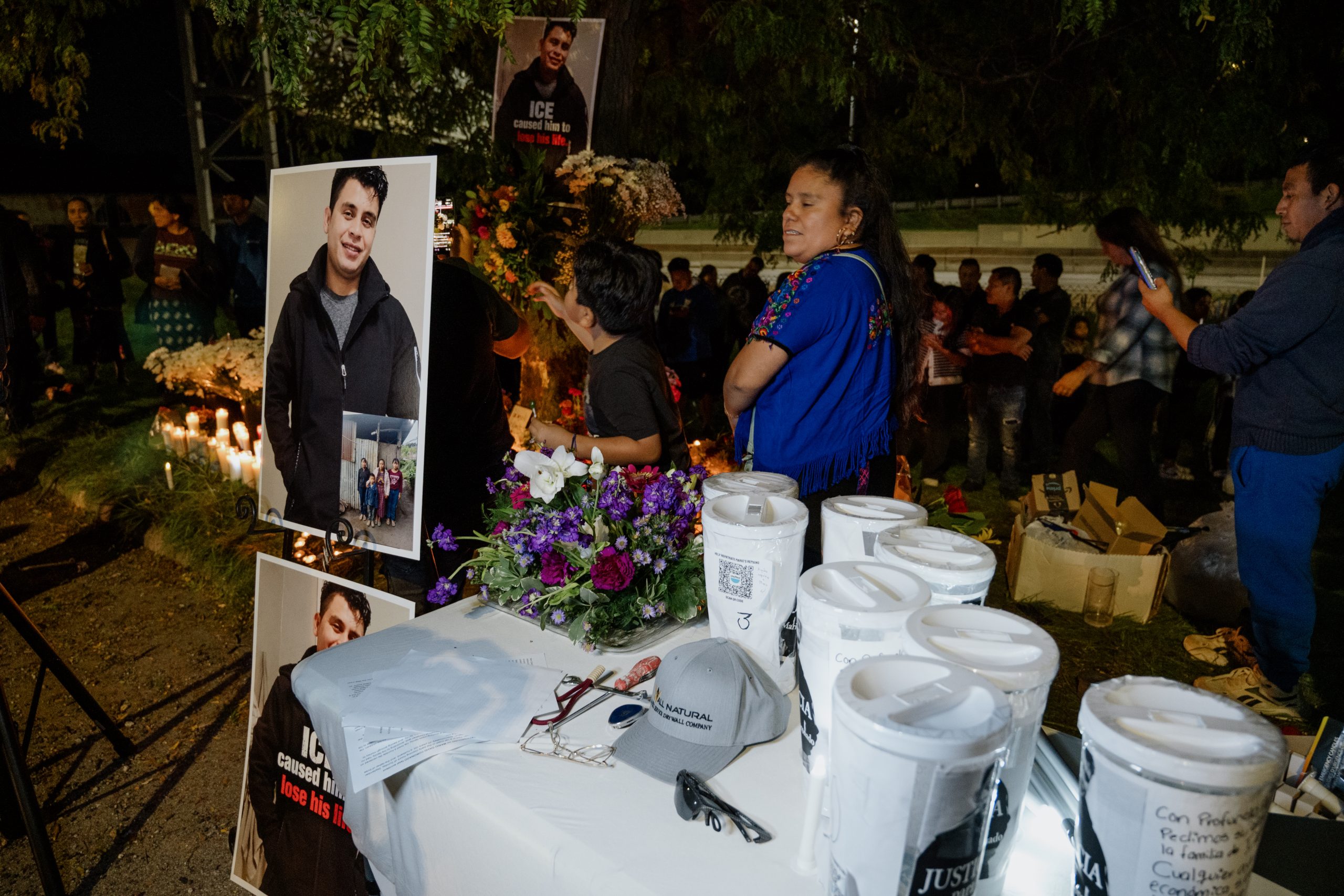
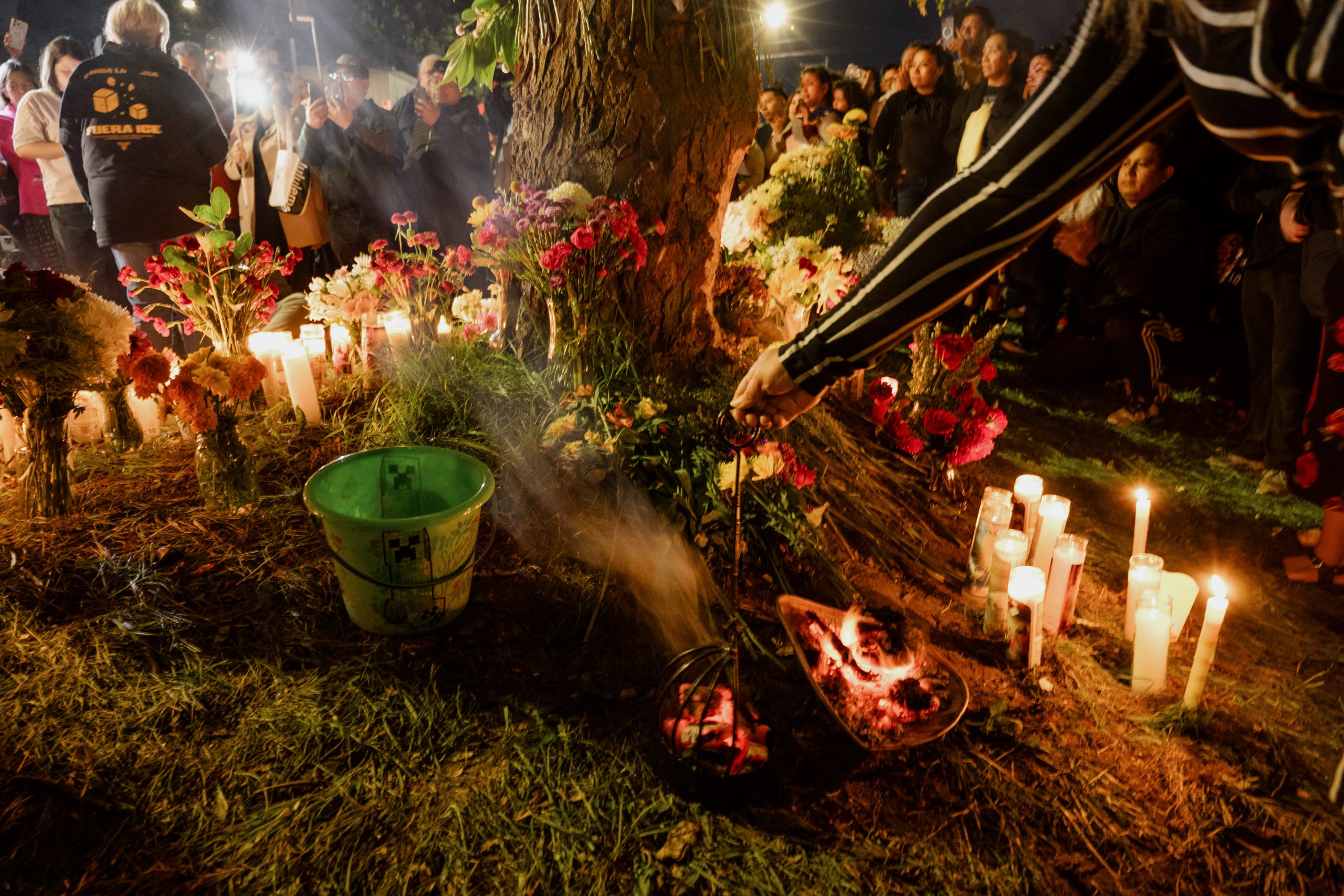
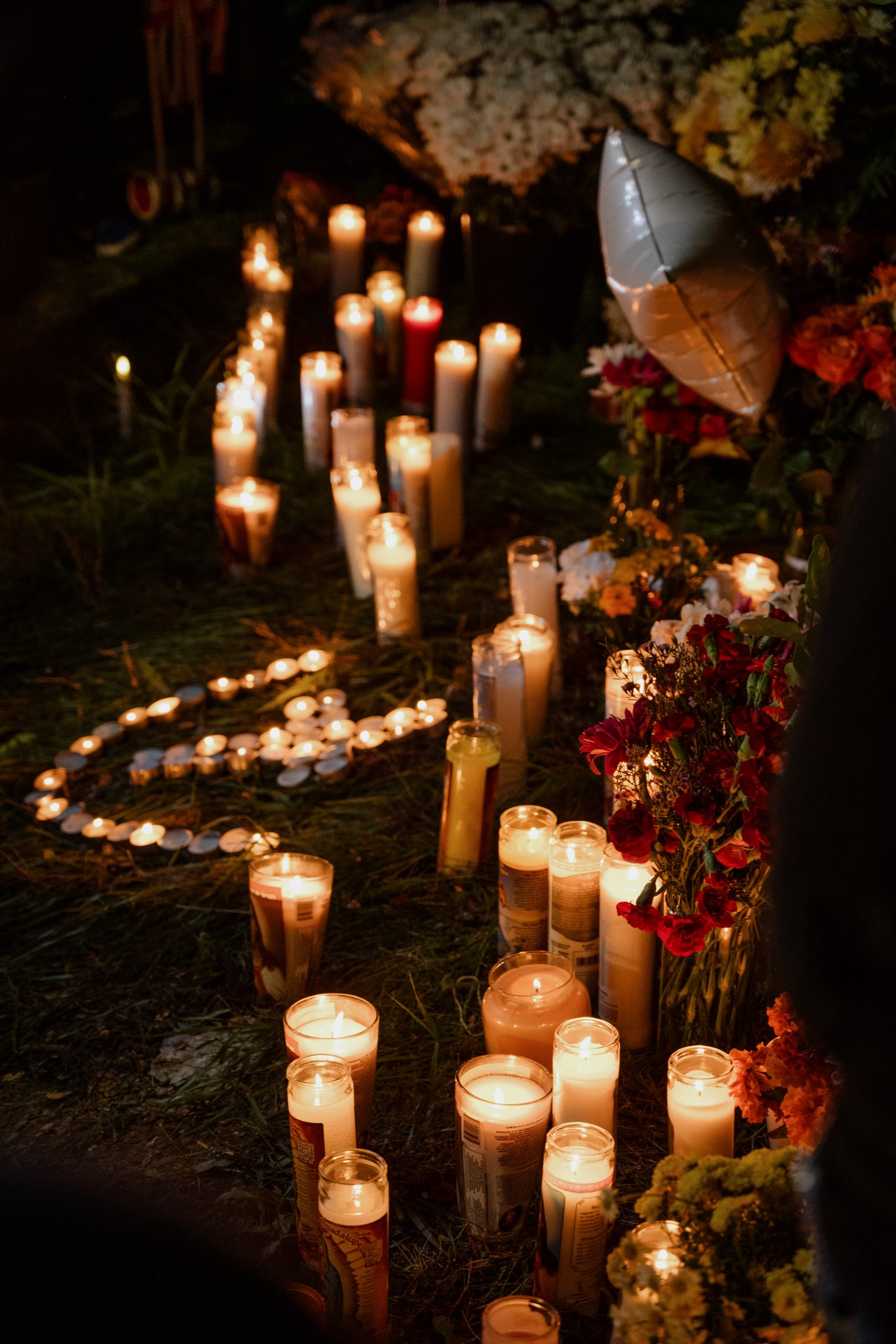
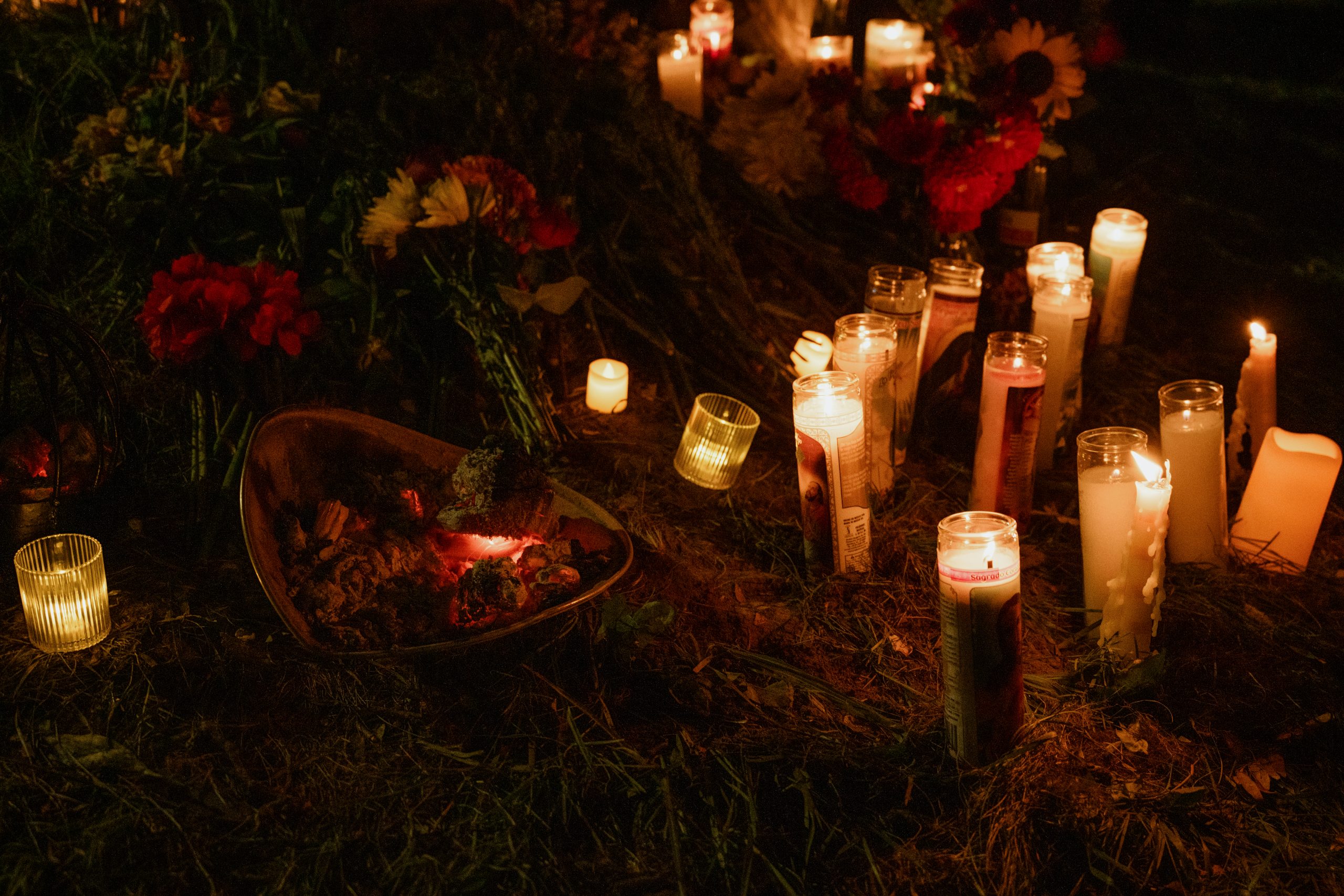
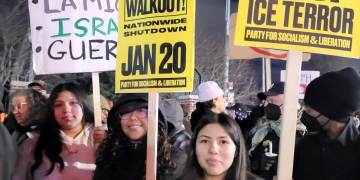
On Thursday afternoon, hundreds of people, including residents, activists, and friends, arrived at the scene of the accident where Coronado Juárez died, bringing candles and flowers for a vigil organized by immigrant advocacy groups such as Movimiento Cosecha and No Detention Center Michigan. A sea of candles illuminated the tree into which his car had crashed. “As Latinos,” said a member of Cosecha, “we are not enemies of America; we are friends. And that is what hurts: we are friends of America, yet we are treated poorly and discriminated against. But one day, God will take care of all that.”
Karla Barbieri, a Grand Rapids resident from Guatemala and Coronado Juarez friend for many years, spoke on behalf of the Coronado Juarez family so the public knew more about him.”Mario was a young man who lived in a room he shared with a couple,” Barbieri said. “He was a hardworking young man who had come to this country, like many of us, with the dream of providing a better future for his family.”
Coronado Juárez’s dream was to build a house for his family in Guatemala; the last receipts for money transfers sent to them were found in his wrecked car, Gema Lowe of Cosecha said at the vigil.
Cosecha members and other immigrant advocacy groups attended the Grand Rapids City Commission meeting on Tuesday, Sept. 22. About 35 people addressed commissioners, demanding greater transparency over the death of Coronado Juárez. They said they had permission from Coronado Juárez’s family to seek justice and questioned the circumstances surrounding his death and GRPD’s interactions with ICE. According to the organization, the family was not contacted by GRPD until more than 24 hours after the crash, while the police chief said ICE officers were the first at the scene. Organizers are seeking answers about how ICE was following Coronado Juárez’s vehicle, whether agents had a judicial warrant, and whether racial profiling played a role.
Speakers also raised concerns about conditions at the North Lake Processing Center and criticized Grand Rapids city mayor David LaGrand for declining to meet with immigrant-rights groups.
In a public statement on social media Thursday, LaGrand condemned ICE’s actions in Grand Rapids. He demanded a transparent, state-led investigation into the death of Coronado Juarez while demanding federal law enforcement reforms, such as body-worn cameras and civilian oversight, to ensure the safety and dignity of all residents regardless of their immigration status.
“The reality is, we cannot keep federal agencies out of our city, however they act,” said LaGrand. “But let me be clear, no law enforcement entity that traffics in fear is welcome here. ICE’s national pattern of intimidation, harassment, and killing has to stop. This is a moment when we all have to stand for justice and real work for public safety. When government agencies cause harm, instead of reducing harm, they are worse than useless.”
The Department of Homeland Security (DHS) said in a Thursday statement shared with several media outlets that ICE officers attempted to stop a vehicle registered to someone who was a “known criminal illegal alien with multiple alcohol related driving offenses” also wanted in Guatemala. Coronado Juarez was not an ICE target, DHS said.
“Coronado Juarez was an illegal alien from Guatemala who was previously removed by Border Patrol from the United States in 2021. He re-entered the country, a felony, at an unknown date and location,” the DHS statement said.

According to the agency, the driver fled at a high speed, prompting officers to immediately discontinue the enforcement action for public safety reasons. Shortly afterward, officers found the vehicle nearly half a mile away after it crashed into a tree and caught fire. DHS said the officers attempted to provide aid and extinguish the fire until GRPD and firefighters arrived.
On Tuesday, a spokesperson for Gov. Gretchen Whitmer said in a statement that she has directed the Michigan State Police (MSP) to investigate the circumstances surrounding a car crash in which Coronado Juarez died.
Joseph Trigg, GRPD Police Chief, had requested the same day that the MSP handle the investigation because they are in a “better position to determine the timeframe and any other potentially relevant circumstances.” Col. James F. Grady II, state police director, said in a statement that the MSP is investigating the case in collaboration with the GRPD.
Michigan Democrat leaders are also demanding transparency from federal authorities. U.S. Rep. Hillary Scholten (D-Grand Rapids) called on ICE to explain why agents attempted to stop Mario Coronado Juárez’s vehicle and whether they pursued him. She also requested the preservation and release of body-camera and dashcam footage and other records related to the incident.
State Rep. Stephen Wooden (D-Wyoming) said in a statement that Mario Coronado Juárez should still be alive and called for dismantling and replacing ICE with a new Department of Justice agency under civilian oversight that respects constitutional law while protecting communities and individual rights. US Rep. Rashida Tlaib (D-Detroit) blamed ICE for the death of Coronado Juarez. “ICE pursued him in an unmarked car, causing a fatal car crash. These killings have to stop.” Tlaib said in a post on X.

Coronado Juarez was Maya, an Indigenous group in Central America, and, true to his heritage, the vigil concluded with a Mayan traditional mourning ceremony featuring smoke, songs, and candles. “The Mayan Indians are also human. We have a soul, we have spirit, we have feelings,” said Barbieri. “We’re human; we’re not disposable. So tonight we’re here to remember Mario and never forget what happened.”
Coronado Juárez’s family hopes to repatriate his body to his village in Guatemala; to that end, organizers provided QR codes and a link to raise funds for transporting his remains back to his home country.
https://www.gofundme.com/f/mario-david-coronados-family-needs-us-right-now