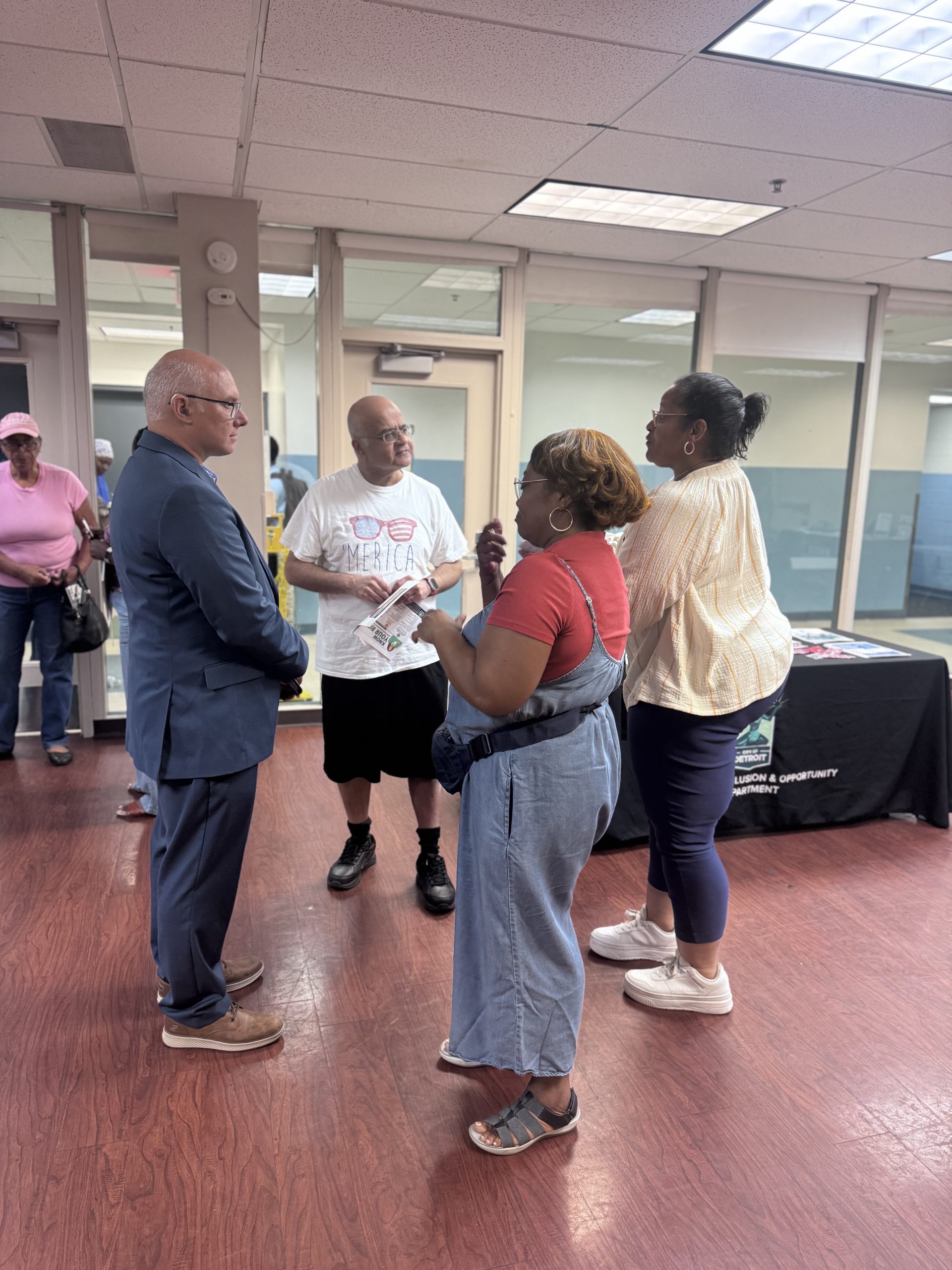

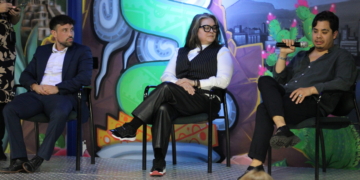


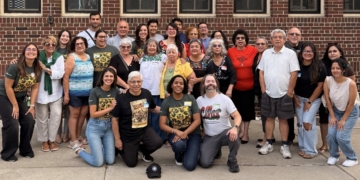











On Wednesday, August 26, the City of Detroit’s Office of Disability Affairs (ODA), led by Director Christopher Samp, held the second of seven community listening sessions at the Northwest Activities Center. Attendees were asked to provide their information at check-in, with the assurance that Samp’s office would follow up individually — a small gesture that made clear attendees’ voices, and their presence, mattered.

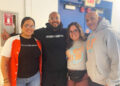
Director Samp was joined by department staff, including Carol Jackson. Two American Sign Language (ASL) interpreters, Katie Fitzpatrick and Stephanie Beatty, were present throughout. About ten people attended in person, including self-advocate Marguerite Maddox, accompanied by her service dog. Samp opened the session by explaining the hybrid format’s evolution: the sessions were originally held only on Zoom, then moved to in-person, before eventually combining both formats.
Samp explained that the Office of Disability Affairs was founded in 2021, when he as appointed as its first director. The office operates under the Department of Civil Rights, Inclusion and Opportunity (CRIO), which is led by Director Jade E. Mathis. He introduced the City Council members who sit on the city’s Disability Task Force: Denzel A. McCampbell (chair), LaTisha Johnson (co-chair), and Council President Pro Tem Coleman A. Young II, an at-large member (co-chair).
Samp recapped the office’s recent achievements, highlighted by its five-year milestone this year. Other accomplishments included sending eight staff members to an ADA symposium, procuring 220 accessible voting booths for the Detroit Department of Elections, hosting the third annual Disability Pride Celebration in July, co-launching a mental health initiative, and installing the city’s first tactile map, with Braille, at Clark Park.
The floor then opened for public comment. Samp worked to ensure both in-room and Zoom attendees had a chance to speak, though a technical issue prevented the room from hearing Zoom participants directly; Samp instead read their questions aloud from the chat.
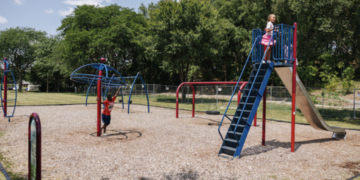
Carla Spight-Mackey spoke about the need for more sensory-friendly parks, describing how her four-year-old grandson, who has autism, has little to do when they visit Van Antwerp Park and often resorts to playing on an iPad. Camille Proctor, founder of the Color of Autism organization, built on the comment, noting that disability-friendly park design doesn’t have to be costly — options like communication boards and adaptable swings can make parks more inclusive at low cost.
Marguerite Maddox urged the office to ensure closed captioning is available at all City Council meetings, noting that some meetings lack ASL interpreters. Samp clarified that interpreters are guaranteed for the formal portions of council meetings, and additional interpreters can be requested for other portions. She also raised concerns about a malfunctioning assistive listening device on the 13th floor, used during City Council meetings; Samp confirmed the missing second piece of the two-part device had since been located and would be back in working order.
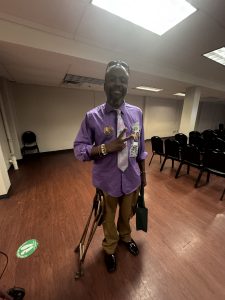
Local activist Brother Cunningham, known for distributing bus passes at the Rosa Parks Transit Center, raised the cost gap between fixed-route bus fare (50 cents) and paratransit (five dollars), noting the burden this places on riders living on fixed disability incomes, particularly toward the end of the month. He asked whether paratransit could offer a discount for riders with Medicare cards, and also raised the cost savings of dedicated mental health shelters over repeat psychiatric hospital admissions for unhoused residents.
Ian Brock, Community liaison representing the office of Council Member Angela Whitfield-Calloway from District 2, where the Northwest Activity Center is located Welcomed us and mention some upcoming community events their office is hosting.
City of Detroit Ombudsman Sherry Gay-Dagnogo closed the formal portion of the session, sharing her office phone number 313-224-6000 thanking attendees and reminding them that her office is available to help resolve concerns about city services.
Afterward, Samp stayed to speak individually with attendees, addressing any concerns that hadn’t been raised during the formal comment period and ensuring each person left contact information so his office could follow up.
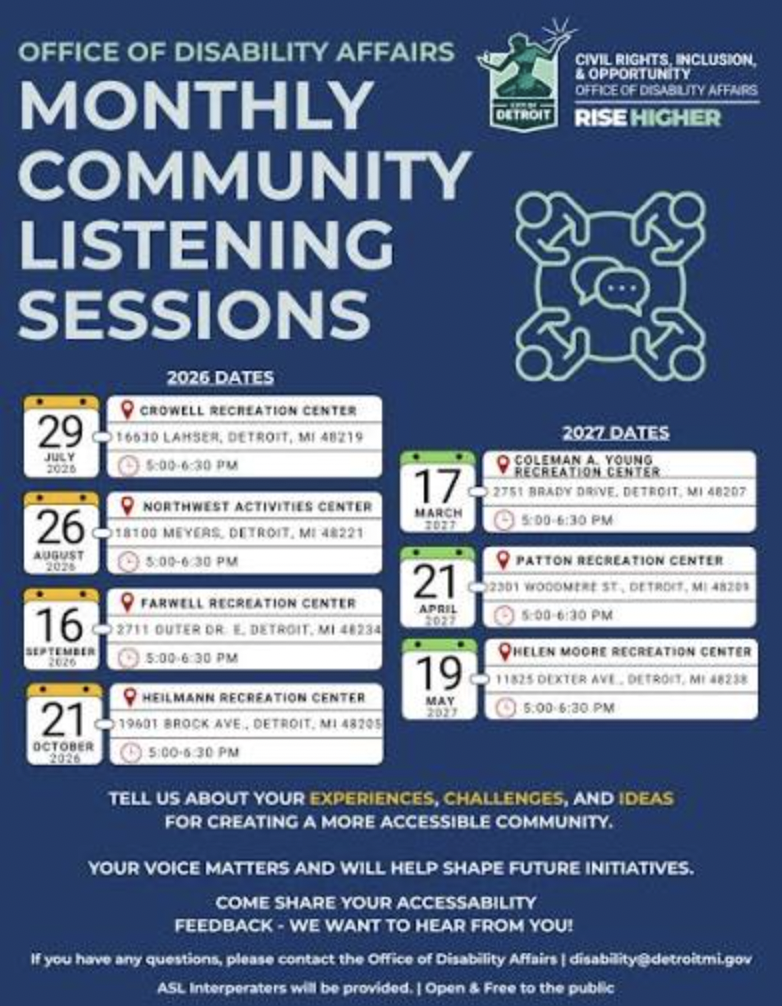
Two more listening sessions remain this year, on September 16 and October 21, with the 2027 series continuing in March, April and May. Learn more about the ODA at https://detroitmi.gov/departments/civil-rights-inclusion-opportunity-department/office-disability-affairs.
El miércoles, 26 de agosto, la Office of Disability Affairs (ODA) de la Ciudad de Detroit, liderada por el Director Christopher Samp, realizó la segunda de siete sesiones comunitarias de escucha en el Northwest Activities Center. Se pidió a los asistentes que proporcionaran su información al registrarse, con la seguridad de que la oficina de Samp haría seguimiento individual — un pequeño gesto que dejó claro que las voces de los asistentes, y su presencia, importaban.
El Director Samp fue acompañado por personal del departamento, incluyendo Carol Jackson. Dos intérpretes de Lenguaje de Signos Estadounidense (ASL), Katie Fitzpatrick y Stephanie Beatty, estuvieron presentes durante toda la sesión. Aproximadamente diez personas asistieron en persona, incluyendo la autodefensora Marguerite Maddox, acompañada por su perro de servicio. Samp abrió la sesión explicando la evolución del formato híbrido: las sesiones fueron originalmente realizadas solo en Zoom, luego se mudaron a en persona, antes de eventualmente combinar ambos formatos.
Samp explicó que la Office of Disability Affairs fue fundada en 2021, cuando fue nombrado como su primer director. La oficina opera bajo el Department of Civil Rights, Inclusion and Opportunity (CRIO), que es liderado por la Directora Jade E. Mathis. Presentó a los miembros del City Council que están en la Disability Task Force de la ciudad: Denzel A. McCampbell (presidente), LaTisha Johnson (copresidenta), y Council President Pro Tem Coleman A. Young II, un miembro at-large (copresidente).
Samp resumió los logros recientes de la oficina, destacado por su hito de cinco años este año. Otros logros incluyeron enviar a ocho miembros del personal a un simposio de ADA, procurar 220 cabinas de votación accesibles para el Detroit Department of Elections, organizar la celebración de Disability Pride anual número tres en julio, co-lanzar una iniciativa de salud mental, e instalar el primer mapa táctil de la ciudad, con Braille, en Clark Park.
El piso luego se abrió para comentarios públicos. Samp trabajó para asegurar que tanto asistentes en la sala como en Zoom tuvieran una oportunidad de hablar, aunque un problema técnico previno que la sala escuchara participantes de Zoom directamente; Samp en su lugar leyó sus preguntas en voz alta del chat.
Carla Spight-Mackey habló sobre la necesidad de más parques amigables para los sentidos, describiendo cómo su nieto de cuatro años, quien tiene autismo, tiene poco que hacer cuando visitan Van Antwerp Park y frecuentemente recurre a jugar en un iPad. Camille Proctor, fundadora de la organización Color of Autism, construyó sobre el comentario, señalando que el diseño de parques amigable con la discapacidad no tiene que ser costoso — opciones como tableros de comunicación y columpios adaptables pueden hacer parques más inclusivos a bajo costo.
Marguerite Maddox instó a la oficina a asegurar que subtítulos cerrados estén disponibles en todas las reuniones del City Council, señalando que algunas reuniones carecen de intérpretes de ASL. Samp aclaró que se garantizan intérpretes para las porciones formales de las reuniones del consejo, e intérpretes adicionales pueden ser solicitados para otras porciones. También levantó preocupaciones sobre un dispositivo de escucha asistiva defectuoso en el piso 13, usado durante las reuniones del City Council; Samp confirmó que la segunda pieza faltante del dispositivo de dos partes había sido localizada desde entonces y estaría de nuevo en orden de funcionamiento.
El activista local Brother Cunningham, conocido por distribuir pases de autobús en el Rosa Parks Transit Center, levantó la brecha de costo entre tarifa de ruta fija (50 centavos) y paratransit (cinco dólares), señalando la carga que esto coloca en pasajeros viviendo en ingresos fijos de discapacidad, particularmente hacia el final del mes. Preguntó si paratransit podría ofrecer un descuento para pasajeros con tarjetas de Medicare, y también levantó los ahorros de costos de refugios de salud mental dedicados sobre admisiones repetidas de hospitales psiquiátricos para residentes sin hogar.
Ian Brock, enlace comunitario representando la oficina del miembro del City Council Angela Whitfield-Calloway del Distrito 2, donde está ubicado el Northwest Activity Center, nos dio la bienvenida y mencionó algunos eventos comunitarios próximos que su oficina está organizando.
La Procuradora de la Ciudad de Detroit Sherry Gay-Dagnogo cerró la porción formal de la sesión, compartiendo el número de teléfono de su oficina 313-224-6000, agradeciendo a los asistentes y recordándoles que su oficina está disponible para ayudar a resolver preocupaciones sobre servicios de la ciudad.
Después, Samp se quedó para hablar individualmente con asistentes, abordando cualquier preocupación que no haya sido levantada durante el período de comentarios formales y asegurando que cada persona dejara información de contacto para que su oficina pudiera hacer seguimiento.
Dos sesiones de escucha más permanecen este año, el 16 de septiembre y el 21 de octubre, con la serie de 2027 continuando en marzo, abril, y mayo. Aprende más sobre la ODA en https://detroitmi.gov/departments/civil-rights-inclusion-opportunity-department/office-disability-affairs.