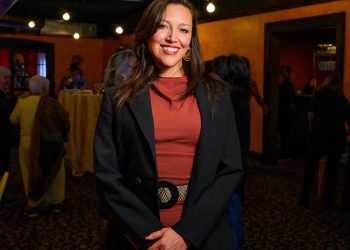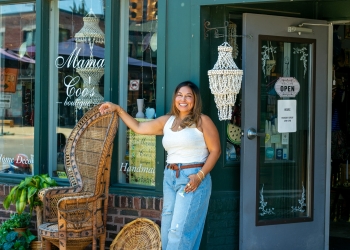













If you ask Raquel Figueroa where she is from, the answer depends on how much time she has to explain. She was born in Venezuela to a Venezuelan father and a Colombian mother. At nine years old, her family moved to Barcelona, where she grew up, went to school and eventually built a career in hospitality and tourism. Over the years, life also took her to Germany and England before she eventually immigrated to Michigan in 2014.
“I am a very mixed person,” she says with a laugh. “A Sancocho of cultures.” In much of Latin America, Sancocho is a stew made from different meats, vegetables and spices, each ingredient contributing something of its own. Raquel sees her life the same way. Every place she has lived became part of who she is: her Venezuelan roots, her Colombian family, her upbringing in Spain, the years she spent in different parts of Europe and the new life she built in the United States.
Every move meant beginning again, learning a new culture and finding a way to belong. Long before she became District 6 Business Liaison for the Detroit Economic Growth Corporation, she spent years learning how to navigate life as an outsider.
Growing up in Barcelona meant learning to adapt. Although Spanish was spoken at home, school was conducted in Catalan, and outside the house she was the daughter of Latin American immigrants in a Spain that, she recalls, looked very different from today.
Are you Venezuelan, Colombian or Spanish? it was a question she heard often. “I would say it was an identity crisis that I had to go through,” she said. Over time, she embraced Barcelona as home without leaving behind her family’s roots, learning that identity is rarely one thing and belonging is something people build.
Learning to live between cultures sparked an interest that would shape the rest of her life. Languages became part of that journey early on and remained a constant. Fluent in Spanish, Catalan and English, Raquel has also studied German, French, Italian, Latin, Greek and Korean, driven by a desire to better understand people and cultures.
That same curiosity shaped her career. After earning a degree in business administration with a concentration in hospitality and tourism, she worked in hotels, museums, restaurants, airports and airlines in Spain, Germany and England. Looking back, she believes those experiences prepared her for the work she would eventually do in Detroit. “I’ve always felt that I had a purpose in serving,” she said.
When she arrived in Michigan in 2014, she carried the same image of Detroit that many people outside the United States did. She knew the headlines about bankruptcy, crime and the collapse of the auto industry. She expected a city struggling to recover. Instead, she found something the headlines rarely mentioned. “The city of Detroit is a city of resilience,” she said.
That understanding deepened after she joined the Detroit Land Bank Authority as one of its first bilingual Spanish-speaking customer service representatives. As she helped residents navigate city processes and find answers in a language they understood, she also got to know Detroit through the people she served.
Their stories introduced her to neighborhoods where residents looked after one another and business owners invested in their communities. “I think that already created a sense of belonging because I share those same values,” she said. Over the next seven years, she earned several promotions, eventually becoming a team leader, and discovered that her work was never really about forms or procedures. It was about helping people take the first step.
That realization eventually led her to the Detroit Economic Growth Corporation, where she now serves as District 6 Business Liaison. The position allows her to connect entrepreneurs with resources, city departments and technical assistance, but she sees the work differently than a job description might suggest. She sees herself as a bridge.

District 6 stretches from Southwest Detroit through Corktown, Midtown, Delray, Boynton and other neighborhoods, each with its own history and culture. Alongside the city’s vibrant Latino community are long-established African American neighborhoods, Arab-owned businesses, African immigrant entrepreneurs and newer residents drawn to the area’s growing commercial corridors. “Each community has different needs, and how you fulfill those needs also has to be different.”
For Raquel, that belief is not a strategy. It is the result of a lifetime spent living between cultures. She knows that sharing a language does not always mean sharing the same experiences, and that understanding people begins with listening before offering solutions.
Looking back, she can see how every stage of her life prepared her for the work she does today. The little girl learning Catalan in Barcelona, the young woman working in hotels and airports across Europe, the immigrant building a new life in Michigan and the bilingual employee helping Detroit residents navigate unfamiliar systems were all becoming the same person.
Today, that journey comes together in the neighborhoods she serves. Every conversation with a business owner is another opportunity to build trust, connect people with resources and remind them that someone is willing to listen.
For someone who spent much of her life searching for where she belonged, Detroit became more than the place where she settled. It became the place where her experiences found meaning. Helping others build businesses is only part of her job. Helping people feel seen, understood and connected to the community they call home is what gives that work its purpose.
Si le preguntas a Raquel Figueroa de dónde es, la respuesta depende de cuánto tiempo tenga para explicar. Nació en Venezuela de un padre venezolano y una madre colombiana. A los nueve años, su familia se mudó a Barcelona, donde creció, fue a la escuela y eventualmente construyó una carrera en hotelería y turismo. Con los años, la vida también la llevó a Alemania e Inglaterra antes de que finalmente emigrara a Michigan en 2014.
“Soy una persona muy mezclada,” dice con una risa. “Un Sancocho de culturas.” En gran parte de América Latina, el Sancocho es un guiso hecho con diferentes carnes, verduras y especias, donde cada ingrediente contribuye algo propio. Raquel ve su vida de la misma manera. Cada lugar donde ha vivido se convirtió en parte de quién es: sus raíces venezolanas, su familia colombiana, su infancia en España, los años que pasó en diferentes partes de Europa y la nueva vida que construyó en Estados Unidos.
Cada mudanza significaba empezar de nuevo, aprender una nueva cultura y encontrar la manera de pertenecer. Mucho antes de convertirse en District 6 Business Liaison para la Detroit Economic Growth Corporation, pasó años aprendiendo cómo navegar la vida como una forastera.
Crecer en Barcelona significó aprender a adaptarse. Aunque el español se hablaba en casa, la escuela se realizaba en catalán, y fuera de la casa era la hija de inmigrantes latinoamericanos en una España que, recuerda, se veía muy diferente a hoy.
¿Eres venezolana, colombiana o española? era una pregunta que escuchaba a menudo. “Diría que fue una crisis de identidad por la que tuve que pasar,” dijo. Con el tiempo, abrazó Barcelona como hogar sin dejar atrás las raíces de su familia, aprendiendo que la identidad rara vez es una sola cosa y que la pertenencia es algo que las personas construyen.
Aprender a vivir entre culturas encendió un interés que daría forma al resto de su vida. Los idiomas se convirtieron en parte de ese viaje desde el principio y permanecieron como una constante. Fluida en español, catalán e inglés, Raquel también ha estudiado alemán, francés, italiano, latín, griego y coreano, impulsada por el deseo de comprender mejor a las personas y culturas.
Esa misma curiosidad moldeó su carrera. Después de obtener una licenciatura en administración de empresas con concentración en hotelería y turismo, trabajó en hoteles, museos, restaurantes, aeropuertos y aerolíneas en España, Alemania e Inglaterra. Mirando hacia atrás, cree que esas experiencias la prepararon para el trabajo que eventualmente haría en Detroit. “Siempre sentí que tenía un propósito en servir,” dijo.
Cuando llegó a Michigan en 2014, llevaba la misma imagen de Detroit que muchas personas fuera de Estados Unidos tenían. Conocía los titulares sobre quiebra, criminalidad y el colapso de la industria automotriz. Esperaba una ciudad luchando por recuperarse. En cambio, encontró algo que los titulares rara vez mencionaban. “La ciudad de Detroit es una ciudad de resiliencia,” dijo.
Esa comprensión se profundizó después de que se unió a la Detroit Land Bank Authority como una de sus primeras representantes de servicio al cliente bilingüe hablante de español. Mientras ayudaba a los residentes a navegar procesos de la ciudad y encontrar respuestas en un idioma que entendían, también llegó a conocer Detroit a través de las personas que servía.
Sus historias la presentaron a barrios donde los residentes se cuidaban mutuamente y los dueños de negocios invertían en sus comunidades. “Creo que eso ya creó un sentido de pertenencia porque comparto esos mismos valores,” dijo. Durante los siguientes siete años, recibió varios ascensos, eventualmente convirtiéndose en líder de equipo, y descubrió que su trabajo nunca fue realmente acerca de formas o procedimientos. Fue acerca de ayudar a las personas a dar el primer paso.
Esa realización eventualmente la llevó a la Detroit Economic Growth Corporation, donde ahora sirve como District 6 Business Liaison. La posición le permite conectar a emprendedores con recursos, departamentos de la ciudad y asistencia técnica, pero ve el trabajo de manera diferente a como una descripción de trabajo podría sugerir. Se ve a sí misma como un puente.
District 6 se extiende desde Southwest Detroit a través de Corktown, Midtown, Delray, Boynton y otros barrios, cada uno con su propia historia y cultura. Junto a la vibrante comunidad latina de la ciudad hay barrios afroamericanos bien establecidos, negocios de propiedad árabe, emprendedores inmigrantes africanos y residentes más nuevos atraídos por los corredores comerciales en crecimiento de la zona. “Cada comunidad tiene necesidades diferentes, y la manera de satisfacer esas necesidades también tiene que ser diferente.”
Para Raquel, esa creencia no es una estrategia. Es el resultado de una vida entera vivida entre culturas. Sabe que compartir un idioma no siempre significa compartir las mismas experiencias, y que comprender a las personas comienza con escuchar antes de ofrecer soluciones.
Mirando hacia atrás, puede ver cómo cada etapa de su vida la preparó para el trabajo que hace hoy. La niña pequeña aprendiendo catalán en Barcelona, la joven trabajando en hoteles y aeropuertos en toda Europa, la inmigrante construyendo una nueva vida en Michigan y la empleada bilingüe ayudando a los residentes de Detroit a navegar sistemas desconocidos, todas estaban convirtiéndose en la misma persona.
Hoy, ese viaje se reúne en los barrios que sirve. Cada conversación con un dueño de negocio es otra oportunidad para construir confianza, conectar a las personas con recursos y recordarles que alguien está dispuesto a escuchar.
Para alguien que pasó gran parte de su vida buscando dónde pertenecía, Detroit se convirtió en más que el lugar donde se asentó. Se convirtió en el lugar donde sus experiencias encontraron significado. Ayudar a otros a construir negocios es solo parte de su trabajo. Ayudar a las personas a sentirse vistas, comprendidas y conectadas a la comunidad que llaman hogar es lo que le da propósito a ese trabajo.